The Ultimate 20-Minute Broccoli and Mushroom Stir Fry with Nutty Brown Rice
Broccoli And Mushroom Stir Fry With Brown Rice Recipe
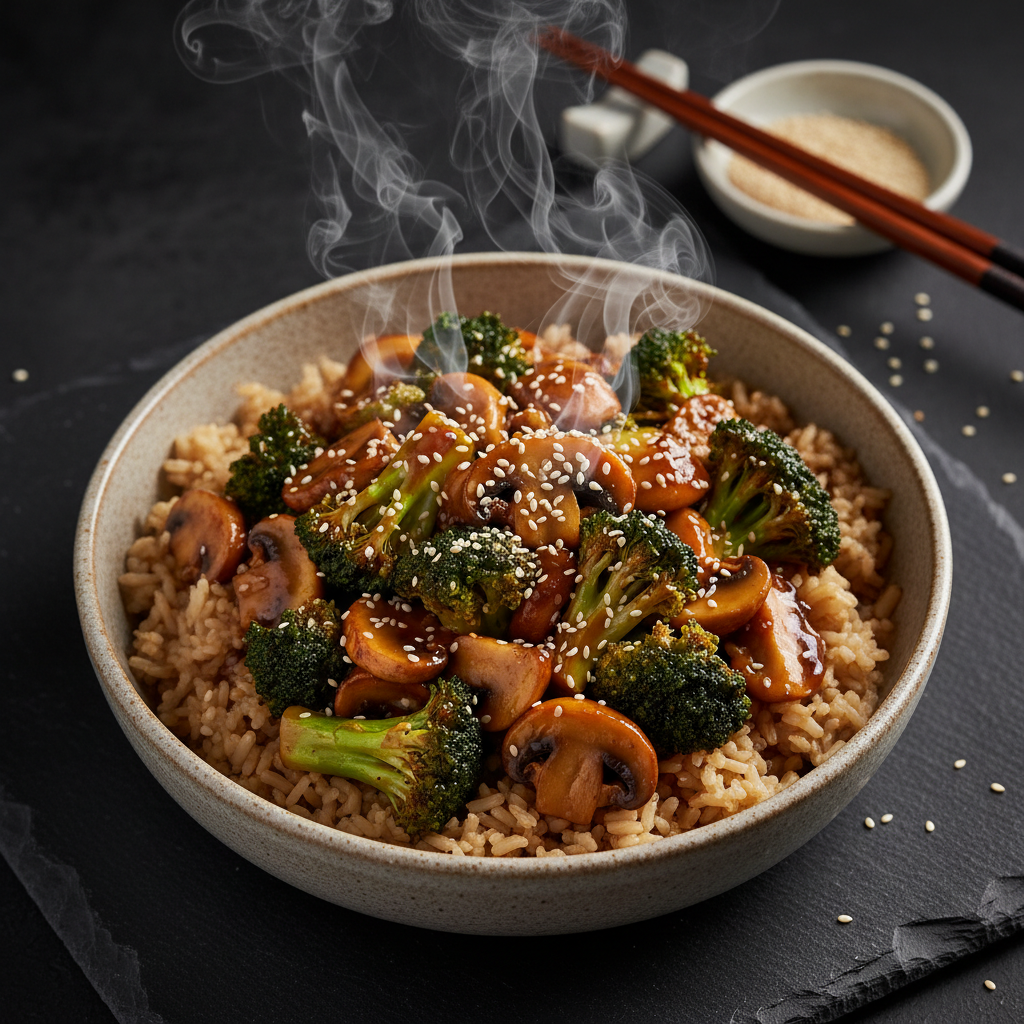
This vibrant Broccoli and Mushroom Stir Fry is the ultimate weeknight savior, packing a savory punch with a sticky ginger-soy glaze. Paired with wholesome, nutty brown rice, it delivers a satisfying texture contrast between crisp-tender florets and meaty mushrooms that will have even the pickiest eaters asking for seconds.
15 minutes
15 minutes
30 minutes
4 servings
Main Course
Stir-Fry
Asian-Fusion
Vegan
There is something profoundly satisfying about a well-executed stir fry. It is the culinary equivalent of a symphony, where timing, heat, and flavor balance come together in a crescendo of sizzling sounds and aromatic steam. This Broccoli and Mushroom Stir Fry with Brown Rice is not just another toss-and-go meal; it is a carefully curated experience designed to maximize texture and umami. We often fall into the trap of ordering takeout when we crave these flavors, but the reality is that homemade is vastly superior—lighter on the oil, fresher in produce, and customizable to your exact palate.
The star of this show is undoubtedly the sauce—a glossy, savory concoction infused with fresh ginger, garlic, and a hint of toasted sesame oil that coats every grain of rice and crevice of broccoli. But let’s not overlook the vegetables. The broccoli provides that essential ‘snap’ and fresh vegetal bitterness, while the mushrooms—browned to perfection—offer a deep, earthy richness that mimics the satisfaction of meat. When served over a bed of fluffy, nutty brown rice, you get a complete protein profile and a meal that sustains energy levels without the post-takeout slump.
Whether you are a busy parent looking for a quick dinner fix, a student meal-prepping for the week, or simply someone trying to incorporate more plant-based meals into your diet without sacrificing flavor, this recipe is your new gold standard. It bridges the gap between health food and comfort food, proving that you don’t need heavy creams or deep-frying to create something truly indulgent.
History & Origins
The technique of stir-frying, known as ‘chǎo’ (炒) in Chinese, has a history that spans thousands of years, likely originating during the Han Dynasty (206 BC – 220 AD) but becoming a staple cooking method during the Song Dynasty (960–1279 AD) as oil became more affordable and accessible. The genius of stir-frying lies in its efficiency; by cutting ingredients into uniform, bite-sized pieces and cooking them rapidly over extremely high heat in a wok, cooks could conserve scarce fuel while preserving the texture, color, and nutritional value of the food. This method creates ‘wok hei’ or ‘breath of the wok,’ a complex charred flavor that defines authentic Chinese cuisine.
As Chinese immigrants moved westward, particularly to the United States during the mid-19th century Gold Rush and railroad construction eras, they brought these culinary traditions with them. However, ingredients were often adapted to what was locally available. Broccoli, a vegetable of Italian origin that became popular in the US in the 1920s, was eventually embraced by Chinese-American chefs for its sturdy texture and ability to hold sauces, leading to the ubiquitous ‘Beef and Broccoli’ and subsequently, vegetable-forward variations like this one.
The integration of brown rice is a more modern, health-conscious twist. Traditionally, white rice was the standard due to its texture and status, but the wellness movements of the late 20th and early 21st centuries saw a surge in whole grains. Today, this dish represents a beautiful fusion of ancient technique, immigrant adaptation, and modern nutritional science, creating a plate that honors the past while nourishing the present.
Why This Recipe Works
This recipe succeeds where many home stir-fries fail because it prioritizes moisture control and heat management. A common mistake is overcrowding the pan, which causes vegetables to steam rather than sear, resulting in a soggy, lackluster mess. In this recipe, we emphasize cooking the mushrooms first to release their liquid and brown them, concentrating their umami flavor. Mushrooms are like sponges; if you don’t cook the water out, they remain rubbery. By searing them, we transform them into savory umami bombs.
Secondly, the sauce uses a cornstarch slurry technique. This ensures that the sauce isn’t watery but rather thick and glossy, clinging to the vegetables and rice rather than pooling at the bottom of the bowl. The balance of soy sauce for salt, rice vinegar for acid, and sugar for balance hits all the taste receptors. Furthermore, we use fresh aromatics—ginger and garlic—added towards the end of the sautéing process. This prevents them from burning and turning bitter, which can happen if they are thrown in too early with the high heat required for the mushrooms. Finally, pairing this with short-grain brown rice adds a chewiness that complements the crunch of the broccoli, creating a varied mouthfeel that makes the dish engaging to eat.
Why You’ll Love This Recipe
- ✓Ready in under 30 minutes for a stress-free dinner.
- ✓Packed with fiber and plant-based protein.
- ✓Uses a homemade sauce that is healthier than store-bought bottles.
- ✓Highly customizable with different veggies or proteins.
- ✓Perfect for meal prep as flavors deepen overnight.
Equipment You’ll Need
- ✓Large Wok or Heavy Skillet
- ✓Chef’s Knife
- ✓Cutting Board
- ✓Rice Cooker or Pot
- ✓Small Whisk
- ✓Measuring Spoons and Cups
Ingredients
- ✓2 cups brown rice, uncooked (short or medium grain preferred)
- ✓1 lb broccoli, cut into bite-sized florets
- ✓10 oz cremini or shiitake mushrooms, sliced
- ✓2 tbsp vegetable oil or avocado oil, divided
- ✓4 cloves garlic, minced
- ✓1 tbsp fresh ginger, grated
- ✓1/4 cup low-sodium soy sauce or tamari
- ✓1/2 cup vegetable broth
- ✓1 tbsp rice vinegar
- ✓1 tbsp brown sugar or maple syrup
- ✓1 tbsp cornstarch
- ✓1 tsp toasted sesame oil
- ✓1 tbsp sesame seeds (for garnish)
- ✓2 green onions, sliced (for garnish)
Instructions
- 1. Cook the Rice: Rinse the brown rice thoroughly under cold water. Cook according to package instructions or use a rice cooker. This usually takes about 40 minutes, so start this first.
- 2. Prepare the Sauce: In a small bowl or jar, whisk together the soy sauce, vegetable broth, rice vinegar, brown sugar, cornstarch, and sesame oil until the cornstarch is completely dissolved. Set aside.
- 3. Sear the Mushrooms: Heat a large wok or skillet over medium-high heat. Add 1 tablespoon of oil. Add the sliced mushrooms in a single layer (do this in batches if necessary). Cook undisturbed for 3 minutes to get a golden sear, then stir and cook for another 2-3 minutes until browned and tender. Remove mushrooms from the pan and set aside.
- 4. Cook the Broccoli: In the same pan, add the remaining 1 tablespoon of oil. Add the broccoli florets and a splash of water (about 2 tablespoons). Cover the pan quickly with a lid to steam the broccoli for 2 minutes. Uncover and stir-fry for another 2-3 minutes until the water evaporates and broccoli is crisp-tender and slightly charred.
- 5. Aromatics: Push the broccoli to the sides of the pan to create a well in the center. Add the minced garlic and ginger. Cook for 30 seconds until fragrant, being careful not to burn them.
- 6. Combine and Sauce: Return the cooked mushrooms to the pan. Give the sauce mixture a quick whisk (cornstarch settles) and pour it over the vegetables. Toss everything together constantly for 1-2 minutes. The sauce will bubble and thicken rapidly, coating everything in a glossy glaze.
- 7. Serve: Fluff the cooked brown rice. Serve the vegetable stir fry over a bed of rice. Garnish generously with sesame seeds and sliced green onions.
Expert Cooking Tips
- ✓Prep is Key: Stir-frying happens fast. Have all your veggies chopped and sauce mixed before you turn on the heat.
- ✓Dry Veggies: Ensure your broccoli is thoroughly dry after washing; otherwise, it will steam instead of sear.
- ✓Don’t Overcrowd: If your pan is small, cook the vegetables in batches to ensure they get caramelized edges.
- ✓Cold Rice is Better: If you have leftover cold brown rice from the day before, it works even better as the grains remain distinct.
- ✓Adjust the Heat: If the garlic starts to brown too quickly, lower the heat immediately to prevent bitterness.
Substitutions and Variations
This recipe is incredibly versatile and forgiving. If you don’t have cremini mushrooms, white button mushrooms work, though they have less depth; shiitakes offer a more intense, woody flavor that is delicious. For the broccoli, you can easily swap in snap peas, asparagus, or bok choy, adjusting the cooking time slightly to ensure they remain crisp. If you are gluten-free, ensure you are using Tamari or coconut aminos instead of traditional soy sauce. For the sweetener, honey or agave nectar are excellent substitutes for brown sugar. If you want to add more protein, cubes of extra-firm tofu, shelled edamame, or even sliced chicken breast can be added; just cook the protein first, remove it, and add it back in with the sauce. Lastly, while brown rice adds a nutty flavor and nutritional boost, this stir fry is equally delicious over jasmine rice, quinoa, or even udon noodles.
Common Mistakes to Avoid
The most common mistake in stir-frying is using a pan that isn’t hot enough. You want to hear a loud sizzle the moment ingredients hit the oil; low heat leads to stewed vegetables. Another pitfall is overcooking the broccoli. Mushy broccoli ruins the texture profile of the dish; it should still have a bit of a crunch. Be careful with the sauce thickening; once the cornstarch activates, it thickens almost instantly. If you leave it on the heat too long without stirring, it can become gloopy or burn. Lastly, adding the garlic and ginger too early is a frequent error. These delicate aromatics burn in seconds at high heat, which is why they should be added only after the vegetables are mostly cooked.
Serving Suggestions
Serve this stir fry immediately while piping hot to enjoy the best texture. It pairs beautifully with a side of veggie spring rolls or potstickers for a complete Asian-inspired feast. A simple cucumber salad with vinegar and chili flakes makes a refreshing, cooling side dish to balance the savory richness of the stir fry. For beverages, a hot jasmine tea or a cold, crisp lager complements the salty and umami notes perfectly. If you like heat, offer a side of chili crisp or Sriracha at the table so guests can adjust the spice level to their liking.
Storage and Reheating Tips
This dish stores exceptionally well, making it a meal prep favorite. Store the rice and the stir-fry mixture in separate airtight containers in the refrigerator for up to 4 days; keeping them separate prevents the rice from absorbing all the sauce and becoming mushy. To reheat, microwave on high for 2-3 minutes, sprinkling a few drops of water over the rice to rehydrate it. Alternatively, reheat in a skillet over medium heat until warmed through. Freezing is possible but not recommended for the vegetables, as the broccoli and mushrooms will lose their crisp texture upon thawing. However, the brown rice freezes perfectly.
Nutrition Facts (Estimated)
| Serving Size | 1 bowl (approx 350g) |
| Calories | 380 |
| Fat | 12g |
| Saturated Fat | 2g |
| Unsaturated Fat | 9g |
| Trans Fat | 0g |
| Cholesterol | 0mg |
| Sodium | 580mg |
| Carbohydrates | 62g |
| Fiber | 8g |
| Sugar | 6g |
| Protein | 14g |
Frequently Asked Questions
Can I use frozen broccoli for this recipe?
Yes, you can, but fresh is best for texture. If using frozen, thaw it completely and pat it very dry before cooking. Skip the steaming step with water and go straight to high-heat stir-frying to evaporate excess moisture.
How do I make the sauce spicy?
You can easily add heat by whisking 1-2 teaspoons of Sriracha, chili garlic sauce (Sambal Oelek), or red pepper flakes directly into the sauce mixture before cooking.
Why is my stir fry watery?
This usually happens if the vegetables were wet when added to the pan, or if the pan wasn’t hot enough. Ensure veggies are dry and the pan is smoking hot. Also, make sure you let the sauce boil for a minute to activate the cornstarch.
Is this recipe gluten-free?
It is naturally gluten-free provided you use a certified gluten-free Tamari instead of standard soy sauce, which often contains wheat.
Can I use white rice instead?
Absolutely. White rice cooks faster (about 15-20 minutes) and has a fluffier texture. Just time your cooking so the rice is ready when the stir fry is done.
What other vegetables go well in this?
Bell peppers, snap peas, baby corn, water chestnuts, sliced carrots, and zucchini are all excellent additions. Just keep the total volume of veggies similar so the sauce amount remains sufficient.
Do I need a wok to make this?
While a wok is traditional and helps with heat distribution and tossing, a large, heavy-bottomed skillet (like cast iron or stainless steel) works perfectly fine.
Can I add meat to this recipe?
Yes. Thinly sliced chicken, beef, or shrimp works great. Season the meat, sear it first until cooked through, remove it, and then add it back in at the final step with the sauce.
Conclusion
There you have it—a recipe that proves healthy eating doesn’t have to be bland or time-consuming. This Broccoli and Mushroom Stir Fry with Brown Rice is a testament to the power of simple, fresh ingredients coming together with the right technique. It’s a dish that warms the soul, nourishes the body, and pleases the palate all at once. Next time you are staring into the fridge wondering what to make, or tempted to open a delivery app, remember that a restaurant-quality meal is just 20 minutes away in your own kitchen. Give it a try, play with the ingredients, and make it your own. Happy cooking!