The Ultimate Roasted Vegetable Buddha Bowl with Crispy Tofu and Lemon-Tahini Dressing
Buddha Bowl With Tofu And Roasted Vegetables Recipe
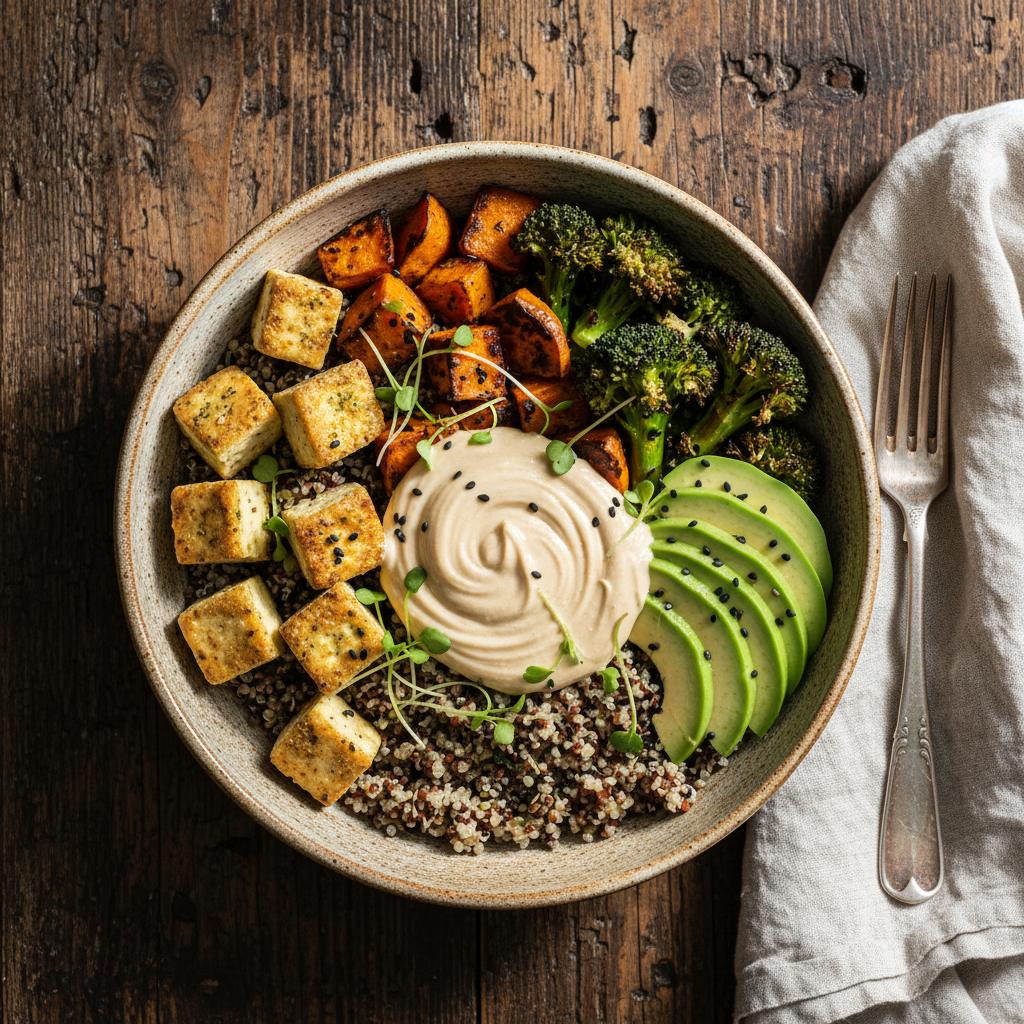
This vibrant, nutrient-packed Buddha Bowl features golden, crispy baked tofu, caramelized roasted vegetables, and fluffy quinoa, all brought together by a creamy, zesty lemon-tahini dressing. It is the perfect balance of protein, fiber, and flavor, making it an ideal choice for a healthy dinner or meal-prep lunch.
20 minutes
40 minutes
60 minutes
4 servings
Main Course
Roasting
American / Fusion
Vegan
In the world of modern wellness cooking, few dishes have captured the hearts (and stomachs) of food lovers quite like the Buddha Bowl. But this isn’t just another bowl of raw vegetables and bland grains; this is a symphony of textures and flavors designed to leave you feeling completely satisfied and energized. The magic of this specific recipe lies in the preparation of the components. We trade the often-soggy texture of standard tofu for a cornstarch-dusted, oven-baked version that achieves a satisfying crunch without deep frying. We pair this with a medley of sweet potatoes, broccoli, and red onions, roasted until their natural sugars caramelize, creating a depth of flavor that steamed vegetables simply cannot match.
What truly elevates this bowl from a simple salad to a gourmet experience is the dressing. A good Buddha Bowl requires a sauce that marries the disparate elements, and our signature Lemon-Tahini drizzle does exactly that. It is rich, nutty, bright with citrus, and savory with a hint of garlic. Whether you are a dedicated vegan, a gluten-free eater, or simply someone looking to incorporate more whole foods into your diet, this recipe checks every box. It is colorful, customizable, and incredibly photogenic, making it a Pinterest favorite for good reason. Prepare to embrace the ‘bowl life’ with a meal that nourishes your body and delights your palate in equal measure.
History & Origins
The term ‘Buddha Bowl’ has become ubiquitous in Western healthy eating culture over the last decade, but its origins are a fascinating blend of spiritual tradition and modern marketing. While there is no ancient text that defines a ‘Buddha Bowl’ recipe, the concept is widely believed to be inspired by the dietary practices of Buddhist monks. Specifically, it draws parallels to ‘Oryoki,’ a meditative form of eating in Zen Buddhism where monks use a set of bowls to eat simple, balanced meals. The name is also frequently attributed to the visual aesthetic of the bowl itself—packed so full of wholesome ingredients that it creates a rounded mound, resembling the belly of Hotei, the laughing Buddha often depicted in Chinese folklore.
Before they were Instagram stars, similar dishes were known as ‘Macro Bowls’ or ‘Hippie Bowls’ in the 1960s and 70s, popularized by the macrobiotic diet movement which emphasized locally sourced grains and vegetables. The term ‘Buddha Bowl’ really began to gain traction around 2013, coinciding with the rise of clean eating blogs and social media. It became a catch-all term for a one-dish meal consisting of small portions of several foods—usually a grain, a plant protein, raw and cooked vegetables, and a healthy fat source—arranged artfully rather than mixed together like a salad. Today, the Buddha Bowl represents a modern approach to balanced eating, focusing on abundance and variety rather than restriction.
Why This Recipe Works
This recipe succeeds where many others fail because it prioritizes texture and flavor balance over simple assembly. A common complaint with plant-based bowls is that they can feel monotonous or lack a savory ‘punch.’ We solve this first by treating the tofu with a specific two-step method: pressing out excess moisture and coating it in cornstarch and seasonings before baking. This creates a ‘skin’ that crisps up beautifully in the oven, mimicking the texture of fried tofu without the excess oil.
Secondly, we roast the vegetables at a high temperature (400°F). Many recipes suggest steaming or sautéing, but roasting is crucial here. It triggers the Maillard reaction, browning the edges of the sweet potatoes and onions, which adds a necessary sweetness and complexity to contrast the earthy quinoa. Finally, the dressing is formulated with the law of fat-acid-salt balance in mind. The tahini provides healthy fats and creaminess, the lemon juice cuts through the richness, and the maple syrup balances the slight bitterness of the sesame paste. When you combine the hot, crispy tofu, the warm roasted veggies, the neutral fluffy grains, and the cold, creamy sauce, you get a perfect bite every time.
Why You’ll Love This Recipe
- ✓High-protein vegan meal perfect for post-workout recovery
- ✓Naturally gluten-free ingredients suitable for sensitive diets
- ✓Excellent for meal prep; ingredients stay fresh for days
- ✓Customizable with whatever seasonal vegetables you have on hand
- ✓Features a homemade dressing better than store-bought alternatives
- ✓Achieves crispy tofu texture without deep frying
Equipment You’ll Need
- ✓Two large baking sheets
- ✓Tofu press (or heavy books and paper towels)
- ✓Medium saucepan for quinoa
- ✓High-speed blender or whisk for dressing
- ✓Parchment paper
- ✓Large mixing bowl
- ✓Chef’s knife
Ingredients
- ✓14 oz block extra-firm tofu, drained and pressed
- ✓1 tbsp cornstarch
- ✓1 tsp garlic powder
- ✓1/2 tsp smoked paprika
- ✓2 tbsp olive oil, divided
- ✓1 large sweet potato, peeled and cubed into 1-inch pieces
- ✓1 head broccoli, cut into florets
- ✓1 red onion, cut into wedges
- ✓1 cup quinoa, uncooked
- ✓2 cups vegetable broth or water
- ✓1/3 cup tahini (sesame seed paste)
- ✓1 large lemon, juiced (approx 3 tbsp)
- ✓1 tbsp maple syrup
- ✓1 clove garlic, minced
- ✓2-4 tbsp warm water (to thin dressing)
- ✓Salt and black pepper to taste
- ✓Optional garnishes: Avocado slices, sesame seeds, microgreens
Instructions
- Preheat your oven to 400°F (200°C) and line two large baking sheets with parchment paper.
- Wrap the tofu block in a clean kitchen towel or paper towels and place a heavy object on top (like a cast-iron skillet) to press out moisture for at least 15 minutes. Alternatively, use a tofu press.
- While tofu presses, rinse the quinoa thoroughly under cold water. Place in a saucepan with vegetable broth. Bring to a boil, then reduce heat to low, cover, and simmer for 15 minutes or until water is absorbed. Fluff with a fork and set aside.
- Cut the pressed tofu into 1-inch cubes. In a bowl, toss tofu with 1 tablespoon olive oil, cornstarch, garlic powder, smoked paprika, salt, and pepper until evenly coated.
- Arrange the tofu cubes in a single layer on one of the prepared baking sheets.
- On the second baking sheet, arrange the sweet potato cubes, broccoli florets, and red onion wedges. Drizzle with the remaining 1 tablespoon of olive oil and season generously with salt and pepper. Toss to coat.
- Place both baking sheets in the oven. Bake for 25-30 minutes. Halfway through (at the 15-minute mark), flip the tofu and toss the vegetables to ensure even browning.
- While the components roast, prepare the dressing. In a small bowl or jar, whisk together tahini, lemon juice, maple syrup, and minced garlic. The mixture may seize up and become thick; gradually whisk in warm water one tablespoon at a time until it reaches a pourable, creamy consistency. Season with salt to taste.
- Once vegetables are tender and tofu is golden and crispy, remove from oven.
- To assemble, divide the quinoa among four bowls. Top with sections of roasted vegetables and crispy tofu. Add fresh avocado if using.
- Drizzle generously with the lemon-tahini dressing and garnish with sesame seeds or microgreens before serving.
Expert Cooking Tips
- ✓Press the tofu thoroughly; removing water is the single most important step for achieving a crispy texture.
- ✓Do not overcrowd the baking sheet. If the vegetables are touching too much, they will steam instead of roast. Use a third pan if necessary.
- ✓Rinse your quinoa well before cooking to remove saponin, a natural coating that can make the grain taste bitter.
- ✓Cut all vegetable pieces to roughly the same size to ensure they cook at the same rate.
- ✓Make a double batch of the dressing; it stores well and tastes great on salads or as a dip for raw veggies.
- ✓If you want extra flavor on the tofu, marinate the cubes in soy sauce for 10 minutes before tossing in cornstarch.
- ✓Add the broccoli to the pan 5-10 minutes after the sweet potatoes if you prefer your broccoli to have more ‘bite’ and less char.
Substitutions and Variations
One of the best aspects of a Buddha Bowl is its versatility. If you don’t have quinoa, brown rice, farro, millet, or couscous make excellent grain bases. For a lower-carb option, swap the grains for cauliflower rice or a bed of leafy greens like kale or spinach. If you are avoiding soy, you can replace the tofu with chickpeas (roast them right alongside the veggies for a crunchy texture), tempeh, or even cooked lentils. For the vegetables, use whatever is in season: butternut squash, Brussels sprouts, bell peppers, cauliflower, or zucchini all work beautifully. In the dressing, almond butter or sunflower seed butter can be used in place of tahini for a different flavor profile, though tahini is the traditional choice. Agave nectar or honey (if not vegan) can substitute for maple syrup.
Common Mistakes to Avoid
The most common mistake is skipping the tofu pressing step, which results in soft, flavorless tofu cubes. Another frequent error is under-seasoning the individual components. Remember that the grains, veggies, and protein are cooked separately, so each needs to be seasoned with salt and pepper before assembly. Don’t rely solely on the dressing for flavor. Additionally, be careful not to overcook the quinoa; mushy grains can ruin the texture of the bowl. Finally, avoid dressing the entire batch if you plan to store leftovers. Once the dressing is on the bowl, the greens will wilt and the crispy tofu will soften, so always store the sauce separately.
Serving Suggestions
Serve these bowls warm or at room temperature. They are substantial enough to be a standalone meal, but they pair wonderfully with a side of miso soup or some fresh fruit for dessert. If you are serving this for a dinner party, set up a ‘Buddha Bowl Bar’ where guests can assemble their own bowls. Put the grains, protein, various roasted veggies, fresh toppings (like shredded carrots, cucumber, avocado), and the dressing in separate serving dishes. This allows everyone to customize their ratio of ingredients. A sprinkle of toasted pumpkin seeds or hemp hearts adds a nice nutritional boost and extra crunch right before eating.
Storage and Reheating Tips
This recipe is a meal prep champion. Store the roasted vegetables, tofu, and cooked quinoa in separate airtight containers in the refrigerator for up to 4-5 days. Keeping them separate maintains their distinct textures and flavors. The lemon-tahini dressing should be stored in a jar or small container and will last for up to a week; it may thicken in the fridge, so just stir in a teaspoon of water before using. To reheat, you can microwave the grains and veggies, or for best results, toss the tofu and veggies in an air fryer or oven at 350°F for 5-10 minutes to crisp them back up. The bowl can also be eaten cold, making it a perfect office lunch option.
Nutrition Facts (Estimated)
| Serving Size | 1 Bowl |
| Calories | 480 |
| Fat | 22g |
| Saturated Fat | 3g |
| Unsaturated Fat | 18g |
| Trans Fat | 0g |
| Cholesterol | 0mg |
| Sodium | 350mg |
| Carbohydrates | 52g |
| Fiber | 12g |
| Sugar | 6g |
| Protein | 24g |
Frequently Asked Questions
Can I make this recipe nut-free?
Yes, the recipe is naturally nut-free as tahini is made from sesame seeds. However, if you have a sesame allergy, you can substitute the tahini with sunflower seed butter.
Is this Buddha Bowl keto-friendly?
As written, it is not keto-friendly due to the quinoa, sweet potatoes, and maple syrup. To make it keto, swap the quinoa for cauliflower rice, replace sweet potatoes with roasted radishes or more broccoli, and omit the maple syrup in the dressing.
Why is my tofu not getting crispy?
This usually happens if the tofu wasn’t pressed long enough or if the oven wasn’t hot enough. Ensure you remove as much water as possible and use cornstarch, which absorbs surface moisture and aids browning.
Can I freeze this meal?
The quinoa and roasted sweet potatoes freeze reasonably well, but roasted broccoli and tofu tend to change texture significantly when frozen and thawed (becoming spongy or mushy). It is best enjoyed fresh or from the fridge.
What other dressings work with this bowl?
If you don’t like tahini, a peanut sauce, a ginger-miso dressing, or a simple balsamic vinaigrette all pair wonderfully with roasted vegetables and tofu.
Do I have to peel the sweet potatoes?
No, peeling is optional. The skin contains fiber and nutrients. If you leave the skin on, just make sure to scrub the potatoes thoroughly before chopping.
How do I know when the quinoa is done?
Quinoa is done when the water is fully absorbed, the grain has become translucent, and the little white spiral germ has separated and is visible.
Can I use frozen vegetables?
You can, but fresh vegetables roast much better. Frozen vegetables have high water content and tend to steam in the oven, resulting in a softer, less caramelized texture.
Conclusion
The Buddha Bowl with Tofu and Roasted Vegetables is more than just a trend; it is a testament to how delicious simple, whole foods can be when prepared with care. By combining the crunch of the oven-baked tofu, the sweetness of caramelized root vegetables, and the creamy richness of the tahini dressing, you create a meal that satisfies every craving while fueling your body with essential nutrients. Whether you are whipping this up for a quick weeknight dinner or prepping lunches for the week ahead, this recipe is sure to become a staple in your kitchen rotation. Enjoy the process of building your bowl and the vibrant flavors in every bite!