Velvety Roasted Butternut Squash Ginger Soup: A Healing Bowl of Comfort
Butternut Squash Ginger Soup Healthy Recipe
This creamy, dairy-free Butternut Squash Ginger Soup is the ultimate cozy meal for chilly days. Packed with anti-inflammatory ingredients and roasted to caramelized perfection, it offers a sophisticated balance of sweet, spicy, and savory flavors that comes together in under an hour.
15 minutes
40 minutes
55 minutes
4 servings
Soup
Roasting and Blending
American Fusion
Vegan
As the leaves begin to turn and a crisp chill settles into the air, there is nothing quite as inviting as a steaming bowl of soup that glows with the vibrant hues of autumn. This Butternut Squash Ginger Soup is more than just a meal; it is a sensory experience that wraps you in warmth and comfort. The recipe begins with the humble butternut squash, a winter staple known for its dense, sweet flesh and nutritional prowess. By roasting the squash rather than boiling it, we unlock a depth of flavor that is nutty, rich, and intensely caramelized, providing a robust foundation that simply cannot be achieved through stovetop simmering alone.
However, the true magic of this dish lies in the pairing. Ginger, with its zesty, peppery bite, acts as the perfect foil to the natural sugars of the squash. It cuts through the creaminess, awakening the palate and adding a layer of complexity that transforms a simple vegetable soup into a gourmet delight. We elevate the texture with full-fat coconut milk, creating a velvety consistency that rivals any heavy cream-based chowder, keeping the recipe entirely vegan and gluten-free without sacrificing luxury.
This soup is designed to be a healing tonic as much as a dinner centerpiece. Both squash and ginger are celebrated for their immune-boosting properties, making this the ideal recipe for flu season or whenever you need a nutritional reset. Whether you are serving it as an elegant starter for a holiday feast or enjoying a quiet bowl on a rainy Tuesday night, this recipe promises to nourish your body and soothe your soul with every spoonful.
History & Origins
The story of butternut squash soup is a journey that spans continents and millennia, rooting itself deeply in the agricultural history of the Americas while borrowing aromatic traditions from across the globe. Butternut squash, a variety of winter squash (Cucurbita moschata), traces its ancestry back to the indigenous peoples of Central and North America. For thousands of years, squash was one of the ‘Three Sisters’—alongside maize (corn) and climbing beans—crops that were interplanted to support each other’s growth. The word ‘squash’ itself comes from the Narragansett word ‘askutasquash,’ meaning ‘eaten raw or uncooked,’ though culinary practices evolved to favor cooking these dense gourds.
The specific variety we know today as ‘butternut’ is actually a relatively modern cultivar, developed in Massachusetts in the 1940s by Charles Leggett. He sought to create a squash that was small enough for a family meal but had a smooth skin that was easier to peel than the knobby Hubbard squash. He named it ‘butternut’ because he described its texture as smooth as butter and sweet as a nut.
Ginger, conversely, hails from the lush tropical jungles of Southeast Asia. It was one of the first spices to be exported from the Orient to the Western world via the ancient spice routes. For centuries, it was prized not just for its flavor but for its medicinal value in Ayurvedic and Traditional Chinese Medicine. The marriage of New World squash and Old World ginger is a testament to modern fusion cuisine. While traditional colonial recipes might have paired squash with maple syrup or savory herbs like sage, the introduction of ginger, turmeric, and coconut milk reflects a globalized palate that emerged in the late 20th century, focusing on bold flavors and functional foods that promote health and vitality.
Why This Recipe Works
This recipe succeeds because it relies on the fundamental principles of flavor balancing and textural contrast. Many butternut squash soups suffer from being one-dimensional—overly sweet and heavy. This recipe corrects that by introducing specific counterpoints. First, the technique of roasting the squash, onions, and garlic is non-negotiable. Roasting induces the Maillard reaction, browning the vegetables and concentrating their natural sugars, which creates a savory depth that boiling water simply washes away.
Secondly, the inclusion of fresh ginger provides a necessary ‘heat’ that isn’t spicy in the way a chili pepper is, but rather warming and aromatic. This heat cuts through the density of the squash starch. To balance the sweetness of the roasted vegetables, we incorporate a splash of acid—typically lime juice or apple cider vinegar—right at the end. This acid brightens the entire profile, making the flavors pop rather than sitting heavy on the tongue.
Finally, the texture is optimized through the use of fat. While the squash provides body, the addition of coconut milk adds a luxurious mouthfeel known as ‘satiety.’ The fats in the coconut milk emulsify with the vegetable broth and squash fiber to create a suspension that is silky and smooth. We also layer spices like turmeric and a hint of cinnamon to bridge the gap between the savory aromatics and the sweet vegetable base, resulting in a complex, restaurant-quality flavor profile.
Why You’ll Love This Recipe
- ✓Naturally Vegan and Gluten-Free
- ✓Rich in Vitamin A and antioxidants
- ✓Roasting method maximizes flavor depth
- ✓Freezer-friendly for easy meal prep
- ✓Ready in under an hour
- ✓Perfect balance of sweet, spicy, and savory
Equipment You’ll Need
- ✓Large rimmed baking sheet
- ✓High-speed blender or immersion blender
- ✓Large soup pot or Dutch oven
- ✓Chef’s knife
- ✓Cutting board
- ✓Peeler
Ingredients
- ✓1 large butternut squash (about 3 lbs), peeled, seeded, and cubed
- ✓1 large yellow onion, cut into wedges
- ✓4 cloves garlic, peeled
- ✓2 tablespoons olive oil
- ✓1 tablespoon fresh ginger, grated or minced
- ✓1/2 teaspoon ground turmeric
- ✓1/4 teaspoon ground cinnamon
- ✓1/8 teaspoon cayenne pepper (optional)
- ✓4 cups vegetable broth (low sodium preferred)
- ✓1 can (13.5 oz) coconut milk (full fat for creaminess, or light)
- ✓1 tablespoon maple syrup
- ✓1 tablespoon fresh lime juice
- ✓Salt and freshly ground black pepper to taste
- ✓Garnish: Toasted pumpkin seeds (pepitas), cilantro, chili flakes
Instructions
- Preheat your oven to 400°F (200°C). Line a large baking sheet with parchment paper for easy cleanup.
- Place the cubed butternut squash, onion wedges, and whole garlic cloves on the baking sheet. Drizzle with olive oil and season generously with salt and pepper. Toss with your hands to ensure everything is evenly coated.
- Roast in the preheated oven for 35-40 minutes, or until the squash is tender and the edges are beginning to brown and caramelize. Toss halfway through roasting to prevent burning.
- While the vegetables are roasting, peel and grate the fresh ginger.
- Once the vegetables are done, transfer them carefully into a large soup pot or Dutch oven. (If using a standard blender, you can transfer them directly to the blender, but work in batches).
- Add the grated ginger, turmeric, cinnamon, and cayenne pepper to the vegetables.
- Pour in the vegetable broth. Bring the mixture to a gentle simmer over medium heat to allow the flavors to meld for about 5 minutes.
- Remove the pot from heat. Stir in the coconut milk and maple syrup.
- Use an immersion blender to puree the soup directly in the pot until it is completely smooth and creamy. If using a standard blender, transfer the soup carefully in batches (do not fill more than halfway) and blend, venting the lid to allow steam to escape.
- Return the smooth soup to low heat if it cooled down too much. Stir in the fresh lime juice.
- Taste and adjust seasoning. Add more salt, pepper, or maple syrup depending on the sweetness of your squash.
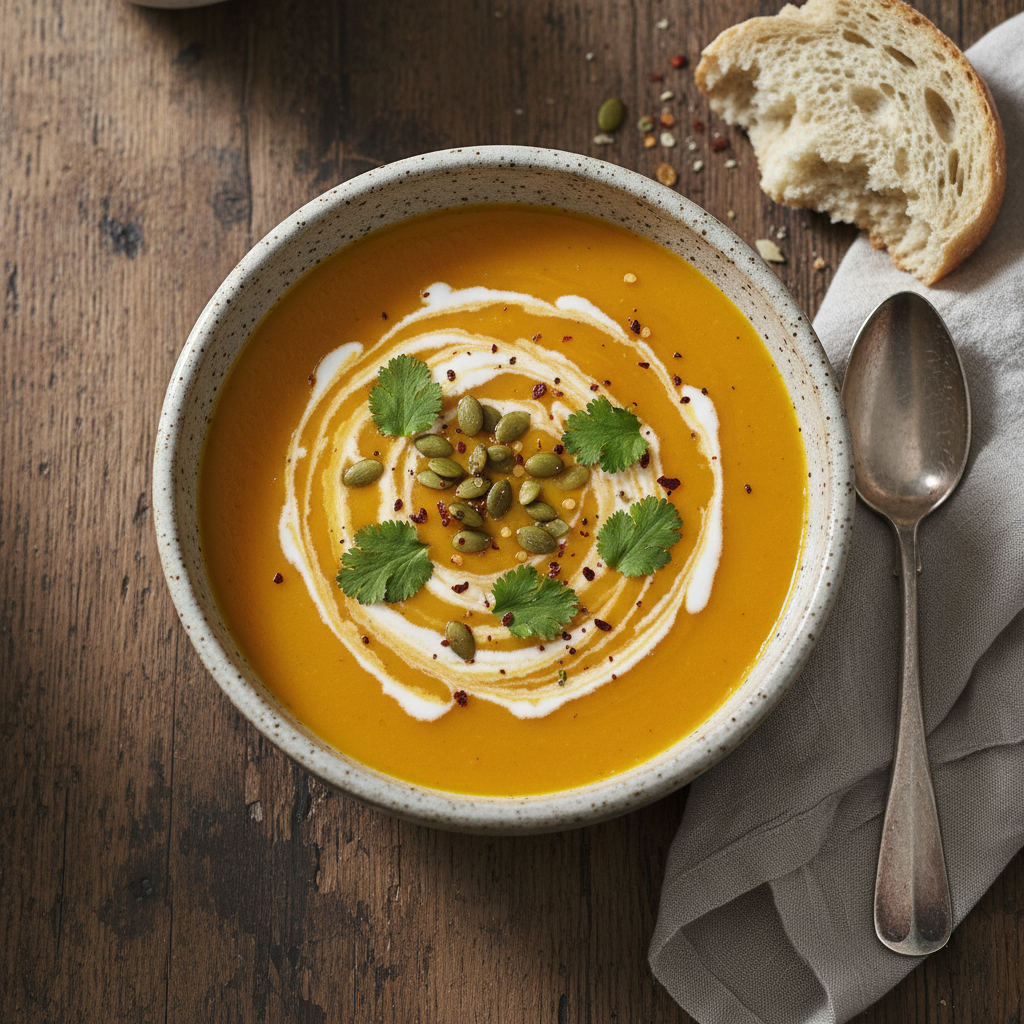
- Ladle into bowls and garnish with a swirl of coconut milk, toasted pumpkin seeds, fresh cilantro, and a pinch of chili flakes.
Expert Cooking Tips
- ✓Don’t skip the roasting step; boiling the squash will result in a watery, bland soup.
- ✓If your garlic cloves are small, leave them in their skins to roast, then squeeze the soft garlic out afterwards to prevent burning.
- ✓For an ultra-silky texture, pass the blended soup through a fine-mesh sieve.
- ✓Use full-fat canned coconut milk for the richest flavor; carton coconut milk is too watery.
- ✓Adjust the ginger to your taste; add it during the blending phase for a sharper, spicier kick.
- ✓If the soup is too thick, thin it out with a little extra broth or water until desired consistency is reached.
- ✓To peel a butternut squash easily, slice off the bottom and top first to create a stable base, then use a Y-peeler.
Substitutions and Variations
This recipe is incredibly versatile and forgiving. If you don’t have butternut squash, you can easily substitute it with sugar pumpkins, kabocha squash, or even sweet potatoes, though the flavor profile will shift slightly towards earthier notes with sweet potatoes. For the liquid base, chicken broth can be used if you are not strictly vegan, but a high-quality vegetable stock is recommended to keep the flavors clean. If you dislike coconut milk or have an allergy, you can use heavy cream, half-and-half, or oat milk for a creamy texture. Cashew cream is another excellent vegan alternative that mimics the richness of dairy. In terms of aromatics, if you don’t have fresh ginger, you can use 1 teaspoon of ground ginger, though fresh provides a much brighter zing. The maple syrup can be swapped for honey or agave nectar, or omitted entirely if the squash is particularly sweet.
Common Mistakes to Avoid
The most common mistake when making squash soup is under-seasoning. Squash is naturally sweet and dense, so it absorbs a lot of salt. If your soup tastes flat, it likely needs more salt or a hit of acid (lime juice) to wake it up. Another error is burning the garlic during the roasting process. Garlic roasts much faster than squash; if your cloves are peeled, tuck them under the squash cubes or add them to the tray during the last 15 minutes of roasting. Additionally, be careful when blending hot liquids in a standard blender. If you overfill the blender and don’t allow steam to escape, the pressure can blow the lid off and cause burns. Always fill halfway and remove the center cap of the lid, covering it with a kitchen towel. Finally, don’t use ‘lite’ coconut milk if you want a restaurant-style texture; the fat is necessary for that luxurious mouthfeel.
Serving Suggestions
This soup is substantial enough to be a light meal on its own but pairs beautifully with various sides. Serve it with a slice of crusty sourdough bread or warm naan to dip into the creamy broth. For a soup-and-salad combo, pair it with a crisp kale salad with apples and pecans or a bitter radicchio salad to contrast the soup’s sweetness. To elevate the presentation for a dinner party, serve the soup in hollowed-out small pumpkins or squash bowls. Garnish is key for texture; crunchy croutons, roasted chickpeas, or toasted pumpkin seeds add a necessary bite to the smooth puree.
Storage and Reheating Tips
This soup stores wonderfully, making it a prime candidate for meal prep. Allow the soup to cool completely before transferring it to an airtight container. It will keep in the refrigerator for up to 5 days. When reheating, do so gently over low heat on the stove or in the microwave, stirring occasionally. You may need to add a splash of water or broth as the soup tends to thicken when chilled. For freezing, pour the cooled soup into freezer-safe bags or containers, leaving about an inch of space for expansion. It freezes well for up to 3 months. Thaw overnight in the refrigerator before reheating. Note that the coconut milk may separate slightly upon thawing; simply blend it briefly or whisk vigorously while reheating to re-emulsify.
Nutrition Facts (Estimated)
| Serving Size | 1.5 cups |
| Calories | 280 |
| Fat | 14g |
| Saturated Fat | 8g |
| Unsaturated Fat | 5g |
| Trans Fat | 0g |
| Cholesterol | 0mg |
| Sodium | 450mg |
| Carbohydrates | 32g |
| Fiber | 6g |
| Sugar | 9g |
| Protein | 4g |
Frequently Asked Questions
Can I use frozen butternut squash?
Yes, you can use frozen cubed butternut squash to save time on peeling and chopping. However, frozen squash tends to hold more water. You can still roast it, but it may not caramelize as well as fresh squash. You might need to roast it slightly longer to evaporate the excess moisture.
Is this soup spicy?
It has a gentle warmth from the ginger and a tiny kick from the cayenne, but it is not ‘hot’ spicy. If you are sensitive to spice, omit the cayenne pepper and start with half the amount of ginger, adding more to taste.
Can I make this in a slow cooker?
Absolutely. Place the peeled and cubed raw squash, onion, garlic, ginger, spices, and broth in the slow cooker. Cook on low for 6-8 hours or high for 3-4 hours until tender. Stir in the coconut milk and maple syrup, then blend until smooth.
Do I have to peel the squash?
Yes, butternut squash skin is tough and unpalatable in a smooth soup. However, if you are roasting the squash whole or in halves, you can scoop the flesh out of the skin after roasting, avoiding the need to peel it raw.
Why is my soup grainy?
Graininess usually happens if the squash wasn’t cooked until completely tender or if the blender wasn’t run long enough. High-speed blenders produce the smoothest results. If it’s still grainy, pass it through a fine-mesh sieve.
What can I use instead of a blender?
An immersion blender (stick blender) is the easiest tool as you can blend right in the pot. If you have neither, you can use a food mill or a potato masher for a more rustic, chunky texture, though it won’t be silky smooth.
Is this recipe Whole30 compliant?
To make this Whole30 compliant, simply omit the maple syrup. The squash is naturally sweet enough, and the coconut milk is allowed on the Whole30 diet.
Can I add protein to this soup?
Yes! Crispy bacon bits, shredded rotisserie chicken, or roasted chickpeas make excellent protein-rich toppings. You could also blend in some red lentils that have been simmered in the broth for added plant-based protein.
Conclusion
There are few dishes as rewarding to make as this Roasted Butternut Squash Ginger Soup. It transforms simple, wholesome ingredients into a meal that feels luxurious and restorative. The interplay of the sweet roasted squash with the zing of fresh ginger and the richness of coconut milk creates a flavor profile that is both comforting and exciting. Whether you are looking for a healthy weeknight dinner, a festive holiday starter, or a meal prep staple to get you through a busy week, this soup delivers on all fronts. Gather your ingredients, turn on the oven, and get ready to enjoy a bowl of pure, golden sunshine.