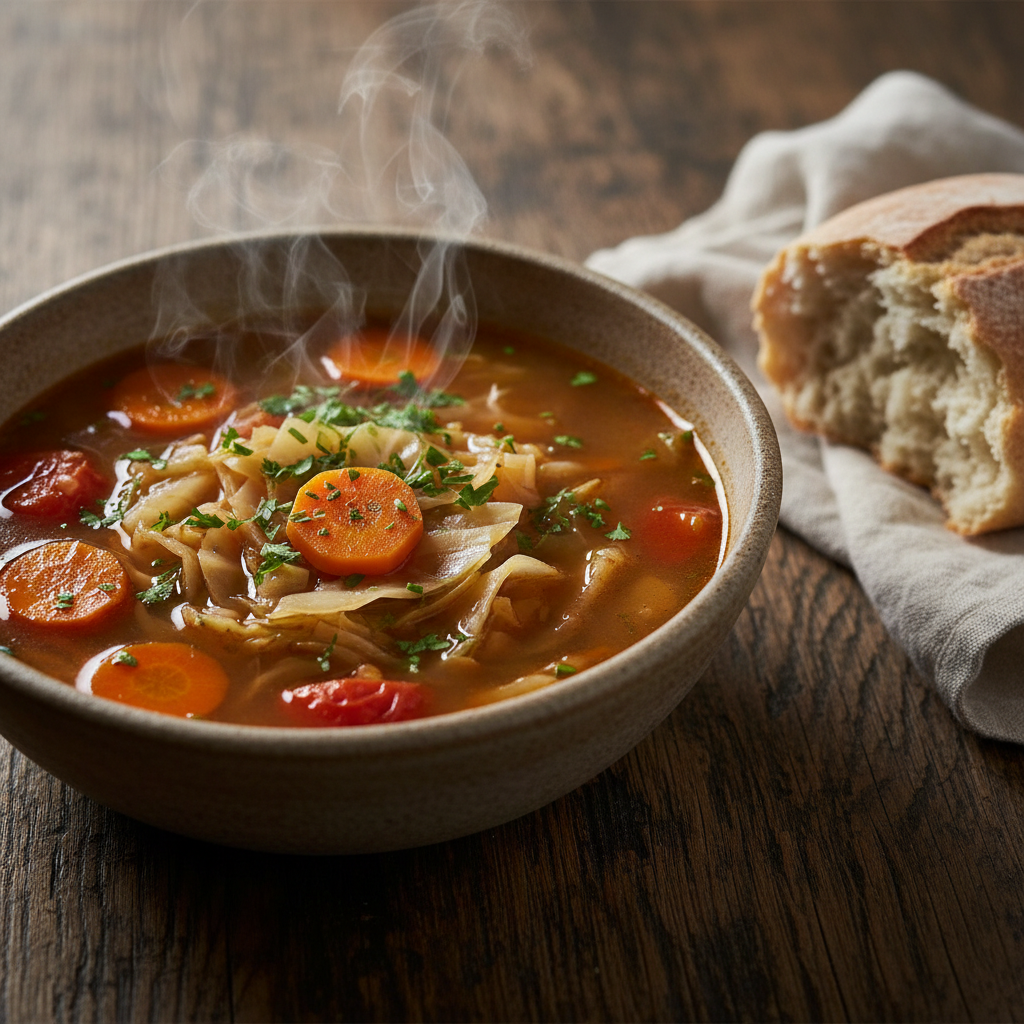
Hearty Cabbage Soup With Carrots And Tomatoes: The Ultimate Healthy Comfort Bowl
Cabbage Soup With Carrots And Tomatoes Healthy Recipe
Discover the perfect balance of nutrition and flavor with this vibrant Cabbage Soup with Carrots and Tomatoes. Packed with antioxidants and wholesome veggies, this low-calorie, detox-friendly bowl is ready in under an hour and tastes even better the next day.
15 minutes
35 minutes
50 minutes
6 servings
Soup
Stovetop
American / European Fusion
Vegan
There is something undeniably healing about a steaming bowl of vegetable soup, and this Cabbage Soup with Carrots and Tomatoes is the epitome of wholesome comfort food. Often, cabbage soup gets a bad reputation for being bland or overly diet-focused, a relic of the fad diets from decades past. However, this recipe completely reinvents the classic by focusing on building layers of flavor rather than just boiling vegetables in water. We start with a robust aromatic base of onions and garlic, sautéed until golden to release their natural sugars. The addition of sweet carrots provides a crucial counterpoint to the earthiness of the cabbage, while the acidity from the tomatoes brightens the entire pot, ensuring that every spoonful is zesty and satisfying rather than flat.
Beyond its incredible taste, this soup is a nutritional powerhouse. It is loaded with fiber, Vitamin C, and Vitamin K, making it an excellent choice for immune support during the colder months or a light, revitalizing meal during the summer. The texture plays a huge role here too; by slicing the cabbage into thin ribbons and dicing the carrots just right, we achieve a mouthfeel that is tender yet retains a pleasant bite. Whether you are looking to reset your digestive system, seeking a low-calorie dinner option that actually leaves you full, or simply craving a rustic, homemade meal that warms you from the inside out, this recipe delivers on all fronts. It is a testament to the fact that simple, humble ingredients, when treated with care, can transform into a gourmet experience right in your own kitchen.
History & Origins
Cabbage soup has a storied history that spans centuries and crosses numerous cultural boundaries. Historically, cabbage was one of the few vegetables that could be easily grown in harsh climates and stored through long winters, making it a staple ingredient for peasant populations across Europe. From the Russian ‘Shchi’ to the Polish ‘Kapuśniak’ and the French ‘Soupe aux Choux,’ cabbage soup has nourished generations of families, serving as a reliable source of sustenance when meat and other luxuries were scarce. In many Eastern European traditions, these soups were often fermented using sauerkraut to preserve the harvest, adding a distinct sour profile that is still cherished today.
In the United States, cabbage soup gained a different kind of notoriety in the mid-to-late 20th century with the emergence of the ‘Cabbage Soup Diet.’ This rapid weight-loss regimen popularized a very basic, often under-seasoned version of the dish, leading many to associate it solely with deprivation and dieting. However, the culinary roots of this dish are far richer than a 7-day diet plan. The specific combination of cabbage with carrots and tomatoes leans heavily on Mediterranean and Eastern European influences, where the sweetness of root vegetables and the umami of tomatoes are used to round out the sulfurous notes of the brassica. Today, modern chefs and home cooks are reclaiming cabbage soup, moving away from the diet-culture version and back towards its roots as a hearty, flavorful, and deeply satisfying meal that celebrates the inherent deliciousness of garden-fresh produce.
Why This Recipe Works
The success of this Cabbage Soup with Carrots and Tomatoes lies in the scientific interplay of flavors and textures. Cabbage, by nature, contains sulfur compounds that can become pungent and bitter if boiled plain. This recipe circumvents that issue through two main techniques: sautéing and acid balancing. By sweating the onions, carrots, and celery (the mirepoix) in olive oil first, we develop a sweet, savory foundation that permeates the broth. The fat from the oil is essential for carrying fat-soluble vitamins (A, D, E, and K) and flavor compounds that water alone cannot transmit.
Furthermore, the inclusion of tomatoes is not just for color; the natural acidity in tomatoes neutralizes the bitterness of the cabbage and softens its fibrous texture without turning it into mush. The carrots bring a necessary earthiness and sugar content that highlights the natural sweetness of the cooked cabbage. We also use a mix of dried herbs like thyme and oregano early in the cooking process, allowing their oils to bloom, while finishing with fresh parsley to provide a grassy, fresh top note. This multi-layered approach ensures that the soup tastes complex and aged, even though it comes together in under an hour. It is a recipe that respects the integrity of each vegetable, allowing them to shine individually while creating a harmonious, cohesive broth.
Why You’ll Love This Recipe
- ✓Packed with immune-boosting Vitamin C and antioxidants.
- ✓Low in calories but high in fiber for sustained satiety.
- ✓Uses affordable, pantry-staple ingredients available year-round.
- ✓Freezes beautifully, making it perfect for meal prep.
- ✓Naturally gluten-free, dairy-free, and vegan-friendly.
- ✓Versatile base that welcomes added proteins like beans or chicken.
Equipment You’ll Need
- ✓Large Dutch oven or heavy-bottomed soup pot
- ✓Chef’s knife
- ✓Large cutting board
- ✓Wooden spoon or heat-resistant spatula
- ✓Measuring cups and spoons
- ✓Can opener
Ingredients
- ✓2 tablespoons extra virgin olive oil
- ✓1 large yellow onion, diced
- ✓3 large carrots, peeled and sliced into rounds
- ✓2 stalks celery, diced
- ✓4 cloves garlic, minced
- ✓1 small head green cabbage, cored and chopped into 1-inch pieces (approx. 6-8 cups)
- ✓1 can (14.5 oz) diced tomatoes, undrained
- ✓1 can (8 oz) tomato sauce
- ✓6 cups low-sodium vegetable broth (or chicken broth if not vegan)
- ✓1 teaspoon dried thyme
- ✓1 teaspoon dried oregano
- ✓1/2 teaspoon smoked paprika
- ✓1 bay leaf
- ✓Salt and freshly cracked black pepper, to taste
- ✓1 tablespoon fresh lemon juice
- ✓1/4 cup fresh parsley, chopped (for garnish)
Instructions
- Prepare all your vegetables by washing, peeling, and chopping them as indicated in the ingredients list. Uniform chopping ensures even cooking.
- Place a large Dutch oven or soup pot over medium heat and add the olive oil. Once the oil is shimmering, add the diced onion, carrots, and celery.
- Sauté the vegetables for about 5-7 minutes, stirring occasionally, until the onions are translucent and the carrots begin to soften.
- Add the minced garlic, dried thyme, dried oregano, and smoked paprika to the pot. Cook for another 1 minute, stirring constantly to prevent the garlic from burning, until the mixture is fragrant.
- Stir in the chopped cabbage and cook for 2-3 minutes, allowing it to wilt slightly and coat in the aromatic oils.
- Pour in the diced tomatoes (with their juices), tomato sauce, and vegetable broth. Add the bay leaf. Stir well to combine all ingredients.
- Increase the heat to high and bring the soup to a rolling boil. Once boiling, reduce the heat to low, cover the pot with a lid, and let it simmer for 20-25 minutes. The cabbage should be tender but not mushy.
- Remove the pot from the heat. Discard the bay leaf. Stir in the fresh lemon juice to brighten the flavors.
- Taste the soup and season generously with salt and freshly cracked black pepper according to your preference.
- Ladle the hot soup into bowls and garnish with fresh chopped parsley. Serve immediately with crusty bread or crackers.
Expert Cooking Tips
- ✓Don’t skip the sauté step; browning the onions and carrots builds the flavor foundation.
- ✓Cut the cabbage into uniform pieces to ensure every bite is cooked perfectly.
- ✓Use high-quality vegetable broth, as it is the main liquid component and heavily influences the final taste.
- ✓If you prefer a spicier kick, add a pinch of red pepper flakes along with the garlic.
- ✓Add the lemon juice at the very end; cooking lemon juice too long can make it turn bitter.
- ✓For a richer flavor, you can add a parmesan rind to the broth while it simmers (if not vegan).
Substitutions and Variations
This recipe is incredibly flexible and forgiving, allowing for numerous substitutions based on dietary needs or pantry availability. If you don’t have green cabbage, Savoy cabbage or Napa cabbage are excellent alternatives; Savoy is more tender and mild, while Napa cooks down faster, so adjust simmer times accordingly. Red cabbage can be used, but be aware it will turn the broth a deep purple color. For the liquid base, chicken broth or beef bone broth can replace vegetable broth if you want added protein and collagen. If you are out of canned tomato sauce, you can substitute it with two tablespoons of tomato paste sautéed with the garlic to deepen the flavor. The vegetables can also be varied; parsnips or sweet potatoes make great substitutes or additions to carrots for a sweeter profile, while zucchini or green beans can be added in the last 10 minutes of cooking for extra texture. For a protein boost, feel free to toss in a can of rinsed kidney beans, chickpeas, or even cooked shredded chicken or turkey sausage.
Common Mistakes to Avoid
A common mistake when making cabbage soup is overcooking the vegetables until they turn into an unappetizing mush. It is crucial to simmer the soup just until the cabbage is tender-crisp or soft but still holding its shape. Another pitfall is under-seasoning. Cabbage and potatoes soak up a lot of salt, so don’t be afraid to taste and adjust the seasoning at the end; the lemon juice is a secret weapon here that mimics saltiness and enhances flavor without adding sodium. Many cooks also simply dump all ingredients into the pot and boil them; failing to sauté the aromatics (onions, garlic, spices) in oil first results in a flat, one-dimensional flavor profile. Lastly, avoid using a broth that you wouldn’t enjoy drinking on its own, as the broth concentrates as it cooks. If your broth is low quality, your soup will be too.
Serving Suggestions
This Cabbage Soup with Carrots and Tomatoes is versatile enough to be a light lunch or a hearty dinner. To make it a full meal, serve it alongside a slice of crusty sourdough bread or a warm garlic baguette for dipping. For a gluten-free option, a side of brown rice or quinoa stirred directly into the bowl adds a lovely texture and extra fiber. If you want to add a touch of luxury, a dollop of sour cream, Greek yogurt, or a drizzle of high-quality olive oil on top just before serving works wonders. A sprinkle of grated Parmesan or Pecorino Romano cheese adds a savory umami punch. For those who like heat, serving with a side of hot sauce or chili oil allows guests to customize their spice level. It pairs beautifully with a simple grilled cheese sandwich or a crisp green salad with a vinaigrette dressing.
Storage and Reheating Tips
This soup is one of those magical dishes that tastes even better the next day, making it a prime candidate for meal prepping. To store, let the soup cool completely to room temperature before transferring it to airtight containers. It will keep well in the refrigerator for up to 5 days. For longer storage, this soup freezes exceptionally well. Portion the cooled soup into freezer-safe bags or containers, leaving about an inch of space at the top for expansion, and freeze for up to 3 months. When ready to eat, thaw the soup overnight in the refrigerator or use the defrost setting on your microwave. Reheat gently on the stovetop over medium heat until warmed through. You may need to add a splash of water or broth if the soup has thickened significantly during storage.
Nutrition Facts (Estimated)
| Serving Size | 1.5 cups |
| Calories | 110 |
| Fat | 3g |
| Saturated Fat | 0.5g |
| Unsaturated Fat | 2.5g |
| Trans Fat | 0g |
| Cholesterol | 0mg |
| Sodium | 450mg |
| Carbohydrates | 18g |
| Fiber | 5g |
| Sugar | 6g |
| Protein | 3g |
Frequently Asked Questions
Can I use red cabbage instead of green cabbage?
Yes, you can absolutely use red cabbage. However, keep in mind that the pigments in red cabbage will leach into the broth, turning the entire soup a dark purple or blueish hue. The flavor will remain largely the same, perhaps slightly earthier.
Is this soup suitable for the ‘Cabbage Soup Diet’?
Yes, this recipe is low in calories, fat-free (if oil is minimized), and high in fiber, making it compatible with the principles of the Cabbage Soup Diet. However, this version is much more flavorful and nutrient-dense than the traditional bland recipe associated with the diet.
Can I make this in a slow cooker or Instant Pot?
Definitely. For a slow cooker, sauté the aromatics first, then add everything to the slow cooker and cook on Low for 6-8 hours or High for 3-4 hours. For the Instant Pot, sauté in the pot, add ingredients, seal, and cook on High Pressure for 5 minutes, followed by a quick release.
How can I add more protein to this soup?
To boost protein without altering the flavor too much, add a can of drained and rinsed white beans (cannellini or Great Northern) or chickpeas. For meat eaters, adding cooked ground turkey, shredded chicken breast, or slices of lean sausage works beautifully.
My soup tastes bland, what should I do?
If the soup tastes flat, it likely needs more salt or acid. Try adding another pinch of salt and a squeeze of fresh lemon juice or a splash of apple cider vinegar. The acid wakes up the flavors of the vegetables.
Do I have to peel the carrots?
It is recommended to peel the carrots for a smoother texture and brighter color. However, if you scrub them very well to remove all dirt, you can leave the skins on for extra rustic texture and nutrients.
Can I use frozen vegetables?
Yes, frozen carrots, onions, or mixed vegetable blends can be used to save time. Add them at the stage where you would add the broth, as they don’t need as much sautéing time as fresh raw vegetables.
Is this recipe gluten-free?
Yes, as written, this recipe is naturally gluten-free. Just ensure that your vegetable broth and any canned tomato products are certified gluten-free to avoid hidden additives.
Conclusion
Cabbage Soup with Carrots and Tomatoes is more than just a healthy meal; it’s a comforting embrace in a bowl that proves nutritious food doesn’t have to be boring. With its vibrant colors, rich flavors, and flexible nature, it earns its place as a staple in any home cook’s rotation. Whether you are looking to warm up on a chilly evening, trying to eat a bit lighter after the holidays, or simply needing a way to use up that head of cabbage in the fridge, this recipe is your answer. We hope this soup brings warmth and wellness to your table. Don’t forget to make a double batch—your future self will thank you for the delicious, ready-to-eat leftovers!