Velvety Garlic Parmesan Cauliflower Mash: The Ultimate Low-Carb Comfort Side
Cauliflower Mash With Garlic And Parmesan Recipe
Discover the creamy, decadent secret to low-carb comfort food with this Garlic Parmesan Cauliflower Mash. Infused with roasted garlic notes and nutty parmesan, this velvety side dish rivals traditional mashed potatoes and is ready in under 30 minutes.
10 minutes
15 minutes
25 minutes
4 servings
Side Dish
Stovetop / Blending
American / Italian-Inspired
Gluten-Free
If you have ever looked at a head of cauliflower and doubted its ability to provide the same soul-soothing comfort as a bowl of mashed potatoes, this recipe is here to change your mind forever. For years, cauliflower was the overlooked vegetable on the crudité platter, but in the modern culinary landscape, it has emerged as a superstar shapeshifter. This Garlic Parmesan Cauliflower Mash is not just a healthy alternative; it is a stand-alone triumph of flavor and texture. The secret lies in the preparation—steaming the florets to preserve their integrity and blending them with a rich combination of butter, cream cheese, and aged Parmesan. The result is a side dish so incredibly smooth and flavorful that you might just forget about starchy potatoes altogether. The roasted garlic adds a sweet, savory depth that permeates every bite, while the sharp Parmesan provides a salty kick that elevates the mild vegetable into gourmet territory. Whether you are following a ketogenic diet, looking to reduce your carb intake, or simply wanting to introduce more vegetables to your family’s dinner table without sacrificing flavor, this mash is the solution. It pairs beautifully with everything from seared steak and roast chicken to braised short ribs, soaking up sauces and gravies with ease. Get ready to experience a texture so luxurious and a flavor profile so satisfying that this cauliflower mash will earn a permanent spot in your weekly meal rotation.
History & Origins
The history of cauliflower is as layered as the vegetable itself. Originating in the Asia Minor region, likely Cyprus, cauliflower was described by Arab botanists in the 12th and 13th centuries. It eventually made its way to Europe, gaining popularity in Italy around the 16th century before spreading to France and England. For centuries, it was prepared simply—often boiled or stewed. However, the concept of ‘mashing’ cauliflower is a relatively recent culinary innovation, born largely out of the low-carb and ketogenic diet movements of the early 21st century. As health-conscious cooks sought substitutes for high-glycemic white potatoes, they discovered that cauliflower, when cooked and pureed, mimics the starchy texture of potatoes remarkably well. The addition of garlic and cheese is a nod to traditional European techniques of enriching simple vegetable purees, particularly the French ‘purée de chou-fleur,’ which was often laden with heavy cream. In the United States, the cauliflower boom of the 2010s saw this humble brassica transform into pizza crusts, rice, and gnocchi, but the mash remains the most enduring and beloved application. It represents a modern shift in home cooking where vegetables are no longer just a side thought but are manipulated to provide the comfort food experience previously reserved for grains and starches.
Why This Recipe Works
This recipe succeeds where many other cauliflower mash recipes fail because it specifically addresses the two biggest complaints about the dish: a watery texture and a bland flavor. First, we utilize a steaming method rather than boiling. Boiling cauliflower saturates the florets with excess water, leading to a soupy, unappetizing mash that cannot hold its shape. By steaming, we cook the vegetable until tender while keeping it relatively dry. Furthermore, we incorporate a crucial step of letting the steam evaporate from the cooked cauliflower before blending, ensuring a dense, potato-like consistency. Flavor-wise, cauliflower is a blank canvas. This recipe uses a two-pronged approach to seasoning. We use fresh garlic sautéed in butter to infuse the fat with aromatics before it even touches the cauliflower. Secondly, the inclusion of cream cheese is non-negotiable; it acts as a stabilizer, adding a thick, velvety body that butter and milk alone cannot achieve. Finally, the Parmesan cheese adds umami and saltiness, masking the sometimes sulfurous undertones of the brassica family. The high-speed blending process aerates the mixture, creating a light, whipped texture that feels indulgent on the palate.
Why You’ll Love This Recipe
- ✓Low-carb and keto-friendly alternative to mashed potatoes
- ✓Ready in under 30 minutes
- ✓Rich and creamy texture thanks to cream cheese and butter
- ✓Packed with savory garlic and parmesan flavors
- ✓Kid-friendly way to serve vegetables
- ✓versatile side dish for any protein
Equipment You’ll Need
- ✓Large pot with steamer basket
- ✓Food processor or immersion blender
- ✓Chef’s knife
- ✓Cutting board
- ✓Spatula
- ✓Measuring cups and spoons
Ingredients
- ✓1 large head of cauliflower (approx. 2 lbs), cut into florets
- ✓3 cloves garlic, minced
- ✓3 tablespoons unsalted butter
- ✓2 ounces cream cheese, softened
- ✓1/3 cup grated Parmesan cheese
- ✓1/2 teaspoon sea salt (adjust to taste)
- ✓1/4 teaspoon black pepper
- ✓1 tablespoon fresh chives, chopped (for garnish)
- ✓Optional: 1 tablespoon heavy cream (for extra richness)
Instructions
- Wash the cauliflower head thoroughly and cut it into small, even-sized florets. Discard the tough stem.
- Fill a large pot with about an inch of water and insert a steamer basket. Bring the water to a boil.
- Add the cauliflower florets to the steamer basket, cover the pot with a lid, and steam for 10-12 minutes, or until the cauliflower is fork-tender. Do not overcook to the point of mushiness.
- While the cauliflower steams, melt 1 tablespoon of butter in a small skillet over medium heat. Add the minced garlic and sauté for 1-2 minutes until fragrant but not browned. Remove from heat.
- Once the cauliflower is cooked, remove it from the pot and transfer it to a colander. Let it sit for 3-5 minutes to allow excess steam and moisture to evaporate. This is crucial for a creamy texture.
- Transfer the drained cauliflower to a food processor or a large mixing bowl if using an immersion blender.
- Add the sautéed garlic (with the butter), the remaining 2 tablespoons of butter, softened cream cheese, Parmesan cheese, salt, and pepper.
- Process on high speed or blend until completely smooth and creamy. If the mixture is too thick, add a splash of heavy cream or milk, one teaspoon at a time, until the desired consistency is reached.
- Taste and adjust seasoning, adding more salt or pepper if needed.
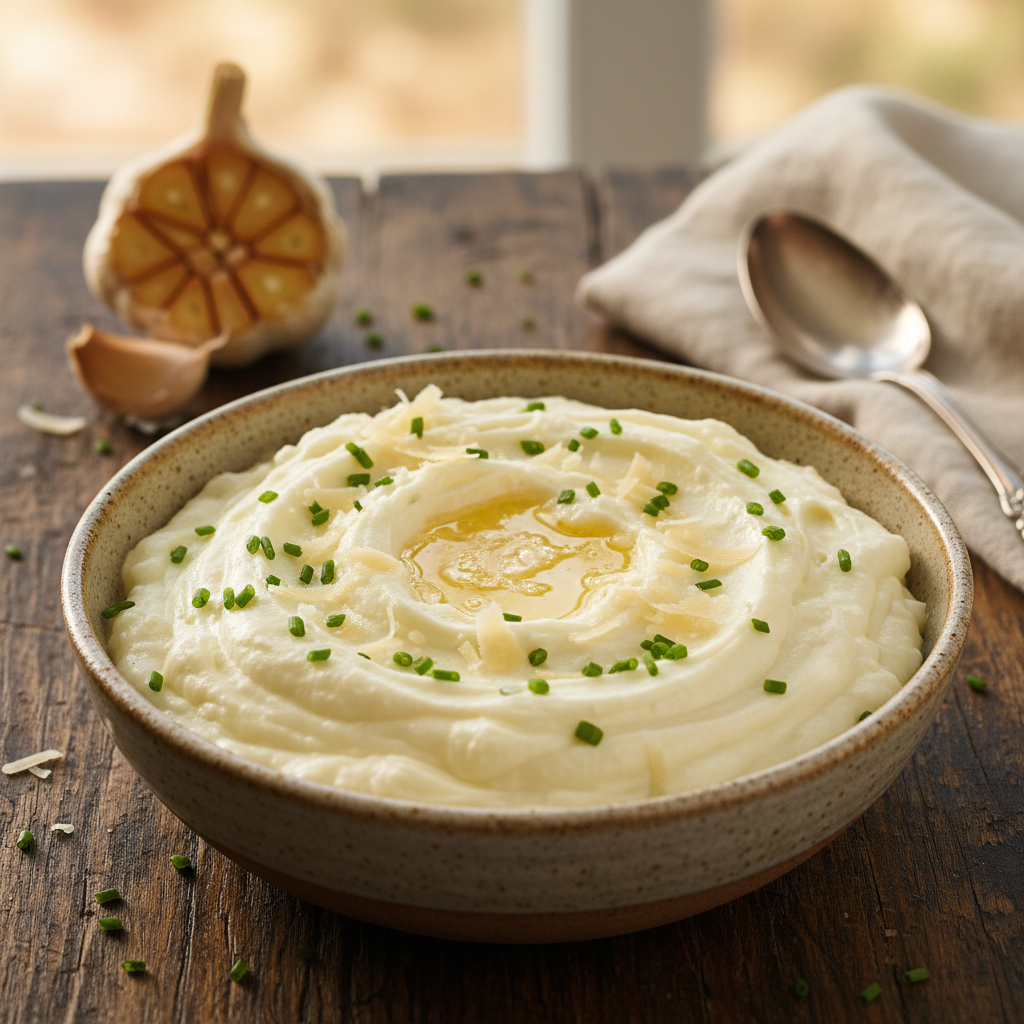
- Transfer to a serving bowl, garnish with chopped fresh chives and an extra sprinkle of Parmesan, and serve warm.
Expert Cooking Tips
- ✓Ensure the cream cheese is softened to room temperature before blending to avoid lumps.
- ✓Do not skip the drying step; allowing the steam to escape prevents a watery mash.
- ✓For a roasted flavor profile, roast the garlic cloves in the oven beforehand instead of sautéing.
- ✓Use freshly grated Parmesan cheese for the best melting capability and flavor.
- ✓If you do not have a steamer basket, you can boil the cauliflower, but you must drain it very thoroughly and perhaps squeeze it gently with a clean kitchen towel.
Substitutions and Variations
This recipe is highly adaptable to various dietary needs and pantry staples. If you are dairy-free or vegan, you can substitute the butter with a high-quality vegan butter or olive oil, and replace the cream cheese with a dairy-free almond or cashew-based cream cheese alternative. Nutritional yeast makes an excellent substitute for Parmesan cheese, adding a similar cheesy, nutty flavor profile without the dairy. For those who do not have fresh garlic, 1 teaspoon of garlic powder can be used, though fresh is recommended for the best punch. If chives are unavailable, green onions or fresh parsley add a nice pop of color and freshness. You can also swap the cauliflower for broccoli to make a green mash, or use a 50/50 blend of cauliflower and turnips for a slightly different flavor profile that is still low in carbs.
Common Mistakes to Avoid
The most common mistake when making cauliflower mash is failing to remove enough moisture. If you boil the cauliflower and immediately blend it without draining it well or letting it steam off, you will end up with a soup rather than a mash. Another mistake is over-processing the cauliflower in a high-speed blender for too long, which can sometimes release too many starches (though less of a risk than with potatoes) or turn it into a gluey consistency; pulse until just smooth. Using cold ingredients like cold butter or cold cream cheese can cool down the mash too quickly and result in a lumpy texture, so always use room temperature fats. Finally, under-seasoning is a frequent error; cauliflower is mild and needs a generous amount of salt and fat to truly shine.
Serving Suggestions
This Garlic Parmesan Cauliflower Mash is incredibly versatile. Serve it as a bed for slow-cooked pot roast or braised lamb shanks, allowing the savory juices to pool in the mash. It is the perfect side for a classic steak dinner, replacing the heavy baked potato. For a lighter meal, pair it with lemon-herb grilled salmon or roasted chicken thighs. You can also use this mash as a topping for a low-carb Shepherd’s Pie. For a festive touch, serve it in a large bowl with a well of melted butter in the center and crispy fried onions or bacon bits on top.
Storage and Reheating Tips
Store any leftovers in an airtight container in the refrigerator for up to 3-4 days. Because of the dairy content, it is best to reheat gently. You can reheat it in the microwave in 30-second intervals, stirring in between, or on the stovetop over low heat. If the mash has thickened up in the fridge, stir in a splash of milk or water to loosen it up while reheating. Freezing is possible but can slightly alter the texture, making it a bit watery upon thawing. If you do freeze it (up to 2 months), let it thaw in the fridge overnight and reheat on the stovetop, whisking vigorously to re-emulsify the fats and liquids.
Nutrition Facts (Estimated)
| Serving Size | 1 cup |
| Calories | 185 |
| Fat | 14g |
| Saturated Fat | 8g |
| Unsaturated Fat | 5g |
| Trans Fat | 0g |
| Cholesterol | 40mg |
| Sodium | 450mg |
| Carbohydrates | 9g |
| Fiber | 4g |
| Sugar | 3g |
| Protein | 7g |
Frequently Asked Questions
Can I make this recipe without a food processor?
Yes, you can use an immersion blender directly in a deep pot or bowl. If you don’t have any electric blenders, you can use a potato masher, but the texture will be more rustic and chunky rather than smooth and velvety.
Is this recipe suitable for the Keto diet?
Absolutely. Cauliflower is a staple keto vegetable, and the addition of high-fat ingredients like butter, cream cheese, and Parmesan makes it perfectly suited for a ketogenic macronutrient profile.
Why does my cauliflower mash taste watery?
This usually happens because the cauliflower wasn’t drained well enough. After steaming or boiling, let the cauliflower sit in the colander for a few minutes so the steam evaporates. Squeezing it gently with a towel can also help.
Can I roast the cauliflower instead of steaming it?
Yes, roasting adds a delicious nutty flavor and prevents wateriness. Roast florets at 400°F (200°C) for about 20-25 minutes until tender, then blend as directed. You may need a splash more liquid (cream or stock) since roasted cauliflower is drier.
Can I use frozen cauliflower?
Yes, frozen cauliflower works well. Steam or microwave it according to the package instructions until very tender, then drain thoroughly before blending. You may need to cook it slightly longer to ensure it’s soft enough to puree smoothly.
How can I make it taste more like real potatoes?
The key is texture and fat. Using cream cheese helps mimic the starchiness of potatoes. Some people also like to add a small peeled turnip to the boil, which has a texture very similar to potato when mashed.
Is garlic powder okay to use?
Yes, substitute 1/2 to 1 teaspoon of garlic powder for the fresh garlic. Add it directly to the food processor with the other ingredients.
Can I prepare this ahead of time?
Yes, you can make it up to 2 days in advance. Reheat it on the stove over low heat, adding a little extra butter or cream if it seems dry.
Does it taste exactly like cauliflower?
While the base flavor is cauliflower, the strong flavors of garlic, butter, and Parmesan significantly mask the vegetal taste. The texture is the most convincing part!
What herbs go well with this?
Besides chives, fresh thyme, rosemary, or parsley are excellent additions. You can infuse the butter with rosemary or thyme while sautéing the garlic.
Conclusion
Cauliflower Mash with Garlic and Parmesan is more than just a dietary substitute; it is a culinary delight that stands on its own merits. With its silky texture, robust savory flavor, and ease of preparation, it has earned its place as a modern classic in kitchens around the world. Whether you are trying to cut carbs or simply looking for a delicious new way to enjoy vegetables, this recipe delivers comfort in every spoonful. Give it a try for your next family dinner, and watch as even the pickiest eaters ask for seconds. It is proof that healthy eating does not have to mean compromising on the rich, comforting tastes we all love.