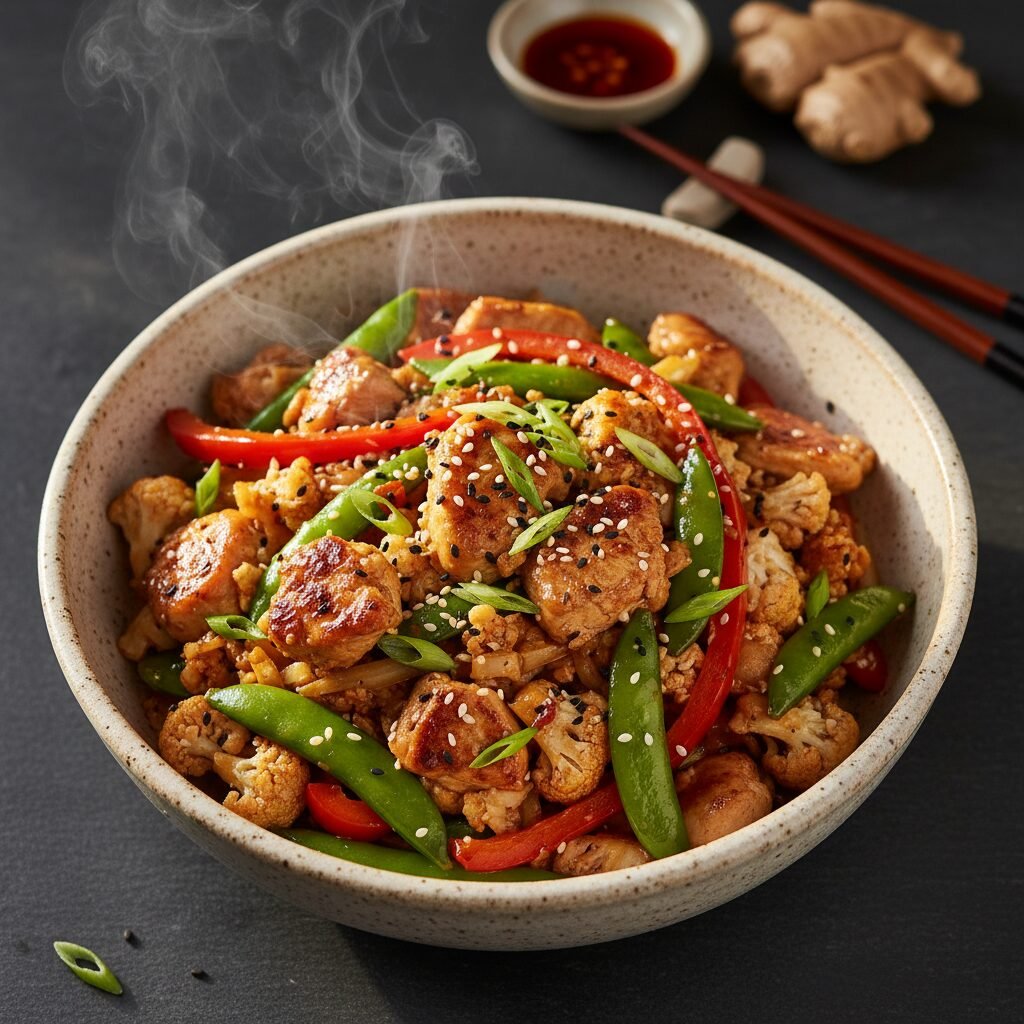
Better-Than-Takeout Chicken and Cauliflower Rice Stir Fry (Low Carb & Keto)
Chicken And Cauliflower Rice Stir Fry Low Carb Recipe
Satisfy your takeout cravings in under 30 minutes with this vibrant Chicken and Cauliflower Rice Stir Fry. Packed with tender protein, crisp vegetables, and a savory umami sauce, this low-carb masterpiece delivers all the flavor of your favorite fried rice without the heavy carbs.
15 minutes
15 minutes
30 minutes
4 servings
Main Course
Stir-fry
Asian-American Fusion
Low Carb
If there is one meal that bridges the gap between healthy eating and pure comfort food, it is this Chicken and Cauliflower Rice Stir Fry. We have all been there—it’s 6 PM, you are exhausted, and the allure of ordering greasy takeout is strong. But what if you could whip up a meal that tastes just as indulgent but leaves you feeling energized instead of sluggish? Enter the magic of cauliflower rice. Over the past decade, this humble cruciferous vegetable has completely revolutionized the low-carb kitchen, transforming from a simple side dish into a culinary superstar capable of mimicking the texture of grains with surprising accuracy.
In this recipe, we are not just tossing vegetables into a pan; we are building layers of flavor. The secret lies in the high-heat sear of the chicken, the aromatic bloom of fresh ginger and garlic, and a sauce that hits the perfect balance of salty, savory, and slightly sweet. Unlike many cauliflower rice recipes that turn into a soggy mash, this method ensures your ‘rice’ stays fluffy and distinct, absorbing the sauce without losing its bite. Whether you are strictly Keto, following a Paleo lifestyle, or simply trying to sneak more vegetables into your family’s diet, this stir fry is a game-changer. It is vibrant, colorful, and deeply satisfying, proving once and for all that healthy food does not have to be boring. Get ready to fire up your wok and fill your kitchen with the irresistible scents of sesame and soy.
History & Origins
The technique of stir-frying, or ‘chao,’ originated in China and can be traced back to the Han Dynasty, though it became widely popularized during the Ming Dynasty as oil became more affordable. Traditionally, this rapid cooking method using a wok allowed chefs to preserve the texture, color, and nutritional value of ingredients while using minimal fuel. Fried rice, specifically, was born out of frugality—a clever way to repurpose leftover cold rice from the night before, ensuring nothing went to waste.
However, the concept of ‘cauliflower rice’ is a much more modern invention in the culinary timeline. While couscous-style cauliflower dishes appeared sporadically in various cuisines, the specific technique of grating cauliflower to mimic grain rice gained massive traction in the early 2000s and 2010s with the explosion of the Paleo and low-carb movements. It is often attributed to chef Ben Ford (Harrison Ford’s son), who featured a cauliflower ‘couscous’ in a 1998 recipe, but it was the health-conscious food blogosphere that truly propelled it into the mainstream. Today, this fusion of ancient Chinese cooking techniques with modern dietary innovation represents a global shift towards vegetable-forward eating. This recipe honors the traditional flavor profiles of Cantonese-style fried rice while adapting the base ingredient to suit modern nutritional needs, creating a dish that respects history while embracing the future of food.
Why This Recipe Works
This recipe succeeds where many low-carb stir fries fail because it meticulously addresses the moisture problem. Cauliflower is naturally high in water content (about 92%), which is the enemy of a good stir fry. If you simply throw raw cauliflower into a pan with sauce and veggies, it steams rather than fries, resulting in a mushy, unappetizing texture. This recipe works because we utilize a high-heat, quick-cooking method that evaporates surface moisture rapidly, allowing the cauliflower to actually caramelize slightly and absorb the flavors of the aromatics.
Furthermore, the order of operations is critical. By cooking the protein and heartier vegetables first and removing them from the pan, we prevent overcrowding. Overcrowding lowers the pan temperature and causes food to stew in its own juices. We treat the cauliflower rice as the final addition, tossing it in hot sesame oil to coat the granules before reintroducing the other ingredients. The sauce is also thickened slightly before hitting the pan or reduced quickly, ensuring it coats the ingredients rather than drowning them. Finally, the use of fresh aromatics—ginger, garlic, and scallions—provides that authentic ‘wok hei’ (breath of the wok) flavor profile that makes the dish taste like it came from a restaurant kitchen.
Why You’ll Love This Recipe
- ✓Ready in under 30 minutes for busy weeknights
- ✓Low carb, Keto-friendly, and Gluten-Free adaptable
- ✓High protein content keeps you full for hours
- ✓Packed with nutrient-dense vegetables
- ✓Prevents the dreaded ‘soggy cauliflower’ texture
- ✓Perfect for meal prep and reheats beautifully
Equipment You’ll Need
- ✓Large Wok or Cast Iron Skillet
- ✓Chef’s Knife
- ✓Cutting Board
- ✓Box Grater or Food Processor (if ricing own cauliflower)
- ✓Small Mixing Bowl
- ✓Whisk
- ✓Spatula
Ingredients
- ✓1 lb boneless, skinless chicken breasts, cut into bite-sized cubes
- ✓1 large head cauliflower, riced (approx. 4-5 cups)
- ✓2 tablespoons sesame oil, divided
- ✓1 tablespoon olive oil or avocado oil
- ✓2 large eggs, lightly beaten
- ✓3 cloves garlic, minced
- ✓1 tablespoon fresh ginger, grated
- ✓1/2 cup onion, diced
- ✓1 cup mixed vegetables (bell peppers, broccoli florets, snap peas)
- ✓3 tablespoons soy sauce (or Tamari/Coconut Aminos for GF)
- ✓1 tablespoon oyster sauce (optional, omit for strict Keto)
- ✓1 teaspoon rice vinegar
- ✓Salt and black pepper to taste
- ✓Green onions and sesame seeds for garnish
Instructions
- Prepare the cauliflower: If using a fresh head, cut into florets and pulse in a food processor until it resembles rice grains. If using frozen, thaw and squeeze out excess water thoroughly.
- Make the sauce: In a small jar or bowl, whisk together the soy sauce, oyster sauce (if using), rice vinegar, grated ginger, and minced garlic. Set aside.
- Cook the eggs: Heat 1/2 tablespoon of sesame oil in a large wok or skillet over medium heat. Add the beaten eggs and scramble until just set. Remove from the pan and set aside.
- Sear the chicken: Increase heat to medium-high. Add 1 tablespoon of olive oil. Season chicken cubes with salt and pepper. Add to the hot pan in a single layer. Cook for 3-4 minutes per side until golden brown and cooked through. Remove chicken and set aside with the eggs.
- Stir fry vegetables: Add the remaining sesame oil to the pan. Add the diced onions and harder vegetables (like broccoli or carrots if using). Stir fry for 2-3 minutes until onions are translucent and veggies are tender-crisp.
- Cook the cauliflower: Push the veggies to the side (or remove if pan is small) and add the cauliflower rice. Turn heat to high. Spread it out and let it sit for a minute to sear, then toss. Cook for 3-4 minutes until tender but not mushy.
- Combine: Return the cooked chicken and eggs to the pan. Pour the sauce mixture over everything.
- Finish: Toss everything together constantly for 1-2 minutes to ensure the sauce coats all ingredients and everything is heated through.
- Serve: Remove from heat. Garnish generously with sliced green onions and toasted sesame seeds. Serve immediately.
Expert Cooking Tips
- ✓Dry the cauliflower thoroughly if using frozen; moisture is the enemy of a good stir fry.
- ✓Prep all ingredients before you turn on the stove; stir frying happens very quickly.
- ✓Use a large wok or the widest skillet you have to maximize surface area for evaporation.
- ✓Don’t over-pulse the cauliflower in the food processor, or it will turn into a paste.
- ✓Cook in batches if your pan is small to avoid steaming the food.
- ✓Use cold ingredients if possible; cold cauliflower rice tends to fry better than warm.
- ✓Taste as you go; the saltiness of soy sauce varies by brand.
Substitutions and Variations
This recipe is incredibly flexible and can be adapted to suit various dietary needs and pantry availability. For the protein, chicken thighs are a juicier alternative to breasts, or you can swap in shrimp, flank steak, or cubed firm tofu for a vegetarian option. If you are strictly Gluten-Free, ensure you use Tamari or Coconut Aminos instead of traditional soy sauce. For the vegetables, feel free to use whatever is in your crisper drawer; zucchini, mushrooms, bok choy, and asparagus all work wonderfully. If you don’t have fresh ginger, ground ginger can be used (1/4 tsp ground = 1 tbsp fresh), though fresh offers a much brighter flavor. For those not strictly watching carbs, you can mix 50% regular jasmine rice with 50% cauliflower rice to ease into the transition. Finally, if you are allergic to eggs, simply omit them or use a vegan egg substitute like Just Egg.
Common Mistakes to Avoid
The most common mistake when making cauliflower fried rice is using frozen cauliflower without removing the moisture. Frozen cauliflower releases a significant amount of water as it thaws, leading to a soupy mess in the pan. Always thaw and wring it out in a clean kitchen towel or cheesecloth first. Another frequent error is overcrowding the pan. If the pan is too full, the heat dissipates, and the ingredients steam instead of searing. This prevents that delicious browning reaction. Also, be careful not to overcook the cauliflower. Unlike regular rice which takes time to soften, cauliflower only needs a few minutes; cook it too long and it releases sulfurous compounds that can smell unpleasant and taste mushy. Lastly, adding the sauce too early can result in soggy rice; add it at the very end just to coat the ingredients.
Serving Suggestions
This Chicken and Cauliflower Rice Stir Fry is a complete meal in a bowl, but it can be elevated with the right sides and garnishes. Serve it hot, topped with a drizzle of Sriracha or chili garlic sauce for a spicy kick. A side of quick-pickled cucumbers or kimchi adds a refreshing, acidic crunch that cuts through the savory richness of the sesame oil. For a fun appetizer, serve alongside lettuce wraps or low-carb egg drop soup. If you are hosting a dinner, you can garnish with chopped cilantro, crushed peanuts, or cashews for added texture. It pairs beautifully with a crisp, dry white wine like a Sauvignon Blanc or a cold sparkling water with lime.
Storage and Reheating Tips
Leftovers of this dish store surprisingly well, making it an excellent candidate for meal prep. Allow the stir fry to cool completely to room temperature before transferring it to an airtight container. It will keep in the refrigerator for up to 4 days. When reheating, it is best to use a skillet over medium heat rather than a microwave to preserve the texture of the vegetables and cauliflower. If you must use a microwave, cover the container with a damp paper towel to prevent the chicken from drying out. While you can freeze this dish, note that the texture of the cauliflower may become softer upon thawing. If freezing, store in portion-sized freezer bags for up to 3 months.
Nutrition Facts (Estimated)
| Serving Size | 1.5 cups |
| Calories | 320 |
| Fat | 14g |
| Saturated Fat | 3g |
| Unsaturated Fat | 9g |
| Trans Fat | 0g |
| Cholesterol | 185mg |
| Sodium | 680mg |
| Carbohydrates | 10g |
| Fiber | 4g |
| Sugar | 4g |
| Protein | 32g |
Frequently Asked Questions
Can I use frozen cauliflower rice?
Yes, absolutely! Frozen cauliflower rice is convenient and works well. However, it holds a lot of water. The key is to thaw it completely and squeeze out as much water as possible using a clean kitchen towel before adding it to the hot pan.
Is this recipe strictly Keto?
Yes, as written, this recipe fits well within a Keto diet. Just be mindful of the vegetable choices; stick to lower-carb veggies like broccoli and peppers, and avoid higher-sugar ones like carrots or peas if you are on a very strict limit.
How do I make the cauliflower rice less soggy?
High heat is your friend. Ensure your pan is hot before adding the cauliflower. Also, do not cover the pan with a lid, as this traps steam. Cook it quickly and add the sauce only at the very end.
Can I use pre-packaged riced cauliflower?
Yes, you can find fresh riced cauliflower in the produce section of most grocery stores. This is often better than frozen as it has less moisture content, saving you the step of squeezing it out.
What if I don’t have a wok?
While a wok is traditional and ideal for heat distribution, a large cast-iron skillet or a wide non-stick sauté pan works perfectly fine. The goal is to have a large surface area.
Can I make this vegetarian?
Certainly. Omit the chicken and oyster sauce. Replace the protein with crispy tofu, edamame, or just extra vegetables. Use a vegetarian mushroom stir-fry sauce instead of oyster sauce.
Is cauliflower rice healthy?
Extremely. It is high in fiber, Vitamin C, Vitamin K, and antioxidants, while being significantly lower in calories and carbohydrates compared to white or brown rice.
Can I prep this ahead of time?
Yes! You can chop all the vegetables and chicken and store them in separate containers in the fridge up to 2 days in advance. You can also rice the cauliflower ahead of time.
Conclusion
There you have it—a vibrant, flavor-packed Chicken and Cauliflower Rice Stir Fry that proves you don’t need heavy carbs to enjoy a satisfying meal. This recipe is a testament to how simple ingredients, when treated with the right techniques, can transform into something truly special. Whether you are looking to lighten up your weekly menu, stick to your low-carb goals, or just want a delicious dinner on the table in under 30 minutes, this dish checks all the boxes. Give it a try tonight, and you might just find yourself deleting your local takeout app. Don’t forget to pin this recipe for later and share your creations on social media!