Fresh & Fit: Ultimate Chicken Avocado Rice Paper Rolls with Creamy Peanut Dip
Chicken Avocado Rice Paper Roll Healthy Recipe
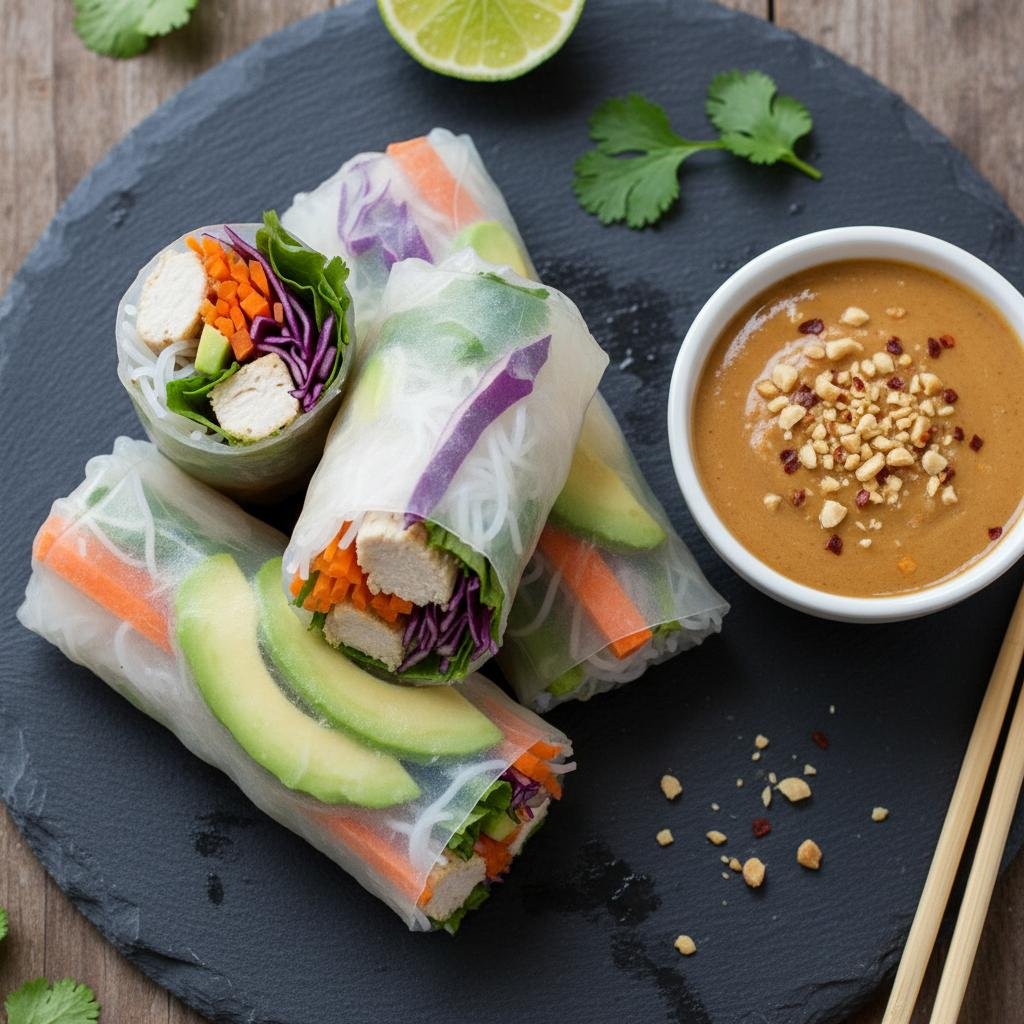
In the world of vibrant, health-conscious eating, few dishes rival the visual appeal and satisfying crunch of a perfectly rolled Chicken Avocado Rice Paper Roll. As we move towards lighter, more nutrient-dense meals that don’t sacrifice flavor, these ‘summer rolls’ have become a staple in my kitchen and a fan favorite on Pinterest boards across the country. Imagine biting into a delicate, translucent wrapper that gives way to a harmonious blend of tender poached chicken, buttery avocado slices, crisp cucumber ribbons, and a burst of fresh aromatic herbs. It is a textural masterpiece that feels indulgent yet leaves you energized rather than weighed down.
What makes this recipe truly standout is its versatility and the sheer joy of the assembly process. It transforms lunch from a mundane task into a creative culinary art project. The combination of lean protein from the chicken and heart-healthy monounsaturated fats from the avocado creates a satiety trifecta that keeps hunger at bay for hours. Unlike their deep-fried cousins, these fresh rolls celebrate the raw integrity of the ingredients. The avocado acts as a natural butter, providing a creamy mouthfeel that bridges the gap between the chewy rice paper and the crunchy vegetables. Whether you are meal-prepping for a busy work week, hosting a chic garden party, or simply looking for a gluten-free dinner option that requires zero oven time, these rolls are your answer. Paired with my signature savory-sweet peanut dipping sauce, they offer a punch of umami that elevates the clean flavors of the filling. Let’s dive into a recipe that promises to be as fun to make as it is delicious to eat.
30 minutes
15 minutes
45 minutes
12 rolls (4 servings)
Appetizer / Main Course
Assembly / No-Cook
Vietnamese-Fusion
Gluten-Free
History & Origins
The origins of the rice paper roll, or ‘summer roll,’ are deeply rooted in Vietnamese culinary tradition, where they are known as ‘Gỏi cuốn.’ Historically, Vietnamese cuisine balances the five fundamental taste elements: spicy, sour, bitter, salty, and sweet. Gỏi cuốn is the embodiment of this philosophy, traditionally consisting of pork, prawn, vegetables, bún (rice vermicelli), and fresh herbs wrapped in bánh tráng (rice paper). Unlike ‘Chả giò’ (spring rolls), which are deep-fried, summer rolls are served fresh and room temperature, making them a popular respite from the humid heat of Southeast Asia.
Rice paper itself has a fascinating history. Traditionally, the batter—made from rice flour, water, and salt—was spread thinly over a cloth stretched over a pot of boiling water, steamed, and then dried on bamboo mats under the sun. This process gave the paper its characteristic woven pattern, which you can still see on many artisanal brands today. As Vietnamese cuisine migrated globally, particularly to the United States and Australia following the diaspora in the late 20th century, the dish evolved. The integration of avocado is a distinctly modern, Western adaptation, likely influenced by California cuisine’s love affair with the fruit. This fusion element adds a richness that replaces the need for fattier cuts of pork found in traditional recipes, aligning the dish with contemporary wellness trends while respecting the structural integrity of the original masterpiece.
Why This Recipe Works
This specific recipe for Chicken Avocado Rice Paper Rolls works exceptionally well because it addresses the most common complaint with homemade summer rolls: lack of flavor and poor texture. Many recipes rely solely on the dipping sauce to carry the dish, resulting in a bland filling. Here, we season the poaching liquid for the chicken with ginger and star anise, infusing the protein itself with subtle aromatics before it even hits the wrapper. Furthermore, the inclusion of avocado is strategic; its creaminess acts as a barrier and a binder, preventing the sharper vegetables from poking through the delicate rice paper while providing a lush mouthfeel that contrasts with the snap of the carrots and cucumbers.
Structurally, the ratio of ingredients in this recipe is calculated to prevent the dreaded ‘burst roll.’ By using vermicelli noodles as a soft bed for the harder ingredients, we create a stable core that is easy to roll tightly. The interplay of textures—chewy wrapper, soft noodles, creamy avocado, fibrous chicken, and crunchy veggies—activates sensory pleasure in every bite. Finally, the homemade peanut sauce is formulated with a touch of acidity (lime juice) and heat (sriracha) to cut through the richness of the avocado and peanut butter, ensuring the palate remains refreshed after every bite. It is a scientifically balanced flavor profile.
Why You’ll Love This Recipe
- ✓Naturally Gluten-Free and Dairy-Free
- ✓Packed with lean protein and heart-healthy fats
- ✓No-cook assembly (if using pre-cooked chicken)
- ✓Perfect for meal prep and lunchboxes
- ✓Highly customizable with seasonal veggies
- ✓Includes a restaurant-quality peanut dipping sauce
Equipment You’ll Need
- ✓Large shallow bowl (for dipping rice paper)
- ✓Clean, damp kitchen towel or wooden cutting board
- ✓Sharp chef’s knife
- ✓Julienne peeler (optional but helpful)
- ✓Saucepan (for poaching chicken and noodles)
- ✓Whisk (for the sauce)
Ingredients
- ✓12 sheets round rice paper (22cm diameter)
- ✓2 large chicken breasts, poached and shredded
- ✓2 ripe avocados, sliced into thin strips
- ✓1 large cucumber, julienned (seeds removed)
- ✓2 medium carrots, peeled and julienned
- ✓1 cup purple cabbage, thinly shredded
- ✓4 oz vermicelli rice noodles, cooked and cooled
- ✓1 cup fresh mint leaves
- ✓1 cup fresh cilantro (coriander) leaves
- ✓1/2 cup creamy peanut butter (unsweetened)
- ✓2 tbsp gluten-free hoisin sauce
- ✓1 tbsp soy sauce or tamari
- ✓1 tbsp lime juice
- ✓1 tsp sriracha (optional)
- ✓Warm water (for thinning sauce)
Instructions
- 1. Prepare the Chicken: If not already cooked, poach chicken breasts in simmering water with a pinch of salt and a slice of ginger for 12-15 minutes until fully cooked. Let cool completely, then shred into bite-sized strips.
- 2. Cook the Noodles: Boil the vermicelli noodles according to package instructions (usually 3-5 minutes). Drain and rinse immediately under cold water to stop the cooking process and prevent sticking. Set aside to drain thoroughly.
- 3. Mise en Place: Organize your workspace. Place the chicken, avocado slices, cucumber, carrots, cabbage, noodles, and herbs in separate piles or bowls around your rolling station. Fill a large shallow bowl with warm water.
- 4. Soak the Rice Paper: Dip one sheet of rice paper into the warm water for about 3-5 seconds. It should still feel slightly stiff when you take it out; it will soften as you work. Lay it flat on your damp kitchen towel or cutting board.
- 5. Layer the Filling: On the bottom third of the rice paper, place a small handful of vermicelli noodles. Top with shredded chicken, cucumber, carrots, and cabbage.
- 6. Add the ‘Beauty’ Layer: Place 2-3 slices of avocado and a few herb leaves horizontally across the center of the rice paper (above the noodle pile). This ensures they show through the translucent skin when rolled.
- 7. The Roll: Fold the bottom edge of the rice paper up and over the noodle/chicken pile, tucking it in tightly. Fold in the left and right sides to seal the ends. Continue rolling upwards over the avocado layer until the roll is sealed tight.
- 8. Repeat: Repeat the process with the remaining ingredients. Keep finished rolls under a slightly damp towel to prevent them from drying out while you work.
- 9. Make the Sauce: In a medium bowl, whisk together peanut butter, hoisin, soy sauce, lime juice, and sriracha. Add warm water one tablespoon at a time until you reach your desired dipping consistency.
- 10. Serve: Slice the rolls in half diagonally if desired and serve immediately with the peanut dipping sauce.
Expert Cooking Tips
- ✓Don’t Over-Soak: The biggest mistake is leaving the rice paper in the water too long. It only needs a few seconds; it continues to soften on the board.
- ✓Use Cool Ingredients: Ensure your chicken and noodles are completely cool before rolling. Warm ingredients will make the rice paper disintegrate.
- ✓Tight Roll: Roll as tightly as possible without tearing. A loose roll will fall apart when dipped.
- ✓Damp Surface: Rolling on a damp wooden board or a damp tea towel prevents the rice paper from sticking to the counter.
- ✓Soft Avocado: Ensure your avocados are ripe but firm. Mushy avocado can be messy to work with inside the roll.
Substitutions and Variations
This recipe is incredibly flexible, allowing for numerous dietary adjustments and flavor profiles. **Protein:** If you are vegetarian or vegan, swap the poached chicken for firm tofu strips that have been pan-seared or marinated tempeh. Cooked shrimp (prawns) are a classic alternative that looks beautiful when placed on the outer layer. For a keto version, omit the vermicelli noodles and double the amount of cabbage or add bean sprouts for crunch. **Vegetables:** Feel free to use red bell peppers, radishes, or mango slices for a sweet twist. **Herbs:** If you have the ‘soap gene’ for cilantro, replace it with Thai basil or fresh dill. **Sauce:** For a nut-free school lunch, substitute the peanut butter with sunflower seed butter or tahini. You can also skip the creamy sauce entirely and use a ‘Nuoc Cham’ style fish sauce vinaigrette with lime, garlic, and chili.
Common Mistakes to Avoid
The most frequent error beginners make is **overfilling the rolls**. It is tempting to pack in as much as possible, but this inevitably leads to tearing and messy eating. Start with less filling than you think you need until you get the hang of the rolling technique. Another common issue is **wet ingredients**. If your noodles or washed vegetables are dripping wet, the excess moisture will seep into the rice paper, causing it to become slimy and break apart. Always spin-dry your greens and thoroughly drain your noodles. Finally, **stacking the finished rolls** directly on top of each other without a barrier will cause them to fuse together. If you must stack them, place a piece of parchment paper or a lettuce leaf between layers.
Serving Suggestions
These rolls are best served fresh as a light lunch, a refreshing appetizer, or a healthy dinner. For a visually stunning platter, slice the rolls in half diagonally to reveal the colorful cross-section of vegetables and avocado. Arrange them in a circular pattern around a central bowl of the peanut dipping sauce. To make it a full meal, serve alongside a hot bowl of Pho broth or a tangy green papaya salad. They also pair beautifully with iced jasmine tea or a crisp white wine like Sauvignon Blanc.
Storage and Reheating Tips
Rice paper rolls are notorious for drying out or getting gummy in the fridge, so they are best eaten the day they are made. However, you can store them for up to 24 hours if done correctly. Wrap each roll individually in plastic wrap or damp paper towels to prevent them from sticking to each other and drying out. Place the wrapped rolls in an airtight container in the refrigerator. The rice paper may harden slightly in the cold; leave them at room temperature for 15-20 minutes before eating to soften them up again. Do not freeze these rolls, as the fresh vegetables and avocado will lose their texture completely upon thawing.
Nutrition Facts (Estimated)
| Serving Size | 3 rolls |
| Calories | 420 |
| Fat | 18g |
| Saturated Fat | 3g |
| Unsaturated Fat | 13g |
| Trans Fat | 0g |
| Cholesterol | 45mg |
| Sodium | 580mg |
| Carbohydrates | 38g |
| Fiber | 5g |
| Sugar | 6g |
| Protein | 26g |
Frequently Asked Questions
Why does my rice paper keep tearing?
Tearing usually happens for two reasons: over-soaking the paper (making it too soft) or overfilling the roll. Try dipping the paper for just 3 seconds and using less filling.
Can I make these the night before?
It is not recommended for optimal quality as the rice paper hardens in the fridge. However, you can prep all the ingredients (julienne veggies, cook chicken) the night before and just assemble them right before serving.
My rolls are too sticky, how do I fix this?
Rice paper is naturally sticky. To manage this, keep your hands slightly damp while rolling, and ensure the finished rolls don’t touch each other on the serving plate.
Is rice paper keto-friendly?
Standard rice paper is made from rice flour and tapioca starch, so it is high in carbs and not keto-friendly. You can use collard greens or thinly sliced cucumber sheets as a keto wrapper alternative.
What is the best brand of rice paper to use?
Look for the ‘Three Ladies’ brand or ‘Rose’ brand if available. They tend to have the best elasticity and resistance to tearing.
Can I use rotisserie chicken?
Absolutely! Using store-bought rotisserie chicken is a fantastic time-saver. Just remove the skin and shred the breast meat.
How do I stop the avocado from turning brown?
Squeeze a little fresh lime or lemon juice over the avocado slices immediately after cutting them. The citric acid prevents oxidation.
Are these rolls spicy?
The rolls themselves are mild. The heat comes from the sriracha in the dipping sauce, which you can adjust or omit entirely to suit your taste.
Conclusion
Mastering the Chicken Avocado Rice Paper Roll is a skill that will serve you well for years to come. It is a recipe that looks incredibly impressive—like something straight out of a high-end spa menu—yet is humble in its ingredients and preparation. The combination of fresh, raw textures with the creamy richness of the avocado and the savory punch of the peanut sauce is truly addictive. Whether you are looking to reset your diet, impress guests at a potluck, or simply enjoy a delicious, guilt-free meal, these rolls are the perfect solution. Don’t forget to snap a picture of your beautiful creations before you devour them—they are definitely Instagram-worthy!