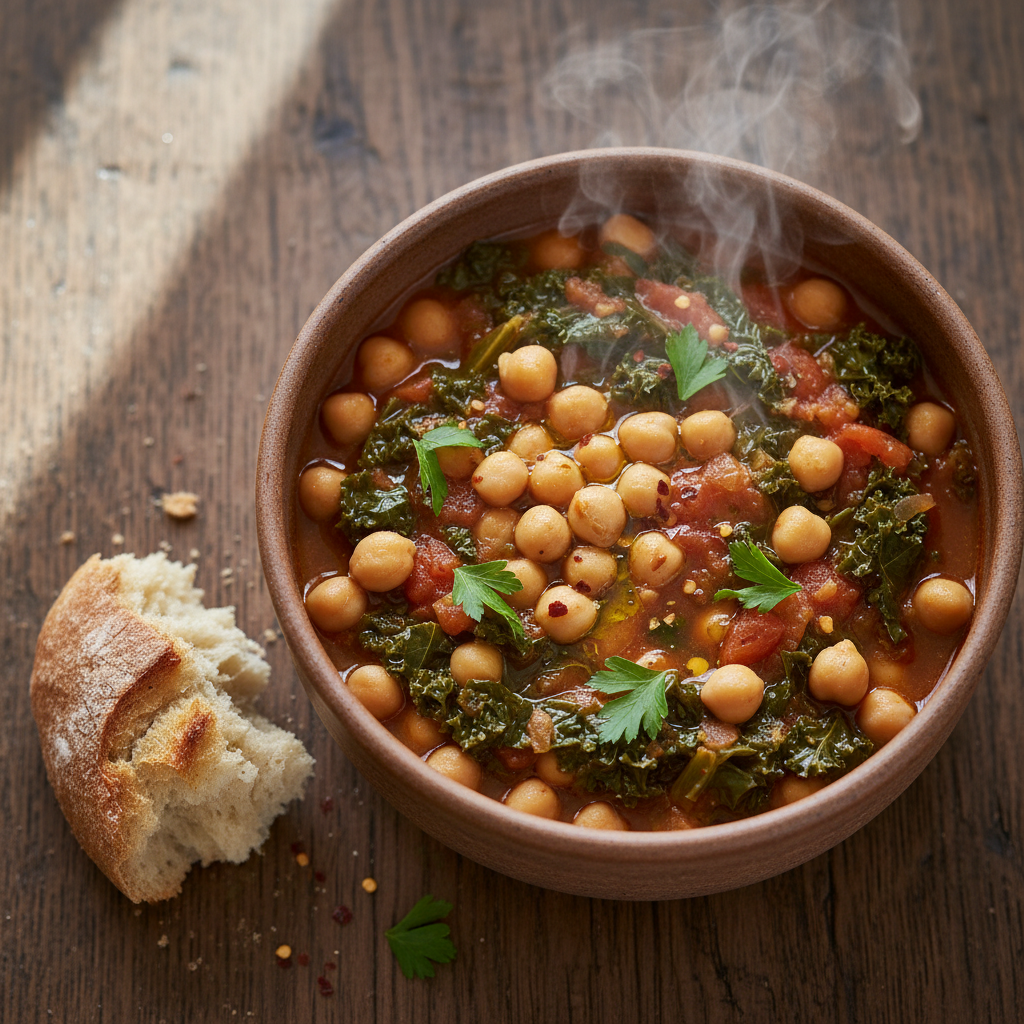
Smoky Chickpea and Kale Stew with Fire-Roasted Tomatoes
Chickpea And Kale Stew With Tomatoes Recipe
This soul-warming Chickpea and Kale Stew is the ultimate 30-minute one-pot meal. Packed with protein-rich legumes, tender greens, and a savory fire-roasted tomato broth, it is a nutrient-dense dinner that pairs perfectly with crusty bread for dipping.
15 minutes
30 minutes
45 minutes
4-6 servings
Main Course
Stovetop
Mediterranean Fusion
Vegan
There is something profoundly comforting about a bowl of stew that manages to be both incredibly hearty and surprisingly light. This Smoky Chickpea and Kale Stew with Fire-Roasted Tomatoes is a celebration of pantry staples transforming into a gourmet experience. It is the kind of meal that beckons you to the kitchen on a chilly evening, promising warmth and sustenance without demanding hours of labor. The magic begins with a base of aromatic vegetables—onions, carrots, and celery—sautéed until tender, creating a flavor foundation known as a mirepoix. To this, we add a bold blend of smoked paprika and cumin, spices that infuse the dish with a deep, savory complexity reminiscent of slow-cooked meats, yet this dish is entirely plant-based.
The texture is a delightful interplay between the creamy, soft chickpeas and the robust, chewy ribbons of kale. Unlike spinach, which can disappear into a broth, kale holds its own, providing a satisfying bite that contrasts beautifully with the velvety tomato base. We utilize fire-roasted tomatoes specifically for their charred sweetness, which cuts through the acidity and adds a layer of smokiness that elevates the entire pot. Whether you are a strict vegan, a busy parent looking for a healthy weeknight rotation, or simply a lover of good food, this stew checks every box. It is rich in fiber, bursting with antioxidants, and improves with time, making it a champion for meal prep. Serve it steaming hot with a generous drizzle of good olive oil and a slice of sourdough to mop up every last drop of the savory, red-gold broth.
History & Origins
The combination of legumes and leafy greens in a savory broth is a culinary tradition that spans centuries and crosses many borders, deeply rooted in the concept of ‘Cucina Povera’ or peasant cooking. In the Mediterranean, particularly in Italy and Spain, dishes like ‘Pasta e Ceci’ or ‘Potaje de Garbanzos’ have long relied on the humble chickpea as a primary source of sustenance. Chickpeas, one of the earliest cultivated legumes, trace their origins back roughly 7,500 years to the Middle East. They were a staple for ancient Egyptians, Greeks, and Romans, prized for their long shelf life and high nutritional value.
Kale, while trendy in modern American cuisine, has been a staple crop in Europe since the Middle Ages due to its resistance to frost. Historically, it was one of the few green vegetables available during harsh winters, making it essential for survival in cooler climates. The marriage of these two ingredients—chickpeas from the trade routes of the East and kale from the gardens of Europe—represents a fusion of durability and nutrition. In Tuscany, ‘Ribollita’ is a famous cousin to this stew, often using white beans and cavolo nero (black kale). Our version leans into these historical roots but adapts them for the modern palate by incorporating smoked paprika, a nod to Spanish influences where pimentón is king. This dish tells the story of agricultural resilience, proving that the most modest ingredients often create the most enduring and beloved recipes.
Why This Recipe Works
This recipe succeeds because it carefully balances acidity, texture, and depth of flavor in a short amount of cooking time. Many quick stews suffer from tasting ‘tinny’ or underdeveloped, usually due to the raw taste of canned tomatoes. We circumvent this issue by using fire-roasted tomatoes and by blooming our spices in hot oil before adding any liquid. ‘Blooming’ the smoked paprika and cumin releases their essential oils, intensifying their flavor profile and distributing it evenly throughout the dish.
Furthermore, the texture of the stew is naturally thickened without the need for flour or cornstarch. By taking a ladleful of the soup, blending it (or mashing it), and returning it to the pot, we create a creamy body that coats the chickpeas and kale, giving the broth a luxurious mouthfeel. The choice of lacinato kale (also known as dinosaur kale) is also strategic; its leaves are tender yet sturdy enough to wilt without becoming slimy, unlike curly kale which can sometimes be tough, or spinach which can become mushy. Finally, the finishing touches—a splash of lemon juice and a drizzle of raw olive oil—add brightness and richness, respectively. The acid wakes up the earthy flavors of the legumes, while the fresh oil adds a grassy, peppery finish that ties everything together.
Why You’ll Love This Recipe
- ✓Ready in under 45 minutes
- ✓High in plant-based protein and fiber
- ✓Vegan and Gluten-Free
- ✓One-pot cleanup
- ✓Freezer-friendly for meal prep
- ✓Budget-friendly pantry staples
Equipment You’ll Need
- ✓Large Dutch oven or heavy-bottomed pot
- ✓Chef’s knife
- ✓Cutting board
- ✓Wooden spoon
- ✓Immersion blender or potato masher
- ✓Measuring cups and spoons
Ingredients
- ✓2 tablespoons extra virgin olive oil
- ✓1 large yellow onion, diced
- ✓3 medium carrots, peeled and diced
- ✓2 stalks celery, diced
- ✓4 cloves garlic, minced
- ✓2 teaspoons smoked paprika
- ✓1 teaspoon ground cumin
- ✓1/2 teaspoon red pepper flakes (optional)
- ✓2 cans (15 oz each) chickpeas, rinsed and drained
- ✓1 can (28 oz) fire-roasted crushed tomatoes
- ✓4 cups vegetable broth (low sodium)
- ✓1 bunch Lacinato (Dino) kale, stems removed and chopped
- ✓1 teaspoon salt (adjust to taste)
- ✓1/2 teaspoon freshly cracked black pepper
- ✓1 tablespoon fresh lemon juice
- ✓Garnish: Fresh parsley, drizzle of olive oil, grated parmesan (optional)
Instructions
- Heat the olive oil in a large Dutch oven or heavy pot over medium heat. Once shimmering, add the diced onion, carrots, and celery. Sauté for about 6-8 minutes, stirring occasionally, until the vegetables are softened and the onions are translucent.
- Add the minced garlic, smoked paprika, cumin, and red pepper flakes. Cook for another 1-2 minutes, stirring constantly, until the spices are fragrant. Be careful not to burn the garlic.
- Pour in the fire-roasted tomatoes (with their juices) and the vegetable broth. Stir well to combine, scraping up any browned bits from the bottom of the pot.
- Add the rinsed chickpeas to the pot. Increase the heat to high to bring the mixture to a boil, then reduce the heat to low. Cover and simmer for 15-20 minutes to allow the flavors to meld.
- Optional Step for Creaminess: Using an immersion blender, pulse 2-3 times directly in the pot to mash some of the chickpeas. Alternatively, remove 1 cup of the soup, mash it with a fork, and return it to the pot. This creates a thicker, stew-like consistency.
- Stir in the chopped kale. Simmer for an additional 3-5 minutes, or until the kale is wilted and tender but still vibrant green.
- Remove the pot from heat. Stir in the fresh lemon juice. Taste and adjust seasoning with salt and black pepper as needed.
- Ladle into bowls and top with a drizzle of high-quality olive oil, fresh parsley, and a side of crusty bread.
Expert Cooking Tips
- ✓Rinse your chickpeas thoroughly to remove excess sodium and the starchy canning liquid, which can sometimes cause digestive issues.
- ✓If using curly kale instead of lacinato, massage the leaves with a little olive oil before adding them to the pot to help tenderize them faster.
- ✓For an even deeper flavor, add a parmesan rind to the broth while it simmers (note: this will make the dish vegetarian, not vegan).
- ✓Don’t skip the lemon juice at the end; the acid is crucial for brightening the heavy, savory flavors of the stew.
- ✓If you prefer a soupier consistency, add an extra cup of broth; for a thicker stew, simmer uncovered for a few extra minutes.
Substitutions and Variations
This recipe is incredibly versatile and forgiving. If you don’t have chickpeas, Cannellini beans or Great Northern beans make excellent substitutes, offering a creamier texture. For the greens, while kale provides a robust texture, you can easily swap it for Swiss chard, collard greens, or spinach. If using spinach, add it at the very last minute as it wilts almost instantly. If fire-roasted tomatoes are unavailable, regular crushed tomatoes work well—just add a pinch of sugar to balance the acidity and perhaps a drop of liquid smoke to mimic the fire-roasted flavor. For non-vegans, adding cooked spicy Italian sausage or diced pancetta at the beginning with the onions adds a tremendous amount of savory richness. If you are out of vegetable broth, chicken broth is a standard alternative, or water with bouillon cubes works in a pinch.
Common Mistakes to Avoid
One of the most common mistakes is adding the garlic too early with the onions; garlic cooks much faster and can turn bitter if burnt, so always add it in the last minute of sautéing aromatics. Another pitfall is overcooking the kale. Kale should retain some texture; if boiled too long, it loses its vibrant color and becomes unpleasantly mushy. Also, be wary of seasoning with salt too early if your broth or canned tomatoes contain sodium. It is always best to under-salt initially and adjust at the very end after the stew has reduced. Finally, do not drain the tomatoes! The juices in the can are packed with flavor and form the base of your broth.
Serving Suggestions
This stew is a complete meal on its own, but it really shines when paired with the right sides. A slice of thick, toasted sourdough or rustic country bread rubbed with garlic is essential for soaking up the broth. For a gluten-free option, serve it over a bed of quinoa or brown rice. To elevate the presentation for a dinner party, top each bowl with a dollop of pesto, a sprinkle of toasted pine nuts, or some crumbled feta cheese. A glass of medium-bodied red wine, like a Chianti or Grenache, pairs beautifully with the tomato and smoked paprika notes.
Storage and Reheating Tips
This stew is one of those magical dishes that tastes even better the next day, making it perfect for meal prep. Store leftovers in an airtight container in the refrigerator for up to 5 days. To reheat, simply warm it on the stovetop over medium heat, adding a splash of water or broth if it has thickened too much in the fridge. For long-term storage, this stew freezes beautifully. Let it cool completely, then transfer to freezer-safe bags or containers. It can be frozen for up to 3 months. Thaw overnight in the refrigerator before reheating. Note that the kale may soften slightly more upon reheating, but the flavor will remain delicious.
Nutrition Facts (Estimated)
| Serving Size | 1.5 cups |
| Calories | 320 |
| Fat | 12g |
| Saturated Fat | 1.5g |
| Unsaturated Fat | 9g |
| Trans Fat | 0g |
| Cholesterol | 0mg |
| Sodium | 480mg |
| Carbohydrates | 45g |
| Fiber | 14g |
| Sugar | 6g |
| Protein | 15g |
Frequently Asked Questions
Can I use dried chickpeas instead of canned?
Absolutely. If using dried chickpeas, soak them overnight and cook them separately until tender before adding them to the stew. You will need about 3 cups of cooked chickpeas to replace the 2 cans.
Is this recipe spicy?
It has a very mild kick from the red pepper flakes. If you are sensitive to spice or cooking for young children, simply omit the red pepper flakes. The smoked paprika adds smokiness, not heat.
Can I make this in an Instant Pot?
Yes! Sauté the veggies on ‘Sauté’ mode, add the rest of the ingredients (except kale and lemon), and cook on High Pressure for 8 minutes. Quick release, stir in kale to wilt, and finish with lemon.
What if I don’t have a blender?
No problem. You can use a potato masher directly in the pot to crush some of the beans, or just use the back of your wooden spoon to smash them against the side of the pot.
Can I add meat to this?
Yes, this base is very adaptable. Browned chorizo, Italian sausage, or shredded rotisserie chicken are all excellent additions for extra protein.
Why does my stew taste acidic?
Canned tomatoes can vary in acidity. If it tastes too sharp, add a pinch of sugar or a teaspoon of maple syrup to balance the pH.
Is this dish gluten-free?
Yes, as written, the recipe is naturally gluten-free. Just ensure your vegetable broth is certified gluten-free.
Can I use sweet potatoes?
Sweet potatoes are a great addition! Peel and cube them, and add them at the same time as the broth. They will add a lovely natural sweetness and bulk up the stew.
Conclusion
In a world of complicated recipes and endless ingredient lists, this Chickpea and Kale Stew stands out as a beacon of simplicity and flavor. It proves that healthy eating doesn’t have to be bland or time-consuming. The smoky, savory broth combined with the hearty texture of chickpeas and kale creates a meal that satisfies the soul as much as the stomach. Whether you are making a big batch for the week ahead or whipping up a quick dinner on a rainy Tuesday, this recipe is sure to become a beloved staple in your kitchen rotation. Don’t forget to share your creation on social media and tag us—we love seeing how you make this recipe your own!