Creamy Pesto Spinach Pasta With Peas: A Light & Vibrant 20-Minute Dinner
Creamy Pesto Spinach Pasta With Peas Light Recipe
Experience the perfect marriage of vibrant basil pesto and tender sweet peas in this lightened-up creamy pasta dish. Ready in just 20 minutes, this recipe swaps heavy cream for a lighter, silky sauce that clings perfectly to every noodle, making it the ultimate guilt-free weeknight comfort food.
10 minutes
15 minutes
25 minutes
4 servings
Main Course
Stovetop
Italian-American
Vegetarian
There is something undeniably comforting about a bowl of pasta, but often, the creamy sauces we crave leave us feeling weighed down and sluggish. Enter this Creamy Pesto Spinach Pasta with Peas—a recipe designed to deliver that luxurious, velvety mouthfeel without the caloric density of traditional heavy cream-based Alfredos. This dish is a celebration of vibrant green hues and fresh flavors, acting as a bridge between the cozy warmth required for comfort food and the bright, zesty notes we crave in a healthy meal.
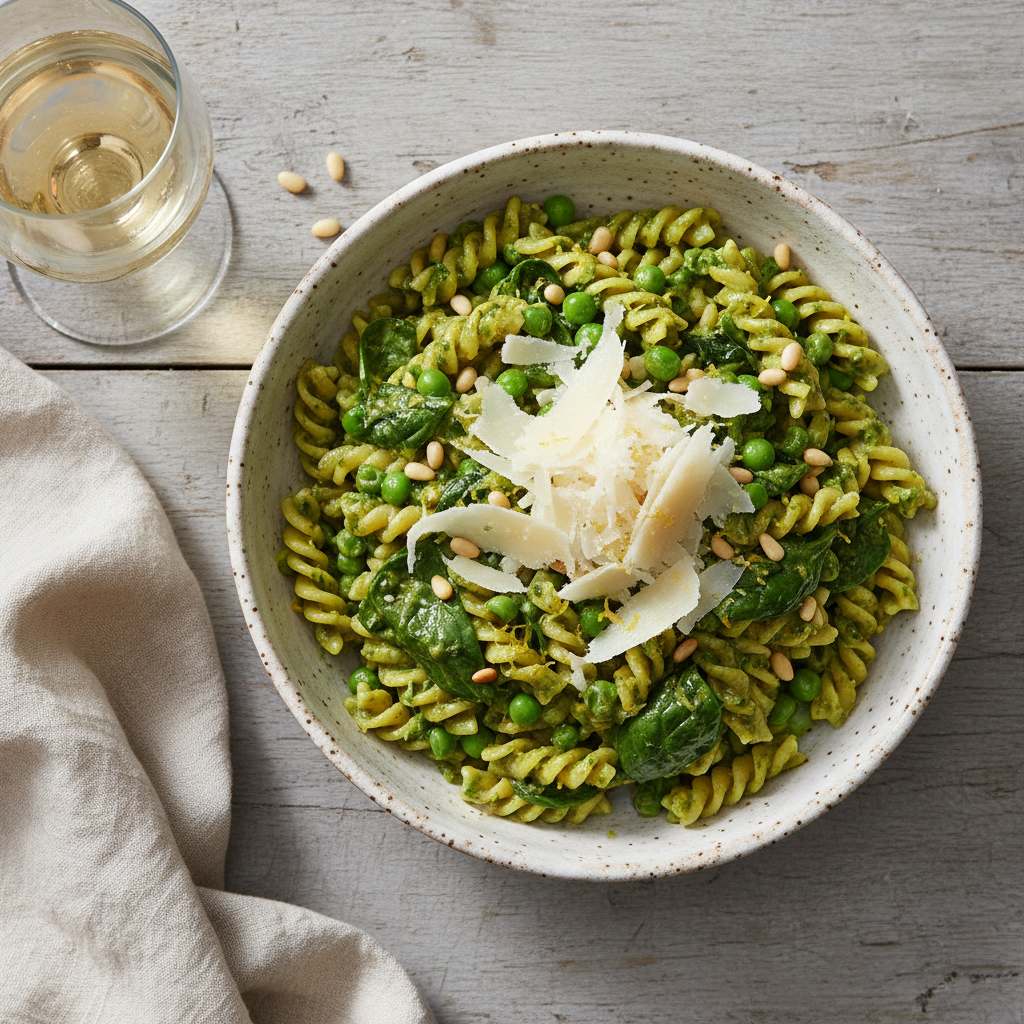
The secret lies in the alchemy of starchy pasta water, high-quality basil pesto, and a touch of light cream cheese or Greek yogurt, which emulsifies into a gloss that rivals any restaurant dish. The sweetness of the green peas pops against the savory, garlicky depth of the pesto, while fresh spinach wilts gently into the mix, adding an earthy nutritional boost. It is a dish that appeals to the eyes as much as the palate; the vivid emerald color is stunning on a white plate.
Whether you are looking for a quick meatless Monday option, a kid-friendly way to serve vegetables, or a sophisticated yet simple dinner date meal, this light creamy pesto pasta fits the bill. It is versatile enough to welcome grilled chicken or shrimp, yet substantial enough to stand alone. By focusing on fresh ingredients and smart cooking techniques, we transform simple pantry staples into a gourmet experience that feels indulgent but remains surprisingly light on the waistline.
History & Origins
To understand the roots of this dish, we must look to the sun-drenched coast of Liguria, Italy, specifically Genoa, the birthplace of *Pesto alla Genovese*. Traditionally, pesto is a raw sauce made from crushing garlic, European pine nuts, coarse salt, fresh basil leaves, and hard cheese like Parmigiano-Reggiano or Pecorino Sardo, all blended with olive oil. The word ‘pesto’ itself stems from the Genoese word *pestâ*, meaning to pound or crush, referencing the marble mortar and wooden pestle traditionally used to prepare it. For centuries, this sauce was served simply with pasta, potatoes, and green beans—a classic Ligurian combination known as *pasta avvantaggiata*.
The introduction of cream to pesto is a more modern, largely American and Northern European adaptation. As Italian cuisine traveled globally in the 20th century, chefs began experimenting with fusing the bright, herbal notes of pesto with the rich, comforting texture of cream sauces like Alfredo. This created a hybrid sauce that was milder and richer, appealing to palates that favored luscious, coating textures. However, the ‘light’ creamy variation is a product of the 21st-century wellness movement, where home cooks sought to replicate that velvety texture using alternative dairy sources like yogurt, light cream cheese, or simply utilizing the starch in pasta water to create an emulsion. This specific recipe nods to the Ligurian tradition of pairing pesto with green vegetables (peas and spinach) while embracing the modern desire for a creamy finish that doesn’t rely on heavy cream.
Why This Recipe Works
This recipe succeeds because it masterfully balances fat, acid, and texture while utilizing the science of emulsification to create creaminess without heaviness. Traditional creamy pesto sauces often break or become oily because the oil in the pesto separates when heated with heavy dairy. In this light version, we utilize starchy pasta water as a binding agent. The starch molecules expand and gelatinize, trapping the fat from the pesto and the light dairy component (such as light cream cheese), creating a stable, glossy sauce that coats the pasta rather than sliding off it.
Furthermore, the flavor profile is built on contrast. The peas provide a natural, popping sweetness that cuts through the intense, savory, and salty profile of the parmesan and basil. The spinach adds texture and bulk, allowing for a larger serving size with fewer calories. By adding the spinach at the very end, we ensure it wilts but retains its bright green color and nutrients, rather than becoming slimy or bitter. The result is a dish that hits every note—salty, sweet, herbal, and creamy—in a cohesive bite that feels much richer than its nutritional profile suggests.
Why You’ll Love This Recipe
- ✓Ready in under 25 minutes, perfect for busy weeknights.
- ✓Significantly lower in calories and fat than traditional creamy pesto sauces.
- ✓Packed with nutrient-dense greens like spinach and peas.
- ✓Vegetarian-friendly and easily adaptable for gluten-free diets.
- ✓Uses pantry staples like frozen peas and jarred or homemade pesto.
- ✓Kids love the bright color and sweet peas.
Equipment You’ll Need
- ✓Large stockpot for boiling pasta
- ✓Large skillet or sauté pan
- ✓Colander
- ✓Chef’s knife
- ✓Cutting board
- ✓Measuring cups and spoons
- ✓Tongs or pasta fork
Ingredients
- ✓12 oz (340g) pasta of choice (fusilli, penne, or farfalle work best)
- ✓1 cup (150g) frozen sweet peas
- ✓4 cups (120g) fresh baby spinach
- ✓1/2 cup (120ml) basil pesto (homemade or high-quality store-bought)
- ✓3 oz (85g) light cream cheese or Greek yogurt, room temperature
- ✓1/2 cup (120ml) reserved pasta water
- ✓2 cloves garlic, minced
- ✓1 tbsp olive oil
- ✓Salt and freshly cracked black pepper to taste
- ✓Optional: Red pepper flakes for heat
- ✓Garnish: Grated Parmesan cheese, lemon zest, toasted pine nuts
Instructions
- Bring a large pot of salted water to a rolling boil. Add the pasta and cook according to package instructions for al dente texture. Do not overcook.
- While the pasta boils, prepare your ingredients. Mince the garlic and measure out the peas, spinach, pesto, and cream cheese.
- About 3 minutes before the pasta is finished, add the frozen peas directly into the boiling pasta water. This blanches them perfectly without dirtying another pot.
- Important: Before draining the pasta, carefully scoop out about 1 cup of the starchy pasta water. Set it aside. Drain the pasta and peas in a colander.
- Return the empty pasta pot or a large skillet to the stove over medium-low heat. Add the olive oil and minced garlic. Sauté for 1 minute until fragrant, being careful not to burn the garlic.
- Reduce heat to low. Add the pesto and the light cream cheese (or yogurt) to the pan. Stir constantly, adding the reserved hot pasta water a splash at a time (start with 1/4 cup). Whisk or stir until the cheese melts and combines with the pesto and water to form a smooth, creamy sauce.
- Add the drained pasta and peas to the skillet with the sauce. Toss gently to coat everything evenly. If the sauce is too thick, add more reserved pasta water until it reaches your desired consistency.
- Add the fresh baby spinach to the hot pasta. Toss continuously for 1-2 minutes. The residual heat from the pasta will wilt the spinach perfectly.
- Season with freshly cracked black pepper and salt if needed (taste first, as pesto and parmesan are salty).
- Serve immediately, garnished with lemon zest, extra parmesan, and red pepper flakes if desired.
Expert Cooking Tips
- ✓Salt the pasta water generously; it is the only chance to flavor the pasta itself.
- ✓Do not rinse your pasta after draining! The starch on the surface helps the sauce cling.
- ✓Ensure the cream cheese or yogurt is at room temperature before adding it to the pan to prevent clumping.
- ✓If using Greek yogurt instead of cream cheese, do not let the sauce boil, or it may curdle. Keep the heat very low.
- ✓Freshly grated Parmesan cheese melts much better than pre-shredded cheese, which often contains anti-caking agents.
- ✓For extra brightness, squeeze a wedge of fresh lemon over the finished dish just before serving.
Substitutions and Variations
This recipe is incredibly flexible and can be adapted to suit various dietary needs and pantry limitations. For the pasta, you can use whole wheat, chickpea, or lentil pasta for a higher protein and fiber content; gluten-free pasta works perfectly as well, just be mindful that gluten-free pasta water is starchier, so use less of it initially. If you don’t have light cream cheese, you can substitute it with plain Greek yogurt (2% or full fat), ricotta cheese, or even a splash of half-and-half. For a vegan version, use a dairy-free pesto (without parmesan), swap the cream cheese for a vegan cream cheese alternative or coconut cream, and use nutritional yeast for cheesy flavor. You can swap the spinach for baby kale or arugula, though kale will need to be sautéed with the garlic rather than just wilted at the end. Frozen peas can be replaced with asparagus tips or broccoli florets, though these will need to be boiled with the pasta for slightly longer than the peas.
Common Mistakes to Avoid
The most common mistake when making this dish is overcooking the pasta. Since you will be tossing the pasta in the sauce over heat for another minute or two, drain it when it is still very ‘al dente’ so it doesn’t turn mushy. Another pitfall is discarding all the pasta water. That cloudy, starchy water is liquid gold—it is the emulsifier that makes the sauce creamy rather than oily. Without it, the pesto and cream cheese might just coat the pasta in a heavy, greasy layer. Also, avoid adding the spinach too early; if you cook it in the boiling water or sauté it too long, it will lose its volume and turn a dark, unappetizing grey-green. Finally, be careful with salt. Pesto, parmesan, and pasta water are all salty components. Taste your sauce before adding any additional salt.
Serving Suggestions
This Creamy Pesto Spinach Pasta is a complete meal on its own, but it pairs beautifully with a variety of sides. For protein, top it with grilled lemon-herb chicken breast, garlic butter shrimp, or sliced Italian sausage. If you want to keep it vegetarian but increase the protein, stir in some cannellini beans or chickpeas along with the peas. A crisp, acidic salad contrasts well with the creamy pasta; try a simple arugula salad with balsamic vinaigrette or a tomato and cucumber salad. Crusty garlic bread or focaccia is excellent for mopping up any leftover sauce. For wine pairings, a crisp white wine like a Sauvignon Blanc or Pinot Grigio cuts through the creaminess and complements the herbal basil notes perfectly.
Storage and Reheating Tips
Leftovers can be stored in an airtight container in the refrigerator for up to 3-4 days. However, creamy pasta dishes tend to dry out as they cool because the pasta absorbs the moisture from the sauce. To reheat, place the pasta in a saucepan over low heat or in the microwave. You *must* add a splash of water, milk, or broth to loosen the sauce back up. Stir gently while heating until the sauce becomes creamy again. Do not freeze this dish; the cream cheese or yogurt base will likely separate and become grainy upon thawing, and the texture of the pasta will deteriorate.
Nutrition Facts (Estimated)
| Serving Size | 1.5 cups |
| Calories | 420 |
| Fat | 14g |
| Saturated Fat | 4g |
| Unsaturated Fat | 9g |
| Trans Fat | 0g |
| Cholesterol | 15mg |
| Sodium | 480mg |
| Carbohydrates | 62g |
| Fiber | 6g |
| Sugar | 4g |
| Protein | 16g |
Frequently Asked Questions
Can I make this recipe vegan?
Yes! Simply use a vegan pesto (check labels to ensure no cheese is added) and substitute the cream cheese with a dairy-free cream cheese alternative, coconut milk, or a cashew cream sauce.
My sauce separated and looks oily. What happened?
This usually happens if the heat was too high or if there wasn’t enough starchy water to emulsify the oil. To fix it, take the pan off the heat and vigorously whisk in a tablespoon of hot water until it comes back together.
Can I use frozen spinach instead of fresh?
Yes, but fresh is better for texture. If using frozen, thaw it completely and squeeze out *all* the excess water before adding it to the sauce, otherwise, your sauce will become watery.
Is this dish spicy?
Not inherently. The red pepper flakes are optional. If you are sensitive to spice, simply omit them. The garlic adds flavor but not heat.
What is the best store-bought pesto to use?
Look for pesto found in the refrigerated section rather than the shelf-stable jarred aisle. Refrigerated pesto usually retains the bright green color and fresh basil flavor much better.
Can I use a different vegetable besides peas?
Absolutely. Broccoli florets, asparagus pieces, zucchini rounds, or green beans are all excellent substitutes. Just adjust cooking times to ensure they are tender-crisp.
Why do I need to save the pasta water?
Pasta water contains starch released from the noodles. This starch acts as a binder and thickener, helping the oil and water-based ingredients mix into a smooth, cohesive cream sauce.
Can I meal prep this for the week?
Yes, it keeps for 3-4 days. Just remember to add a splash of water when reheating to restore the creamy consistency.
Conclusion
This Creamy Pesto Spinach Pasta with Peas proves that you don’t need heavy cream or hours in the kitchen to create a meal that feels gourmet and satisfying. It is a testament to the power of fresh ingredients and simple cooking techniques. The vibrant green colors make it a joy to look at, and the blend of textures and flavors ensures it’s a joy to eat. Whether you are a novice cook or a seasoned pro looking for a quick win, this recipe is sure to become a staple in your rotation. Give it a try tonight, and enjoy a lighter take on comfort food that doesn’t compromise on taste.