Creamy Tomato Spinach Orzo Skillet Light Recipe
Creamy Tomato Spinach Orzo Skillet Light Recipe
Discover the ultimate comfort food makeover with this Creamy Tomato Spinach Orzo Skillet. This one-pot wonder delivers all the rich, velvety texture of a risotto-style dish but with a fraction of the calories and cleanup, ready in under 30 minutes.
10 minutes
20 minutes
30 minutes
4 servings
Main Course
Stovetop
Italian-American
Vegetarian
In the bustling world of weeknight dinners, finding the perfect balance between comfort, health, and convenience is often the holy grail for home cooks. Enter the Creamy Tomato Spinach Orzo Skillet—a recipe that has quickly become a staple in my kitchen and is guaranteed to win over yours. Imagine a dish that combines the tender, rice-like texture of orzo pasta with the bright, acidic punch of tomatoes and the earthy goodness of fresh spinach, all bound together in a sauce that feels luxuriously creamy yet remains surprisingly light. This isn’t just pasta with sauce; it is a cohesive, one-pan masterpiece where the starch from the orzo works its magic to thicken the broth naturally, eliminating the need for heavy roux or excessive amounts of high-fat cream.
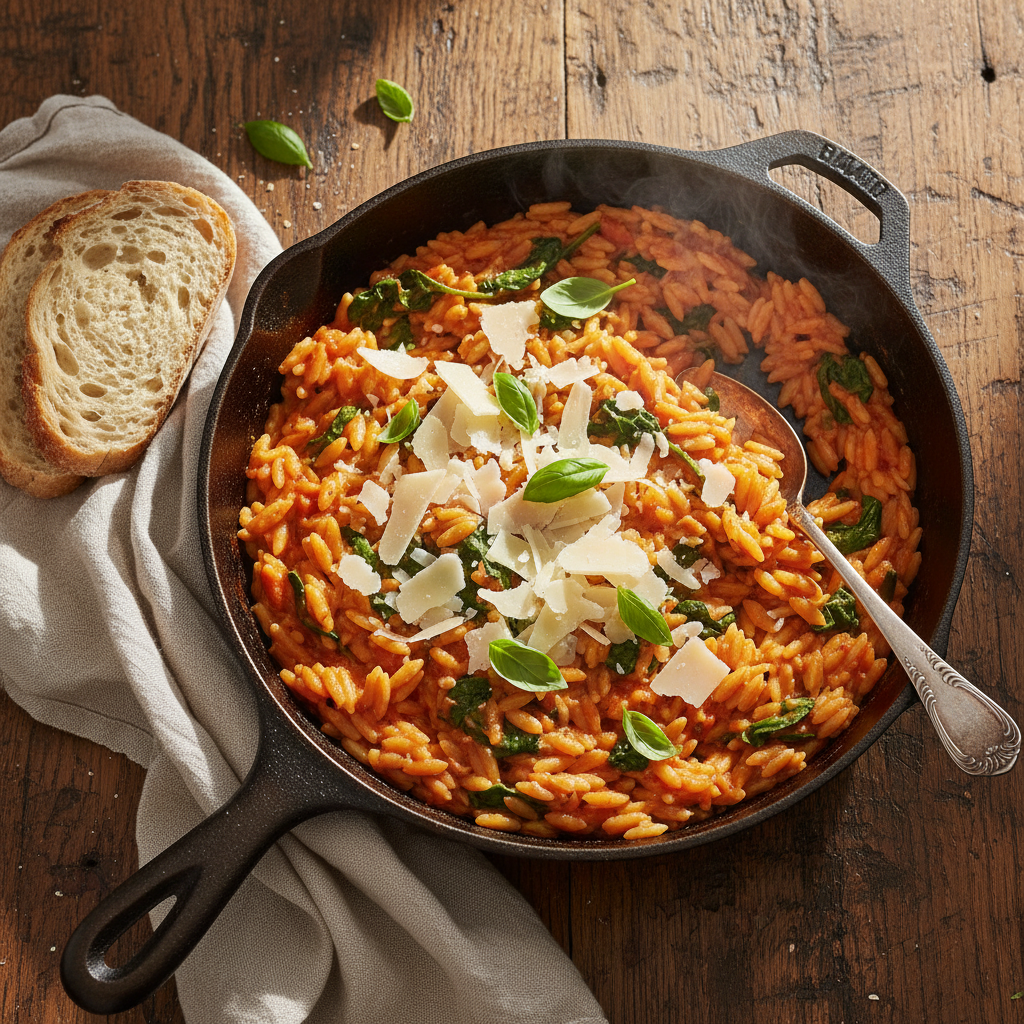
What makes this specific version a standout is its dedication to flavor without the heaviness that usually accompanies ‘creamy’ pasta dishes. By utilizing vegetable broth, a touch of high-quality parmesan, and a splash of half-and-half or a light cream alternative, we achieve that coveted velvety mouthfeel that coats every grain of pasta. It is the kind of meal that warms you up on a chilly evening but feels fresh enough for a spring dinner. Furthermore, the visual appeal is undeniable; the vibrant red of the tomatoes contrasting with the deep green spinach makes for a Pinterest-worthy presentation right in the skillet. whether you are cooking for a family of picky eaters or looking for a sophisticated yet quick meal prep option, this recipe checks every single box. It is hearty, wholesome, and proves that ‘light’ cooking does not mean sacrificing an ounce of satisfaction.
History & Origins
To truly appreciate this dish, we must look at the origins of its star ingredient: orzo. While it looks deceptively like a grain of rice, orzo is actually a form of short-cut pasta, made from semolina flour. In Italy, it is traditionally known as ‘risoni’ (meaning ‘large rice’) and is classified as ‘pastina’—a category of tiny pasta shapes often used in soups and broths. The name ‘orzo’ actually translates to ‘barley’ in Italian, referring to the shape of the pasta rather than its ingredients. Historically, orzo was a humble ingredient, primarily used to bulk up minestrones or wedding soups in Italian peasant cooking. It wasn’t the star of the show, but rather a supporting character providing texture and sustenance.
The transformation of orzo from a soup addition to the main event in a skillet meal is a relatively modern evolution, largely influenced by the American ‘one-pot’ cooking movement. In the mid-20th century, as American suburban life became faster-paced, the demand for convenience cooking skyrocketed. This gave rise to the ‘skillet dinner’—meals that combined protein, starch, and vegetables in a single vessel. While early iterations heavily relied on processed ingredients, the farm-to-table movement and the rise of food blogging in the early 2000s reimagined this concept using fresh, whole ingredients. Influential food writers began experimenting with cooking pasta directly in its sauce (a technique similar to risotto), realizing that the starch released created a natural creaminess. This Creamy Tomato Spinach Orzo Skillet is the culmination of that history: blending traditional Italian ingredients with the modern American desire for efficient, healthy, and flavor-forward one-pan meals.
Why This Recipe Works
This recipe succeeds because it leverages the science of starch gelatinization to create texture without relying on heavy fats. When you boil pasta in a large pot of water and drain it, you are pouring away liquid gold—the starchy water that helps emulsify sauces. In this skillet method, the orzo cooks directly in the mixture of crushed tomatoes and broth. As the pasta simmers, it releases starch into the liquid. Because the liquid reduces rather than being drained, that starch concentrates, naturally thickening the sauce and binding the fats (from the olive oil and cheese) with the water-based liquids. This results in a sauce that clings to the pasta rather than sliding off.
Furthermore, the flavor profile works on the principle of balancing acidity and fat. Tomatoes are naturally acidic and umami-rich. If served alone, they can be sharp; if drowned in heavy cream, their brightness is lost. This ‘light’ version uses just enough dairy to neutralize the sharpest acid notes of the tomato while preserving its zest. The spinach is added at the very end, utilizing residual heat to wilt it. This technique prevents the spinach from becoming slimy or losing its vibrant green color, ensuring a fresh textural contrast to the soft pasta. Finally, toasting the orzo and aromatics (garlic and onion) at the beginning of the cooking process creates a layer of deep, savory flavor (the Maillard reaction) that permeates the entire dish, meaning you need less salt and fat to make it taste delicious.
Why You’ll Love This Recipe
- ✓One-Pot Wonder: Less cleanup with everything cooked in a single skillet.
- ✓Under 30 Minutes: Perfect for busy weeknight schedules.
- ✓Healthier Creaminess: Uses starch and light dairy alternatives for a guilt-free rich texture.
- ✓Vegetarian Friendly: A hearty meatless meal that satisfies carnivores too.
- ✓Budget-Conscious: Utilizes pantry staples like canned tomatoes and dried pasta.
Equipment You’ll Need
- ✓Large skillet or sauté pan with high sides
- ✓Wooden spoon or spatula
- ✓Chef’s knife
- ✓Cutting board
- ✓Measuring cups and spoons
- ✓Garlic press (optional)
Ingredients
- ✓1 tablespoon extra virgin olive oil
- ✓1 medium yellow onion, finely diced
- ✓3 cloves garlic, minced
- ✓1.5 cups dry orzo pasta
- ✓1 (14.5 oz) can petite diced tomatoes, undrained
- ✓2.5 cups vegetable broth (low sodium preferred)
- ✓1 teaspoon dried Italian seasoning
- ✓1/2 teaspoon salt (plus more to taste)
- ✓1/4 teaspoon black pepper
- ✓3 cups fresh baby spinach, loosely packed
- ✓1/3 cup half-and-half (or light coconut milk for dairy-free)
- ✓1/4 cup grated Parmesan cheese
- ✓Fresh basil for garnish
- ✓Red pepper flakes (optional)
Instructions
- Heat the olive oil in a large skillet over medium heat. Once shimmering, add the diced onion and sauté for 3-4 minutes until it becomes translucent and soft.
- Add the minced garlic and dry orzo pasta to the skillet. Stir frequently for about 2 minutes. This toasts the orzo slightly, adding a nutty flavor, and prevents the garlic from burning.
- Pour in the diced tomatoes (with their juices), vegetable broth, Italian seasoning, salt, and pepper. Stir well to combine and scrape up any browned bits from the bottom of the pan.
- Bring the mixture to a gentle boil, then reduce the heat to medium-low to maintain a steady simmer.
- Cook uncovered for about 10-12 minutes, stirring occasionally to prevent the orzo from sticking to the bottom of the pan. Cook until the orzo is al dente and most of the liquid has been absorbed (it should still look saucy, not dry).
- Reduce heat to low. Stir in the half-and-half and Parmesan cheese until the sauce becomes creamy and uniform.
- Add the fresh baby spinach on top and gently fold it into the pasta mixture. Continue to stir for 1-2 minutes until the spinach has just wilted.
- Taste and adjust seasoning with additional salt or pepper if needed. Remove from heat immediately.
- Serve hot, garnished with fresh chopped basil and a sprinkle of red pepper flakes if you like a little heat.
Expert Cooking Tips
- ✓Stir Often: Unlike boiling pasta in water, cooking orzo in sauce requires frequent stirring to release starch evenly and prevent sticking.
- ✓Toast the Orzo: Do not skip the step of sautéing the dry pasta with the aromatics; it adds a depth of flavor that boiling alone cannot achieve.
- ✓Watch the Liquid: If the liquid evaporates too quickly before the pasta is tender, add a splash more broth or water, 1/4 cup at a time.
- ✓Fresh Spinach is Best: Frozen spinach can be used, but fresh baby spinach provides a much better texture and doesn’t add excess water.
- ✓Grate Your Own Cheese: Pre-shredded cheese contains anti-caking agents that prevent smooth melting. Grate a block of Parmesan for the best texture.
- ✓Don’t Overcook: Orzo can turn mushy quickly. Stop cooking when it is al dente; it will continue to soften slightly in the hot sauce as it sits.
Substitutions and Variations
This recipe is incredibly versatile and forgiving. If you are gluten-free, you can substitute the orzo for a gluten-free orzo variety or even quinoa, though cooking times and liquid ratios may need slight adjustments (quinoa typically needs a 1:2 ratio). For a dairy-free or vegan version, replace the half-and-half with unsweetened coconut milk, cashew cream, or a plant-based heavy cream alternative, and use nutritional yeast or vegan parmesan instead of cheese. If you want to boost the protein content, this dish pairs beautifully with added ingredients. You can sauté diced chicken breast or Italian sausage with the onions at the start, or stir in a can of drained chickpeas or white beans when you add the tomatoes. If you don’t have spinach, kale or Swiss chard work well, though they will need to be added a few minutes earlier than spinach to ensure they soften sufficiently. Lastly, crushed tomatoes can be used instead of diced tomatoes if you prefer a smoother sauce without chunks.
Common Mistakes to Avoid
The most common mistake with skillet pasta is walking away. Because there is a limited amount of liquid, the starch can settle and burn on the bottom of the pan if not agitated. Another pitfall is over-seasoning with salt early on. The broth, canned tomatoes, and Parmesan cheese all contain sodium, so it is crucial to taste at the very end before adding extra salt. Additionally, many cooks mistakenly cover the pan for the entire duration. While covering speeds up cooking, it prevents evaporation, which is necessary to thicken the sauce. It is best to cook uncovered or only partially covered so you can monitor the liquid reduction. Finally, adding the dairy while the heat is too high can cause the sauce to curdle or ‘break,’ resulting in a grainy texture. Always lower the heat before stirring in cream or cheese.
Serving Suggestions
This Creamy Tomato Spinach Orzo Skillet is a complete meal on its own, but it shines when paired with the right sides. A slice of crusty sourdough or garlic bread is almost mandatory for mopping up the delicious creamy tomato sauce. To balance the richness of the pasta, serve a crisp, acidic side salad—arugula with lemon vinaigrette or a classic Caesar salad works wonders. If you are serving this as a side dish rather than a main, it pairs exceptionally well with grilled proteins like lemon-herb chicken breast, pan-seared salmon, or garlic butter shrimp. For a dinner party, serve it in individual shallow bowls topped with a generous amount of fresh basil and perhaps a drizzle of high-quality balsamic glaze for an elegant finish.
Storage and Reheating Tips
This dish stores surprisingly well, making it a great candidate for meal prep. Allow the leftovers to cool completely before transferring them to an airtight container. It can be refrigerated for up to 3-4 days. Note that the orzo will continue to absorb liquid as it sits in the fridge, so the mixture will be much thicker the next day. To reheat, place the desired portion in a saucepan over medium-low heat or in the microwave. You will almost certainly need to add a splash of water, broth, or milk to loosen the sauce and restore the creamy consistency. Stir gently while reheating to ensure it warms evenly. Freezing is not highly recommended for this specific recipe, as the dairy-based sauce can separate and the texture of the orzo can become grainy upon thawing, but if you must, freeze it without the spinach and add fresh greens upon reheating.
Nutrition Facts (Estimated)
| Serving Size | 1.5 cups |
| Calories | 340 |
| Fat | 9g |
| Saturated Fat | 3.5g |
| Unsaturated Fat | 5g |
| Trans Fat | 0g |
| Cholesterol | 15mg |
| Sodium | 580mg |
| Carbohydrates | 52g |
| Fiber | 5g |
| Sugar | 6g |
| Protein | 14g |
Frequently Asked Questions
Can I use milk instead of half-and-half?
Yes, you can use whole milk or even 2% milk to make it even lighter. However, the sauce will be slightly less rich and creamy. You might want to simulate the thickness by simmering it a minute longer.
Is orzo gluten-free?
No, traditional orzo is made from wheat semolina flour. If you have a gluten intolerance, you must specifically buy gluten-free orzo (often made from corn or rice flour) or substitute with rice or quinoa.
Can I add meat to this recipe?
Absolutely. Browned ground turkey, Italian sausage, or bite-sized chicken pieces can be cooked in the skillet before the onions are added. Remove the cooked meat, proceed with the recipe, and stir the meat back in at the end.
Why is my sauce too runny?
If the sauce is too runny, continue simmering uncovered for a few more minutes. The orzo releases starch as it cooks, which thickens the liquid. Also, remember it will thicken significantly as it cools.
Can I use fresh tomatoes instead of canned?
Yes, you can use about 1.5 cups of chopped fresh tomatoes. However, canned tomatoes provide a more consistent liquid content and concentrated flavor which is helpful for the one-pot method.
What if I don’t have vegetable broth?
Chicken broth is a perfect substitute if you are not vegetarian. In a pinch, you can use water and adjust your seasoning, perhaps adding a bouillon cube for flavor depth.
Can I use frozen spinach?
Yes. Thaw the frozen spinach and squeeze out as much excess water as possible before adding it to the skillet. This prevents the sauce from becoming watery.
Is this recipe spicy?
Not inherently. The red pepper flakes are optional. Without them, the dish is savory and creamy, suitable for children and those sensitive to spice.
Can I make this vegan?
Yes. Use vegetable broth, swap the half-and-half for full-fat coconut milk or a plant-based creamer, and use a vegan parmesan alternative or nutritional yeast.
Do I need to rinse the orzo before cooking?
No, do not rinse the orzo. Rinsing removes the surface starch that is essential for thickening the creamy sauce in this one-pot method.
Conclusion
The Creamy Tomato Spinach Orzo Skillet is more than just a recipe; it is a solution to the modern dinner dilemma. It proves that you don’t need hours of time, a sink full of dishes, or heavy ingredients to create a meal that feels indulgent and restaurant-quality. Whether you are a novice cook looking for an easy win or a seasoned pro seeking a reliable weeknight staple, this dish delivers on all fronts. The combination of tangy tomato, comforting pasta, and fresh greens creates a flavor profile that is universally loved. I hope this recipe brings as much warmth and joy to your table as it has to mine. Don’t forget to pin this recipe for later and share your creations on social media!