The Ultimate Healthy Blueberry Crisp With Oat Crumble Recipe
Healthy Blueberry Crisp With Oat Crumble Recipe
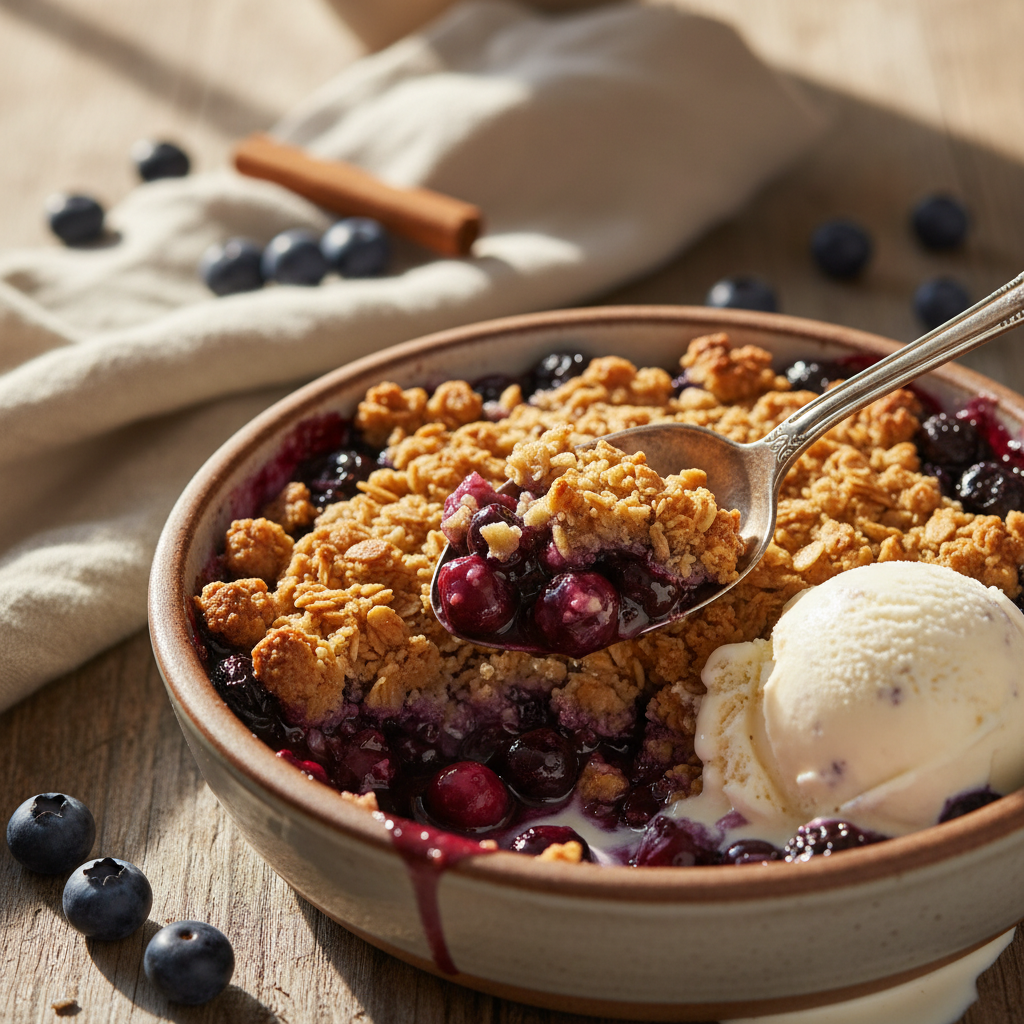
Bursting with juicy, antioxidant-rich blueberries and topped with a golden, crunchy oat crumble, this healthy blueberry crisp is the ultimate guilt-free dessert. Naturally sweetened with maple syrup and packed with wholesome ingredients, it is perfect for a cozy breakfast or a light summer treat.
15 minutes
40 minutes
55 minutes
8 servings
Dessert
Baking
American
Gluten-Free
There is something undeniably magical about the transformation of fresh fruit when it meets the heat of an oven. In the height of summer, when blueberries are at their peak—plump, sweet, and slightly tart—there is no better way to celebrate their abundance than with a classic blueberry crisp. However, traditional recipes often drown the natural vibrancy of the fruit in cups of refined white sugar and heavy butter toppings. This Healthy Blueberry Crisp with Oat Crumble rewrites that narrative, proving that you do not need to sacrifice flavor for nutrition. We strip back the excess to focus on what truly matters: the jammy, bubbling interior of bursting berries and the nutty, textural crunch of a wholesome oat topping.
This recipe is designed for the modern kitchen, bridging the gap between a decadent dessert and a nourishing breakfast. Imagine pulling a bubbling dish from the oven, the scent of warm cinnamon, toasted nuts, and caramelized maple syrup filling your home. The filling becomes a luscious, deep purple compote that pairs perfectly with the golden-brown crust, which utilizes rolled oats, almond flour, and coconut oil instead of refined flour and butter. It is gluten-free, vegan-friendly, and refined sugar-free, yet it retains that nostalgic comfort food quality that makes crisps a beloved staple. Whether you serve it piping hot with a scoop of dairy-free vanilla ice cream or cold straight from the fridge with a dollop of Greek yogurt, this dish is a testament to the power of whole food ingredients. It is robust enough to stand alone but elegant enough to serve at a dinner party, making it a versatile addition to your culinary repertoire.
History & Origins
The history of fruit crisps, crumbles, and cobblers is a fascinating journey through culinary pragmatism and resourcefulness. While baked fruit dishes have existed for centuries, the specific iteration known as the ‘crisp’ or ‘crumble’ gained significant popularity during World War II. In both Britain and the United States, strict rationing of ingredients like flour, butter, and sugar meant that traditional pies—which require significant amounts of fat and flour for the crust—became a luxury that few could afford regularly. Home cooks needed a way to stretch their limited supplies while still providing a comforting, sweet end to a meal.
Enter the crumble. By mixing a smaller amount of flour and fat with oats (which were often more available) and sprinkling it over fruit, cooks could create a satisfying dessert that mimicked the flavors of a pie without the structural demands of a pastry crust. In the United Kingdom, the term ‘crumble’ became the standard, while in the United States, the terminology evolved with slight regional nuances. An American ‘crisp’ traditionally contained oats in the topping, which crisped up during baking, whereas a ‘crumble’ was originally just flour, sugar, and fat. A ‘cobbler’ featured a biscuit topping, a ‘betty’ used breadcrumbs, and a ‘buckle’ was more akin to a coffee cake with fruit mixed in.
Over the decades, the lines between these dishes have blurred. Today, ‘crisp’ and ‘crumble’ are often used interchangeably, though purists still argue for the oat distinction. This specific recipe represents the modern evolution of the dish. As health consciousness rose in the late 20th and early 21st centuries, the crisp became a prime candidate for a makeover. By swapping lard or butter for heart-healthy oils and replacing refined sugar with natural sweeteners like maple syrup or honey, the humble wartime dessert has been elevated into a nutrient-dense dish that honors its frugal roots while embracing contemporary nutritional science.
Why This Recipe Works
This recipe succeeds where many ‘healthy’ adaptations fail because it prioritizes texture and balance rather than just removing ingredients. The secret lies in the dual-texture engineering of the topping and the stabilization of the filling. First, let’s talk about the fruit. Blueberries are naturally high in pectin, but they release a significant amount of water when baked. To prevent a soupy mess, we use a precise amount of cornstarch (or arrowroot powder) mixed with lemon juice. The acid in the lemon juice not only brightens the flavor, cutting through the sweetness, but it also activates the pectin, working in tandem with the starch to create a glossy, thick sauce that coats the back of a spoon.
For the topping, the combination of old-fashioned rolled oats and almond flour is crucial. Rolled oats provide the necessary chew and structure that instant oats simply cannot offer; instant oats would turn to mush in the oven. The almond flour adds a high fat content and a subtle nuttiness that mimics the richness of butter, allowing us to use less oil while achieving a tender crumb. We use melted coconut oil to bind the dry ingredients; coconut oil has a higher melting point than butter, which helps the topping crisp up beautifully without burning too quickly. Finally, using liquid sweetener (maple syrup) in the topping promotes caramelization, giving the oats that signature golden-brown hue and a slight snap when you break into it. The result is a dish where the topping remains crunchy even as it sits atop the moisture-rich fruit, creating the perfect bite every time.
Why You’ll Love This Recipe
- ✓100% Whole Grain & Gluten-Free: Uses rolled oats and almond flour for a nutrient-dense base.
- ✓Refined Sugar-Free: Sweetened entirely with pure maple syrup and the natural sugars of the fruit.
- ✓Versatile: Perfect for dessert with ice cream or breakfast with yogurt.
- ✓Meal-Prep Friendly: Can be assembled ahead of time or frozen for later.
- ✓High in Antioxidants: Packed with fresh or frozen blueberries.
- ✓Dairy-Free & Vegan: Uses coconut oil instead of butter.
Equipment You’ll Need
- ✓9×9 inch baking dish or cast iron skillet
- ✓Large mixing bowl
- ✓Medium mixing bowl
- ✓Rubber spatula
- ✓Measuring cups and spoons
- ✓Citrus juicer
Ingredients
- ✓6 cups fresh or frozen blueberries
- ✓1/3 cup pure maple syrup (for filling)
- ✓1 tablespoon fresh lemon juice
- ✓1 teaspoon lemon zest
- ✓2 tablespoons cornstarch or arrowroot powder
- ✓1 teaspoon vanilla extract
- ✓1.5 cups old-fashioned rolled oats (certified GF if needed)
- ✓3/4 cup almond flour
- ✓1/2 cup chopped walnuts or pecans
- ✓1/3 cup pure maple syrup (for topping)
- ✓1/3 cup coconut oil, melted
- ✓1 teaspoon ground cinnamon
- ✓1/4 teaspoon sea salt
Instructions
- Preheat your oven to 350°F (175°C). Lightly grease a 9×9 inch baking dish or a 10-inch cast-iron skillet with a little coconut oil.
- In a large mixing bowl, combine the blueberries, 1/3 cup maple syrup, lemon juice, lemon zest, vanilla extract, and cornstarch. Toss gently until the berries are evenly coated and the cornstarch has dissolved into the liquid. Pour this mixture into your prepared baking dish and spread it out into an even layer.
- In a separate medium bowl, prepare the crumble topping. Combine the rolled oats, almond flour, chopped nuts, cinnamon, and sea salt. Stir to mix the dry ingredients well.
- Pour the melted coconut oil and the remaining 1/3 cup maple syrup over the oat mixture. Stir with a spatula or fork until the dry ingredients are fully moistened and clumps begin to form. You want a texture that looks like wet sand with some larger clusters.
- Sprinkle the oat crumble evenly over the blueberry filling. Use your fingers to lightly press the topping down; this helps form nice crunchy chunks after baking.
- Bake in the preheated oven for 40 to 45 minutes. You are looking for the fruit filling to be bubbling vigorously around the edges and the oat topping to be a deep golden brown.
- If the topping starts to brown too quickly before the fruit is bubbling, loosely tent the dish with aluminum foil for the last 10-15 minutes of baking.
- Remove from the oven and let the crisp cool for at least 15-20 minutes before serving. This resting period is crucial as it allows the fruit filling to thicken and set.
Expert Cooking Tips
- ✓Use Old-Fashioned Oats: Never use instant or quick oats for a crisp. They are too processed and will result in a mushy, powdery texture rather than a crisp crumble.
- ✓Don’t Thaw Frozen Berries: If using frozen blueberries, use them straight from the freezer. If you thaw them first, they will release too much juice and make the crisp soggy. You may need to add 5 minutes to the baking time.
- ✓Check the Bubbles: The most reliable sign that a fruit crisp is done is not just the color of the topping, but the bubbling of the fruit. The filling must bubble in the center, not just the edges, to ensure the cornstarch has fully activated and thickened.
- ✓Tent with Foil: Nuts and maple syrup can burn if left in the heat too long. Keep an eye on your oven around the 30-minute mark and cover with foil if the top is getting dark.
- ✓Zest is Best: Do not skip the lemon zest. The oils in the zest provide a floral aroma that elevates the blueberry flavor significantly more than juice alone.
Substitutions and Variations
This recipe is highly adaptable to suit various dietary needs and pantry staples. **Flour:** If you have a nut allergy, you can substitute the almond flour with oat flour, sunflower seed flour, or a standard gluten-free all-purpose flour blend. **Sweetener:** Honey or agave nectar can be swapped 1:1 for maple syrup, though honey will result in a softer, less crisp topping and darker browning. For a lower glycemic option, liquid monk fruit or stevia blends can be used, but check conversion charts. **Fats:** Melted unsalted butter or vegan butter can be used in place of coconut oil if you prefer a buttery flavor. **Fruit:** This base recipe works beautifully with other fruits. Try a mix of berries, peaches, apples, or pears. If using apples, slice them thinly and sauté for 5 minutes before baking to ensure they cook through. **Nuts:** Pecans, almonds, or hazelnuts can be used instead of walnuts. For a nut-free version, use pumpkin seeds (pepitas) or sunflower seeds for crunch.
Common Mistakes to Avoid
The most common mistake when making a healthy crisp is **underbaking**. Because we are not using refined sugar, which creates a thick syrup easily, we rely on the reduction of fruit juices and the activation of cornstarch. If you pull it out before the center bubbles, the filling will be watery. Another mistake is **using too much fat** in the topping. While fat creates crispness, too much will cause the topping to slide off the fruit and become greasy. Stick to the measurements provided. Finally, **over-mixing the topping** can lead to a dense paste rather than a crumble. Use a fork to mix just until combined to maintain those lovely clusters.
Serving Suggestions
This Healthy Blueberry Crisp is incredibly versatile. For a classic dessert presentation, serve it warm with a scoop of vanilla bean ice cream or a dairy-free coconut milk ice cream. The contrast of hot fruit and cold cream is unbeatable. For a lighter option, top with a dollop of whipped coconut cream or almond whipped topping. If you are serving this for breakfast or brunch, it pairs beautifully with plain Greek yogurt or Skyr, which adds protein and cuts the sweetness. A drizzle of almond butter or a sprinkle of hemp seeds can add extra nutrition for a morning meal.
Storage and Reheating Tips
To store leftovers, allow the crisp to cool completely to room temperature to prevent condensation from making the topping soggy. Cover the dish tightly with plastic wrap or transfer to an airtight container. It will keep in the refrigerator for up to 4-5 days. **Reheating:** To restore the crunch, reheat individual portions in a toaster oven or conventional oven at 350°F for 10-15 minutes. Microwaving is faster but will result in a softer topping. **Freezing:** You can freeze the baked crisp for up to 3 months. Thaw overnight in the refrigerator before reheating in the oven.
Nutrition Facts (Estimated)
| Serving Size | 1 cup |
| Calories | 245 kcal |
| Fat | 12g |
| Saturated Fat | 4g |
| Unsaturated Fat | 7g |
| Trans Fat | 0g |
| Cholesterol | 0mg |
| Sodium | 5mg |
| Carbohydrates | 32g |
| Fiber | 5g |
| Sugar | 18g |
| Protein | 4g |
Frequently Asked Questions
Can I use frozen blueberries instead of fresh?
Absolutely. Frozen blueberries work perfectly in this recipe. Do not thaw them before baking; simply toss them with the starch and sweetener frozen. You might need to bake the crisp for an extra 5-10 minutes to account for the colder starting temperature.
Is this recipe completely gluten-free?
Yes, provided you use certified gluten-free rolled oats. While oats are naturally gluten-free, they are often processed in facilities that handle wheat, so checking the label is essential for those with Celiac disease.
Can I make this crisp ahead of time?
Yes. You can assemble the entire crisp and refrigerate it (uncooked) for up to 6 hours before baking. Alternatively, bake it fully, let it cool, and reheat it before serving. It is best served warm.
My topping isn’t getting crispy, what did I do wrong?
You likely didn’t bake it long enough or used quick oats instead of rolled oats. Also, ensure you used enough oil/fat to coat the dry ingredients. If it’s still soft, try finishing it under the broiler for 1-2 minutes, watching closely to prevent burning.
Can I use a different sweetener?
Yes, you can use honey, agave, or brown rice syrup. Granulated sweeteners like coconut sugar or brown sugar also work, but you may need to add a tablespoon of water or extra oil to the topping to help it clump together.
Why is my filling runny?
A runny filling usually means the cornstarch didn’t have a chance to reach boiling point and activate. Ensure the fruit is bubbling vigorously in the center of the dish before removing it from the oven.
Can I omit the cornstarch?
You can, but the filling will be very juicy and soup-like. If you prefer a thicker sauce that stays with the fruit, a thickener like cornstarch, arrowroot, or tapioca flour is necessary.
Is this recipe keto-friendly?
As written, no, due to the maple syrup and oats. However, you can adapt it by using a keto-friendly maple syrup alternative, replacing oats with more nuts/seeds and shredded coconut, and using a low-carb thickener like xanthan gum.
Can I double the recipe?
Yes, you can double the ingredients and bake it in a 9×13 inch baking dish. The baking time remains similar, perhaps adding 5-10 minutes depending on the depth of the fruit.
What is the best way to reheat it?
The oven is best. 350°F for 10-15 minutes. This re-crisps the topping. The microwave will make the oats chewy and soft.
Conclusion
This Healthy Blueberry Crisp with Oat Crumble is more than just a recipe; it is a celebration of simple, wholesome ingredients coming together to create something truly comforting. It proves that you don’t need excessive amounts of sugar or processed ingredients to create a dessert that feels indulgent and satisfying. Whether you are an experienced baker or a novice in the kitchen, this fool-proof recipe delivers consistent, delicious results that will have your family and friends asking for seconds. So, grab those blueberries, preheat your oven, and get ready to fill your kitchen with the irresistible aroma of baked fruit and toasted oats. We hope this becomes a staple in your home just as it is in ours.