The Ultimate Kale and Quinoa Power Salad with Crispy Chickpeas
Kale And Quinoa Power Salad With Chickpeas Recipe
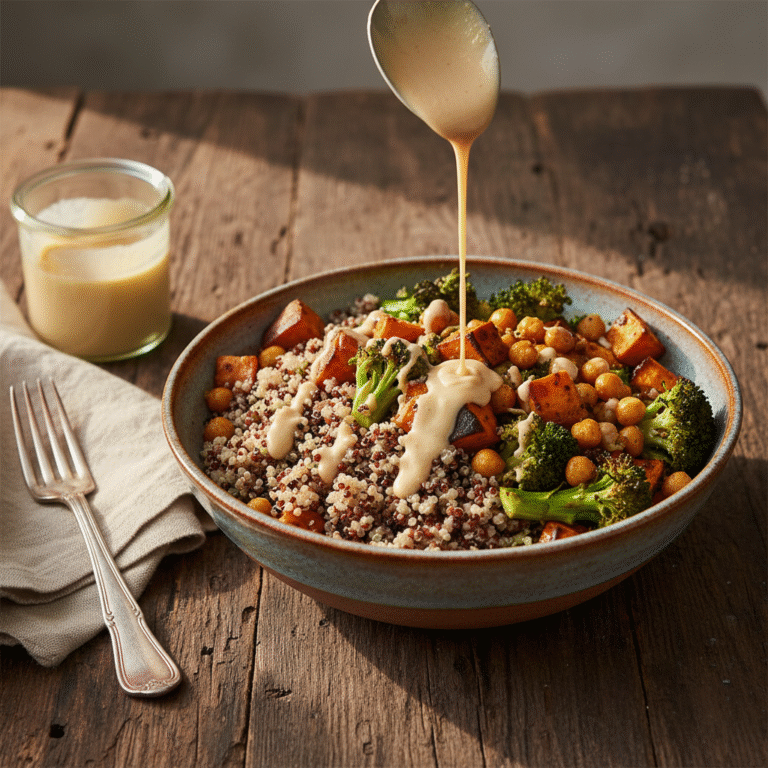
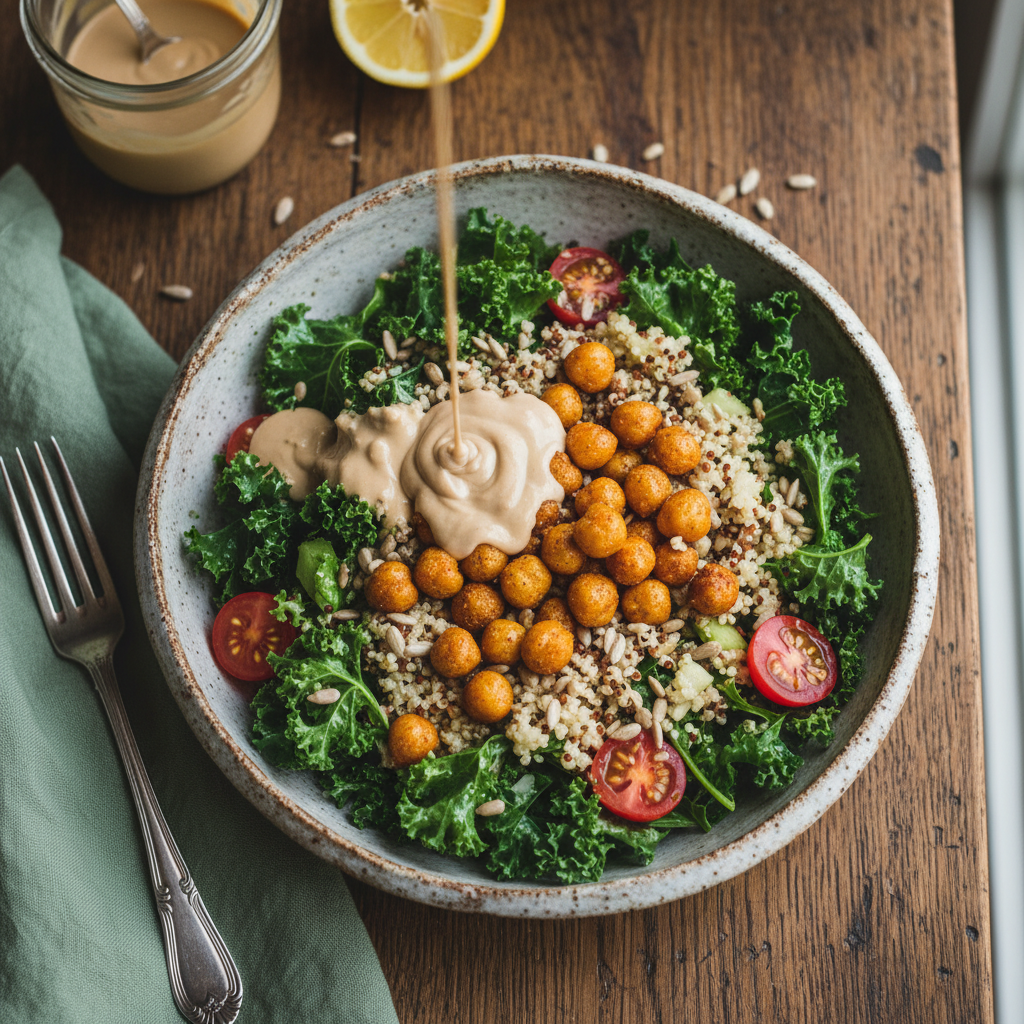
Packed with nutrient-dense superfoods, this vibrant salad combines tender massaged kale, fluffy quinoa, and spiced roasted chickpeas for the ultimate healthy meal prep lunch. A zesty lemon-tahini dressing ties it all together, offering a perfect balance of crunch, creaminess, and plant-based protein that keeps you full for hours.
20 minutes
25 minutes
45 minutes
4 generous servings
Main Course / Salad
Roasting and Stovetop
Modern American / Mediterranean Fusion
Vegan
In the world of wellness and food blogging, the term ‘salad’ often gets a bad reputation for being boring, unsatisfying, or simply a side dish to the main event. However, this Kale and Quinoa Power Salad is here to completely rewrite that narrative. We are moving far beyond the realm of wilted iceberg lettuce and bland tomatoes into a culinary experience that is as robust in flavor as it is in nutrition. This dish is designed to be a complete meal, featuring a complex interplay of textures and flavors that dance on the palate. The foundation starts with lacinato kale, but not the tough, fibrous leaves you might be afraid of. By using a special preparation technique, the greens become tender and silky. We pair this with fluffy, nutty quinoa, which acts as a sponge for our dressing, and the star of the show: oven-roasted, smoky, crispy chickpeas. These chickpeas provide the ‘crouton’ crunch without the empty calories. To finish, the entire bowl is drizzled with a creamy, golden lemon-tahini dressing that is rich in healthy fats and bright citrus notes. Whether you are a dedicated vegan, a gluten-free eater, or just someone looking to incorporate more whole foods into your diet without sacrificing taste, this power salad is a game-changer. It holds up remarkably well in the fridge, making it the holy grail of Sunday meal prep, ensuring you have a high-vibration lunch ready to go all week long.
History & Origins
To understand the roots of this Power Salad, we have to look at the fascinating histories of its three main components: kale, quinoa, and chickpeas, and how they converged in modern American wellness culture. Kale, a descendant of the wild cabbage, has been cultivated for over 2,000 years, with origins in the eastern Mediterranean and Asia Minor. It was a staple in Europe during the Middle Ages due to its frost resistance, but for decades in the United States, it was primarily used as a garnish for salad bars (famously, Pizza Hut was once the largest purchaser of kale, purely for decoration). It wasn’t until the early 2010s that kale experienced a massive rebranding, exploding onto the health food scene as a ‘superfood.’ Quinoa followed a similar trajectory. Domesticated by the Incas in the Andes mountains 3,000 to 4,000 years ago, it was considered sacred, the ‘mother of all grains.’ It remained relatively obscure in the global market until the late 20th century when its status as a complete protein—containing all nine essential amino acids—propelled it to stardom in Western diets. Chickpeas, or garbanzo beans, have sustained civilizations in the Middle East for over 7,000 years. The concept of combining these ancient ingredients into a single ‘Power Bowl’ is a distinctly modern, Western innovation. Emerging from the clean-eating movements of California in the early 2000s and popularized by fast-casual chains like Sweetgreen, the ‘grain bowl’ became a symbol of modern, functional eating—fueling the body with macro-balanced meals that are as photogenic as they are nutritious.
Why This Recipe Works
This recipe succeeds where other salads fail because it is built on the principles of texture variation and flavor balancing. A common pitfall of grain salads is a singular, mushy texture. Here, we combat that by roasting the chickpeas until they are genuinely crispy, providing a necessary crunch that contrasts with the soft, fluffy quinoa. Furthermore, the ‘massaging’ step for the kale is scientifically crucial; mechanically breaking down the plant’s cellulose structure releases natural sugars and softens the leaves, removing the bitterness often associated with raw kale. Flavor-wise, the dressing acts as an emulsified bridge between the earthy grains and the fresh vegetables. Tahini introduces a sesame bitterness that is immediately cut by the sharp acidity of fresh lemon juice and the sweetness of maple syrup. This creates a ‘umami-bomb’ effect that makes the vegetables taste savory and indulgent. Additionally, the ratio of grain to green is optimized so that every bite contains a mix of ingredients, ensuring you aren’t left with a pile of plain quinoa at the bottom of the bowl. It works because it treats vegetables not as an obligation, but as a canvas for bold, aggressive seasoning.
Why You’ll Love This Recipe
- ✓Packed with 15g of plant-based protein per serving
- ✓Meal-prep friendly: stays crisp for days
- ✓Naturally Gluten-Free and Vegan
- ✓Rich in fiber and antioxidants
- ✓Features a creamy, oil-free optional dressing base
- ✓Highly customizable with seasonal veggies
Equipment You’ll Need
- ✓Large Baking Sheet
- ✓Fine-mesh sieve
- ✓Medium Saucepan with lid
- ✓Large Mixing Bowl
- ✓Small whisk or jar for dressing
- ✓Chef’s Knife
- ✓Cutting Board
Ingredients
- ✓1 cup uncooked quinoa, rinsed thoroughly
- ✓2 cups water or vegetable broth
- ✓1 large bunch Lacinato (Dino) kale, ribs removed and chopped
- ✓1 can (15 oz) chickpeas, rinsed, drained, and dried
- ✓1 tbsp olive oil (for roasting chickpeas)
- ✓1 tsp smoked paprika
- ✓1/2 tsp ground cumin
- ✓1/2 tsp garlic powder
- ✓1/2 cup cherry tomatoes, halved
- ✓1/2 English cucumber, diced
- ✓1/4 cup red onion, finely diced
- ✓1/4 cup toasted sunflower seeds or pepitas
- ✓1/3 cup tahini (sesame seed paste)
- ✓1 large lemon, juiced (approx 3 tbsp)
- ✓1 tbsp maple syrup
- ✓1 clove garlic, minced
- ✓2-3 tbsp warm water (to thin dressing)
- ✓Salt and black pepper to taste
Instructions
- 1. Preheat your oven to 400°F (200°C). Line a large baking sheet with parchment paper.
- 2. Thoroughly dry the rinsed chickpeas with a clean kitchen towel. Remove any loose skins. Toss them on the baking sheet with 1 tablespoon olive oil, smoked paprika, cumin, garlic powder, and a pinch of salt. Spread them in a single layer.
- 3. Roast the chickpeas for 20-25 minutes, shaking the pan halfway through, until they are golden and crispy. Set aside to cool.
- 4. While chickpeas roast, combine rinsed quinoa and water (or broth) in a saucepan. Bring to a boil, then reduce heat to low, cover, and simmer for 15 minutes or until water is absorbed. Remove from heat and let it sit covered for 5 minutes before fluffing with a fork.
- 5. Place the chopped kale in a large bowl. Drizzle with a tiny splash of olive oil and a pinch of salt. Using your clean hands, massage the kale for 2-3 minutes until it turns dark green and reduces in volume by about half. This step is crucial for texture.
- 6. In a small bowl or jar, whisk together the tahini, lemon juice, maple syrup, minced garlic, salt, and pepper. Add warm water one tablespoon at a time, whisking constantly, until the dressing reaches a pourable, creamy consistency.
- 7. To assemble, add the cooked quinoa, cucumber, cherry tomatoes, and red onion to the bowl with the massaged kale. Pour the dressing over the top and toss well to coat everything evenly.
- 8. Just before serving, top with the crispy roasted chickpeas and toasted sunflower seeds. This ensures they stay crunchy.
- 9. Serve immediately or portion into meal prep containers.
Expert Cooking Tips
- ✓Dry the chickpeas thoroughly before roasting; moisture creates steam and prevents crispiness.
- ✓Rinse your quinoa under cold water until the water runs clear to remove saponins, which can cause a bitter taste.
- ✓Do not skip the kale massage; it transforms the texture from tough to tender.
- ✓If meal prepping, store the roasted chickpeas in a separate container at room temperature to maintain their crunch.
- ✓Toast your sunflower seeds in a dry pan for 2 minutes to release their natural oils and enhance flavor.
- ✓Use English cucumbers or Persian cucumbers to avoid thick skins and large seeds.
- ✓If the dressing seizes up (becomes thick and clumpy) when you add lemon juice, just keep whisking and adding warm water; it will smooth out.
Substitutions and Variations
This salad is incredibly versatile and forgiving. If you don’t have kale, you can use Swiss chard or spinach, though spinach does not require massaging and will wilt faster. For the grains, farro, barley, or brown rice make excellent substitutes for quinoa if you are not strictly gluten-free. If you are out of chickpeas, try roasting white cannellini beans or even cubes of extra-firm tofu for a similar protein boost. The tahini in the dressing can be swapped for almond butter or sunflower seed butter for a different nutty profile, or use plain Greek yogurt (or vegan yogurt) for a tangier, lower-fat option. For a nut-free crunch, stick to pumpkin seeds (pepitas) or hemp hearts; if nuts are allowed, toasted walnuts or slivered almonds are delicious additions.
Common Mistakes to Avoid
The most common mistake people make is undressing the salad or dressing it too early if they plan to eat it much later. While kale holds up well, the quinoa can absorb all the moisture, leaving the salad feeling dry the next day; always keep a little extra dressing on the side. Another error is failing to dry the chickpeas enough before roasting, resulting in soft, mushy beans rather than the desired crunchy element. Also, avoid overcooking the quinoa to the point of mushiness; you want individual grains that pop, not porridge. Finally, using curly kale without removing the tough center ribs is a surefire way to make the salad unpleasant to chew; take the time to strip the leaves properly.
Serving Suggestions
This salad is substantial enough to stand on its own as a main course for lunch or a light dinner. However, it pairs beautifully with a bowl of roasted tomato basil soup or a side of warm pita bread with hummus. If you aren’t vegetarian, it serves as an excellent base for grilled lemon-herb chicken breast, seared salmon, or garlic shrimp. For a dinner party, serve it family-style on a large platter garnished with avocado slices and lemon wedges. It is also a perfect dish to bring to potlucks or picnics because it doesn’t spoil quickly like mayonnaise-based salads.
Storage and Reheating Tips
Store the base salad (kale, quinoa, veggies) mixed with the dressing in an airtight container in the refrigerator for up to 4 days. Kale is robust enough to not get slimy like lettuce. However, the roasted chickpeas should be stored separately in a container with the lid slightly ajar at room temperature to keep them crisp; if you refrigerate them, they will soften. When ready to eat, simply toss the chickpeas in. If the salad has absorbed too much dressing in the fridge, squeeze a fresh wedge of lemon over it to wake up the flavors before serving.
Nutrition Facts (Estimated)
| Serving Size | 1 large bowl (approx 350g) |
| Calories | 460 |
| Fat | 22g |
| Saturated Fat | 3g |
| Unsaturated Fat | 18g |
| Trans Fat | 0g |
| Cholesterol | 0mg |
| Sodium | 320mg |
| Carbohydrates | 52g |
| Fiber | 14g |
| Sugar | 6g |
| Protein | 16g |
Frequently Asked Questions
Can I use frozen kale for this recipe?
No, frozen kale is too wet and mushy for a raw salad. It is best suited for soups and smoothies. Always use fresh kale for this recipe to ensure the right texture.
Is quinoa gluten-free?
Yes, quinoa is naturally gluten-free. However, if you have Celiac disease, ensure you buy quinoa labeled ‘certified gluten-free’ to avoid cross-contamination during processing.
Why is my quinoa bitter?
Quinoa has a natural coating called saponin which can taste bitter or soapy. Rinsing it thoroughly in a fine-mesh sieve under cold running water before cooking removes this coating.
Can I make this nut-free?
Yes, this recipe is naturally nut-free if you use tahini (sesame seeds) and sunflower seeds. Just double-check labels on your seeds to ensure they weren’t processed in a facility with tree nuts.
Do I have to peel the chickpeas?
It is not strictly necessary, but removing the loose skins helps them get crispier. You can gently rub the chickpeas between two kitchen towels to loosen the skins easily.
Can I use bottled dressing?
You can, but a homemade tahini dressing provides a specific creaminess and nutritional profile that complements the kale best. If buying, look for a ‘Lemon Tahini’ or ‘Goddess’ style dressing.
Is this salad high in protein?
Yes, it is very high in plant-based protein. The combination of quinoa (a complete protein) and chickpeas provides approximately 16g of protein per serving.
Can I eat the stems of the kale?
Kale stems are very fibrous and tough to chew raw. It is best to remove them for the salad. You can save them to chop finely and sauté in stir-frys or add to vegetable stocks.
How do I ripen an avocado quickly for the topping?
Place the avocado in a brown paper bag with a banana or apple. The ethylene gas released by the fruit will speed up the ripening process, usually within 24 hours.
Conclusion
This Kale and Quinoa Power Salad with Chickpeas is more than just a healthy meal; it is a testament to how delicious whole, plant-based foods can be when prepared with care and creativity. By combining the earthiness of quinoa, the robust texture of massaged kale, and the addictive crunch of spiced chickpeas, you create a symphony of flavors that satisfies the body and the soul. Whether you are meal prepping for a busy work week or looking for a stunning dish to bring to a gathering, this recipe delivers on all fronts. Give it a try, and you might just find yourself looking forward to eating your greens every single day.