Zesty Lemon Herb Tuna Salad With Crackers: The Ultimate Healthy 10-Minute Lunch
Lemon Herb Tuna Salad With Crackers Healthy Recipe
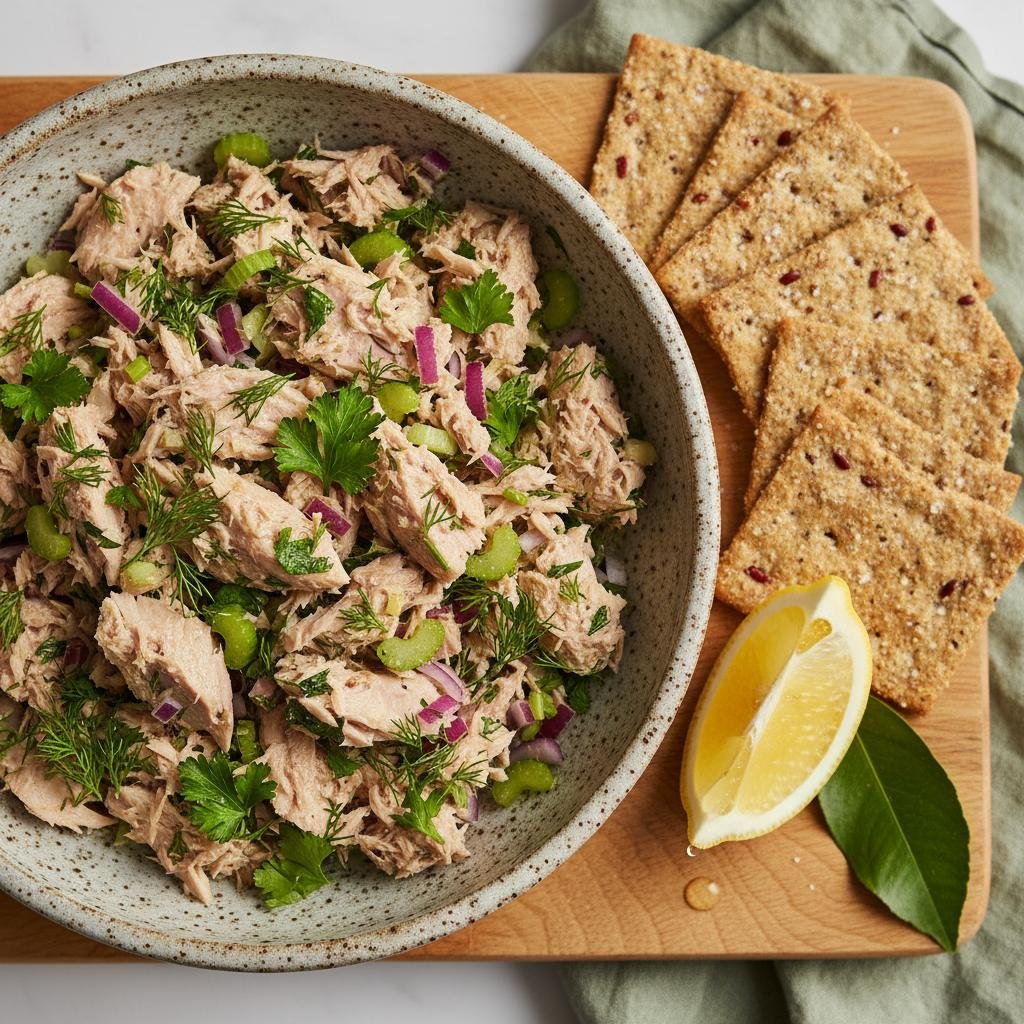
If you are stuck in a midday rut, tired of the same old heavy sandwiches or sad desk salads, this Lemon Herb Tuna Salad is about to revolutionize your lunch hour. Forget everything you know about the gloopy, mayonnaise-drenched tuna salads of the cafeteria past. This recipe is a vibrant, sophisticated, and incredibly fresh take on a pantry staple that focuses on bright flavors and clean ingredients. By swapping out heavy binders for high-quality extra virgin olive oil and zesty fresh lemon juice, we transform humble canned tuna into a Mediterranean-inspired delight that feels light on the stomach but keeps you full for hours. The texture is paramount here; we are talking about flaky chunks of protein-rich tuna, the satisfying crunch of finely diced celery and red onion, and a burst of aromatic freshness from dill and parsley.
This dish is not just a recipe; it is a strategy for healthy eating when you are short on time. It comes together in under ten minutes, requires no cooking, and packs a serious nutritional punch with heart-healthy fats and lean protein. Served alongside your favorite artisan crackers, it offers the perfect balance of creamy and crunchy textures. Whether you are meal-prepping for a busy work week, looking for a quick post-workout refuel, or hosting a casual brunch, this lemon herb version elevates the standard tuna salad into something truly crave-worthy. It is proof that healthy food does not have to be bland and that fast food can be incredibly nourishing. Get ready to rediscover your love for tuna with a recipe that screams freshness in every bite.
15 minutes
0 minutes
15 minutes
3 Servings
Lunch / Salad
No-Cook / Mixing
Mediterranean-American Fusion
Dairy-Free
History & Origins
The history of tuna salad is a fascinating journey through the evolution of convenience food and American domestic life. While preserving fish in oil or salt has been a Mediterranean tradition for millennia, the modern concept of ‘tuna salad’ is largely a result of the industrial canning revolution of the late 19th and early 20th centuries. Canned tuna first gained significant commercial traction in California in 1903 when Albert P. Halfhill, facing a shortage of sardines, began canning albacore. It was an instant hit due to its white meat and mild flavor, often marketed as a substitute for chicken—hence the moniker ‘Chicken of the Sea.’
During the early 20th century, particularly through the Great Depression and World War II, canned tuna became a vital source of affordable protein for American families. To stretch this protein further, home cooks began mixing it with cheaper ingredients like celery, pickles, and the increasingly popular mayonnaise, which had become shelf-stable and widely available. This gave birth to the classic American tuna salad, a staple of diners and lunchboxes for decades. However, as culinary tastes evolved in the late 20th and early 21st centuries, there was a shift away from heavy, processed binders. The health-conscious movements of the 2000s saw a return to older, European styles of dressing fish salads—relying on vinaigrettes rather than creamy emulsions. This specific Lemon Herb Tuna Salad represents that modern renaissance: a nod to the convenience of the canned era but prepared with the lighter, fresher palate of the Mediterranean diet, focusing on whole ingredients and bold, natural flavors.
Why This Recipe Works
This recipe succeeds because it fundamentally understands the science of flavor balancing and texture contrast. Traditional tuna salads often suffer from being one-dimensional—soft, creamy, and heavy. This Lemon Herb Tuna Salad works because it introduces acidity as a primary flavor driver. The fresh lemon juice cuts through the natural richness of the fish and the olive oil, acting as a palate cleanser that makes every bite taste vibrant. By using a high-quality olive oil instead of mayonnaise, we coat the tuna flakes without smothering them, allowing the actual flavor of the fish to shine through rather than being masked by processed fillers.
Texture is the second pillar of why this works. The tuna itself is soft, so the inclusion of finely diced celery and red onion is non-negotiable; they provide the necessary ‘snap’ that keeps the mouthfeel interesting. The herbs are not just a garnish here; the dill and parsley are used in significant quantities to act as a leafy green component, adding earthy notes that ground the bright citrus. Finally, the Dijon mustard acts as an emulsifier. It helps bind the lemon juice and oil together so the dressing clings to the tuna rather than pooling at the bottom of the bowl. When you scoop this onto a crisp cracker, you get the ultimate bite: crunchy, creamy, tart, and savory all at once.
Why You’ll Love This Recipe
- ✓Ready in under 10 minutes with zero cooking required.
- ✓Mayo-free and dairy-free, focusing on heart-healthy olive oil.
- ✓Packed with lean protein and omega-3 fatty acids.
- ✓Versatile: serves perfectly on crackers, bread, or lettuce cups.
- ✓Budget-friendly using pantry staples.
- ✓Meal-prep friendly; flavors improve after sitting for a few hours.
Equipment You’ll Need
- ✓Medium mixing bowl
- ✓Sharp chef’s knife
- ✓Cutting board
- ✓Citrus juicer or reamer
- ✓Measuring spoons
- ✓Fork for flaking tuna
- ✓Can opener
Ingredients
- ✓2 cans (5 oz each) solid white albacore tuna packed in water, drained well
- ✓1/4 cup extra virgin olive oil (high quality)
- ✓2 tablespoons fresh lemon juice
- ✓1 teaspoon lemon zest
- ✓2 stalks celery, finely diced
- ✓1/4 cup red onion, finely minced
- ✓2 tablespoons fresh flat-leaf parsley, chopped
- ✓1 tablespoon fresh dill, chopped
- ✓1 teaspoon Dijon mustard
- ✓1/2 teaspoon kosher salt
- ✓1/4 teaspoon freshly cracked black pepper
- ✓1 box artisan whole grain or seed crackers, for serving
Instructions
- Begin by preparing your vegetables and herbs. Finely dice the celery and mince the red onion. The smaller the dice, the better the distribution of crunch in every bite. Chop the fresh parsley and dill.
- Open the cans of tuna and drain them very thoroughly. Press down on the lid or use a mesh sieve to squeeze out as much water as possible. Excess water will water down the dressing and make the salad soggy.
- In a medium mixing bowl, combine the extra virgin olive oil, fresh lemon juice, lemon zest, Dijon mustard, kosher salt, and black pepper. Whisk vigorously until the mixture is emulsified and creamy looking.
- Add the drained tuna to the bowl with the dressing. Use a fork to flake the tuna apart, breaking up large chunks while mixing it into the dressing to ensure the fish absorbs the flavors.
- Add the diced celery, minced red onion, chopped parsley, and dill to the bowl.
- Gently fold everything together until the ingredients are evenly distributed. Taste and adjust seasoning, adding a pinch more salt or a squeeze more lemon juice if needed.
- Let the salad sit for at least 10 minutes to allow the flavors to meld, or serve immediately.
- Serve chilled or at room temperature alongside a generous portion of your favorite crackers.
Expert Cooking Tips
- ✓Drain the tuna aggressively; dry tuna absorbs the flavorful olive oil dressing much better than water-logged tuna.
- ✓Use solid white albacore for a meatier, steak-like texture, or chunk light tuna for a softer, more integrated salad.
- ✓If raw onion is too pungent for you, soak the minced onion in ice water for 10 minutes and drain before adding. This removes the harsh bite.
- ✓Fresh herbs are crucial for this recipe; dried herbs will not provide the same bright flavor profile.
- ✓Zest the lemon before you juice it; it is much harder to zest a squeezed lemon half.
- ✓For the best flavor, use a high-quality extra virgin olive oil that you enjoy the taste of on its own.
- ✓If meal prepping, store the crackers separately to ensure they stay crisp.
Substitutions and Variations
This recipe is incredibly flexible and welcomes substitutions based on your dietary needs or pantry inventory. If you are not a fan of tuna, canned salmon or shredded rotisserie chicken works beautifully with this lemon-herb profile. For a vegetarian or vegan version, try using mashed chickpeas (garbanzo beans) or white beans; the texture mimics tuna surprisingly well. If you do not have red onion, shallots or green onions (scallions) are excellent milder alternatives. In terms of herbs, if you dislike dill, try fresh basil, tarragon, or cilantro for a different twist. You can swap the lemon juice for lime juice or a white wine vinegar, though fresh lemon offers the best zestiness. If you prefer a creamy element but want to keep it healthy, substitute half of the olive oil with plain Greek yogurt or mashed avocado. For the crackers, feel free to use gluten-free crackers, cucumber slices, or endive leaves for a lower-carb option.
Common Mistakes to Avoid
The most common mistake when making tuna salad is failing to drain the tuna properly. If the tuna retains too much packing water, the salad will turn into a soupy mess, and the olive oil dressing will separate. Another error is over-processing the vegetables; you want a nice dice, not a puree, to maintain texture. Avoid using bottled lemon juice if possible; the preservatives in bottled juice can give the salad a metallic or artificial aftertaste that ruins the fresh herb profile. Be careful not to over-salt initially; canned tuna can contain sodium, and the Dijon mustard is also salty, so season gradually and taste as you go. Lastly, do not skip the resting time if you can help it; even just 10 minutes allows the acid to penetrate the fish.
Serving Suggestions
While crackers are the classic pairing for this salad, there are numerous ways to enjoy it. It makes for an elegant appetizer served inside hollowed-out cherry tomatoes or on top of cucumber rounds for a low-carb bite. For a heartier lunch, pile it onto toasted sourdough bread with a layer of avocado or sliced tomato for an open-faced tartine. It is also fantastic stuffed inside a pita pocket with fresh arugula or spinach. For a strictly low-carb or keto-friendly meal, serve the tuna salad inside large butter lettuce leaves or romaine hearts as lettuce wraps, or stuff it into half of an avocado.
Storage and Reheating Tips
This Lemon Herb Tuna Salad stores excellently in the refrigerator. Place it in an airtight container, and it will keep fresh for up to 3 to 4 days. In fact, the flavors often taste better on day two as the herbs and lemon marinate the tuna. Because this recipe uses olive oil instead of mayonnaise, it is less prone to spoiling quickly, but it should still be kept chilled. Before serving leftovers, give it a quick stir, as the oil and juices may settle at the bottom. If the salad looks a bit dry after storing, drizzle a tiny teaspoon of fresh olive oil or a squeeze of lemon to wake it up. Freezing is not recommended for this dish, as the celery and onions will lose their crunch and become mushy upon thawing.
Nutrition Facts (Estimated)
| Serving Size | 1/2 cup salad (excluding crackers) |
| Calories | 210 |
| Fat | 14g |
| Saturated Fat | 2g |
| Unsaturated Fat | 11g |
| Trans Fat | 0g |
| Cholesterol | 30mg |
| Sodium | 380mg |
| Carbohydrates | 3g |
| Fiber | 1g |
| Sugar | 1g |
| Protein | 18g |
Frequently Asked Questions
Can I use tuna packed in oil instead of water?
Yes, absolutely. Tuna packed in olive oil is delicious and rich. If you use oil-packed tuna, you can drain it slightly less and reduce the amount of added olive oil in the recipe to balance the fat content.
Is this recipe gluten-free?
The tuna salad mixture itself is naturally gluten-free. To keep the entire meal gluten-free, simply serve it with certified gluten-free crackers, rice cakes, or fresh vegetable slices like cucumber or bell peppers.
How can I make this spicy?
To add a kick, try adding a pinch of red pepper flakes, a dash of cayenne pepper, or some finely diced jalapeño to the mixture. A splash of hot sauce also blends well with the lemon acidity.
Is canned tuna healthy to eat regularly?
Canned tuna is a healthy source of protein and omega-3s. However, due to mercury content, it is generally recommended to consume it in moderation (2-3 servings a week). Light tuna typically has less mercury than Albacore.
What kind of crackers work best?
Sturdy crackers work best to hold the weight of the chunky salad. Artisan multi-grain crackers, woven wheat crackers, or seeded crackers provide a nice nutty flavor that complements the herbs.
Can I make this ahead of time for meal prep?
Yes, this is a great meal prep recipe. You can make a double batch on Sunday and eat it for lunch through Wednesday. Just keep it refrigerated in a sealed container.
Why does my tuna salad taste bitter?
Bitterness can come from the white pith of the lemon if you zest too deeply, or from old olive oil. Ensure you only zest the yellow skin and use fresh, high-quality oil.
Can I add other vegetables?
Definitely. Diced bell peppers, shredded carrots, chopped cucumber (seeds removed), or even corn can be great additions for extra color and nutrition.
Conclusion
This Lemon Herb Tuna Salad with Crackers proves that you do not need complicated techniques or hours in the kitchen to create a meal that is both nourishing and delicious. It strikes the perfect balance between the convenience we all need in our busy lives and the fresh, wholesome flavors our bodies crave. By ditching the heavy mayo for bright citrus and aromatic herbs, you elevate a simple pantry staple into a dish that feels intentional and satisfying. Whether you are packing a lunchbox, needing a quick protein fix, or snacking on a lazy afternoon, this recipe is sure to become a regular in your rotation. Give it a try, and you might just find yourself looking forward to tuna salad day.