Low Carb Cabbage And Sausage Skillet – The Ultimate 30-Minute Keto Dinner
Low Carb Cabbage And Sausage Skillet Recipe
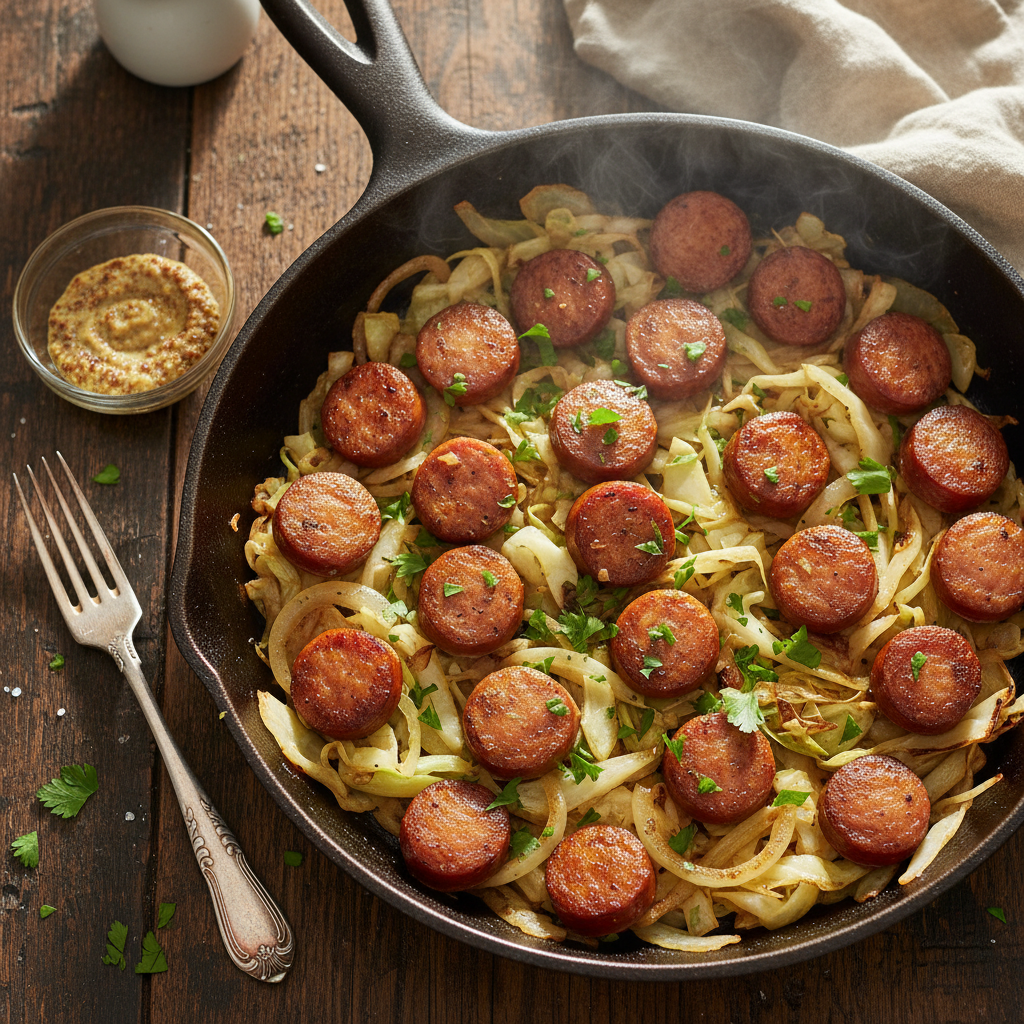
This savory, one-pan Low Carb Cabbage and Sausage Skillet combines smoky, crisp-edged kielbasa with tender, butter-braised cabbage for a meal that feels comforting yet light. Ready in under 30 minutes, it is the perfect solution for busy weeknights when you need a nutritious, flavor-packed dinner without the heavy carbs.
10 minutes
20 minutes
30 minutes
4 servings
Main Course
Stovetop
American / European Fusion
Gluten-Free
There is something profoundly satisfying about the humble combination of cabbage and sausage. It is a pairing that transcends cultures and generations, often evoking memories of cozy kitchens and hearty, rustic meals. In the world of low-carb and keto cooking, finding dishes that deliver on both comfort and nutritional compliance can sometimes feel like a chore, but this Low Carb Cabbage and Sausage Skillet breaks that mold entirely. Imagine the sound of savory sausage slices sizzling in a hot skillet, releasing their smoky paprika-infused oils, followed by the sweet, earthy aroma of fresh cabbage wilting down in that flavorful rendered fat. This dish is not just a compromise for a diet; it is a celebration of simple ingredients transforming into something greater than the sum of their parts. By skipping the potatoes or noodles often found in traditional variations, we allow the natural sweetness of the cabbage to shine through, perfectly balancing the salty richness of the meat. The texture plays a massive role here as well—you get the snap of the sausage casing, the caramelized char on the meat, and the tender-crisp bite of the vegetable, all tied together with a hint of garlic and butter. Whether you are strictly keto, gluten-free, or just looking to incorporate more vegetables into your family’s diet without sacrificing flavor, this skillet dinner is a revelation. It proves that ‘fast food’ can be homemade, healthy, and incredibly delicious.
History & Origins
The marriage of cabbage and sausage is a culinary tradition deeply rooted in Central and Eastern European history. For centuries, these two ingredients were staples of the peasant diet in countries like Poland, Germany, Russia, and Ukraine. Cabbage was one of the few vegetables that could be easily preserved through the harsh European winters, either via cold storage or fermentation (sauerkraut), while sausages were a practical method for preserving meat. Dishes like Polish ‘Bigos’ (Hunter’s Stew) or German cabbage skillets were born out of necessity, utilizing economical ingredients to create filling, energy-dense meals for hardworking laborers. When European immigrants made their way to the United States in the 19th and early 20th centuries, they brought these food traditions with them. Over time, the recipes adapted to American ingredients and conveniences. The ‘fried cabbage and sausage’ skillet became a popular Southern American staple as well, often seasoned with bacon grease and Cajun spices. In recent years, as the understanding of nutrition has shifted away from heavy starches and toward protein and fiber-rich vegetables, this historic dish has seen a massive resurgence. It has been reclaimed by the low-carb community as a perfect ‘keto’ meal, stripping away the potatoes often added in the mid-20th century to bulk it up, and returning to the roots of the dish: meat and greens.
Why This Recipe Works
This recipe works exceptionally well because it leverages the principles of fat layering and the Maillard reaction to build complex flavors in a short amount of time. By browning the sausage first, we accomplish two things: we create a delicious, crispy texture on the meat, and we render out the spiced fat (often containing paprika, garlic, and smoke flavor) into the pan. Instead of using plain oil to cook the cabbage, we use this flavorful rendered fat as the base. Cabbage is naturally high in water and can be bland if boiled or steamed plain. However, when sautéed in the sausage drippings and butter at a high heat, the sugars in the cabbage begin to caramelize, bringing out a nutty sweetness that perfectly contrasts the saltiness of the sausage. Furthermore, the addition of aromatics like onions and garlic *after* the sausage has released its fat ensures they cook in that flavor without burning. The final splash of apple cider vinegar or broth deglazes the pan, lifting those browned bits (fond) off the bottom and coating the vegetables in a rich, savory ‘sauce’ without needing thickeners. It is a chemistry-perfect balance of fat, acid, salt, and sweet.
Why You’ll Love This Recipe
- ✓Ready in under 30 minutes from prep to plate.
- ✓Uses only one pan for minimal cleanup.
- ✓Naturally gluten-free, keto-friendly, and low carb.
- ✓Budget-friendly ingredients that are available year-round.
- ✓High in fiber and protein for a satiating meal.
- ✓Excellent for meal prep as flavors improve over time.
Equipment You’ll Need
- ✓Large Cast Iron Skillet or Non-Stick Pan
- ✓Chef’s Knife
- ✓Cutting Board
- ✓Wooden Spoon or Spatula
- ✓Measuring Spoons
Ingredients
- ✓1 lb (16oz) Smoked Sausage or Kielbasa, sliced into 1/4 inch rounds
- ✓1 medium head Green Cabbage, cored and roughly chopped
- ✓1 medium Yellow Onion, sliced into strips
- ✓3 cloves Garlic, minced
- ✓2 tbsp Butter (grass-fed preferred)
- ✓1 tbsp Olive Oil
- ✓1 tsp Smoked Paprika
- ✓1/2 tsp Onion Powder
- ✓1/2 tsp Sea Salt (adjust to taste)
- ✓1/2 tsp Black Pepper
- ✓1 tbsp Apple Cider Vinegar (optional, for brightness)
- ✓Fresh Parsley, chopped (for garnish)
Instructions
- Prepare your ingredients: Slice the sausage into rounds, chop the cabbage into bite-sized pieces, and slice the onions.
- Heat a large skillet over medium-high heat. Add the sliced sausage in a single layer (you may need to do this in two batches if your pan is small).
- Cook the sausage for 3-4 minutes per side until browned and crispy edges appear. Remove the sausage with a slotted spoon and set aside on a plate, leaving the rendered fat in the pan.
- Reduce heat to medium. Add the butter and olive oil to the skillet with the reserved sausage fat.
- Add the sliced onions and sauté for 3-4 minutes until they begin to soften and turn translucent.
- Add the minced garlic and cook for another 30 seconds until fragrant, being careful not to burn it.
- Add the chopped cabbage to the skillet. It may look like a lot, but it will shrink significantly. Toss well to coat the cabbage in the fat and onion mixture.
- Sprinkle the smoked paprika, onion powder, salt, and pepper over the cabbage. Stir to combine.
- Cover the skillet with a lid and let it cook for 5-7 minutes to help the cabbage steam and soften.
- Remove the lid and increase the heat slightly. Stir fry the cabbage for another 3-5 minutes until the edges begin to brown and caramelize.
- Add the cooked sausage back into the pan. Toss everything together and cook for 2 more minutes to reheat the sausage.
- Stir in the apple cider vinegar if using, scraping up any browned bits from the bottom of the pan.
- Taste and adjust salt and pepper if needed. Garnish with fresh parsley and serve hot.
Expert Cooking Tips
- ✓Do not overcrowd the pan when browning the sausage; this ensures a crispy texture rather than a steamed one.
- ✓Cut the cabbage into uniform pieces to ensure even cooking.
- ✓If you prefer softer cabbage, leave the lid on for a few extra minutes. for crunchier cabbage, remove the lid sooner.
- ✓Use a cast-iron skillet if possible; it retains heat better and provides a superior char on the cabbage.
- ✓If the pan gets too dry before the cabbage is tender, add a splash of chicken broth or water.
Substitutions and Variations
This recipe is incredibly versatile. For the protein, you can substitute the pork sausage with turkey kielbasa, chicken and apple sausage, or even Andouille for a spicy Cajun kick. If you are vegetarian, a high-quality plant-based sausage works well, though you may need to add extra oil since it won’t render fat like pork. For the cabbage, green cabbage is the standard, but Savoy cabbage offers a lovely texture, and Napa cabbage cooks down faster for a more delicate dish. Avoid red cabbage unless you don’t mind the entire dish turning pink. You can replace the onion with leeks or shallots for a milder flavor. If you don’t have apple cider vinegar, a squeeze of fresh lemon juice at the end works beautifully to brighten the flavors.
Common Mistakes to Avoid
The most common mistake is overcooking the cabbage until it turns into mush. Cabbage should retain a slight bite for the best texture. Another error is burning the garlic; always add garlic after the onions have softened, as it burns much faster than other aromatics. Also, be cautious with salt. Smoked sausage is naturally salty, so taste your dish before adding the full amount of salt listed in the recipe. Finally, don’t skip the browning step for the sausage; throwing everything in the pot at once will result in a boiled texture that lacks depth.
Serving Suggestions
This skillet meal is substantial enough to be served on its own, but it pairs wonderfully with a side of cauliflower rice to keep it low carb. For those not following a keto diet, it is excellent over mashed potatoes or buttered egg noodles. A dollop of sour cream or a side of spicy grain mustard adds a creamy or tangy element that complements the savory sausage. A fresh cucumber salad with dill makes for a refreshing, cooling side dish.
Storage and Reheating Tips
Store leftovers in an airtight glass container in the refrigerator for up to 4 days. This dish actually tastes better the next day as the flavors meld. To reheat, simply warm it in a skillet over medium heat until hot, or microwave in 30-second intervals. While you can freeze this dish, the texture of the cabbage will become significantly softer upon thawing. If you plan to freeze it, slightly undercook the cabbage initially. Freeze in airtight containers for up to 2 months.
Nutrition Facts (Estimated)
| Serving Size | 1.5 cups |
| Calories | 410 |
| Fat | 32g |
| Saturated Fat | 12g |
| Unsaturated Fat | 18g |
| Trans Fat | 0g |
| Cholesterol | 75mg |
| Sodium | 890mg |
| Carbohydrates | 9g |
| Fiber | 4g |
| Sugar | 5g |
| Protein | 18g |
Frequently Asked Questions
Can I use red cabbage for this recipe?
Yes, you can use red cabbage, and it will taste delicious. However, be aware that red cabbage contains anthocyanins which will bleed into the sausage and onions, turning the entire dish a purple or pink hue.
Is this recipe spicy?
The spice level depends entirely on the sausage you choose. Standard kielbasa is mild, while Andouille or hot Italian sausage will add heat. You can also increase the spice by adding red pepper flakes.
Can I add other vegetables?
Absolutely! Bell peppers, zucchini, or green beans are great low-carb additions. Add them at the same time as the onions.
How do I make this dairy-free?
Simply substitute the butter with more olive oil, avocado oil, or bacon grease to keep it dairy-free.
Can I use coleslaw mix instead of a head of cabbage?
Yes, a bag of pre-shredded coleslaw mix is a great time-saver. Since it is shredded finely, it will cook much faster, likely in about 5-8 minutes total.
Is this dish suitable for meal prep?
Yes, it is excellent for meal prep. The cabbage holds up well in the fridge and doesn’t get soggy if cooked properly. It’s a favorite for work lunches.
Do I have to use apple cider vinegar?
No, it is optional, but highly recommended. The acid cuts through the richness of the sausage fat and brightens the overall flavor profile.
What creates the best flavor in this dish?
The ‘fond’ or browned bits on the bottom of the pan from frying the sausage are the secret. Scraping these up when you add the liquid incorporates deep, savory notes into the vegetables.
Conclusion
This Low Carb Cabbage and Sausage Skillet is the definition of a ‘back-pocket’ recipe—one that you can rely on when time is short, ingredients are scarce, but the need for a comforting meal is high. It proves that eating low carb doesn’t mean eating boring food. With its robust flavors, varying textures, and incredible ease, it is sure to become a regular in your dinner rotation. Give it a try tonight, and enjoy a healthy dinner that tastes like a cheat meal.