Low Carb Mediterranean Salmon Tray Bake: The Ultimate 30-Minute Sheet Pan Dinner
Low Carb Mediterranean Salmon Tray Bake Recipe
This vibrant Low Carb Mediterranean Salmon Tray Bake is the answer to your busy weeknight prayers. Packed with juicy roasted vegetables, tangy feta, and perfectly flaky salmon, this one-pan wonder delivers maximum flavor with minimal cleanup.
10 minutes
20 minutes
30 minutes
4 servings
Main Course
Roasting
Mediterranean
Gluten-Free
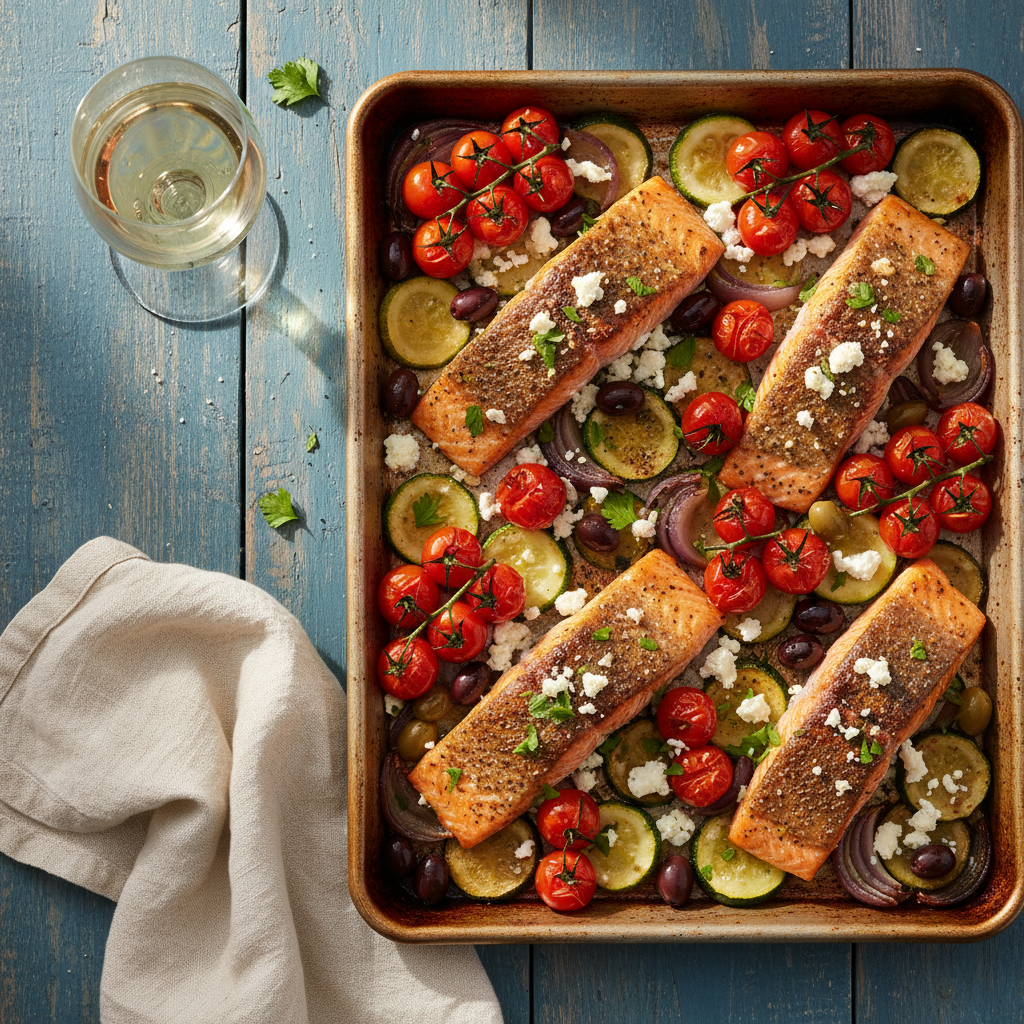
There is something undeniably magical about a sheet pan dinner. It is the culinary equivalent of a deep exhale after a frantic day. When you combine the ease of a tray bake with the robust, sun-drenched flavors of the Mediterranean, you get a meal that feels indulgent yet is incredibly nourishing. This Low Carb Mediterranean Salmon Tray Bake is designed for the modern home cook who refuses to compromise on taste for the sake of time. Imagine tender fillets of salmon, rich in healthy fats, nestled amongst a mosaic of colorful vegetables—zucchini, cherry tomatoes, red onions, and olives—all roasting together in harmony. As they cook, the tomatoes burst, creating a natural sauce that mingles with the olive oil, lemon juice, and aromatic oregano, coating every bite in savory goodness. The addition of salty feta cheese, which softens and browns slightly in the oven, adds a creamy texture that elevates the dish from simple to sublime. This recipe is not just a quick fix; it is a celebration of fresh ingredients and bold flavors that fits perfectly into a low-carb, keto, or gluten-free lifestyle. Whether you are hosting a casual dinner party or just trying to get a healthy meal on the table before collapsing on the couch, this tray bake delivers restaurant-quality results with the effort of a microwave meal. It is vibrant, heart-healthy, and guaranteed to become a regular in your weekly rotation.
History & Origins
While the concept of the ‘sheet pan dinner’ or ‘tray bake’ is a relatively modern convenience born out of the fast-paced American lifestyle of the late 20th century, the roots of this dish run deep into the ancient culinary traditions of the Mediterranean basin. The ingredients used here—olive oil, lemons, oregano, garlic, fish, and an abundance of fresh vegetables—are the cornerstones of the Mediterranean diet, a way of eating that has been celebrated for centuries for its longevity-boosting properties. Specifically, this flavor profile draws heavily from Greek and Southern Italian cuisines. In coastal Greece, small fish and vegetables are often roasted or baked in clay pots with olive oil and lemon, a method known as ‘plaki.’ The use of feta cheese, a brined curd cheese made from sheep’s milk or a mixture of sheep and goat’s milk, dates back to Ancient Greece and is a staple that adds a distinct tang and saltiness to dishes. Olives, cultivated in the region for thousands of years, provide the essential savory depth. This modern tray bake adaptation takes these time-honored ingredients and applies a contemporary cooking technique: high-heat roasting on a flat metal sheet. This method allows for caramelization that traditional clay pot braising might not achieve as quickly. essentially bridging the gap between the rustic, slow-food traditions of the Mediterranean and the high-speed demands of the 21st-century kitchen.
Why This Recipe Works
This recipe works so effectively because it leverages the science of heat transfer and flavor melding in a single vessel. By cutting the vegetables into specific sizes, we ensure that they roast at the exact same rate as the salmon fillets. Zucchini and cherry tomatoes have a high water content, which usually poses a risk of steaming rather than roasting. However, by spreading them out on a large baking sheet and blasting them with high heat, the moisture evaporates quickly, concentrating their sugars and flavors. The salmon, being a fatty fish, is forgiving and stays moist even as the vegetables char slightly. The marinade plays a dual role here: the acid from the lemon juice tenderizes the fish and brightens the vegetables, while the olive oil conducts heat evenly and promotes browning. Furthermore, the ‘Maillard reaction’—the chemical reaction between amino acids and reducing sugars that gives browned food its distinctive flavor—is maximized by the surface area of the sheet pan. The salty feta and olives act as seasoning agents, reducing the need for excessive added salt while providing pops of intense flavor that cut through the richness of the salmon. It is a perfectly engineered balance of texture, temperature, and taste.
Why You’ll Love This Recipe
- ✓Ready in under 30 minutes from prep to plate.
- ✓Only one pan to clean, making it a weeknight savior.
- ✓Packed with heart-healthy Omega-3 fatty acids and antioxidants.
- ✓Naturally gluten-free, low carb, and keto-friendly.
- ✓Versatile ingredients that can be swapped based on seasonality.
- ✓Restaurant-quality presentation with minimal effort.
Equipment You’ll Need
- ✓Large rimmed baking sheet (13×18 inch)
- ✓Parchment paper or silicone baking mat
- ✓Sharp chef’s knife
- ✓Cutting board
- ✓Small mixing bowl
- ✓Whisk
- ✓Pastry brush (optional)
Ingredients
- ✓4 Salmon fillets (approx. 6oz each), skin-on or off
- ✓2 medium Zucchinis, sliced into half-moons
- ✓1 large Red Onion, cut into wedges
- ✓1.5 cups Cherry Tomatoes, whole
- ✓1/2 cup Kalamata Olives, pitted
- ✓4 oz Feta Cheese, crumbled or cubed
- ✓1/4 cup Extra Virgin Olive Oil
- ✓2 tbsp Fresh Lemon Juice
- ✓3 cloves Garlic, minced
- ✓1 tbsp Dried Oregano
- ✓1 tsp Salt (divided)
- ✓1/2 tsp Black Pepper
- ✓Fresh Parsley and Lemon wedges for garnish
Instructions
- Preheat your oven to 400°F (200°C). Line a large rimmed baking sheet with parchment paper for easy cleanup.
- In a small bowl, whisk together the olive oil, lemon juice, minced garlic, dried oregano, half of the salt, and the black pepper to create the marinade.
- Place the sliced zucchini, red onion wedges, and cherry tomatoes onto the baking sheet. Drizzle with about two-thirds of the marinade and toss with your hands to coat the vegetables evenly. Spread them out in a single layer, leaving four spaces for the salmon fillets.
- Pat the salmon fillets dry with a paper towel. This ensures they roast rather than steam. Place the fillets in the spaces you cleared on the baking sheet.
- Brush the remaining marinade over the top of each salmon fillet. Season the fish with the remaining salt.
- Scatter the kalamata olives and crumbled feta cheese over the vegetables (avoid putting the cheese directly on the fish to keep the fish skin crisp if using skin-on).
- Bake in the preheated oven for 15-18 minutes. The exact time will depend on the thickness of your salmon. The fish should flake easily with a fork and be opaque in the center.
- Optional: Switch the oven to ‘Broil’ for the last 2 minutes to get a nice char on the tomatoes and feta. Watch closely to prevent burning.
- Remove from the oven and garnish immediately with fresh chopped parsley and extra lemon wedges. Serve hot.
Expert Cooking Tips
- ✓Dry the salmon thoroughly before adding the marinade to ensure it browns nicely.
- ✓Do not overcrowd the pan; use two pans if necessary to ensure vegetables roast instead of steam.
- ✓Cut your veggies to a uniform size so they cook at the same rate.
- ✓If using skin-on salmon, roast skin-side down for the best texture.
- ✓Use a block of feta and crumble it yourself for better melting and flavor compared to pre-crumbled options.
- ✓Let the salmon come to room temperature for 10 minutes before cooking for more even baking.
Substitutions and Variations
This recipe is incredibly flexible and forgiving. If you are not a fan of salmon, you can easily substitute it with other firm fish like cod, halibut, or trout; just adjust the cooking time slightly as white fish may cook faster. For non-fish eaters, chicken thighs or breast tenderloins work beautifully, though you will need to start roasting the chicken for about 10-15 minutes before adding the quicker-cooking vegetables. Vegetarian? Swap the protein for halloumi cheese slices or a can of chickpeas (rinsed and dried) for a protein-packed meatless meal. Vegetable substitutions are endless: bell peppers, asparagus spears, broccoli florets, or yellow squash are all excellent candidates. If you don’t have kalamata olives, green olives or capers provide a similar briny punch. For a dairy-free version, simply omit the feta or use a high-quality vegan feta alternative. If you don’t have fresh lemons, bottled lemon juice works in a pinch, though fresh is always superior for the zest.
Common Mistakes to Avoid
The most common mistake with tray bakes is overcrowding the pan. When vegetables are piled on top of each other, they release moisture that gets trapped, causing them to steam and become soggy rather than caramelized and crisp. Always use the largest baking sheet you have, or split the ingredients between two sheets. Another pitfall is overcooking the salmon. Salmon continues to cook slightly after being removed from the oven due to residual heat. Pull it out when it is just starting to flake and is slightly translucent in the very center. Using low-quality olive oil can also dampen the flavor; since the oil is a primary flavor component here, use a good Extra Virgin Olive Oil. Lastly, seasoning is key—don’t forget that the feta and olives add salt, so be mindful when adding extra salt to the dish, but do not skip seasoning the fish directly.
Serving Suggestions
To keep this meal low carb and keto-friendly, serve it exactly as is, perhaps with a side of cauliflower rice or a fresh green salad with a vinaigrette dressing. If you are not restricting carbohydrates, this tray bake pairs wonderfully with fluffy quinoa, couscous, or orzo pasta to soak up the delicious pan juices. A side of warm, crusty artisanal bread or pita is also fantastic for dipping into the roasted tomato and olive oil mixture. For a refreshing contrast, serve with a dollop of Tzatziki sauce or a yogurt-dill dip on the side. A glass of crisp white wine, such as a Sauvignon Blanc or Pinot Grigio, complements the acidity of the lemon and the richness of the salmon perfectly.
Storage and Reheating Tips
This dish is best enjoyed fresh, but leftovers can be stored in an airtight container in the refrigerator for up to 3 days. To reheat, it is best to avoid the microwave if possible, as it can make the salmon rubbery and the vegetables mushy. Instead, reheat in a 300°F (150°C) oven or toaster oven for about 10 minutes until warmed through. If you must use a microwave, use 50% power and heat in short intervals. We do not recommend freezing the roasted vegetables as they will become very soft upon thawing, though the cooked salmon can be frozen for up to 2 months. If meal prepping, store the salmon and vegetables in separate compartments to maintain their textures.
Nutrition Facts (Estimated)
| Serving Size | 1 fillet + 1 cup veggies |
| Calories | 480 |
| Fat | 32g |
| Saturated Fat | 8g |
| Unsaturated Fat | 22g |
| Trans Fat | 0g |
| Cholesterol | 95mg |
| Sodium | 580mg |
| Carbohydrates | 9g |
| Fiber | 3g |
| Sugar | 4g |
| Protein | 38g |
Frequently Asked Questions
Can I use frozen salmon for this recipe?
Yes, you can use frozen salmon, but it is crucial to thaw it completely in the refrigerator overnight before cooking. Cooking salmon from frozen will result in uneven cooking and a waterlogged tray bake due to excess moisture release.
How do I know when the salmon is fully cooked?
The salmon is done when it turns opaque pink and flakes easily when pressed with a fork. The internal temperature should reach 145°F (63°C) at the thickest part.
Can I use dried herbs instead of fresh?
Absolutely. The recipe calls for dried oregano, which holds up well to high heat. If you want to use fresh herbs like basil or parsley, add them after cooking as a garnish to preserve their bright flavor and color.
Is this recipe suitable for a Keto diet?
Yes, this recipe is perfectly suited for a Keto diet. It is high in healthy fats from the salmon, olive oil, and feta, and low in net carbs.
Can I prep this meal ahead of time?
You can chop all the vegetables and prepare the marinade up to 24 hours in advance. Store them separately in the fridge. When ready to cook, just assemble on the tray and bake.
What if I don’t like olives?
You can simply leave them out! If you still want that salty, briny element, try adding capers or chopped sun-dried tomatoes instead.
Why did my vegetables turn out soggy?
Soggy vegetables are usually the result of overcrowding the pan. Ensure there is space between the veggies for air to circulate. Also, make sure your oven is fully preheated before putting the tray in.
Can I make this dairy-free?
Yes, simply omit the feta cheese or use a dairy-free cheese alternative. The dish will still be flavorful thanks to the marinade and olives.
Conclusion
The Low Carb Mediterranean Salmon Tray Bake is more than just a recipe; it is a lifestyle hack that proves healthy eating doesn’t have to be complicated or flavorless. By bringing together the classic tastes of the Mediterranean—zesty lemon, aromatic oregano, and rich olive oil—you create a meal that feels special enough for guests but is simple enough for a Tuesday night. The beauty of this dish lies in its versatility and the minimal cleanup required, giving you more time to enjoy the meal and less time scrubbing pots. We hope this becomes a staple in your kitchen just as it is in ours. If you make this recipe, don’t forget to snap a photo and tag us on social media—we love seeing your delicious creations!