Sunshine in a Jar: The Ultimate Mango Coconut Chia Pudding Cup
Mango Coconut Chia Pudding Cup Recipe
Transport your taste buds to a tropical paradise with these lush Mango Coconut Chia Pudding Cups. Layered with velvety coconut cream, nutrient-packed chia seeds, and fresh, juicy mango puree, this make-ahead breakfast is as healthy as it is indulgent.
15 minutes
0 minutes
4 hours 15 minutes (includes chilling)
4 servings
Breakfast
Refrigeration
Tropical Fusion
Vegan
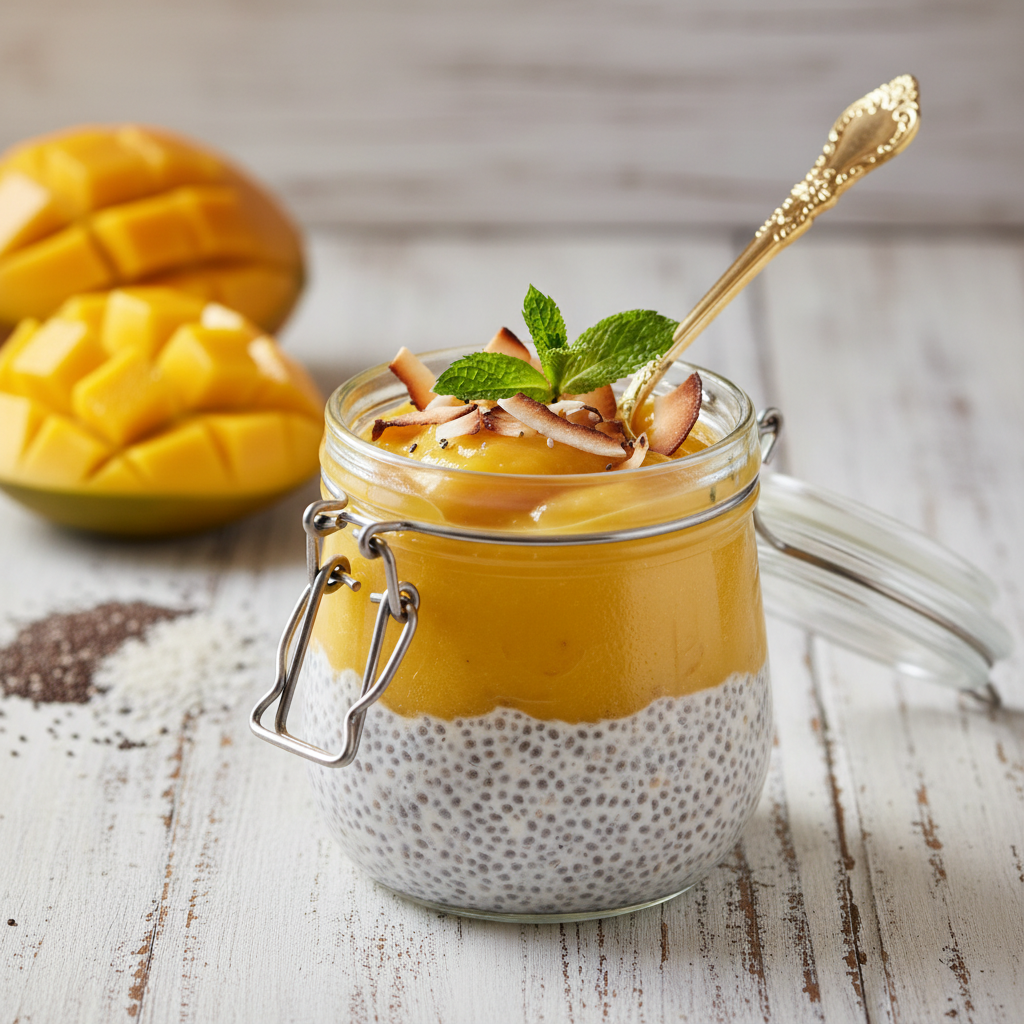
If you have ever struggled to find a breakfast that is both deeply nourishing and genuinely exciting to eat, your search ends here. The Mango Coconut Chia Pudding Cup is more than just a meal prep staple; it is a textural masterpiece that marries the rich, creamy decadence of coconut milk with the bright, acidic sweetness of ripe mangoes. Often, chia pudding gets a bad reputation for having a texture that is too gelatinous or slimy. However, this recipe solves that issue entirely by utilizing premium, full-fat canned coconut milk, which creates a mousse-like consistency that feels more like a dessert than a health food. The concept is simple but the execution is what elevates this dish. We start with a base of vanilla-infused coconut chia pudding, allowing the seeds to plump up and absorb the liquid gold of the coconut cream. Once set, we crown this base with a vibrant layer of pureed fresh mango, enhanced with just a squeeze of lime to pop the flavors. The result is a visually stunning, two-toned breakfast cup that looks beautiful on your Pinterest feed and tastes like a vacation in a jar. It is vegan, gluten-free, and packed with Omega-3 fatty acids, making it the perfect fuel for a busy morning or a refreshing afternoon snack. Whether you are a seasoned meal-prepper or a culinary novice, this recipe promises high-impact flavor with minimal effort.
History & Origins
The star ingredient of this dish, the chia seed (Salvia hispanica), has a history as rich as its nutritional profile. Native to central and southern Mexico and Guatemala, chia seeds were a staple food for the ancient Aztecs and Mayans. In fact, the word ‘chia’ is derived from the Nahuatl word ‘chian,’ meaning oily. Historical records suggest that Aztec warriors would consume chia seeds for endurance during long expeditions and battles; it was considered a high-energy ‘running food’ capable of sustaining a person for 24 hours with just a spoonful. For centuries, chia remained a regional secret, largely forgotten by the rest of the world until its commercial resurgence in the late 20th century, initially as a novelty item (the famous Chia Pets) before being recognized as a superfood in the early 2000s. The culinary application of chia as a pudding is a relatively modern innovation, born out of the vegan and raw food movements of the last two decades. It leverages the seed’s unique hydrophilic ability to absorb up to 12 times its weight in liquid, forming a gel. This specific recipe, pairing coconut and mango, draws heavy inspiration from Southeast Asian cuisine, specifically the beloved Thai dessert Mango Sticky Rice (Khao Niao Mamuang). By swapping the glutinous rice for chia seeds, we retain the iconic flavor profile of coconut cream and mango while creating a lighter, no-cook version suitable for modern, health-conscious lifestyles.
Why This Recipe Works
This recipe succeeds where many other chia puddings fail due to three critical factors: the liquid-to-seed ratio, the fat content of the liquid, and the double-whisk technique. First, the ratio. Many recipes call for too much liquid, resulting in a soupy mess, or too many seeds, creating a solid brick. Our ratio ensures a spoonable, custard-like consistency. Second, the choice of liquid is paramount. While almond or oat milk are popular, they lack the fat content necessary to suspend the seeds evenly and provide a luxurious mouthfeel. By using canned coconut milk (ideally ‘light’ for a balance of creaminess and drinkability, or full-fat for a dessert vibe), we introduce natural emulsifiers that create a velvety texture. Finally, the ‘Why This Works’ secret weapon is the double-whisk method. Chia seeds have a tendency to clump together immediately upon hitting liquid, forming dry pockets that never hydrate. By whisking once to combine, waiting five minutes for the initial gelling to start, and then whisking vigorously again, we mechanically separate the seeds before the final set. This ensures that every single seed is surrounded by liquid, resulting in a perfectly smooth and uniform pudding every time.
Why You’ll Love This Recipe
- ✓Requires absolutely no cooking or heat
- ✓Packed with plant-based protein and Omega-3s
- ✓Vegan, Gluten-Free, and Paleo-friendly
- ✓Perfect for meal prep with a 5-day fridge life
- ✓Tastes like a tropical dessert but healthy enough for breakfast
Equipment You’ll Need
- ✓4 small Mason jars or glass cups (8oz size)
- ✓Mixing bowl
- ✓Whisk
- ✓Blender or food processor
- ✓Measuring cups and spoons
Ingredients
- ✓1 can (13.5 oz) coconut milk (light or full fat)
- ✓1/2 cup chia seeds
- ✓3 tablespoons maple syrup or agave nectar
- ✓1 teaspoon pure vanilla extract
- ✓2 large ripe mangoes, peeled and cubed
- ✓1 teaspoon fresh lime juice
- ✓2 tablespoons toasted coconut flakes (for garnish)
- ✓Fresh mint leaves (optional garnish)
Instructions
- 1. In a medium mixing bowl, pour in the can of coconut milk. If the milk has separated in the can, whisk it briefly to homogenize the cream and water.
- 2. Add the maple syrup and vanilla extract to the coconut milk and whisk to combine.
- 3. Slowly pour in the chia seeds while whisking constantly. This prevents immediate clumping.
- 4. Let the mixture sit on the counter for 5 to 10 minutes. You will see it start to thicken slightly.
- 5. Whisk the mixture vigorously one more time to break up any clumps that may have formed. This is the most crucial step for smooth texture.
- 6. Divide the chia mixture evenly among the 4 mason jars or cups. Cover them and place them in the refrigerator to set for at least 4 hours, or preferably overnight.
- 7. While the pudding sets (or right before serving), prepare the mango layer. Place the cubed ripe mango and fresh lime juice into a blender.
- 8. Blend on high until completely smooth and creamy. If your mango is very fibrous, you may want to strain the puree, though this is usually not necessary with high-quality fruit.
- 9. Once the chia pudding has set into a thick gel, remove the lids. Spoon a generous layer of the mango puree over the top of each pudding cup.
- 10. Garnish with toasted coconut flakes and a sprig of fresh mint before serving.
Expert Cooking Tips
- ✓The ‘Double Whisk’ is non-negotiable; do not skip the second mix after 5 minutes or you will have clumpy pudding.
- ✓Use ripe, sweet mangoes (like Ataulfo or Honey mangoes) for the best flavor and natural sweetness.
- ✓If you prefer a thinner consistency, you can dilute the coconut milk with a splash of water or almond milk.
- ✓Toast your coconut flakes in a dry pan for 2 minutes to release their essential oils and add crunch.
- ✓Chill your ingredients beforehand if you want to eat it sooner, though the chia still needs time to expand.
Substitutions and Variations
This recipe is incredibly flexible. If you are not a fan of coconut milk, you can substitute it with oat milk for a creamy texture, or almond milk for a lighter, nuttier version, though the pudding will be less rich. For the sweetener, honey works beautifully if you are not strictly vegan, and stevia or monk fruit can be used for a sugar-free option. If fresh mangoes are out of season, you can use thawed frozen mango chunks; just be sure to drain any excess water before blending to keep the puree thick. You can also swap the fruit entirely—pureed strawberries, peaches, or even passion fruit pulp make excellent alternatives to the mango layer.
Common Mistakes to Avoid
The most common mistake is impatience. Chia seeds need time to absorb liquid; eating it after only an hour will result in a crunchy, watery texture rather than a creamy pudding. Another mistake is using unripe mangoes, which will result in a sour, pale puree that clashes with the creamy coconut base. Finally, failing to stir the mixture thoroughly before putting it in the fridge often results in a layer of liquid on top and a cement-like layer of seeds on the bottom. Ensure suspension is even before chilling.
Serving Suggestions
Serve these pudding cups chilled, straight from the refrigerator. They make for a stunning brunch item when served in clear glass to show off the layers. For added texture, top with granola just before eating. They pair wonderfully with a hot cup of green tea or a cold brew coffee. If serving as a dessert, a dollop of coconut whipped cream on top makes it extra decadent.
Storage and Reheating Tips
These pudding cups are excellent for meal prep. They can be stored in airtight containers in the refrigerator for up to 5 days. The mango puree layer is best added within 1-2 days of serving to prevent it from oxidizing and turning brown, although the lime juice helps preserve the color. If you need to store them longer, keep the chia base and the mango puree in separate containers and assemble just before eating. Do not freeze the assembled pudding, as the texture of the gel changes upon thawing and becomes watery.
Nutrition Facts (Estimated)
| Serving Size | 1 jar (approx 250g) |
| Calories | 340 |
| Fat | 22g |
| Saturated Fat | 18g |
| Unsaturated Fat | 2g |
| Trans Fat | 0g |
| Cholesterol | 0mg |
| Sodium | 30mg |
| Carbohydrates | 32g |
| Fiber | 11g |
| Sugar | 18g |
| Protein | 7g |
Frequently Asked Questions
Can I use frozen mango for the puree?
Yes, absolutely. Allow the frozen mango to thaw completely, and drain any excess water before blending to ensure the puree remains thick and flavorful.
Why is my chia pudding runny?
This usually happens if the chia seeds were old and lost their absorption power, or if not enough seeds were used relative to the liquid. You can fix it by stirring in another tablespoon of seeds and letting it sit for another hour.
Is this recipe Keto-friendly?
The chia base is keto-friendly if you use a low-carb sweetener. However, mango is a high-sugar fruit. To make it keto, substitute the mango puree with a berry puree (like raspberry or blackberry) and use a keto-approved sweetener.
Can I blend the chia seeds?
Yes! If you dislike the texture of whole chia seeds (which can be like tapioca), you can blend the mixture before chilling. This creates a completely smooth, mousse-like chocolate pudding texture.
What kind of coconut milk should I use?
For the creamiest result, use canned coconut milk. Carton coconut milk is mostly water and will result in a thinner pudding. ‘Light’ canned coconut milk is a good middle ground.
How long does it take to set?
4 hours is the minimum for a good texture, but overnight (8-12 hours) yields the absolute best, creamiest results.
Can I use black or white chia seeds?
You can use either! There is no nutritional or flavor difference. White chia seeds might look slightly more aesthetic in the white coconut milk, but black seeds provide a nice contrast.
Can I warm this up?
While this recipe is designed to be eaten cold, you can gently warm the chia base on the stove if you prefer a warm porridge-style breakfast, then top with cold mango.
Conclusion
The Mango Coconut Chia Pudding Cup is the ultimate proof that healthy food does not have to be boring or complicated. With just a handful of wholesome ingredients and a few minutes of active prep time, you can create a breakfast that nourishes your body and delights your senses. The contrast between the creamy, vanilla-scented chia base and the bright, zesty mango topping is a flavor combination that never gets old. Give this recipe a try for your next meal prep Sunday, and enjoy the ease of grabbing a gourmet-style breakfast right out of your fridge every morning. Don’t forget to pin this recipe to your breakfast board!