Mediterranean Baked Cod With Tomatoes And Olives: A Healthy & Flavorful 30-Minute Dinner
Mediterranean Baked Cod With Tomatoes And Olives Recipe
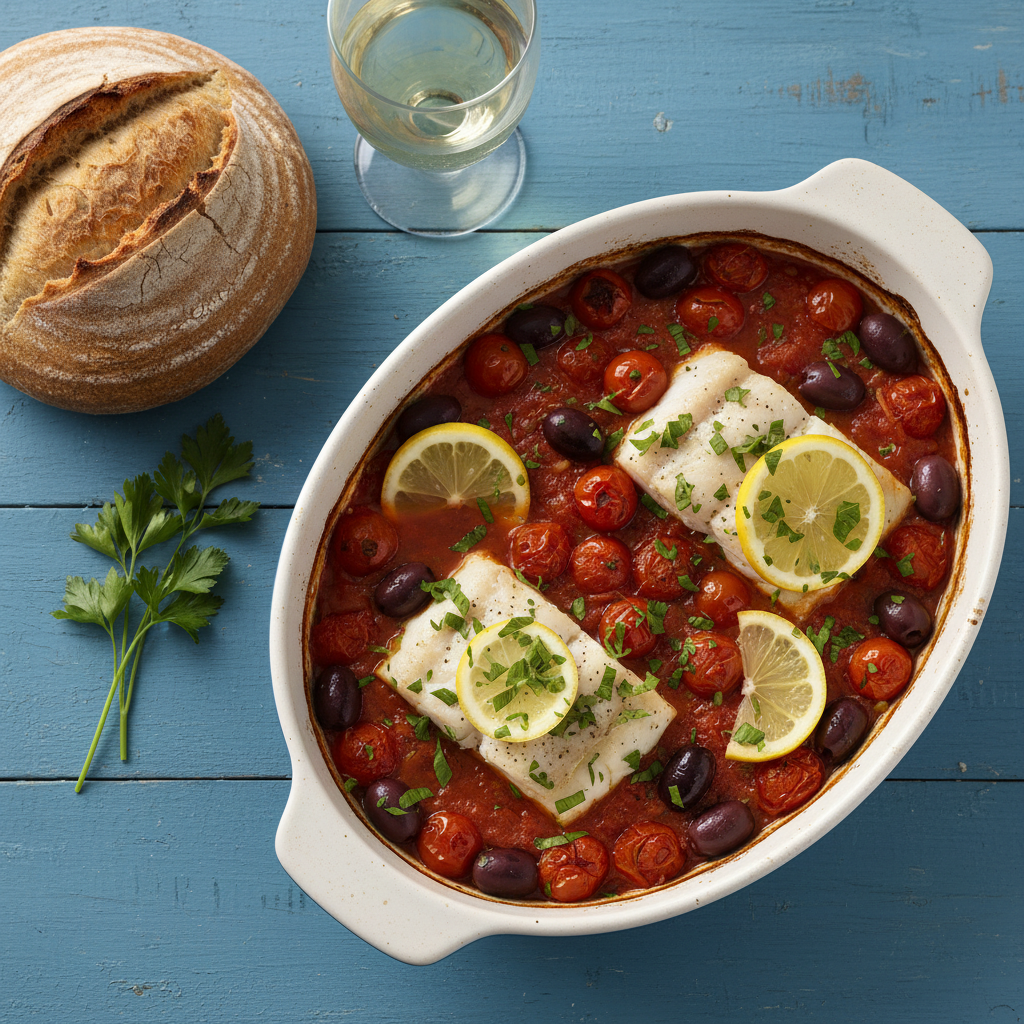
This vibrant Mediterranean Baked Cod recipe features tender, flaky fish nestled in a sauce of bursting cherry tomatoes, briny Kalamata olives, and aromatic garlic. It is an effortless, healthy weeknight meal that feels like a gourmet escape to the Greek isles, ready in under 30 minutes.
10 minutes
20 minutes
30 minutes
4 servings
Main Course
Baking
Mediterranean
Gluten-Free
There is something profoundly transportive about the flavors of the Mediterranean. With just a few simple, high-quality ingredients, you can turn a mundane Tuesday evening dinner into a seaside escape reminiscent of a taverna in Santorini or the Amalfi Coast. This Mediterranean Baked Cod with Tomatoes and Olives is the epitome of that culinary philosophy: fresh ingredients, minimal fuss, and maximum flavor. As a food writer who constantly seeks the balance between health-conscious eating and genuine comfort food, I have found that this dish checks every single box. The star of the show is the cod—a mild, white fish that serves as the perfect canvas for the bold, assertive flavors of the sauce. Unlike heavier meat dishes that can leave you feeling sluggish, this meal is light yet incredibly satisfying, packed with lean protein and heart-healthy fats. The magic happens in the oven; as the cherry tomatoes roast, they burst open, releasing their sweet and acidic juices which mingle with the high-quality extra virgin olive oil, garlic, and the natural juices of the fish. This creates an instant, emulsified sauce that requires no whisking or reduction. The addition of Kalamata olives introduces a necessary savory punch, a briny depth that cuts through the sweetness of the tomatoes. What I love most about this recipe is its versatility and forgiveness. It is elegant enough to serve at a dinner party with a chilled glass of Sauvignon Blanc, yet easy enough to throw together after a long day of work when the idea of extensive chopping and stirring feels impossible. It captures the essence of the Mediterranean diet—not just as a nutritional guideline, but as a celebration of vibrant, sun-drenched produce and the joy of eating well.
History & Origins
The culinary traditions of the Mediterranean basin are ancient, deeply rooted in the geography and climate of the region. While this specific recipe is a modern iteration using fresh fillets, the combination of ingredients tells a story of trade, agriculture, and cultural exchange spanning centuries. Cod, specifically, has a fascinating history in Southern Europe. Historically, the warm waters of the Mediterranean were not the natural habitat for Atlantic cod. However, the trade of salted cod (known as ‘bacalao’ in Spain, ‘bacalhau’ in Portugal, and ‘bakaliaros’ in Greece) became a staple commodity as early as the Viking age and later through Basque fishermen who ventured across the Atlantic. It became a crucial source of protein that could be preserved for long voyages and inland transport. The pairing of fish with tomatoes and olives is a relatively newer phenomenon in the grand timeline of history, as tomatoes were not introduced to Italy and Greece until after the colonization of the Americas in the 16th century. Initially viewed with suspicion, the tomato eventually became the cornerstone of Mediterranean cooking. Olives and olive oil, conversely, have been the lifeblood of the region since antiquity, mentioned in ancient texts and revered as liquid gold. This dish represents the harmonious marriage of these eras: the ancient staple of olives, the New World gift of tomatoes, and the Atlantic bounty of cod, all brought together by the unifying technique of simple roasting. In many Greek coastal villages, similar dishes are known as ‘Plaki’, a style of baking fish with vegetables and oil, showcasing the enduring legacy of these flavor profiles.
Why This Recipe Works
This recipe succeeds because it leverages the science of steam roasting and flavor balancing to solve the most common problem with cooking white fish: dryness. Cod is a lean fish with very little intramuscular fat. When pan-seared or grilled, the window between perfectly cooked and rubbery is incredibly small. By baking the cod surrounded by vegetables and olive oil, we create a humid environment in the oven. The cherry tomatoes are roughly 95% water; as they heat up, they release steam and juice. This liquid does two things: it creates a braising liquid that keeps the fish moist, and it concentrates the tomato flavor as the water evaporates, leaving behind a rich, jammy consistency. Flavor-wise, this dish is a masterclass in balancing the five tastes. The cod provides a neutral, slightly sweet, umami base. The tomatoes offer acidity and sweetness. The Kalamata olives provide a sharp, salty brine that seasons the sauce from within, reducing the need for excessive added salt. The garlic and oregano provide the aromatic top notes. Furthermore, adding the lemon juice at the end rather than the beginning preserves the bright, fresh citrus notes which can sometimes turn bitter if roasted for too long. The result is a cohesive dish where every ingredient amplifies the others rather than competing for attention.
Why You’ll Love This Recipe
- ✓Ready in under 30 minutes
- ✓High in protein and heart-healthy fats
- ✓One-pan meal for easy cleanup
- ✓Gluten-free and Low-Carb/Keto friendly
- ✓Bursting with fresh Mediterranean flavors
- ✓Foolproof cooking method for moist fish
Equipment You’ll Need
- ✓9×13 Ceramic Baking Dish
- ✓Chef’s Knife
- ✓Cutting Board
- ✓Paper Towels
- ✓Citrus Juicer
Ingredients
- ✓4 fresh Cod fillets (approx 6oz each), skinless
- ✓2 cups Cherry tomatoes, whole
- ✓1/2 cup Kalamata olives, pitted and halved
- ✓3 cloves Garlic, minced
- ✓3 tbsp Extra Virgin Olive Oil
- ✓1 tsp Dried Oregano
- ✓1/2 tsp Red Pepper Flakes (optional)
- ✓1 Lemon (half for juice, half sliced)
- ✓1/4 cup Fresh Parsley, chopped
- ✓Salt and Black Pepper to taste
Instructions
- Preheat your oven to 400°F (200°C). Ensure the rack is positioned in the center of the oven.
- Pat the cod fillets very dry with paper towels. This is a crucial step to ensure the fish roasts rather than steams in its own excess water. Season both sides generously with salt and black pepper.
- In your baking dish, combine the cherry tomatoes, halved Kalamata olives, minced garlic, dried oregano, red pepper flakes, and 2 tablespoons of the olive oil. Toss everything directly in the dish until the vegetables are well coated.
- Spread the tomato and olive mixture out to the edges of the baking dish to create a space in the center.
- Nestle the seasoned cod fillets into the center of the dish, surrounded by the vegetables. Drizzle the remaining tablespoon of olive oil over the top of the fish.
- Bake for 15-20 minutes, or until the cherry tomatoes have burst and the fish is opaque and flakes easily with a fork. The internal temperature of the fish should reach 145°F (63°C).
- Remove from the oven. Immediately squeeze the juice of half a lemon over the fish and vegetables. Garnish generously with fresh chopped parsley.
- Serve immediately, spooning the roasted tomato and olive juices over the fish.
Expert Cooking Tips
- ✓Always pat the fish dry before seasoning to improve texture.
- ✓Use high-quality Extra Virgin Olive Oil as it is a main flavor component.
- ✓If your tomatoes are very large, cut them in half before baking to ensure they release their juices.
- ✓Do not overcook the cod; check it at the 15-minute mark.
- ✓Let the dish rest for 2-3 minutes after removing from the oven to let the juices settle.
- ✓For extra flavor, add a splash of dry white wine to the baking dish before cooking.
Substitutions and Variations
This recipe is incredibly flexible. If you cannot find Cod, any firm white fish will work beautifully, such as Halibut, Haddock, Sea Bass, or even Mahi Mahi. For the vegetables, you can substitute grape tomatoes for cherry tomatoes, though cherry tomatoes tend to be sweeter. If you find Kalamata olives too strong, you can use mild Castelvetrano olives or regular black olives, though the flavor profile will be less tangy. Capers are an excellent substitute or addition to olives if you want that briny kick without the texture of olives. For herbs, fresh thyme or basil can replace the dried oregano and parsley. If you are out of fresh garlic, garlic powder can be used, but fresh is significantly better for the sauce. For a dairy-free richness, you could stir a teaspoon of nutritional yeast into the sauce, though it is not traditional.
Common Mistakes to Avoid
The most common mistake with this dish is overcooking the fish. Cod is delicate and can turn tough and rubbery if left in the oven too long. Start checking at 15 minutes. Another error is not drying the fish properly; excess water on the fillets will dilute the sauce and make the dish watery rather than rich. Using low-quality olive oil is also a missed opportunity, as the oil forms the base of the sauce. Avoid using large, salad tomatoes as they contain too much water and lack the concentrated sweetness of cherry tomatoes. Finally, do not skip the lemon juice at the end; the acid is necessary to brighten the dish and cut through the savory oils.
Serving Suggestions
To keep this meal low-carb and gluten-free, serve the cod alongside roasted asparagus, zucchini noodles, or a crisp green salad with a vinaigrette. For a heartier meal, it pairs perfectly with crusty sourdough bread to sop up the delicious tomato-olive juices. It is also excellent served over a bed of fluffy couscous, orzo pasta, lemon rice, or quinoa. A glass of crisp, dry white wine like Pinot Grigio or Sauvignon Blanc complements the acidity of the tomatoes and the delicate fish perfectly.
Storage and Reheating Tips
Leftover baked cod is best consumed within 2 days. Store it in an airtight container in the refrigerator. When reheating, do so gently to avoid drying out the fish. The best method is to place the fish and sauce in a small baking dish, cover with foil to trap moisture, and reheat in a 275°F oven until just warmed through. Alternatively, you can flake the cold leftover fish and mix it into a salad or pasta dish the next day. We do not recommend freezing the cooked dish, as the texture of the tomatoes and the fish will degrade significantly upon thawing.
Nutrition Facts (Estimated)
| Serving Size | 1 fillet with sauce |
| Calories | 280 |
| Fat | 14g |
| Saturated Fat | 2g |
| Unsaturated Fat | 11g |
| Trans Fat | 0g |
| Cholesterol | 70mg |
| Sodium | 450mg |
| Carbohydrates | 8g |
| Fiber | 2g |
| Sugar | 3g |
| Protein | 30g |
Frequently Asked Questions
Can I use frozen cod fillets?
Yes, you can use frozen cod. However, it is absolutely critical to thaw them completely in the refrigerator overnight and pat them extremely dry before baking, as frozen fish holds more water.
Is this dish spicy?
Not really. The red pepper flakes add a very subtle warmth, but they can be completely omitted if you prefer zero heat.
Can I prepare this ahead of time?
You can prep the vegetables and place them in the baking dish earlier in the day. Add the fish and bake just before serving for the best quality.
What if I don’t like olives?
You can omit the olives entirely. To keep the savory element, try adding a tablespoon of capers or simply use more garlic and herbs.
How do I know when the cod is done?
The fish should be opaque (solid white, not translucent) and should flake easily when you twist a fork into the thickest part. The internal temp should be 145°F.
Can I add other vegetables?
Absolutely. Zucchini rounds, bell pepper strips, or thinly sliced red onions roast well alongside the tomatoes.
Is this recipe dairy-free?
Yes, this recipe is naturally dairy-free, gluten-free, and paleo-friendly.
Can I cook this on the stovetop instead?
Yes, you can sauté the fish in a skillet, remove it, cook the sauce in the same pan, and then return the fish to warm through, but baking is easier and more hands-off.
Conclusion
This Mediterranean Baked Cod with Tomatoes and Olives is more than just a recipe; it is a reliable solution for busy nights when you refuse to compromise on flavor or health. It brings the warmth of the Mediterranean sun right into your kitchen with minimal effort. Whether you are a seasoned cook or a beginner, the simplicity of these ingredients ensures a delicious result every time. Gather your ingredients, pour a glass of wine, and enjoy a meal that nourishes both the body and the soul.