The Ultimate One Pan Chicken and Vegetables Sheet Pan Healthy Recipe
One Pan Chicken And Vegetables Sheet Pan Healthy Recipe
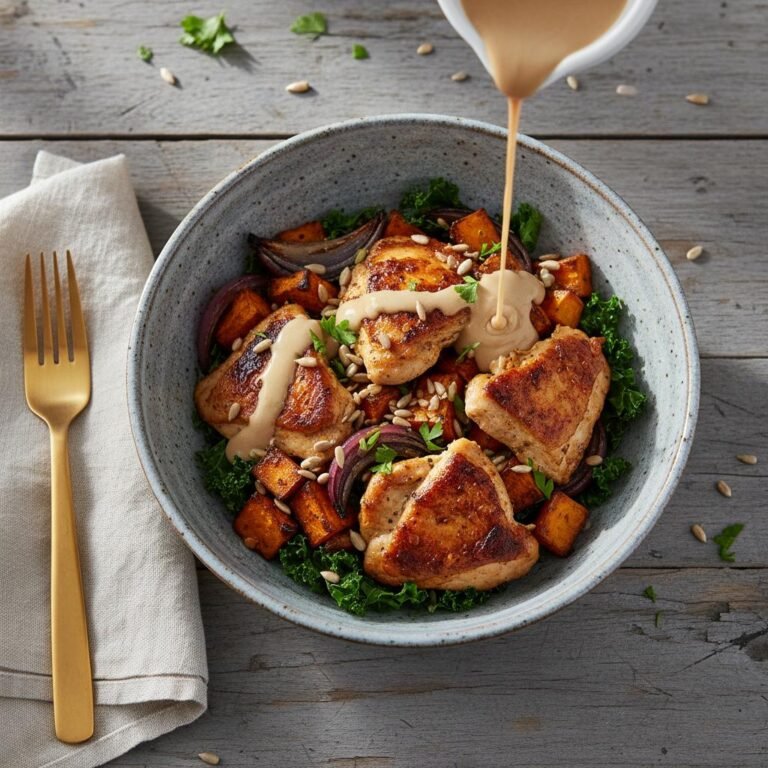
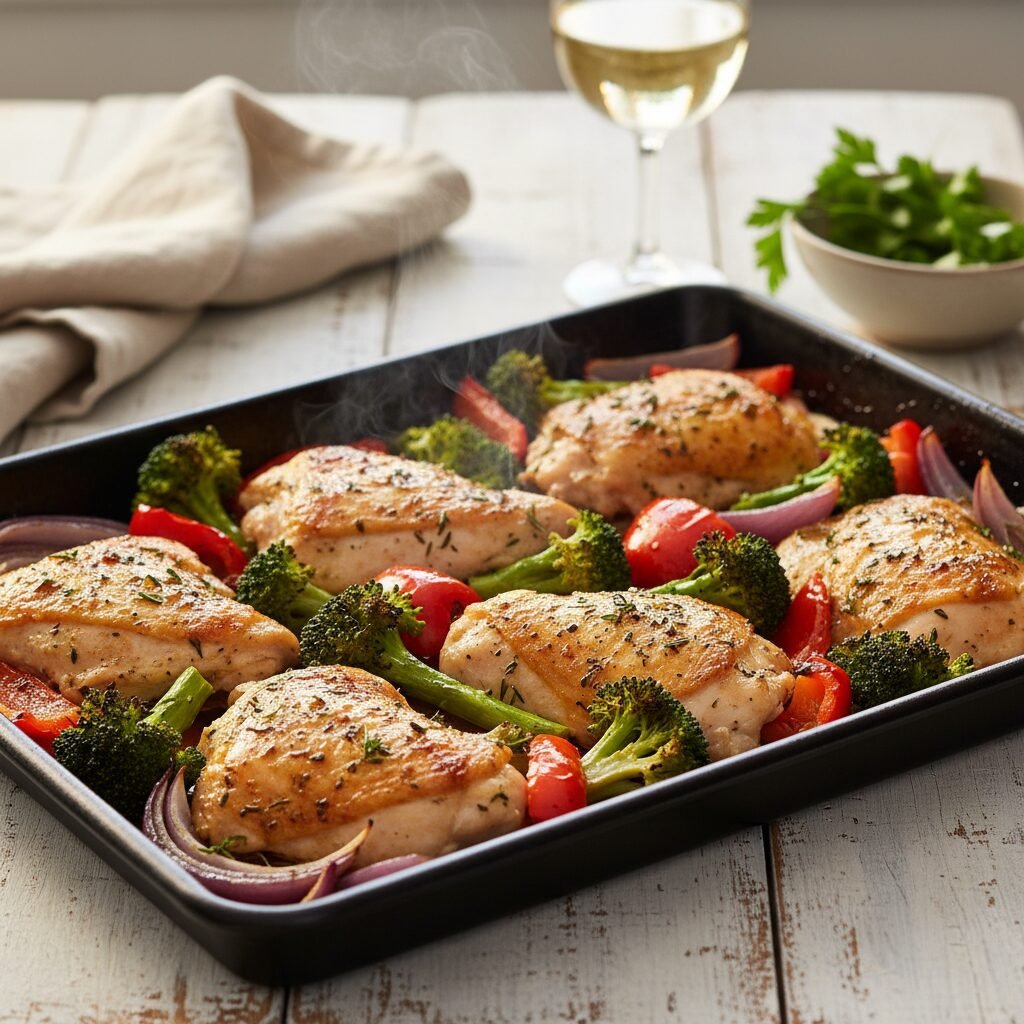
This vibrant sheet pan chicken and vegetables recipe is the ultimate weeknight savior, combining juicy herb-roasted chicken with a rainbow of tender-crisp veggies. Ready in under 45 minutes with minimal cleanup, it is a wholesome, gluten-free meal that delivers big flavor without the fuss.
15 minutes
25 minutes
40 minutes
4 servings
Main Course
Roasting
American / Mediterranean Fusion
Gluten-Free
In the hustle and bustle of modern life, the question ‘What is for dinner?’ often brings a sense of dread, especially when the clock strikes 5:00 PM and energy levels are low. Enter the culinary superhero of the 21st century: The Sheet Pan Dinner. This One Pan Chicken and Vegetables recipe is not just a meal; it is a reclamation of your evening. Imagine a cooking process where the oven does 90% of the work, transforming humble ingredients into a gourmet experience with virtually no active effort. The magic lies in the high-heat roasting, which caramelizes the natural sugars in the vegetables, turning ordinary broccoli and bell peppers into sweet, charred delights that even picky eaters cannot resist. The chicken, marinated in a zesty blend of olive oil, garlic, and aromatic herbs, cooks alongside the vegetables, absorbing their steam and flavor while rendering its own juices to create a natural sauce. This dish is a symphony of textures—the snap of the roasted pepper, the tenderness of the zucchini, and the succulent bite of perfectly cooked protein. Beyond the incredible flavor profile, this recipe champions the concept of ‘eating the rainbow.’ It is visually stunning, packed with vitamins, and completely customizable to whatever produce is languishing in your crisper drawer. Whether you are a busy parent, a meal-prep enthusiast, or someone simply trying to eat cleaner without sacrificing taste, this sheet pan recipe is about to become your new go-to favorite. It proves that healthy eating does not require hours in the kitchen or a sink full of dirty dishes; sometimes, all you need is a single pan and a hot oven.
History & Origins
While the concept of roasting meat and vegetables together is as old as the discovery of fire, the specific iteration of the ‘Sheet Pan Dinner’ is a relatively modern culinary phenomenon that parallels the evolution of the American kitchen. Historically, one-pot meals were the standard for efficiency, seen in Dutch oven roasts, stews, and braises that simmered for hours. These methods were ideal for tougher cuts of meat and root vegetables that required long cooking times. However, the mid-20th century brought the era of convenience foods and TV dinners, shifting focus away from fresh roasting. The renaissance of the sheet pan meal began gaining serious traction in the early 2010s, coinciding with two major cultural shifts: the rise of food blogging/Instagram and a growing public interest in whole-food, paleo, and clean-eating diets. Home cooks needed meals that were photogenic (colorful roasted vegetables look far better than brown stew) and time-efficient for dual-income households. Food writers like Melissa Clark of the New York Times helped popularize the technique, showcasing that high-heat roasting on a rimmed baking sheet could mimic the effects of a grill or a sauté pan but on a larger scale. The sheet pan itself, once reserved strictly for cookies and jelly rolls, became the workhorse of the savory kitchen. This specific recipe draws on Mediterranean influences—using olive oil, lemon, and dried herbs—which have been staples in coastal cooking for centuries, but adapts them to the American demand for quick, 30-minute meals. It represents the perfect marriage of old-world flavor profiles and new-world convenience.
Why This Recipe Works
This recipe succeeds because it leverages the principles of thermodynamics and flavor science to ensure every component is cooked perfectly at the same time. The key factor here is surface area. Unlike a crowded sauté pan where ingredients steam rather than brown, a large sheet pan allows for air circulation around each piece of chicken and vegetable. This circulation is crucial for the Maillard reaction—the chemical reaction between amino acids and reducing sugars that gives browned food its distinctive flavor. By cutting the chicken and denser vegetables (like broccoli) into uniform sizes, we ensure they reach the finish line simultaneously. The marinade serves a dual purpose: the oil acts as a conductor of heat, ensuring even browning and preventing the lean chicken breast from drying out, while the acid from the lemon juice helps to tenderize the meat fibers before cooking begins. Furthermore, the high oven temperature (400°F/200°C) creates a ‘searing’ effect that locks in moisture. Cooking the vegetables in the rendered juices of the chicken adds a depth of savory richness (umami) that you simply cannot achieve by steaming or boiling vegetables separately. It is a scientifically sound method for maximizing flavor with minimal effort.
Why You’ll Love This Recipe
- ✓Ready in under 45 minutes from prep to plate.
- ✓Requires only one pan, meaning minimal cleanup.
- ✓High in protein and fiber while naturally gluten-free.
- ✓Highly customizable with whatever vegetables you have on hand.
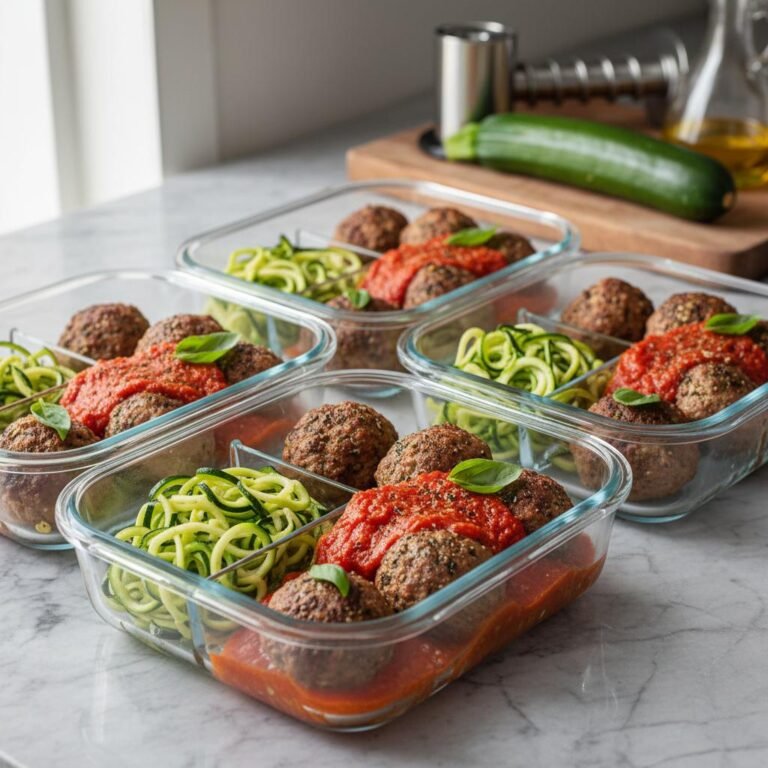
- ✓Perfect for weekly meal prep as it reheats beautifully.
Equipment You’ll Need
- ✓Large rimmed baking sheet (18×13 inches)
- ✓Parchment paper or aluminum foil
- ✓Chef’s knife
- ✓Cutting board
- ✓Small mixing bowl
- ✓Whisk
- ✓Large mixing bowl
Ingredients
- ✓1.5 lbs (680g) boneless, skinless chicken breasts, chopped into 1-inch bite-sized pieces
- ✓2 cups broccoli florets, cut into small pieces
- ✓1 large red bell pepper, chopped into 1-inch squares
- ✓1 large zucchini, sliced into half-moons
- ✓1 medium red onion, chopped into large chunks
- ✓1 cup cherry tomatoes (optional)
- ✓4 tablespoons extra virgin olive oil
- ✓2 teaspoons dried Italian seasoning (or a mix of oregano, basil, and thyme)
- ✓1 teaspoon garlic powder (or 3 cloves fresh garlic, minced)
- ✓1 teaspoon smoked paprika
- ✓1/2 teaspoon salt
- ✓1/2 teaspoon black pepper
- ✓1 tablespoon fresh lemon juice
- ✓Fresh parsley and parmesan cheese for garnish
Instructions
- Preheat your oven to 400°F (200°C). Line a large rimmed baking sheet with parchment paper or aluminum foil for easy cleanup.
- In a small bowl, whisk together the olive oil, lemon juice, Italian seasoning, garlic powder, smoked paprika, salt, and black pepper to create the marinade.
- Place the chopped chicken pieces in a large bowl. Pour half of the marinade over the chicken and toss until every piece is well coated. Let it sit while you prep the vegetables.
- Place the chopped broccoli, red bell pepper, zucchini, and red onion on the prepared baking sheet. Drizzle the remaining marinade over the vegetables and toss them directly on the pan to ensure they are evenly coated with oil and spices.
- Add the seasoned chicken to the sheet pan. Spread everything out into a single layer. It is crucial not to overcrowd the pan; if the pan is too full, use two pans. The ingredients need space to roast properly.
- Place the baking sheet in the preheated oven and roast for 20-25 minutes. Halfway through the cooking time (around the 10-12 minute mark), remove the pan and gently toss the ingredients to ensure even cooking.
- Check that the chicken is cooked through (internal temperature should reach 165°F/74°C) and the vegetables are tender-crisp with caramelized edges.
- Optional: For extra char, switch the oven to ‘Broil’ for the last 2-3 minutes, watching closely to prevent burning.
- Remove from the oven. Squeeze a little extra fresh lemon juice over the top if desired, and garnish with fresh chopped parsley and a sprinkle of grated parmesan cheese. Serve immediately.
Expert Cooking Tips
- ✓Dry the chicken thoroughly with paper towels before chopping; removing surface moisture helps the chicken brown rather than steam.
- ✓Cut all vegetables to roughly the same size to ensure they cook at the same rate.
- ✓Do not skimp on the oil; it conducts the heat and is essential for that delicious roasted flavor.
- ✓If using two sheet pans, rotate them from top to bottom rack halfway through cooking.
- ✓Use a meat thermometer to avoid overcooking the chicken breast, which can dry out quickly.
Substitutions and Variations
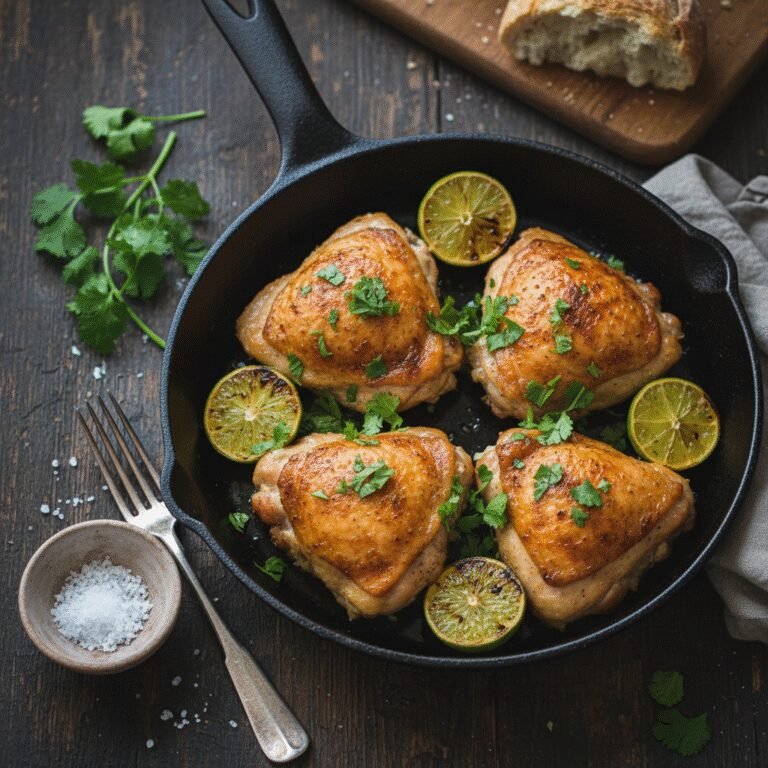
This recipe is the chameleon of the kitchen and welcomes substitutions based on your dietary needs or pantry inventory. For the protein, you can easily swap chicken breasts for boneless, skinless chicken thighs, which are more forgiving and stay juicier, though they may require an extra 5 minutes of cooking time. Shrimp is another great option, but it should only be added during the last 8 minutes of roasting. For a vegetarian version, substitute the meat with a can of drained chickpeas or cubes of firm tofu. Vegetable variations are endless: try asparagus, green beans, cauliflower, sweet potatoes (cut small), or Brussels sprouts. If you are swapping in root vegetables like carrots or potatoes, roast them for 10 minutes before adding the chicken and softer vegetables, as they take longer to cook. Flavor-wise, you can pivot from Italian to Mexican by using cumin, chili powder, and lime juice, or go Asian-inspired with soy sauce, ginger, and sesame oil.
Common Mistakes to Avoid
The most common mistake with sheet pan meals is overcrowding the pan. When ingredients are piled on top of each other, moisture gets trapped, creating a steam bath instead of a roasting environment. This results in soggy vegetables and pale, rubbery chicken. Always use the largest pan you have, or split the batch between two pans. Another pitfall is cutting the vegetables unevenly; tiny pieces of broccoli will burn before a large chunk of potato is soft. Ensure uniformity in your chopping. Lastly, many home cooks set the oven temperature too low. Roasting requires high heat (at least 400°F) to achieve caramelization. Cooking at 350°F will result in a longer cook time and dried-out meat.
Serving Suggestions
While this One Pan Chicken and Vegetables is a complete meal on its own, it pairs wonderfully with a variety of bases to stretch the servings further. Serve it over a bed of fluffy quinoa, brown rice, or farro for a hearty grain bowl. For a low-carb option, cauliflower rice or spiralized zucchini noodles work perfectly. It is also delicious stuffed into a warm pita pocket with a dollop of tzatziki sauce or hummus. A side of crisp green salad with a balsamic vinaigrette can add a nice fresh contrast to the warm roasted flavors. If you want to elevate the dish for a dinner party, serve it with a side of crusty garlic bread to soak up the delicious pan juices.
Storage and Reheating Tips
This recipe is excellent for meal prep. Store leftovers in an airtight container in the refrigerator for up to 4 days. To reheat, avoid the microwave if possible, as it can make the vegetables mushy. Instead, reheat in a skillet over medium heat or pop it back into a 350°F oven (or air fryer) for 5-10 minutes until warmed through. This restores the texture of the roasted vegetables. You can also freeze the cooked dish for up to 3 months. Thaw overnight in the refrigerator before reheating. Note that zucchini may become softer upon thawing, so if you plan to freeze, you might opt for heartier vegetables like carrots or green beans.
Nutrition Facts (Estimated)
| Serving Size | 1 bowl (approx 350g) |
| Calories | 415 |
| Fat | 22g |
| Saturated Fat | 3.5g |
| Unsaturated Fat | 17g |
| Trans Fat | 0g |
| Cholesterol | 95mg |
| Sodium | 580mg |
| Carbohydrates | 14g |
| Fiber | 5g |
| Sugar | 6g |
| Protein | 38g |
Frequently Asked Questions
Can I use frozen vegetables for this recipe?
Yes, but with caveats. Frozen vegetables release more water than fresh ones. If using frozen, do not thaw them first. Toss them in oil and roast them, but be aware they will not get as crispy as fresh vegetables. You may need to drain excess liquid from the pan halfway through.
How do I stop the chicken from drying out?
The key is high heat and not overcooking. Cut the chicken into uniform pieces so they cook evenly. Using a marinade with oil creates a barrier that locks in moisture. Also, chicken thighs are naturally juicier than breasts if you are worried about dryness.
Can I marinate the chicken overnight?
Yes! Marinating the chicken for 2 to 12 hours will deepen the flavor. However, do not leave it longer than 24 hours if the marinade contains a lot of lemon juice, as the acid can start to break down the meat texture.
Do I have to use parchment paper?
No, it is not strictly necessary, but it makes cleanup significantly easier. If you don’t use parchment or foil, make sure to grease the baking sheet generously to prevent sticking.
Can I add potatoes to this recipe?
Absolutely. However, potatoes take longer to cook than chicken and zucchini. Cut the potatoes into small 1/2 inch cubes, or start roasting the potatoes for 10-15 minutes before adding the rest of the ingredients to the pan.
Is this recipe Keto-friendly?
Yes, this recipe is naturally low-carb and keto-friendly. Just ensure you stick to lower-carb vegetables like broccoli, cauliflower, and zucchini, and avoid adding sugary sauces or starchy root vegetables.
Why are my vegetables soggy?
Soggy vegetables are usually the result of overcrowding the pan or using an oven temperature that is too low. Ensure there is space between the ingredients and that your oven is fully preheated to 400°F.
What is the best way to check if it is done?
Visual cues are good (browning on veggies), but a meat thermometer is best for safety. Insert it into the largest piece of chicken; it should read 165°F (74°C).
Conclusion
There you have it—a foolproof roadmap to a healthy, delicious, and stress-free dinner. This One Pan Chicken and Vegetables recipe proves that you do not need a culinary degree or hours of free time to put a nutritious meal on the table. It is a celebration of simple ingredients coming together to create something greater than the sum of its parts. Whether you are cooking for a family, prepping for the week, or just treating yourself to a wholesome dinner, this sheet pan wonder delivers every time. Give it a try tonight, and do not forget to snap a picture before you dig in—it tastes as good as it looks!