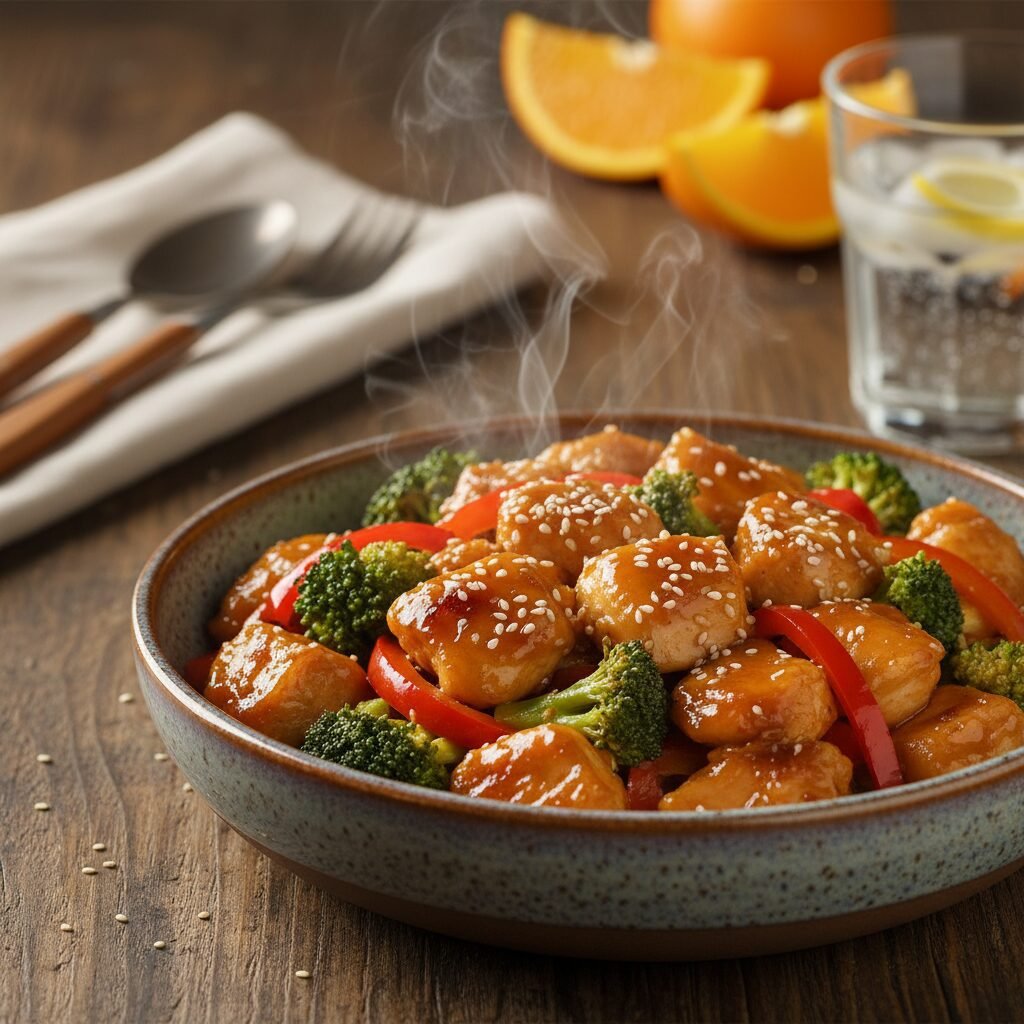
Better-Than-Takeout Healthy Orange Ginger Chicken Stir Fry
Orange Ginger Chicken Stir Fry Healthy Recipe
Craving Chinese takeout without the heavy grease and sugar crash? This vibrant Orange Ginger Chicken Stir Fry delivers sticky, sweet-savory perfection in under 30 minutes. Loaded with crisp vegetables and lean protein, it is the ultimate weeknight dinner that tastes indulgent but fuels your body right.
15 minutes
15 minutes
30 minutes
4 servings
Main Course
Stovetop / Stir-Fry
Chinese-American
Dairy-Free
We have all been there: it is 6 PM on a Tuesday, you are exhausted, and the siren call of the local Chinese takeout menu is deafening. You want that sticky, sweet, umami-packed Orange Chicken, but you know it usually comes battered, deep-fried, and swimming in a sugary glaze that will leave you feeling sluggish. Enter this Healthy Orange Ginger Chicken Stir Fry—a total game-changer for your weeknight rotation. This recipe was born out of a necessity to satisfy those intense takeout cravings while sticking to clean, whole-food ingredients. Instead of breading and deep-frying the chicken, we use a technique called ‘velveting’ with a touch of cornstarch to keep the breast meat incredibly tender and juicy while searing it in a hot pan.
The star of the show, however, is the sauce. Forget the bottled stuff loaded with high-fructose corn syrup. We are using fresh orange juice, zest, and a generous amount of fresh ginger to create a sauce that is bright, zesty, and deeply flavorful. The natural sweetness of the orange pairs perfectly with the heat of the ginger and the savory depth of soy sauce (or tamari for our gluten-free friends). Combined with a rainbow of crunchy vegetables like broccoli, bell peppers, and snap peas, this dish offers a textural delight in every bite. It is lighter, fresher, and honestly, significantly tastier than what comes in those white cardboard boxes. Plus, it comes together in one pan, making cleanup a breeze. Get ready to ditch the delivery app and impress your family with a meal that looks as good as it tastes.
History & Origins
Stir-frying is an ancient cooking method that originated in China, dating back to the Han Dynasty, though it became widely popular during the Ming Dynasty as oil became more accessible. The technique, known as ‘chao,’ involves cooking ingredients rapidly in a small amount of very hot oil in a wok. This method is prized for its ability to preserve the texture, color, and nutritional value of vegetables while searing meats to perfection. The concept of ‘wok hei’ or ‘breath of the wok’ refers to the complex smoky flavor imparted by the high heat, a hallmark of authentic stir-fry.
The specific dish ‘Orange Chicken,’ however, has a fascinating trans-pacific history. While traditional Hunan cuisine features ‘Tangerine Chicken’ (Chen Pi Ji), which uses dried citrus peel and is generally savory and spicy, the sticky, sweet Orange Chicken most Americans know and love is largely an invention of Chinese-American cuisine. Popularized in the late 20th century by fast-casual chains like Panda Express, the Americanized version is typically heavily battered, deep-fried, and coated in a thick, very sweet sauce. It was designed to appeal to American palates that favor sweet and fried profiles.
This specific recipe represents the modern evolution of home cooking—a ‘third wave’ of sorts. We are taking the nostalgic flavor profile of the Americanized classic (orange + chicken) and reapplying the traditional, healthier Chinese cooking method of stir-frying. By stripping away the heavy batter and deep-frying process, we return the dish closer to its roots of quick, high-heat cooking that celebrates fresh ingredients, bridging the gap between authentic technique and beloved modern flavors.
Why This Recipe Works
This recipe succeeds where many ‘healthy’ adaptations fail because it prioritizes texture and flavor balance equally. First, the ‘velveting’ technique is crucial. By tossing the chicken strips in a mixture of cornstarch and a splash of soy sauce before cooking, we create a protective barrier. This seals in moisture, preventing the lean chicken breast from drying out—a common pitfall in stir-fries—and gives the meat a silky mouthfeel that mimics the tenderness of restaurant chicken without the heavy batter.
Secondly, the sauce relies on the ‘blooming’ of aromatics. We do not just dump everything in at once; we sauté the garlic and ginger briefly before adding the liquids. This releases their essential oils, creating a robust flavor foundation. Using fresh orange juice provides acidity and sweetness, but the addition of orange zest is the secret weapon; it contains citrus oils that deliver a punchy, aromatic orange flavor that juice alone cannot achieve.
Finally, the vegetable timing is precise. We cook the harder vegetables (like broccoli) first and the softer ones (like snap peas) later, or flash-steam them, ensuring everything retains a vibrant crunch. The sauce is thickened with a cornstarch slurry at the very end, allowing it to glaze the ingredients glossy and tight, rather than leaving them swimming in a watery soup. This balance of savory soy, sweet orange, and spicy ginger hits all the taste receptors, making it deeply satisfying.
Why You’ll Love This Recipe
- ✓Ready in under 30 minutes
- ✓High protein and low fat
- ✓Uses fresh orange juice and zest for authentic citrus flavor
- ✓No deep-frying required
- ✓Packed with nutrient-dense vegetables
- ✓Easily adaptable for Gluten-Free or Paleo diets
Equipment You’ll Need
- ✓Large Wok or Skillet
- ✓Chef’s Knife
- ✓Cutting Board
- ✓Small Mixing Bowl (for sauce)
- ✓Whisk
- ✓Microplane or Zester
- ✓Tongs or Spatula
Ingredients
- ✓1 lb Boneless skinless chicken breasts, sliced into thin strips
- ✓1 tbsp Cornstarch (for chicken coating)
- ✓1 tbsp Olive oil or Avocado oil
- ✓2 cups Broccoli florets, bite-sized
- ✓1 Red bell pepper, sliced
- ✓1 cup Sugar snap peas
- ✓2 Green onions, chopped (for garnish)
- ✓1 tbsp Sesame seeds (optional garnish)
- ✓—SAUCE—
- ✓1/2 cup Fresh orange juice (approx 2 oranges)
- ✓1 tsp Orange zest
- ✓3 tbsp Low-sodium soy sauce (or Tamari/Coconut Aminos)
- ✓1 tbsp Rice vinegar
- ✓1 tbsp Honey or Maple syrup
- ✓1 tbsp Fresh ginger, grated
- ✓2 cloves Garlic, minced
- ✓1 tsp Sesame oil
- ✓1 tbsp Cornstarch mixed with 1 tbsp water (slurry)
Instructions
- 1. Prep the Chicken: In a medium bowl, toss the sliced chicken breast with 1 tablespoon of cornstarch and a pinch of salt and pepper. Toss until the chicken is evenly coated. This step creates that silky, velvet texture.
- 2. Make the Sauce: In a small bowl or jar, whisk together the fresh orange juice, orange zest, soy sauce, rice vinegar, honey, grated ginger, minced garlic, and sesame oil. Set aside.
- 3. Sear the Chicken: Heat the olive oil in a large wok or skillet over medium-high heat. Once hot, add the chicken in a single layer (you may need to do this in two batches to avoid overcrowding). Cook for 3-4 minutes per side until golden brown and cooked through. Remove chicken from the pan and set aside on a plate.
- 4. Stir Fry Veggies: In the same pan (add a splash more oil if needed), add the broccoli florets and a splash of water (about 2 tablespoons). Cover with a lid for 2 minutes to steam the broccoli. Remove lid, add the red bell pepper and snap peas. Stir fry for another 2-3 minutes until veggies are tender-crisp.
- 5. Combine: Add the cooked chicken back into the pan with the vegetables.
- 6. Thicken Sauce: Give your sauce mixture a quick whisk (ingredients may settle) and pour it over the chicken and veggies. Let it bubble for 30 seconds. Stir in the cornstarch slurry (cornstarch + water mix) and toss everything constantly for 1 minute until the sauce thickens and coats everything in a glossy glaze.
- 7. Serve: Remove from heat immediately. Garnish with chopped green onions and sesame seeds. Serve hot over brown rice, quinoa, or cauliflower rice.
Expert Cooking Tips
- ✓Freeze Your Ginger: Keep a knob of fresh ginger in the freezer. It grates much easier when frozen and you don’t have to peel it first.
- ✓Don’t Overcrowd the Pan: When searing chicken, give the pieces room to breathe. If they are piled on top of each other, they will steam instead of sear, and you will lose that delicious golden crust.
- ✓Prep is Key: Stir-frying happens fast! Have all your veggies chopped and sauce mixed before you turn on the stove.
- ✓Zest Before Juicing: It is much harder to zest an orange after you have squeezed the juice out. Zest first, slice second.
- ✓Adjust Sweetness: Depending on how sweet your oranges are, you might want to adjust the honey. Taste the sauce before adding the cornstarch slurry.
Substitutions and Variations
This recipe is incredibly flexible to suit various dietary needs and pantry staples. **Protein:** If you prefer chicken thighs, they work wonderfully and stay even juicier. For a vegetarian version, swap the chicken for firm tofu (pressed and cubed) or even chickpeas. Shrimp is also a fantastic alternative; just reduce the cooking time to avoid rubbery seafood. **Vegetables:** Use whatever is in your crisper drawer. Zucchini, carrots, baby corn, mushrooms, and bok choy are all excellent additions. **Sauce:** If you are gluten-free, ensure you are using Tamari or Coconut Aminos instead of traditional soy sauce. If you don’t have rice vinegar, apple cider vinegar or white wine vinegar are acceptable substitutes. For a refined sugar-free option, stick to the honey or maple syrup, or use a monk fruit sweetener, though the consistency of the glaze may vary slightly.
Common Mistakes to Avoid
The most common mistake with stir-fries is overcooking the vegetables. Nobody likes mushy broccoli. To avoid this, cut your vegetables into uniform sizes so they cook at the same rate, and don’t be afraid of high heat—you want a sear, not a stew. Another mistake is adding the sauce too early. The sauce should only be in the pan for the final minute or two; otherwise, the sugars in the orange juice and honey can burn, and the fresh flavors will dull. Lastly, do not skip the cornstarch on the chicken. If you skip this, the sauce won’t cling to the meat as well, and the texture will be more fibrous.
Serving Suggestions
This Orange Ginger Chicken is versatile. For a classic pairing, serve it over steamed Jasmine or brown rice to soak up the extra sauce. For a lower-carb option, it is fantastic over cauliflower rice or zucchini noodles. If you are feeling adventurous, try serving it over soba noodles or thin rice vermicelli. Pair the meal with a side of cucumber salad marinated in vinegar and chili flakes for a cooling contrast to the warm stir fry. A cup of hot green tea or jasmine tea makes for the perfect beverage accompaniment.
Storage and Reheating Tips
This dish stores surprisingly well, making it great for meal prep. **Refrigerator:** Store leftovers in an airtight glass container for up to 3-4 days. **Reheating:** Reheat in a skillet over medium heat with a splash of water to loosen the sauce, or microwave in 30-second intervals, stirring in between. **Freezing:** You can freeze the cooked chicken and vegetables in the sauce for up to 2 months. Thaw overnight in the fridge before reheating. Note that the veggies may lose some of their crunch after freezing and reheating.
Nutrition Facts (Estimated)
| Serving Size | 1.5 cups |
| Calories | 340 |
| Fat | 10g |
| Saturated Fat | 1.5g |
| Unsaturated Fat | 8g |
| Trans Fat | 0g |
| Cholesterol | 75mg |
| Sodium | 680mg |
| Carbohydrates | 28g |
| Fiber | 4g |
| Sugar | 12g |
| Protein | 32g |
Frequently Asked Questions
Can I use bottled orange juice?
You can, but fresh is significantly better. Bottled juice often has added sugar and lacks the bright acidity of fresh citrus. If you must use bottled, try to find one with ‘high pulp’ and no added sugar, and do not skip the fresh zest.
Is this recipe spicy?
It has a very mild warmth from the fresh ginger. If you want actual heat, add 1/2 teaspoon of red pepper flakes or a drizzle of Sriracha to the sauce mixture.
How do I make the sauce thicker?
The cornstarch slurry is the thickening agent. If it’s too thin after a minute of boiling, mix another teaspoon of cornstarch with cold water and add it in slowly. Remember, the sauce thickens more as it cools.
Can I make this in a slow cooker?
Technically yes, but you will lose the texture. Stir-fries are designed for high heat. In a slow cooker, the veggies will get very soft and the chicken may shred. It is best cooked fresh.
Is this gluten-free?
It is gluten-free IF you use Tamari or Coconut Aminos instead of standard Soy Sauce (which contains wheat). Always check your labels to be sure.
Can I use powdered ginger instead of fresh?
In a pinch, yes. Use 1/4 teaspoon of ground ginger for every tablespoon of fresh ginger. However, fresh ginger provides a zesty bite that powder lacks.
Why is my chicken tough?
Chicken breast is lean and dries out easily. It was likely overcooked. Slice it against the grain and don’t skip the cornstarch coating step, which protects the meat.
What if I don’t have a wok?
No problem! A large, heavy-bottomed skillet (like cast iron or stainless steel) works perfectly fine. Just ensure it is wide enough to toss ingredients easily.
Conclusion
There you have it—a healthy, vibrant, and absolutely delicious Orange Ginger Chicken Stir Fry that proves fast food can be good food. By taking control of the ingredients and using simple techniques, you can create a meal that satisfies those savory cravings while nourishing your body with wholesome protein and veggies. Whether you are cooking for a busy family on a weeknight or meal prepping for the week ahead, this recipe is sure to become a staple in your kitchen. Give it a try, and don’t forget to tag us in your photos—we love seeing your culinary creations come to life!