The Ultimate Creamy Peanut Butter Banana Smoothie Bowl Dessert
Peanut Butter Banana Smoothie Bowl Dessert Recipe
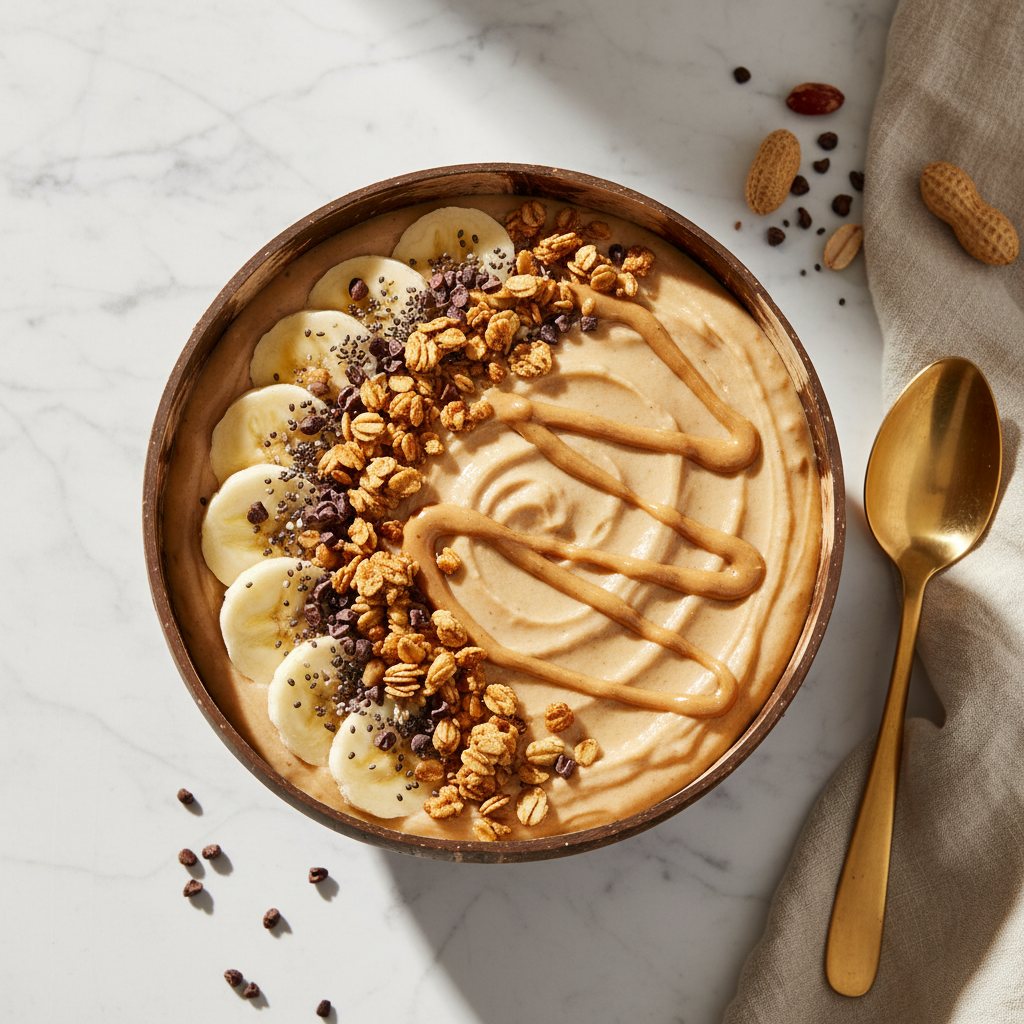
Indulge in this thick, velvety Peanut Butter Banana Smoothie Bowl that tastes exactly like soft-serve ice cream but is packed with wholesome ingredients. It is the perfect guilt-free dessert or decadent breakfast that comes together in just 5 minutes!
5 minutes
0 minutes
5 minutes
2 servings
Dessert
Blending
American
Vegan
There is something undeniably magical about the combination of peanut butter and banana. It is a flavor marriage that has stood the test of time, gracing sandwiches, baked goods, and now, the modern smoothie bowl. But let’s set the record straight: this isn’t just a smoothie poured into a bowl. This recipe is designed to be a dessert experience, a ‘nice cream’ that rivals the texture of your favorite dairy-laden frozen treats while remaining entirely plant-based and nutrient-dense.
Imagine a texture so thick your spoon stands straight up in it, cold and creamy, melting slowly on your tongue with the rich, nutty depth of roasted peanuts and the natural sweetness of ripe bananas. This Peanut Butter Banana Smoothie Bowl is the answer to late-night sugar cravings, post-workout refueling needs, and those mornings when you just want to treat yourself to something special. Unlike traditional smoothies that are often gulped down on the go, a smoothie bowl invites you to slow down. It demands to be savored. The base is lusciously smooth, providing the perfect canvas for a symphony of textures from crunchy granola, cacao nibs, fresh fruit slices, and drizzles of honey or agave.
In this guide, we aren’t just blending fruit; we are mastering the art of consistency. Achieving that perfect, scoopable texture requires specific techniques and ingredient ratios that I have perfected over years of testing. Whether you are a long-time vegan, a fitness enthusiast looking for protein, or simply a lover of all things peanut butter, this bowl is about to become your new obsession. It is visually stunning, incredibly satisfying, and shockingly easy to make. Get your blenders ready, because we are about to elevate your dessert game to a whole new level of deliciousness.
History & Origins
The concept of the smoothie bowl is a relatively recent phenomenon in the grand timeline of culinary history, yet its roots run deep into the invention of the blender and the evolution of health food culture. The electric blender was invented in the 1920s by Stephen Poplawski, primarily for making soda fountain drinks like malted milks. However, it wasn’t until the health food movements of the 1960s and 70s, fueled by the counterculture’s interest in macrobiotics and natural foods, that fruit blends began to gain traction as a staple meal replacement.
The specific evolution from ‘smoothie in a cup’ to ‘smoothie in a bowl’ is largely credited to the rise of the Acai bowl in the early 2000s. Originating in Brazil, frozen acai pulp was blended and topped with granola and bananas, becoming a surfer’s staple before exploding onto the global scene. As social media platforms like Instagram and Pinterest rose to prominence in the 2010s, the smoothie bowl became a viral sensation. The visual appeal of artfully arranged toppings on a vibrant, thick fruit base made it the darling of food photography.
This specific Peanut Butter Banana iteration leans heavily on the concept of ‘nice cream,’ a term coined by the vegan community to describe fruit-based ice cream alternatives. By utilizing frozen bananas as the primary emulsifier and thickener, home cooks realized they could mimic the mouthfeel of dairy ice cream without the cream. Adding peanut butter was a natural progression, tapping into the classic American love affair with peanut butter that dates back to the St. Louis World’s Fair in 1904. Today, this bowl represents the intersection of modern wellness trends, visual food culture, and nostalgic comfort flavors, cementing its place as a modern classic in the dessert world.
Why This Recipe Works
This recipe works exceptionally well because it relies on the science of freezing fruit sugars and fibers to create an emulsion that mimics dairy fat. When bananas are frozen at their peak ripeness, their water content crystallizes. However, because bananas are high in pectin and sugar, they don’t freeze into a solid block of ice like a strawberry might. Instead, when high-speed friction from a blender is applied, those micro-crystals break down into a creamy, cohesive paste that holds its shape—very similar to the churning process of traditional ice cream.
The addition of natural peanut butter does more than just add flavor; the fat content in the nut butter helps to aerate the mixture and prevent it from melting too quickly, adding a rich, velvety mouthfeel that water or juice-based smoothies lack. We also use a very minimal amount of liquid in this recipe. Most smoothie mistakes happen when too much liquid is added, turning a bowl into a soup. By strictly limiting the almond milk, we force the blender to process the solids into a dense, scoopable soft-serve texture.
Furthermore, the flavor balance here is scientifically sound. The slight saltiness of the peanut butter cuts through the intense sweetness of the concentrated banana sugars, creating a ‘salted caramel’ effect that triggers the pleasure centers of the brain. The toppings provide the necessary textural contrast—crunchy against creamy—which is essential for a satisfying eating experience, making your brain register this as a substantial meal or dessert rather than just a drink.
Why You’ll Love This Recipe
- ✓Achieves a perfect soft-serve ice cream consistency without dairy.
- ✓Packed with potassium, healthy fats, and plant-based protein.
- ✓Ready in under 10 minutes with minimal cleanup.
- ✓Highly customizable with various toppings and mix-ins.
- ✓Naturally sweetened with no added refined sugars.
- ✓Kid-friendly and perfect for picky eaters.
Equipment You’ll Need
- ✓High-speed blender or food processor
- ✓Silicone spatula
- ✓Measuring cups and spoons
- ✓Serving bowls
- ✓Knife and cutting board (for toppings)
Ingredients
- ✓3 large bananas, peeled, sliced, and frozen solid (at least 4 hours)
- ✓2 tablespoons creamy natural peanut butter (unsweetened)
- ✓1/4 cup unsweetened almond milk (or oat milk)
- ✓1/2 teaspoon pure vanilla extract
- ✓1 pinch of sea salt
- ✓1 tablespoon maple syrup (optional, for extra sweetness)
- ✓Toppings: Sliced fresh bananas, granola, chia seeds, cacao nibs, drippy peanut butter
Instructions
- Prepare your ingredients: Ensure your bananas are completely frozen. If they are stuck together in a clump, bang the bag against the counter to separate the slices before measuring.
- Load the blender: Add the frozen banana slices, peanut butter, vanilla extract, sea salt, and maple syrup (if using) into the canister of a high-speed blender.
- Add liquid sparingly: Pour in the almond milk. Start with just 1/4 cup. It is always better to start with less liquid and add more only if absolutely necessary.
- Blend on low: Start the blender on the lowest speed. The machine will make a loud crunching noise as it breaks down the frozen fruit. Use the tamper (the stick that comes with the blender) to push the ingredients down into the blades vigorously.
- Increase speed: Gradually increase the speed to medium-high. Continue using the tamper to keep the mixture moving. If you do not have a tamper, you will need to stop the blender frequently to scrape down the sides with a spatula.
- Check consistency: Blend for about 45-60 seconds. You are looking for a pale, creamy texture with no remaining chunks of banana. Be careful not to over-blend, or the friction heat will melt the mixture into a soup.
- Serve immediately: Scoop the thick mixture into chilled bowls. It should hold its shape like soft-serve ice cream.
- Top and enjoy: Immediately garnish with fresh banana slices, a handful of granola, a sprinkle of chia seeds, and a generous drizzle of extra peanut butter. Eat right away while cold and firm.
Expert Cooking Tips
- ✓Freeze bananas when they are spotty and brown for maximum natural sweetness.
- ✓Slice bananas before freezing; blending whole frozen bananas is extremely difficult for most machines.
- ✓Chill your serving bowls in the freezer for 10 minutes beforehand to keep the smoothie from melting.
- ✓If your blender gets stuck, add liquid only 1 tablespoon at a time to avoid thinning it out too much.
- ✓Use a tamper tool vigorously; it is the secret to getting a thick blend without excessive liquid.
- ✓For an extra protein boost, add a scoop of vanilla or peanut butter protein powder.
- ✓Clean your blender immediately by blending warm water and a drop of dish soap for 30 seconds.
Substitutions and Variations
This recipe is incredibly versatile and can be adapted to suit various dietary needs and pantry staples. If you have a peanut allergy, almond butter, cashew butter, or sunflower seed butter work beautifully as direct 1:1 replacements, though the flavor profile will shift slightly. For the liquid base, any plant-based milk (soy, oat, coconut, cashew) works well; coconut milk will yield an even creamier, more tropical result, while oat milk adds a pleasant earthiness. If you are not strictly vegan, regular dairy milk or Greek yogurt can be used, with the latter adding a significant protein boost and a tangy flavor profile. For sweetener, maple syrup can be swapped for agave nectar, honey (if not vegan), or a pitted Medjool date thrown into the blender for a whole-food sweetener option. If you want to reduce the sugar content, you can omit the added sweetener entirely, relying solely on the ripeness of the bananas. For a chocolate twist, add a tablespoon of unsweetened cocoa powder to the base mix.
Common Mistakes to Avoid
The most common mistake people make with smoothie bowls is adding too much liquid right at the start. It is tempting to add more milk when the blender struggles or makes loud noises, but patience and the use of a tamper are key. If you add too much liquid, you will end up with a drinkable smoothie rather than a spoonable bowl. Another frequent error is using under-ripe bananas. Green or barely yellow bananas lack the sugar content and soft pectin structure needed for a creamy texture, resulting in a bland, icy, and somewhat chalky bowl. Always wait until the bananas have cheetah spots before freezing. Additionally, over-blending is a pitfall; high-speed blenders generate heat. If you blend for too long (over 90 seconds), you will melt the frozen fruit, destroying the thick texture you worked so hard to achieve. Finally, failing to prep toppings beforehand can lead to a melted bowl; have your granola and fruit ready to go before you even touch the blender button.
Serving Suggestions
This Peanut Butter Banana Smoothie Bowl is best served immediately after blending to maintain its frozen, ice-cream-like consistency. It makes for a stunning breakfast centerpiece or a sophisticated dessert. For a breakfast setting, serve it alongside a hot cup of black coffee or an oat milk latte to contrast the cold temperature of the bowl. If serving as a dessert for guests, consider setting up a ‘topping bar’ where everyone can customize their own bowl. Offer small bowls of shredded coconut, dark chocolate shavings, hemp hearts, goji berries, various nut butters, and fresh berries. For an ultra-decadent treat, you can crumble a chocolate chip cookie or brownie bites over the top. Serve in wide, shallow bowls rather than deep cups; this maximizes the surface area for toppings, ensuring you get a bit of crunch with every creamy bite.
Storage and Reheating Tips
Smoothie bowls are notoriously difficult to store because their texture relies entirely on the immediate emulsion of frozen fruit. Once melted, they do not refreeze well; they tend to become an icy, solid block rather than returning to a creamy state. Therefore, it is highly recommended to make only what you intend to eat immediately. However, if you do have leftovers, you can pour the mixture into popsicle molds and freeze them for later enjoyment as a frozen treat. Alternatively, you can store leftovers in an airtight container in the freezer for up to 24 hours. When ready to eat, you will need to let it thaw on the counter for 15-20 minutes and likely re-blend it with a splash of milk to revive the texture, though it may be slightly icier than the fresh version. Do not store in the refrigerator, as the bananas will oxidize (turn brown) and the mixture will separate into a liquid sludge.
Nutrition Facts (Estimated)
| Serving Size | 1 bowl |
| Calories | 380 |
| Fat | 16g |
| Saturated Fat | 3g |
| Unsaturated Fat | 11g |
| Trans Fat | 0g |
| Cholesterol | 0mg |
| Sodium | 110mg |
| Carbohydrates | 52g |
| Fiber | 8g |
| Sugar | 18g |
| Protein | 12g |
Frequently Asked Questions
Can I use fresh bananas instead of frozen?
No, frozen bananas are non-negotiable for this recipe. They act as the ice component. Using fresh bananas will result in a room-temperature pudding or soup, not a thick, cold smoothie bowl.
My blender isn’t high-speed, can I still make this?
Yes, but you will need to be patient. Let the frozen banana slices thaw on the counter for about 5-10 minutes to soften slightly before blending. You may also need to add a tiny bit more liquid and stop frequently to scrape down the sides.
Is this recipe gluten-free?
Yes, the base ingredients (bananas, peanut butter, almond milk) are naturally gluten-free. However, always check the labels on your peanut butter and ensure your granola topping is certified gluten-free.
How do I make it taste more like chocolate?
Simply add 1 to 2 tablespoons of unsweetened cocoa powder or cacao powder to the blender along with the other ingredients. It turns into a chocolate peanut butter delight!
Can I add spinach without ruining the taste?
Absolutely! You can add a handful of fresh spinach. The color will turn green, but the strong flavors of peanut butter and banana completely mask the taste of the greens.
Why is my smoothie bowl runny?
This usually happens for two reasons: either too much liquid was added, or the bananas weren’t frozen enough. Ensure bananas are frozen solid (at least 4 hours, preferably overnight) and add milk very sparingly.
Can I use powdered peanut butter to save calories?
Yes, powdered peanut butter (like PB2) works well. Use 2 tablespoons of powder and you may need to adjust the liquid slightly since the powder is dry compared to creamy butter.
Is this suitable for meal prep?
You can prep ‘smoothie packs’ by placing the sliced bananas and measured peanut butter in freezer bags. When ready to eat, just dump the bag contents into the blender, add milk, and blend. Do not blend ahead of time.
What is the best way to freeze bananas?
Peel the bananas first! Never freeze them in the peel. Slice them into coins, lay them flat on a parchment-lined baking sheet to freeze individually (flash freezing), then transfer to a bag. This prevents them from sticking together.
Conclusion
In the world of healthy eating, it is rare to find a recipe that feels this indulgent while nourishing your body so completely. This Peanut Butter Banana Smoothie Bowl bridges the gap between a nutritious breakfast and a decadent dessert, proving that you don’t have to compromise flavor for health. Whether you are looking to cool down on a hot summer day or simply need a comforting, creamy treat that won’t weigh you down, this bowl delivers every time. The combination of textures, temperatures, and rich flavors makes it a sensory experience that goes far beyond a standard smoothie. We hope this recipe becomes a staple in your kitchen rotation, bringing a little bit of joy and a whole lot of deliciousness to your daily routine. Grab your spoon, pile on the toppings, and dig in!