Light & Zesty Pesto Chicken Pasta Salad with Fresh Summer Veggies
Pesto Chicken Pasta Salad With Veggies Light Recipe
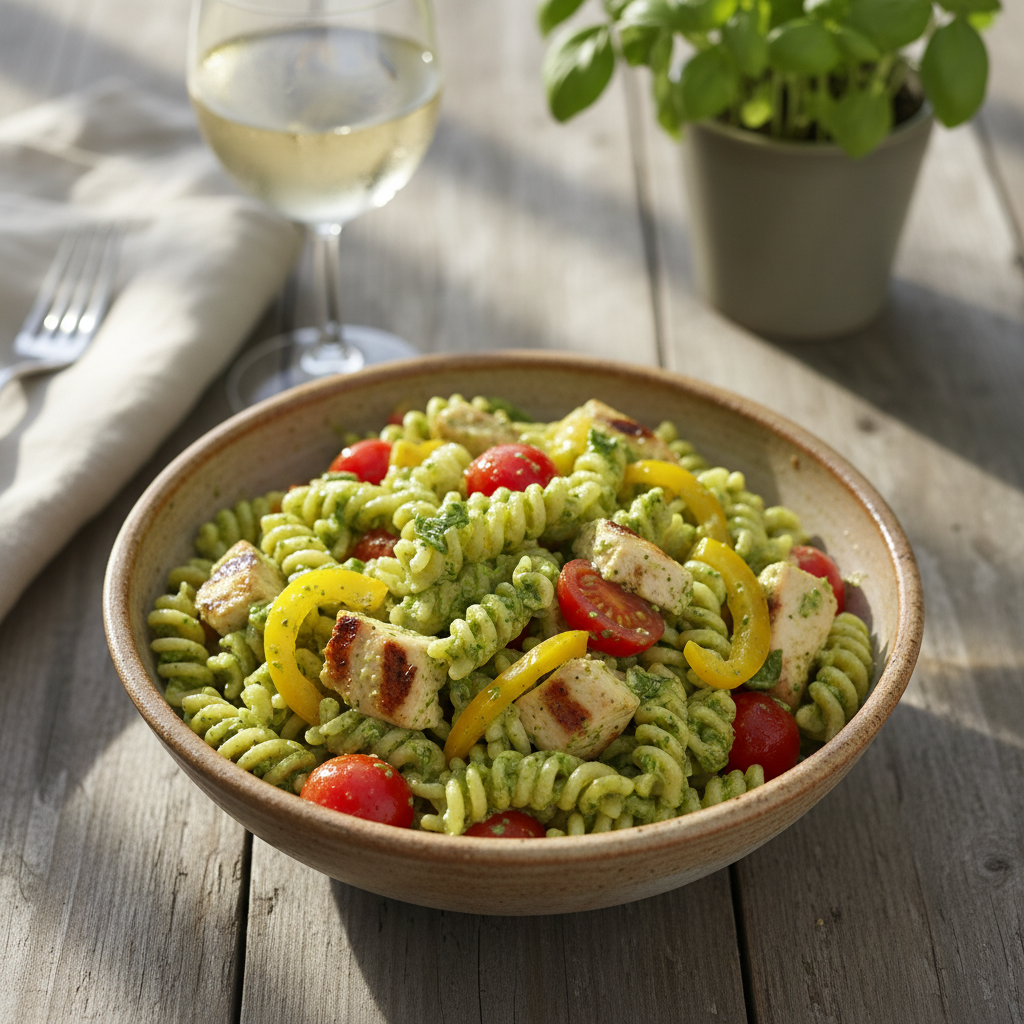
This vibrant Pesto Chicken Pasta Salad is the ultimate guilt-free comfort food, swapping heavy mayo for a creamy blend of Greek yogurt and basil pesto. Packed with juicy cherry tomatoes, crisp cucumbers, and tender chicken, it’s a high-protein, 20-minute meal perfect for meal prep or summer picnics.
20 minutes
10 minutes
30 minutes
6 Servings
Main Course
Boiling/Mixing
Italian-American
Gluten-Free Option
There is something undeniably magnetic about a pasta salad. It sits at the intersection of comfort food and fresh produce, offering the satisfaction of carbohydrates with the crunch of raw vegetables. However, traditional pasta salads often fall into the trap of being weighed down by heavy, caloric mayonnaise-based dressings that leave you feeling sluggish rather than energized. Enter the Pesto Chicken Pasta Salad with Veggies—a lighter, zestier, and infinitely more vibrant alternative that has taken the Pinterest food community by storm. This recipe is designed for the modern home cook who craves flavor without the heaviness. By utilizing a clever culinary hack—blending robust basil pesto with tangy Greek yogurt—we achieve a creamy, luxurious texture that coats every spiral of pasta while significantly boosting the protein content and cutting down on saturated fats.
Imagine sitting on a patio with a bowl of this salad; the aroma of fresh basil strikes you first, followed by the bright acidity of lemon and the savory depth of parmesan. It is a dish that celebrates texture as much as flavor. The tender bite of perfectly cooked rotini contrasts beautifully with the snap of fresh bell peppers and the burst of sweetness from ripe cherry tomatoes. Whether you are looking for a reliable weekday lunch that won’t wilt in the fridge, a crowd-pleasing side dish for a backyard barbecue, or a light dinner after a workout, this recipe checks every box. It is versatile, forgiving, and deeply satisfying, proving that ‘light’ food does not have to mean ‘boring’ food. In this comprehensive guide, we will walk you through exactly how to balance these flavors to perfection.
History & Origins
To truly appreciate this Pesto Chicken Pasta Salad, we must look at the two distinct culinary lineages that converge in the bowl: the ancient Italian tradition of pesto and the distinctively American evolution of the cold pasta salad. Pesto, specifically ‘Pesto alla Genovese,’ originates from Genoa, the capital city of Liguria, Italy. The word ‘pesto’ stems from the Italian verb ‘pestare,’ meaning to crush or pound, referencing the traditional method of grinding fresh basil, garlic, pine nuts, coarse salt, and hard cheese (like Parmigiano-Reggiano or Pecorino Sardo) with olive oil in a marble mortar. This sauce has been a staple of Ligurian cuisine for centuries, celebrated for its raw, fresh flavor profile that captures the essence of the Mediterranean coast.
On the other hand, the concept of ‘pasta salad’ is a relatively modern, largely American phenomenon that gained massive popularity in the mid-20th century. While Italians certainly eat cold pasta dishes (pasta fredda) during hot summers, the mayonnaise-drenched macaroni salads of the 1950s and the vinaigrette-based tricolor pasta salads of the 1980s cemented the dish as a staple of Western potlucks and delis. The fusion of these two worlds—using Italian pesto as the primary flavor agent for an American-style cold noodle salad—represents the globalization of food culture. Adding chicken transforms it from a side dish (contorno) into a balanced main course (piatto unico). The modern ‘light’ variation, incorporating Greek yogurt, reflects the current culinary zeitgeist which prioritizes high-protein, functional nutrition without sacrificing the nostalgic flavors of classic comfort foods.
Why This Recipe Works
This recipe succeeds where many other pasta salads fail due to three primary factors: the emulsion of the sauce, the balance of textures, and the temperature management. First, let’s talk about the dressing. Pesto on its own is oil-based and can sometimes feel greasy when served cold, as the olive oil may solidify or separate. By whisking the pesto with Greek yogurt, we create a stable emulsion. The yogurt provides a creamy body similar to mayonnaise but with a tangy acidity that cuts through the richness of the nuts and cheese in the pesto. This ensures the sauce clings to the pasta rather than sliding to the bottom of the bowl.
Secondly, the choice of pasta shape is crucial. We recommend rotini or fusilli because their corkscrew shape provides ample surface area and nooks for the creamy green sauce and finely chopped herbs to get trapped in, ensuring flavor in every bite. Finally, the ‘light’ aspect works because of the volume of vegetables. By maintaining a high ratio of crunchy vegetables (cucumbers, peppers, onions) to pasta, we increase the satiety factor through fiber and water content, allowing for a generous portion size that feels indulgent but is calorically dense in the right way. The addition of lemon juice not only brightens the flavor but also prevents the oxidation of the basil, keeping the salad a vibrant green for days.
Why You’ll Love This Recipe
- ✓High-Protein & Lower Fat: Greek yogurt replaces mayo for a creamy texture with added health benefits.
- ✓Meal Prep Friendly: The flavors deepen after sitting in the fridge, making it perfect for next-day lunches.
- ✓Bursting with Freshness: Loaded with raw veggies for a satisfying crunch and essential vitamins.
- ✓Versatile: Easily customizable with gluten-free pasta or different proteins like shrimp or tofu.
- ✓Quick Assembly: Ready in under 30 minutes if using rotisserie or leftover chicken.
Equipment You’ll Need
- ✓Large pot for boiling pasta
- ✓Colander
- ✓Large mixing bowl
- ✓Small whisk or fork
- ✓Chef’s knife
- ✓Cutting board
- ✓Measuring cups and spoons
Ingredients
- ✓12 oz Rotini or Fusilli pasta (whole wheat, chickpea, or regular)
- ✓2 cups cooked chicken breast, shredded or cubed (rotisserie works great)
- ✓1 cup cherry tomatoes, halved
- ✓1 large cucumber, diced (seeds removed if preferred)
- ✓1 yellow bell pepper, seeded and chopped
- ✓1/4 cup red onion, finely minced
- ✓1/2 cup fresh basil pesto (store-bought or homemade)
- ✓1/2 cup plain non-fat Greek yogurt
- ✓1 tbsp fresh lemon juice
- ✓1/2 tsp garlic powder
- ✓Salt and black pepper to taste
- ✓Optional garnish: 2 tbsp toasted pine nuts or grated Parmesan cheese
Instructions
- Begin by bringing a large pot of salted water to a rolling boil. Add the pasta and cook according to package directions for ‘al dente’. Do not overcook, as the pasta will soften slightly when it absorbs the dressing.
- While the pasta boils, prepare the dressing. In a small bowl, whisk together the basil pesto, Greek yogurt, lemon juice, garlic powder, and a pinch of black pepper until smooth and creamy. Set aside.
- Prepare the vegetables and protein. Chop the cucumber, bell pepper, and red onion into bite-sized pieces. Halve the cherry tomatoes. Cube or shred the cooked chicken breast.
- Once the pasta is cooked, drain it in a colander and immediately rinse under cold running water. This stops the cooking process and cools the pasta down so it doesn’t melt the yogurt dressing or wilt the veggies.
- Shake off excess water from the pasta thoroughly. Transfer the cooled pasta to a large mixing bowl.
- Add the chopped chicken, tomatoes, cucumber, bell pepper, and red onion to the bowl with the pasta.
- Pour the creamy pesto-yogurt dressing over the mixture.
- Toss everything gently until the pasta and vegetables are evenly coated in the green sauce.
- Taste and adjust seasoning, adding a pinch of salt or more lemon juice if needed.
- Cover and refrigerate for at least 30 minutes before serving to allow the flavors to meld. Garnish with pine nuts or parmesan just before serving.
Expert Cooking Tips
- ✓Rinse the pasta well: Unlike hot pasta dishes where you want the starch, for pasta salad, rinsing removes excess starch and prevents clumping.
- ✓Salt the water: Ensure your pasta water is salty like the sea; this is your only chance to season the actual noodle.
- ✓Uniform chopping: Try to chop all your veggies and chicken to roughly the same size as the pasta noodles for the perfect bite every time.
- ✓Toast the nuts: If using pine nuts as a garnish, toast them in a dry pan for 2 minutes to release their aromatic oils.
- ✓Let it marinate: While you can eat it immediately, letting it sit in the fridge for an hour transforms the flavor profile significantly.
Substitutions and Variations
This recipe is incredibly flexible and can be adapted to suit various dietary needs and pantry staples. If you are gluten-free, simply swap the wheat pasta for a brown rice or chickpea pasta; chickpea pasta adds a nutty flavor that pairs excellently with pesto. For a dairy-free version, replace the Greek yogurt with a plain, unsweetened almond or coconut yogurt, or simply use a little more olive oil and avocado for creaminess. If you don’t have chicken, this recipe works beautifully with canned chickpeas (rinsed), mozzarella pearls, or even grilled shrimp. Vegetable substitutions are endless; try adding blanched asparagus, raw zucchini, kalamata olives, sun-dried tomatoes, or baby spinach. If you are out of pine nuts for the pesto, walnuts or sunflower seeds make a budget-friendly and delicious alternative.
Common Mistakes to Avoid
The most common mistake with pasta salad is overcooking the pasta. Mushy pasta will break apart when tossed with the heavy ingredients and result in an unappealing texture; always aim for al dente. Another error is overdressing the salad while the pasta is still hot. If the pasta is hot, the yogurt may separate or curdle, and the crisp vegetables will wilt and lose their crunch. Always ensure the pasta is completely cool. Additionally, under-seasoning is a frequent issue. Cold food requires slightly more seasoning than hot food to be perceptible to the palate, so don’t be afraid to taste and add that extra squeeze of lemon or pinch of salt before serving. Finally, using a watery cucumber without removing the seeds can water down your dressing over time; taking a moment to scoop out the seeds is worth the effort.
Serving Suggestions
This Pesto Chicken Pasta Salad is a complete meal on its own, but it also pairs wonderfully with other sides. Serve it alongside a crisp green salad with a balsamic glaze, or some garlic bread to scoop up any leftover sauce. It makes for an excellent side dish at a BBQ next to grilled burgers or veggie skewers. For a sophisticated lunch spread, serve it with a side of chilled gazpacho or fresh fruit skewers. If you are serving this for a dinner party, plating it on a bed of arugula and topping it with fresh shavings of parmesan cheese and a drizzle of balsamic reduction elevates the presentation instantly.
Storage and Reheating Tips
Store the pasta salad in an airtight container in the refrigerator. It will keep well for up to 3 to 4 days. In fact, it often tastes better on day two as the pasta absorbs the pesto flavor. Give the salad a good stir before serving leftovers, as the dressing may settle at the bottom. If the salad looks a little dry after sitting in the fridge (since pasta absorbs moisture), stir in a teaspoon of water, olive oil, or a dollop of yogurt to revive the creaminess. Freezing is not recommended for this recipe, as the fresh vegetables (cucumber and tomatoes) will become mushy and the yogurt dressing may separate upon thawing.
Nutrition Facts (Estimated)
| Serving Size | 1.5 cups |
| Calories | 340 |
| Fat | 12g |
| Saturated Fat | 3g |
| Unsaturated Fat | 8g |
| Trans Fat | 0g |
| Cholesterol | 45mg |
| Sodium | 280mg |
| Carbohydrates | 32g |
| Fiber | 4g |
| Sugar | 4g |
| Protein | 24g |
Frequently Asked Questions
Can I use store-bought pesto?
Absolutely. While homemade pesto offers the freshest flavor, high-quality jarred pesto is a fantastic time-saver. Look for brands that use olive oil rather than sunflower oil for the best taste.
Is this recipe suitable for weight loss?
Yes, this is a ‘light’ version specifically designed to be lower in calories and fat than traditional pasta salads. The high protein from the chicken and yogurt, combined with the fiber from the veggies, helps keep you full longer.
Can I make this vegetarian?
To make it vegetarian, simply omit the chicken. You can replace the protein with a can of rinsed chickpeas, white beans, or marinated tofu cubes.
Why do you use Greek yogurt instead of mayo?
Greek yogurt provides a similar creamy texture to mayonnaise but with a fraction of the calories and fat, plus a significant boost of probiotics and protein. The tanginess also complements the lemon and basil.
What is the best pasta shape to use?
Short pasta shapes with texture are best. Rotini, fusilli, penne, or farfalle (bowtie) are ideal because they hold onto the dressing and are easy to eat with a fork.
My pasta salad seems dry the next day. What should I do?
Pasta acts like a sponge and soaks up the dressing overnight. Simply stir in a tablespoon of water, milk, or extra olive oil to loosen it up and bring back the creamy consistency.
Can I use gluten-free pasta?
Yes, gluten-free pasta works well. However, gluten-free pasta tends to harden more than wheat pasta when refrigerated. We recommend taking it out of the fridge 15 minutes before eating to let it soften slightly.
Do I have to peel the cucumber?
It is not strictly necessary, but if the skin is thick or waxy, peeling it (or peeling it in stripes) can improve the texture. We recommend using English cucumbers which have thinner, more palatable skin.
Conclusion
This Light Pesto Chicken Pasta Salad with Veggies is more than just a recipe; it is a solution for healthy, flavorful eating in a busy world. It proves that you don’t need to sacrifice creaminess or comfort to eat well. By combining the vibrant, herbaceous punch of pesto with the wholesome goodness of Greek yogurt and fresh vegetables, you create a meal that nourishes the body and delights the taste buds. Whether you are meal-prepping for a busy work week or hosting a sunny weekend gathering, this dish is sure to become a recurring favorite in your kitchen rotation. Give it a try, customize it with your favorite veggies, and enjoy the fresh taste of summer in every bite!