The Ultimate Quinoa And Roasted Chickpea Lunch Bowl with Lemon-Tahini Dressing
Quinoa And Roasted Chickpea Lunch Bowl Recipe
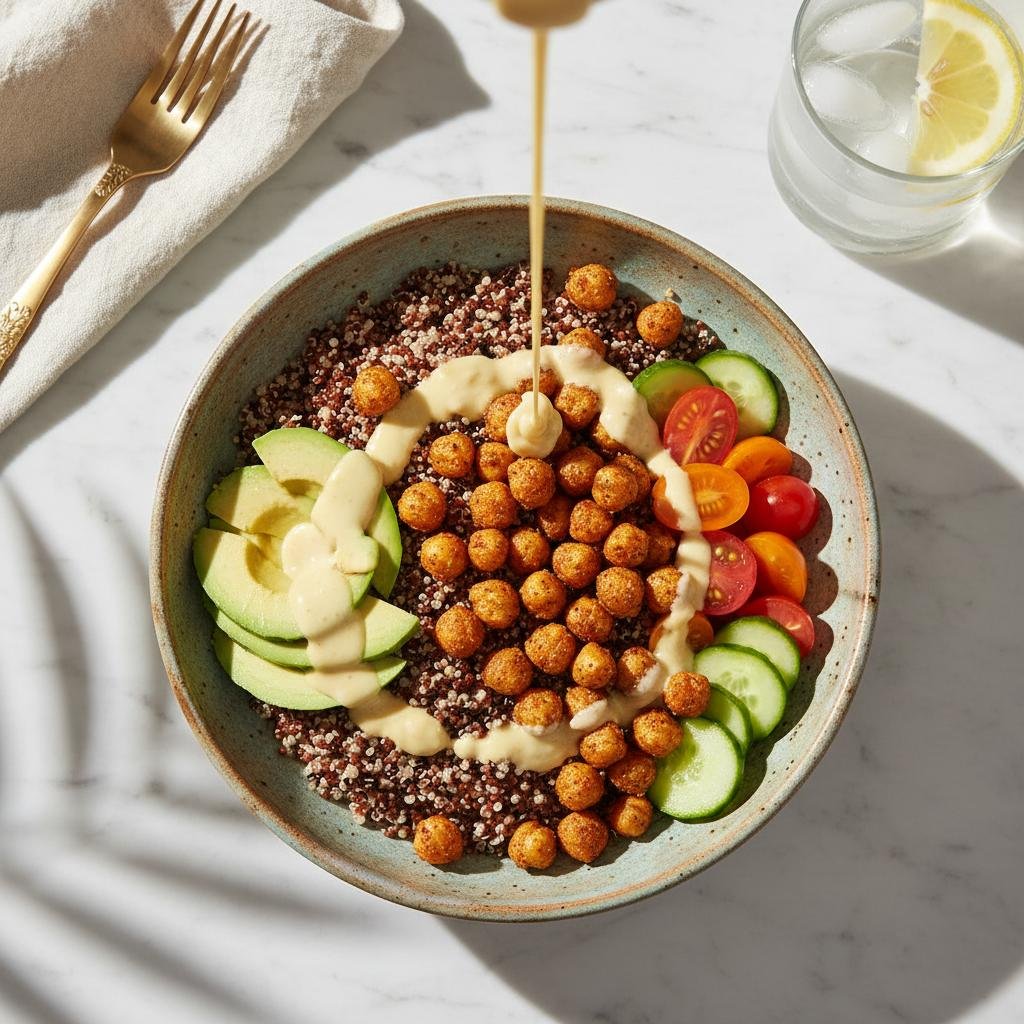
If there is one lunch that has completely revolutionized my midday routine, it is this vibrant, texture-rich Quinoa and Roasted Chickpea Lunch Bowl. We have all been there—staring into the fridge at noon, uninspired by leftover sandwiches or sad, wilted salads. This recipe is the antidote to the lunchtime slump. It is a celebration of crunch, creaminess, and wholesome nutrition that feels more like a treat than a health food staple. At the heart of this bowl is the dynamic duo of fluffy, nutty quinoa and crispy, spice-roasted chickpeas. The chickpeas are roasted until they are golden and audible when you bite into them, seasoned with a smoky blend of paprika, cumin, and a hint of cayenne that wakes up the palate.
But a bowl is only as good as its dressing, and the Lemon-Tahini drizzle included here is liquid gold. It ties the earthy grains and savory legumes together with a bright, zesty punch of citrus and the rich, sesame-forward depth of tahini. This dish is designed for the modern food lover who craves variety; every bite offers a different combination of textures, from the buttery softness of ripe avocado to the snap of fresh cucumbers and the chew of the quinoa. Beyond just flavor, this bowl is a meal prep champion. You can roast a big batch of chickpeas and cook the quinoa on Sunday, and they stay fresh and delicious for days. Whether you are a busy professional needing fuel to power through meetings or a parent looking for a nutritious, kid-friendly option that can be deconstructed, this bowl checks every box. It is gluten-free, packed with plant-based protein, and incredibly satisfying, keeping you full and energized without the heavy crash that comes from processed carbs. Get ready to look forward to lunch again.
15 minutes
30 minutes
45 minutes
4 servings
Main Course
Roasting
American / Mediterranean Fusion
Gluten-Free
History & Origins
To truly appreciate this modern lunch bowl, we have to look back at the ancient origins of its two star ingredients: quinoa and chickpeas. Quinoa, often mistaken for a grain, is actually a seed from the Chenopodium quinoa plant, native to the Andean region of South America. For thousands of years, it was a staple of the Inca civilization, who revered it as the ‘mother of all grains’ or ‘chisaya mama.’ It was so vital to their culture that the Incan emperor would traditionally sow the first seeds of the season using golden implements. Following the Spanish conquest, quinoa cultivation was suppressed in favor of European crops like wheat, nearly driving it to extinction. It wasn’t until the late 20th century that the world rediscovered this nutritional powerhouse, leading to a global boom in popularity due to its status as a complete protein containing all nine essential amino acids.
Chickpeas, or garbanzo beans, have an equally storied past, tracing their roots back roughly 7,500 years to the Middle East. They were a cornerstone of cuisine in ancient Egypt, Greece, and Rome, valued for their durability and nutritional density. While traditionally stewed or ground into flour, the method of roasting chickpeas to create a crunchy snack or topping is a technique that spans various cultures but has seen a massive resurgence in modern Western health food trends. The concept of the ‘bowl’ meal—often called a Buddha Bowl or Grain Bowl—emerged in the United States around the early 2010s. It represents a shift in American dining towards deconstructed, component-based meals that emphasize whole foods, colorful presentation, and a balance of macronutrients. This recipe is a delicious convergence of ancient agricultural history and contemporary culinary wellness trends.
Why This Recipe Works
This recipe succeeds because it is built on the fundamental culinary principle of balancing textures and flavors. Many grain bowls fail because they are monotonous—soft grains mixed with soft vegetables and soft beans result in ‘palate fatigue,’ where your brain gets bored of eating the same texture repeatedly. By roasting the chickpeas at a high temperature (400°F), we dehydrate the exterior to create a substantial crunch that contrasts perfectly with the tender, fluffy quinoa. This interplay keeps every bite interesting. Furthermore, the seasoning on the chickpeas is oil-soluble, meaning the blooming of spices like cumin and smoked paprika in the olive oil during roasting amplifies their flavor profile significantly compared to adding raw spices to a dressing.
Nutritionally, this combination works because quinoa and chickpeas are complementary powerhouses. Quinoa provides a complete amino acid profile, while chickpeas offer high fiber content that promotes satiety. The fat source in this recipe—tahini and olive oil—is crucial for the absorption of fat-soluble vitamins (A, D, E, and K) found in the accompanying vegetables like spinach or kale. The lemon juice in the dressing does double duty: it cuts through the richness of the tahini to prevent the dish from feeling heavy, and the Vitamin C helps your body absorb the plant-based iron from the chickpeas and quinoa. It is a scientifically sound, gastronomically delightful meal that hits all the right notes.
Why You’ll Love This Recipe
- ✓High-Protein & Plant-Based: A complete protein source perfect for vegans and vegetarians.
- ✓Meal Prep Friendly: Components store well separately for up to 4 days.
- ✓Gluten-Free: Naturally safe for those with celiac disease or gluten sensitivity.
- ✓Texture Rich: Combines crispy roasted chickpeas with fluffy quinoa and creamy dressing.
- ✓Budget-Friendly: Utilizes pantry staples like dried grains and canned beans.
- ✓Customizable: Acts as a perfect base for clearing out leftover veggies in your fridge.
Equipment You’ll Need
- ✓Large baking sheet
- ✓Fine-mesh sieve
- ✓Medium saucepan with lid
- ✓Small mixing bowl or jar (for dressing)
- ✓Whisk
- ✓Chef’s knife
- ✓Cutting board
Ingredients
- ✓1 cup uncooked quinoa, rinsed well
- ✓2 cups water or vegetable broth
- ✓1 (15 oz) can chickpeas, drained, rinsed, and patted dry
- ✓2 tablespoons olive oil, divided
- ✓1 teaspoon smoked paprika
- ✓1/2 teaspoon ground cumin
- ✓1/2 teaspoon garlic powder
- ✓Salt and black pepper to taste
- ✓2 cups baby spinach or mixed greens
- ✓1 large cucumber, diced
- ✓1 cup cherry tomatoes, halved
- ✓1 ripe avocado, sliced
- ✓1/4 cup tahini
- ✓2 tablespoons fresh lemon juice
- ✓1 tablespoon maple syrup (optional)
- ✓2-3 tablespoons warm water (to thin dressing)
Instructions
- Preheat your oven to 400°F (200°C). Line a large baking sheet with parchment paper for easy cleanup.
- Thoroughly rinse the chickpeas and pat them very dry with a paper towel or clean kitchen cloth. Removing moisture is key to getting them crispy.
- Place the chickpeas on the baking sheet. Drizzle with 1 tablespoon of olive oil and sprinkle with smoked paprika, cumin, garlic powder, salt, and pepper. Toss with your hands to coat evenly.
- Roast the chickpeas for 25-30 minutes, shaking the pan halfway through, until they are golden brown and crispy.
- While the chickpeas roast, prepare the quinoa. In a medium saucepan, combine the rinsed quinoa and water (or broth). Bring to a boil over high heat.
- Once boiling, reduce the heat to low, cover with a tight-fitting lid, and simmer for 15 minutes, or until the water is absorbed.
- Remove the quinoa from heat and let it sit, covered, for 5 minutes to steam. Then, fluff with a fork.
- Prepare the dressing: In a small bowl, whisk together the tahini, lemon juice, remaining 1 tablespoon of olive oil, maple syrup, salt, and pepper. The mixture will seize up and get thick initially.
- Gradually add warm water, one tablespoon at a time, whisking constantly until the dressing reaches a smooth, pourable consistency.
- Assemble the bowls: Divide the spinach, cooked quinoa, cucumber, tomatoes, and avocado among four bowls.
- Top generously with the roasted chickpeas.
- Drizzle the lemon-tahini dressing over the top just before serving.
Expert Cooking Tips
- ✓Dry the chickpeas thoroughly before roasting; any leftover moisture will steam them instead of crisping them.
- ✓Rinse your quinoa under cold water until the water runs clear to remove saponin, a natural coating that can taste bitter.
- ✓Don’t overcrowd the baking sheet; give the chickpeas space to roast properly.
- ✓Let the roasted chickpeas cool completely on the pan if you plan to store them; this helps them stay crunchy.
- ✓Massage the kale or spinach with a tiny bit of olive oil and lemon juice if you find raw greens too tough.
- ✓Use vegetable broth instead of water for the quinoa to infuse more savory flavor into the grains.
Substitutions and Variations
This bowl is incredibly flexible, allowing you to swap ingredients based on your pantry stock or dietary needs. If you don’t have quinoa, you can easily substitute it with brown rice, farro, barley, or even cauliflower rice for a lower-carb option. For the chickpeas, white cannellini beans or black beans also roast well, though they may not get quite as crunchy. If you are allergic to sesame seeds and cannot use tahini, try using almond butter or sunflower seed butter for a similar creamy texture, or simply opt for a vinaigrette made with olive oil and apple cider vinegar. The vegetables are entirely interchangeable; roasted sweet potatoes, bell peppers, red onion, or steamed broccoli all make fantastic additions. For a non-vegan version, you could add feta cheese or grilled chicken for extra protein.
Common Mistakes to Avoid
The most common mistake people make with this recipe is rushing the chickpea drying process. If you throw wet chickpeas into the oven, they will end up mushy rather than crispy. Another pitfall is overcooking the quinoa, which turns it into a gummy paste. Always follow the ratio of 1 part quinoa to 2 parts liquid and let it steam off the heat. Regarding the dressing, adding the water too quickly can cause the emulsion to break or become too runny; add it slowly. Finally, dressing the salad too early if you are meal prepping is a major error—the acid in the dressing will wilt the greens and make the quinoa soggy. Always keep the dressing separate until you are ready to eat.
Serving Suggestions
Serve this bowl warm or at room temperature. It pairs beautifully with a side of warm pita bread or naan for scooping. If you are serving this for a dinner party, start with a light soup, such as a chilled gazpacho or a roasted red pepper soup. For a beverage pairing, an iced mint tea or a crisp white wine like a Sauvignon Blanc complements the citrusy dressing and earthy grains perfectly. You can also set up a ‘build your own bowl’ station with various toppings like toasted pumpkin seeds, hemp hearts, or pickled red onions to allow guests to customize their plates.
Storage and Reheating Tips
To store this recipe for meal prep, keep the components in separate airtight containers in the refrigerator. The cooked quinoa will last for up to 5 days. The chopped vegetables should be consumed within 3-4 days for maximum freshness. The roasted chickpeas are best stored in a container at room temperature with the lid slightly ajar to maintain crispness; if refrigerated, they will soften but can be re-crisped in a toaster oven or air fryer for 2-3 minutes. The dressing can be stored in a jar in the fridge for up to a week; it may thicken when cold, so just add a splash of water and shake before using. Do not assemble the full bowl until you are ready to eat.
Nutrition Facts (Estimated)
| Serving Size | 1 Bowl |
| Calories | 480 |
| Fat | 22g |
| Saturated Fat | 3g |
| Unsaturated Fat | 18g |
| Trans Fat | 0g |
| Cholesterol | 0mg |
| Sodium | 320mg |
| Carbohydrates | 58g |
| Fiber | 14g |
| Sugar | 4g |
| Protein | 18g |
Frequently Asked Questions
Can I use canned quinoa?
While canned quinoa exists, it is often mushy. It is highly recommended to cook dry quinoa fresh for the best texture, but pre-cooked pouches are a decent time-saving alternative.
Why are my roasted chickpeas not crunchy?
This usually happens if they weren’t dried enough before roasting or if the oven wasn’t hot enough. Ensure they are bone-dry and roast at 400°F.
Is this recipe keto-friendly?
No, quinoa and chickpeas are higher in carbohydrates. To make it keto, swap quinoa for cauliflower rice and chickpeas for roasted macadamia nuts or pecans.
Can I freeze this meal?
You can freeze the cooked quinoa and the chickpeas (though the texture of chickpeas changes), but fresh vegetables like cucumber and lettuce do not freeze well.
What other dressings work with this bowl?
A balsamic glaze, green goddess dressing, or a simple garlic-yogurt sauce are all excellent alternatives.
Do I have to peel the chickpeas?
No, peeling is not necessary. However, removing the skins can result in a smoother interior and crispier exterior if you have the time.
Is quinoa a complete protein?
Yes, quinoa is one of the few plant foods that contain all nine essential amino acids, making it a complete protein.
How do I make the onions less sharp if adding them raw?
Soak sliced red onions in ice water for 10 minutes before adding them to the bowl to tame their bite.
Can I make this nut-free?
Yes, this recipe is naturally nut-free if you use tahini (sesame seeds). Just ensure your facility is nut-free if allergies are severe.
Conclusion
The Quinoa and Roasted Chickpea Lunch Bowl is more than just a collection of ingredients; it is a reliable, nourishing staple that fits seamlessly into a busy lifestyle. By mastering the simple techniques of roasting chickpeas and emulsifying a tahini dressing, you elevate humble pantry items into a gourmet experience. It is proof that healthy eating doesn’t have to be complicated or bland. Whether you are prepping for the week ahead or whipping up a quick dinner, this bowl delivers on flavor, nutrition, and satisfaction every single time. Give it a try, and watch it become a regular in your recipe rotation.