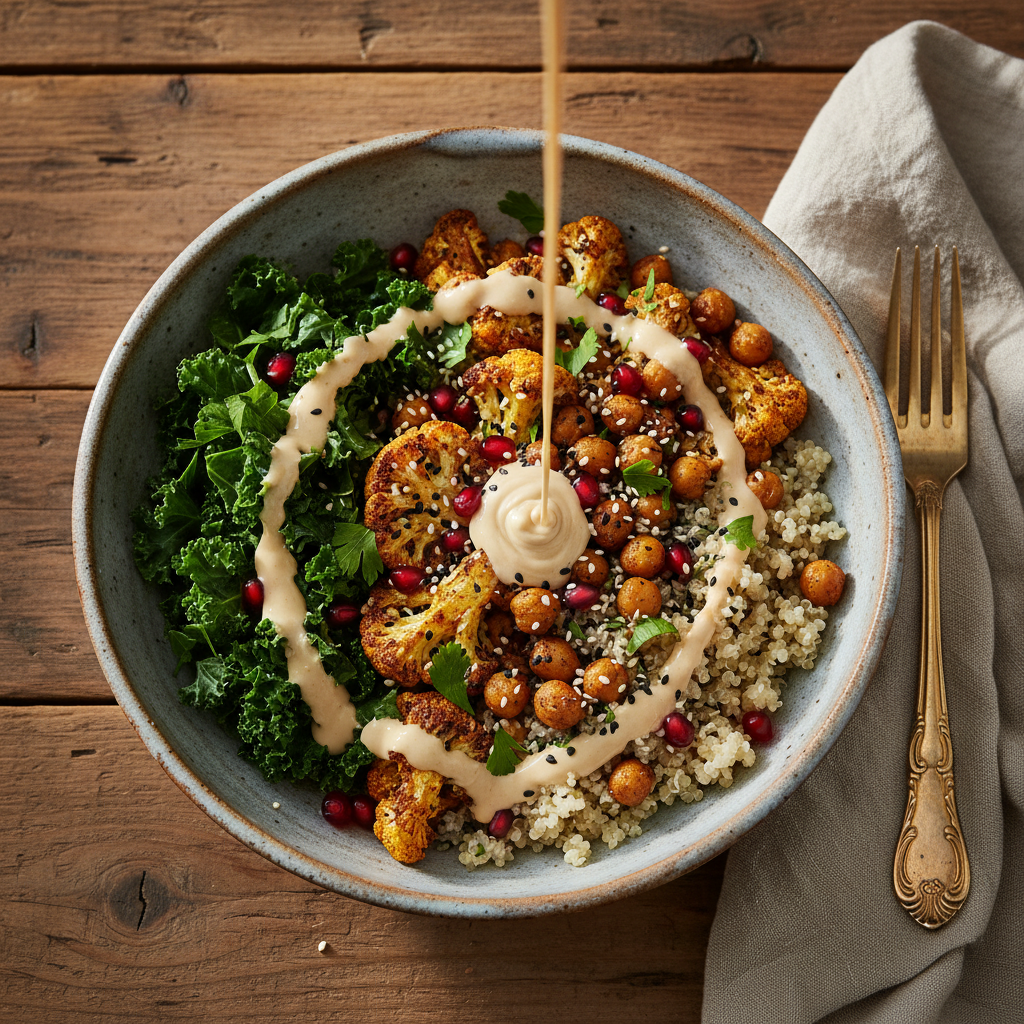
Golden Roasted Cauliflower & Lemon-Garlic Tahini Buddha Bowl
Roasted Cauliflower And Tahini Bowl Healthy Recipe
This vibrant, nutrient-packed roasted cauliflower bowl features crispy spiced chickpeas, fluffy quinoa, and a drizzle of creamy lemon-garlic tahini dressing. It is the ultimate healthy comfort food that works perfectly for easy weeknight dinners or meal-prep lunches.
20 minutes
30 minutes
50 minutes
4 servings
Main Course
Roasting
Mediterranean Fusion
Vegan
There is something undeniably comforting about a well-constructed grain bowl. In the world of modern wellness cooking, the ‘Buddha Bowl’ has reigned supreme for years, and for good reason. It represents the perfect marriage of texture, flavor, and nutrition, all nestled into a single vessel. This Golden Roasted Cauliflower and Tahini Bowl is my absolute favorite iteration of this concept. It starts with the star of the show: cauliflower florets tossed in a warming blend of turmeric, cumin, and smoked paprika, then roasted until they reach that sweet spot of caramelized edges and tender centers. But a bowl is only as good as its sauce, and the liquid gold here is a lemon-garlic tahini dressing that is so creamy, you won’t believe it’s entirely dairy-free.
This recipe isn’t just about throwing ingredients together; it’s about balancing the five distinct tastes. You have the savory umami from the roasted chickpeas, the slight bitterness of the charred kale and sesame paste, the sweetness from the roasted vegetables and a touch of maple syrup in the dressing, the sour punch of fresh lemon juice, and the salty finish of sea salt. The result is a meal that feels indulgent and satisfying but leaves you feeling energized rather than weighed down. Whether you are a strict vegan, gluten-free, or just trying to incorporate more plants into your diet without sacrificing flavor, this bowl checks every single box. It is vibrant, colorful, and deeply nourishing—a true feast for both the eyes and the palate.
History & Origins
The concept of the ‘Buddha Bowl’—a bowl packed so full that it has a rounded ‘belly’ appearance like a Buddha statue—is a relatively modern term, likely emerging from the American health food movements of the early 2010s. However, the culinary roots of this specific dish run deep into ancient history, particularly drawing from the Mediterranean and Middle Eastern traditions.
Cauliflower, originally cultivated in the Asia Minor region, became a staple in Mediterranean cuisine around the 12th century. For centuries, it was roasted or stewed in olive oil and spices across the Levant. The other primary component, Tahini (sesame paste), has an even older lineage. Sesame seeds were cultivated in the Indus Valley over 4,000 years ago, and tahini has been a cornerstone of Middle Eastern cuisine for millennia, appearing in hummus, baba ghanoush, and halva.
The combination of roasted vegetables and grain-based salads is also reminiscent of the macrobiotic diet trends of the 1920s and the later ‘hippie bowls’ of the 1960s and 70s in California. These movements emphasized whole grains, local vegetables, and simple, plant-based proteins. Today’s version, popularized by Instagram and food blogs, takes these ancient ingredients—quinoa (the gold of the Incas), chickpeas (a staple of the Fertile Crescent), and tahini—and fuses them into a modern, globalized dish that celebrates the best of ancient agriculture and contemporary nutritional science.
Why This Recipe Works
This recipe succeeds because it relies on the culinary science of texture contrast and flavor balancing. First, we utilize high-heat roasting (400°F/200°C) for the cauliflower and chickpeas. This triggers the Maillard reaction, browning the natural sugars in the vegetables and creating a depth of flavor that steaming or boiling simply cannot achieve. The chickpeas transform from soft legumes into crunchy, crouton-like bites that add necessary texture to the soft quinoa and tender cauliflower.
Secondly, the dressing acts as the unifying element. Tahini is high in fat, which carries flavor compounds effectively across the palate. By emulsifying the sesame paste with lemon juice and cold water, we create a sauce that coats every grain of quinoa and piece of kale, ensuring every bite is flavorful. The acidity of the lemon cuts through the richness of the tahini and the earthiness of the turmeric, brightening the entire dish.
Finally, the nutritional balance ensures satiety. Often, salads leave you hungry an hour later. By combining a complete protein (quinoa) with fiber-rich vegetables and healthy fats (tahini and olive oil), this meal stabilizes blood sugar levels and provides sustained energy, making it ‘work’ not just as a recipe, but as fuel for your body.
Why You’ll Love This Recipe
- ✓High-Protein Vegan Meal: Packed with plant-based protein from quinoa, chickpeas, and tahini.
- ✓Meal Prep Friendly: Components can be made ahead and stored separately for up to 4 days.
- ✓Gluten-Free & Dairy-Free: Suitable for a wide variety of dietary restrictions without modification.
- ✓Nutrient Dense: Loaded with fiber, antioxidants, and anti-inflammatory spices like turmeric.
- ✓Customizable: Acts as a perfect base template for whatever vegetables you have in the fridge.
Equipment You’ll Need
- ✓Large rimmed baking sheet
- ✓Parchment paper
- ✓Fine-mesh sieve (for rinsing quinoa)
- ✓Medium saucepan with lid
- ✓High-speed blender or small food processor (for dressing)
- ✓Large mixing bowl
- ✓Whisk
- ✓Chef’s knife
- ✓Cutting board
Ingredients
- ✓1 large head cauliflower, chopped into bite-sized florets
- ✓1 (15 oz) can chickpeas, rinsed, drained, and patted dry
- ✓3 tbsp extra virgin olive oil, divided
- ✓1 tsp ground turmeric
- ✓1 tsp ground cumin
- ✓1 tsp smoked paprika
- ✓1/2 tsp sea salt
- ✓1/4 tsp black pepper
- ✓1 cup dry quinoa (or brown rice)
- ✓2 cups vegetable broth or water
- ✓4 cups chopped kale or baby spinach
- ✓1/2 cup tahini (sesame seed paste)
- ✓1 large lemon, juiced (approx 3 tbsp)
- ✓1 clove garlic, grated or minced
- ✓1 tbsp maple syrup
- ✓3-4 tbsp ice-cold water (to thin dressing)
- ✓Garnish: Fresh parsley, sesame seeds, pickled red onions
Instructions
- 1. Preheat your oven to 400°F (200°C). Line a large baking sheet with parchment paper for easy cleanup.
- 2. In a large bowl, toss the cauliflower florets and dried chickpeas with 2 tablespoons of olive oil, turmeric, cumin, smoked paprika, salt, and pepper until evenly coated.
- 3. Spread the seasoned vegetables and chickpeas in a single layer on the baking sheet. Do not overcrowd the pan; use two sheets if necessary. Roast for 25-30 minutes, tossing halfway through, until the cauliflower is tender and golden brown, and chickpeas are crispy.
- 4. While the vegetables roast, prepare the quinoa. Rinse the quinoa thoroughly in a fine-mesh sieve. Combine quinoa and vegetable broth in a saucepan. Bring to a boil, then reduce heat to low, cover, and simmer for 15 minutes. Remove from heat and let it sit covered for 5 minutes before fluffing with a fork.
- 5. Make the dressing: In a small bowl or jar, whisk together the tahini, lemon juice, grated garlic, maple syrup, and a pinch of salt. The mixture will seize up and become thick initially.
- 6. Slowly add ice-cold water, one tablespoon at a time, whisking constantly until the dressing turns pale, creamy, and pourable.
- 7. Prepare the greens: If using kale, massage it with the remaining 1 tablespoon of olive oil and a pinch of salt for 2-3 minutes until it softens and turns dark green. If using spinach, leave fresh.
- 8. Assemble the bowls: Start with a base of fluffy quinoa and greens. Top generously with the roasted cauliflower and chickpeas.
- 9. Drizzle the lemon-tahini dressing over the top. Garnish with fresh parsley, sesame seeds, and pickled red onions if desired. Serve warm.
Expert Cooking Tips
- ✓Dry the Chickpeas: For maximum crunch, roll the rinsed chickpeas in a clean kitchen towel to remove excess moisture before roasting.
- ✓Don’t Overcrowd: If the cauliflower is piled on top of each other, it will steam instead of roast. Give them space to breathe.
- ✓Ice Water Magic: Using ice-cold water for the tahini dressing is the secret to getting that ultra-creamy, whipped texture.
- ✓Massage the Kale: Raw kale can be tough and fibrous. Massaging it with oil breaks down the cell walls, making it tender and easier to digest.
- ✓Rinse the Quinoa: Quinoa has a natural coating called saponin which can taste soapy or bitter. Always rinse it well before cooking.
- ✓Customize the Roast: Feel free to add other root vegetables like diced sweet potatoes or carrots to the roasting pan.
Substitutions and Variations
This recipe is incredibly flexible. If you don’t have cauliflower, broccoli or Brussels sprouts roast beautifully using the exact same spices. For the grain base, brown rice, farro, or millet are excellent alternatives to quinoa; for a low-carb option, use cauliflower rice or a bed of mixed greens. If you are allergic to sesame, you can substitute the tahini with almond butter or sunflower seed butter for a similar creamy texture, though the flavor profile will shift slightly to be nuttier. For the protein, if you aren’t strictly vegan, grilled chicken breast or a soft-boiled egg makes a great addition, though the chickpeas provide ample protein on their own. Maple syrup in the dressing can be swapped for honey or agave nectar.
Common Mistakes to Avoid
The most common mistake is under-seasoning or under-roasting the vegetables. Cauliflower needs a good amount of salt and spices to shine, and it needs high heat to develop sweetness. Pulling it out of the oven while it is still pale will result in a bland bowl. Another frequent error involves the dressing; tahini brands vary wildly in consistency. Some are runny, some are rock hard. You must adjust the water content by eye—don’t just follow the measurement blindly. Add water slowly until you reach the consistency of heavy cream. Lastly, skipping the step of drying the chickpeas will result in mushy beans rather than the desired crispy texture.
Serving Suggestions
Serve these bowls warm immediately after roasting for the best contrast between the hot vegetables and cool dressing. However, they are also delightful served at room temperature. For a dinner party, serve the components ‘family style’ on large platters—a big bowl of quinoa, a platter of roasted veggies, and a jug of dressing—allowing guests to build their own bowls. Pair this dish with some warm pita bread or naan to scoop up any leftover dressing. A side of hummus or baba ghanoush would also complement the Mediterranean flavors perfectly.
Storage and Reheating Tips
This recipe is a meal prep champion. Store the roasted vegetables and chickpeas in one airtight container, and the cooked quinoa in another. The kale should be stored separately if possible, or placed on top of the quinoa. Keep the dressing in a small jar or container; do not dress the salad until you are ready to eat, or the ingredients will become soggy. Everything will keep well in the refrigerator for up to 4-5 days. To reheat, you can microwave the grains and veggies for 60-90 seconds, or sauté them quickly in a pan to crisp them back up. The dressing may thicken in the fridge; simply whisk in a teaspoon of warm water to loosen it before serving.
Nutrition Facts (Estimated)
| Serving Size | 1 Bowl |
| Calories | 480 |
| Fat | 22g |
| Saturated Fat | 3g |
| Unsaturated Fat | 18g |
| Trans Fat | 0g |
| Cholesterol | 0mg |
| Sodium | 380mg |
| Carbohydrates | 58g |
| Fiber | 14g |
| Sugar | 6g |
| Protein | 18g |
Frequently Asked Questions
Can I freeze this recipe?
You can freeze the cooked quinoa and the roasted chickpeas/cauliflower, but the texture of the vegetables will soften significantly upon thawing. The tahini dressing freezes okay but may separate; it’s best made fresh or kept in the fridge.
Is this recipe keto-friendly?
As written, it is not strictly keto due to the quinoa and chickpeas, which are higher in carbohydrates. To make it keto, swap the quinoa for cauliflower rice and omit the chickpeas, adding tofu or nuts instead.
Why is my tahini dressing bitter?
Tahini can be bitter if it’s made from unhulled sesame seeds or if it’s old/rancid. Look for ‘hulled’ sesame tahini, and balance the bitterness with enough lemon juice, salt, and maple syrup.
Can I use frozen cauliflower?
Yes, you can roast frozen cauliflower. Do not thaw it first. Toss it in oil and spices while frozen and roast at a slightly higher temperature (425°F) to help evaporate the extra moisture.
What if I don’t like kale?
Spinach, arugula, or Swiss chard are great alternatives. If using spinach or arugula, you don’t need to massage them or cook them; just stir them into the warm grains to wilt slightly.
Is this dish spicy?
The spices used (cumin, paprika, turmeric) are aromatic and warming, not spicy hot. If you want heat, add a pinch of cayenne pepper or red chili flakes to the roasting mix.
How do I make the chickpeas extra crispy?
Ensure they are bone dry before oiling. You can also remove the thin skins from the chickpeas for maximum crispiness, though this is time-consuming.
Can I use bottled lemon juice?
Fresh lemon juice is highly recommended for the brightness it brings to the heavy tahini. Bottled juice often has preservatives that alter the flavor, but it can be used in a pinch.
Conclusion
This Roasted Cauliflower and Tahini Bowl is more than just a recipe; it is a reliable staple that you will find yourself returning to week after week. It proves that healthy eating doesn’t have to mean bland steamed vegetables or boring salads. With the right techniques—roasting for flavor depth and creating a killer sauce—you can transform simple pantry staples into a gourmet meal. Whether you are cooking for a family dinner, prepping lunches for the work week, or just treating yourself to a nutritious bowl of goodness, this dish delivers on all fronts. I hope it brings as much color and joy to your table as it does to mine. Happy cooking!