Easy Salmon and Spinach Frittata: A Protein-Packed Healthy Dinner
Salmon And Spinach Frittata Healthy Dinner Recipe
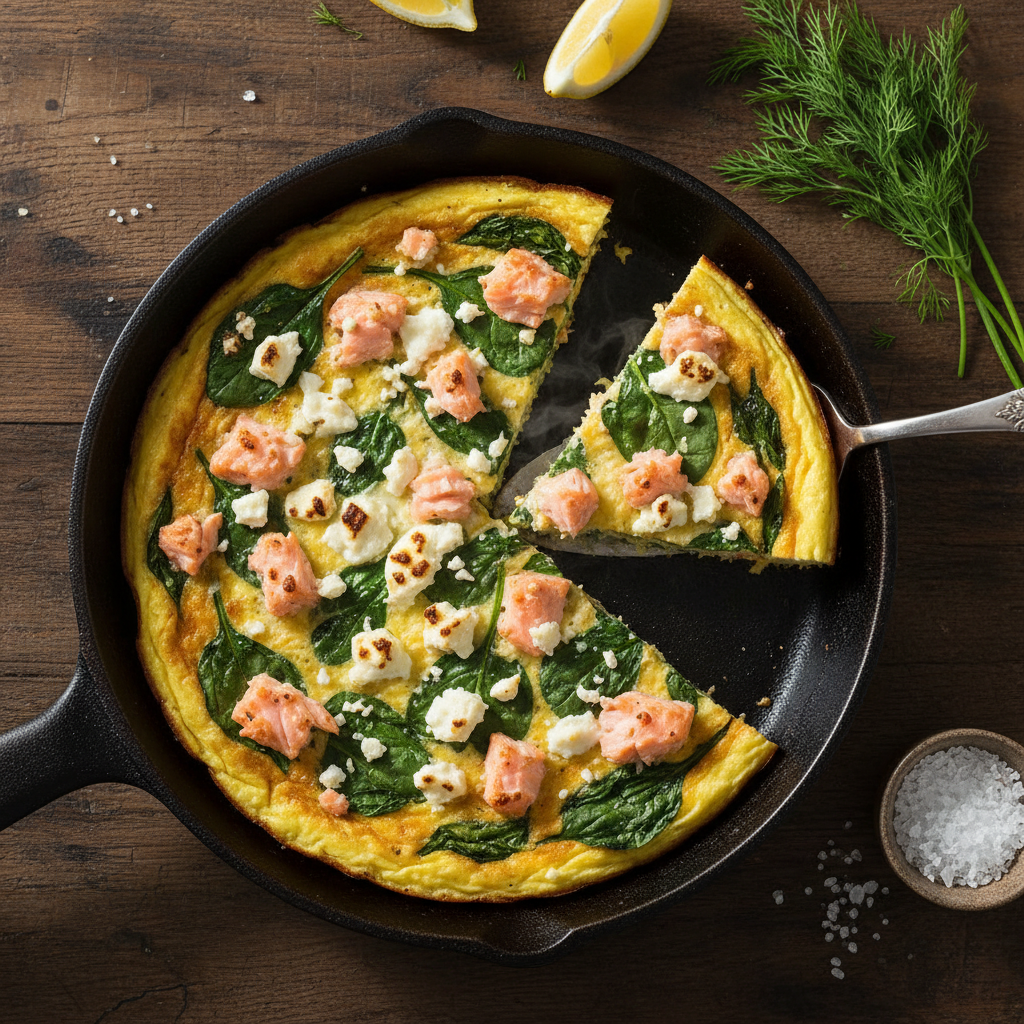
This vibrant Salmon and Spinach Frittata is the ultimate solution for a nutritious, low-carb dinner that comes together in under 40 minutes. Bursting with omega-3 rich salmon, fresh spinach, and creamy feta cheese, it transforms simple ingredients into a gourmet meal perfect for busy weeknights or lazy weekend brunches.
15 minutes
20 minutes
35 minutes
6 servings
Main Course
Stovetop to Oven
Italian-American
Gluten-Free
There is something undeniably comforting about a dish that bridges the gap between a lazy Sunday brunch and a hectic Tuesday night dinner with such effortless grace. This Salmon and Spinach Frittata is exactly that kind of culinary chameleon. It is a celebration of fresh flavors and robust textures, bringing together the rich, buttery taste of salmon with the earthy notes of spinach and the tangy bite of feta cheese. While many view eggs strictly as morning fare, the Italian frittata makes a compelling case for ‘breakfast for dinner.’ It is substantial, satisfying, and incredibly nutrient-dense, providing a heavy hit of protein and healthy fats without the heaviness of a carb-loaded meal.
What makes this specific recipe a standout is its versatility and its ability to turn leftovers into luxury. Whether you are using fresh salmon fillets specifically baked for this dish, or flaking up leftovers from the night before, the eggs act as a perfect canvas, binding the ingredients in a fluffy, golden embrace. The addition of fresh dill and a hint of lemon zest brightens the entire flavor profile, cutting through the richness of the eggs and fish. Furthermore, this dish is a visual stunner; served straight from the cast-iron skillet, it presents a rustic elegance that looks just as good on a holiday table as it does on a simple weeknight. If you are looking to incorporate more heart-healthy omega-3s into your diet without spending hours in the kitchen, this frittata is your new go-to recipe. It’s keto-friendly, naturally gluten-free, and packed with vitamins, proving that healthy eating doesn’t have to compromise on flavor or satisfaction.
History & Origins
The frittata is a dish deeply rooted in the culinary traditions of Italy, though its precise origins are somewhat humble and nebulous, born out of necessity rather than royal decree. The word ‘frittata’ derives from the Italian verb ‘friggere,’ which means ‘to fry.’ Historically, it was the Italian answer to the ‘waste not, want not’ philosophy—a peasant dish designed to use up leftover vegetables, meats, cheeses, and pasta from the previous day’s meals. Unlike its French cousin, the omelet, which is cooked quickly and folded over a filling, the frittata is an open-faced creation where the ingredients are mixed directly into the beaten eggs before cooking.
For generations, Italian home cooks would whisk eggs and pour them over whatever ingredients were on hand in a skillet, cooking it slowly over a fire before flipping it to set the top (or, in modern times, finishing it under a broiler). It wasn’t about specific recipes; it was about resourcefulness. As Italian immigrants moved across the globe, particularly to the United States in the late 19th and early 20th centuries, they brought this versatile technique with them. Over time, the frittata evolved from a leftover-clearing strategy into a deliberate, gourmet menu item found in cafes and brunch spots worldwide.
While traditional versions might have included leftover spaghetti (frittata di pasta) or simple onions, modern interpretations like this Salmon and Spinach Frittata reflect a shift towards health-conscious, protein-forward eating. By incorporating salmon—a fish prized in many coastal cuisines—we marry the rustic Italian cooking method with contemporary nutritional desires, creating a dish that honors its history of simplicity while embracing modern flavor palettes.
Why This Recipe Works
This recipe works exceptionally well because it masters the delicate balance of texture and moisture, which are the two most common pitfalls in egg-based dishes. Salmon is a naturally oily fish, rich in moisture. When paired with spinach, which releases water as it cooks, there is a risk of the frittata becoming soggy. This recipe counters that by sautéing the spinach and aromatics first to evaporate excess liquid before the eggs are even introduced. This ensures that the structural integrity of the egg custard remains firm and fluffy, not watery.
Furthermore, the two-step cooking process—starting on the stovetop and finishing in the oven—is crucial for success. Cooking the bottom on the stove ensures a golden, delicious crust that releases easily from the pan, while finishing it in the oven provides gentle, even heat to set the center without rubberizing the eggs. The addition of dairy (cream or milk) interferes with the protein coagulation just enough to keep the curd tender, preventing the eggs from becoming tough. Flavor-wise, the combination is scientifically sound: the fat in the salmon and egg yolks carries the flavor compounds of the dill and garlic, while the acidity of the lemon zest and the saltiness of the feta cheese cut through that richness, stimulating the palate and making every bite complex and satisfying. It is a recipe engineered for both ease and gastronomic pleasure.
Why You’ll Love This Recipe
- ✓High in protein and heart-healthy Omega-3 fatty acids.
- ✓Ready in under 40 minutes using one pan.
- ✓Naturally gluten-free and keto-friendly.
- ✓Perfect for meal prep as it reheats beautifully.
- ✓Versatile: works for breakfast, brunch, or dinner.
- ✓A great way to use up leftover cooked salmon.
Equipment You’ll Need
- ✓10-inch Cast Iron Skillet or Oven-Safe Non-Stick Pan
- ✓Large Mixing Bowl
- ✓Whisk
- ✓Chef’s Knife
- ✓Cutting Board
- ✓Spatula
Ingredients
- ✓8 large eggs
- ✓1/3 cup heavy cream or whole milk
- ✓1 lb cooked salmon, flaked into large chunks (roasted or poached)
- ✓2 cups fresh baby spinach, packed
- ✓1 small yellow onion, finely diced
- ✓2 cloves garlic, minced
- ✓1/2 cup crumbled feta cheese or goat cheese
- ✓2 tablespoons olive oil
- ✓1 tablespoon fresh dill, chopped
- ✓1/2 teaspoon salt
- ✓1/4 teaspoon black pepper
- ✓1/2 teaspoon lemon zest (optional)
Instructions
- Preheat your oven to 400°F (200°C). Position a rack in the center of the oven.
- In a large mixing bowl, crack the eggs and add the heavy cream (or milk), salt, black pepper, fresh dill, and lemon zest. Whisk vigorously until the mixture is fully combined and slightly frothy. Set aside.
- Place your 10-inch cast-iron skillet (or oven-safe pan) over medium heat. Add the olive oil.
- Once the oil is shimmering, add the diced onion. Sauté for 3-4 minutes until the onion is translucent and soft.
- Add the minced garlic and fresh spinach to the skillet. Cook for another 1-2 minutes, stirring constantly, until the spinach is just wilted and any excess moisture has evaporated.
- Spread the spinach and onion mixture evenly across the bottom of the pan. Distribute the chunks of cooked salmon evenly over the vegetables.
- Pour the egg mixture over the salmon and vegetables. Do not stir; instead, use a spatula to gently lift the edges of the cooked vegetables slightly to let the egg flow underneath.
- Sprinkle the crumbled feta cheese evenly over the top.
- Let the frittata cook on the stovetop undisturbed for about 2-3 minutes, or until you see the edges starting to set and pull away slightly from the pan.
- Carefully transfer the skillet to the preheated oven. Bake for 10-12 minutes.
- Check for doneness: the center should be just set and no longer jiggly. If you want a more golden top, you can switch the oven to broil for the last 1-2 minutes, watching very closely to prevent burning.
- Remove from the oven (handle will be extremely hot!) and let it rest for 5 minutes before slicing. This helps the frittata hold its shape.
Expert Cooking Tips
- ✓Use room temperature eggs if possible; they whisk up fluffier and cook more evenly.
- ✓Do not over-whisk the eggs to the point of stiff peaks, but ensure yolks and whites are fully integrated for a uniform texture.
- ✓If using leftover salmon that is already seasoned, adjust the salt in the egg mixture accordingly to avoid over-salting.
- ✓The handle of the skillet will stay hot for a long time after coming out of the oven. Always keep a towel or oven mitt over the handle as a visual reminder.
- ✓If you don’t have heavy cream, full-fat coconut milk works as a great dairy-free alternative that adds a subtle sweetness.
- ✓Avoid using frozen spinach unless absolutely necessary; if you do, you must thaw it and squeeze out every drop of water to prevent a soggy frittata.
- ✓For a lighter texture, you can add a pinch of baking powder to the egg mixture before whisking.
Substitutions and Variations
This recipe is incredibly forgiving and allows for numerous substitutions based on dietary needs or pantry availability. If you don’t have salmon, smoked salmon is a fantastic alternative that adds a deeper, savory flavor—just be mindful to reduce the added salt. Canned salmon (drained well) also works in a pinch for a budget-friendly version. For the greens, kale or Swiss chard can replace spinach; just be sure to remove the tough stems and sauté them a bit longer to tenderize. If you are dairy-free, substitute the heavy cream with unsweetened almond milk or coconut milk, and omit the cheese or use a vegan feta alternative. The feta can also be swapped for goat cheese for a tangier bite, or shredded mozzarella/cheddar for a meltier, milder finish. Aromatics like leeks or shallots can replace the yellow onion for a more delicate flavor profile.
Common Mistakes to Avoid
The most common mistake when making a frittata is overcooking it. Eggs are delicate proteins that continue to cook from residual heat even after being removed from the oven. If you wait until the center is completely stiff in the oven, it will likely be rubbery by the time you eat it. Pull it out when the center is just barely set. Another error is not seasoning the layers; ensure your vegetables are seasoned as they sauté, not just the egg mixture. Failing to use enough fat in the pan is another issue; even in a non-stick or seasoned cast iron pan, a good coating of oil is necessary to ensure the frittata slides out effortlessly. Lastly, overloading the frittata with watery vegetables (like raw tomatoes or zucchini) without cooking them down first will result in a watery, unappetizing mess.
Serving Suggestions
This Salmon and Spinach Frittata is a complete meal on its own, but it pairs beautifully with light sides. For a dinner setting, serve it alongside a crisp arugula salad dressed with a lemon vinaigrette to cut through the richness of the eggs and fish. Roasted baby potatoes with rosemary or a slice of crusty sourdough bread make excellent carbohydrate additions if you aren’t strictly low-carb. If serving for brunch, a fresh fruit salad and a mimosa or bloody mary are classic accompaniments. A dollop of sour cream, crème fraîche, or a drizzle of hot sauce on top of the slice adds an extra layer of flavor and creaminess.
Storage and Reheating Tips
To store leftovers, allow the frittata to cool completely to room temperature. Slice it into wedges and place them in an airtight container in the refrigerator for up to 3-4 days. Frittatas are excellent for meal prep as they taste great cold or at room temperature. To reheat, it is best to use a toaster oven or an oven set to 350°F for about 5-10 minutes until warmed through. You can use a microwave, but be careful to do so in short 30-second bursts to avoid making the eggs rubbery. Freezing is possible but can slightly alter the texture of the eggs and spinach (making them a bit watery upon thawing); if you must freeze, wrap individual slices tightly in plastic wrap and foil, and consume within 1 month.
Nutrition Facts (Estimated)
| Serving Size | 1 slice |
| Calories | 280 |
| Fat | 18g |
| Saturated Fat | 6g |
| Unsaturated Fat | 10g |
| Trans Fat | 0g |
| Cholesterol | 210mg |
| Sodium | 450mg |
| Carbohydrates | 4g |
| Fiber | 1g |
| Sugar | 2g |
| Protein | 24g |
Frequently Asked Questions
Can I use raw salmon instead of cooked?
Yes, but you need to cook it first. Dice the raw salmon into small cubes and sauté them in the pan with the onions before adding the spinach. Once the salmon is opaque and cooked through, proceed with adding the eggs.
Why is my frittata spongy?
A spongy texture usually indicates that the eggs were overbeaten (incorporating too much air) or overcooked. Whisk just until combined and remove from the oven while the center is still slightly soft.
Can I make this without a cast-iron skillet?
Absolutely. You can use any oven-safe non-stick skillet. If your skillet has a plastic handle, wrap it tightly in a double layer of aluminum foil to protect it, or simply transfer the sautéed mixture into a greased baking dish before adding the eggs and baking.
Is this recipe Keto-friendly?
Yes, this recipe is naturally low in carbohydrates and high in healthy fats and protein, making it excellent for a Keto diet.
How do I flip the frittata?
Unlike a Spanish tortilla, you do not need to flip a frittata. The beauty of this method is finishing it in the oven, which cooks the top without the risky maneuver of flipping a hot pan.
Can I use frozen spinach?
Yes, but you must thaw it completely and squeeze out all the excess water using a clean kitchen towel or cheesecloth. Excess water will ruin the texture of the frittata.
What other herbs go well with salmon?
If you don’t like dill, fresh parsley, chives, or tarragon are excellent alternatives that pair wonderfully with salmon and eggs.
Can I make this ahead of time?
Yes, frittatas are great made ahead. You can bake it on Sunday and eat it for lunch or dinner throughout the week. It tastes delicious cold, room temp, or warmed up.
Why did my frittata stick to the pan?
This usually happens if the pan wasn’t hot enough when the eggs were added, or if there wasn’t enough oil/butter used to coat the surface. Cast iron needs to be well-seasoned.
Conclusion
Whether you are a seasoned home cook or a beginner looking for a reliable, healthy dinner option, this Salmon and Spinach Frittata is sure to impress. It manages to be elegant yet humble, sophisticated yet simple to prepare. The combination of tender salmon, nutrient-packed spinach, and fluffy eggs creates a meal that satisfies on every level. It is a testament to the fact that ‘fast food’ can be incredibly healthy and homemade. Give this recipe a try next time you have leftover salmon or just want a break from the usual chicken dinner rotation. Don’t forget to pin this recipe for later and leave a comment below letting us know how it turned out for you!