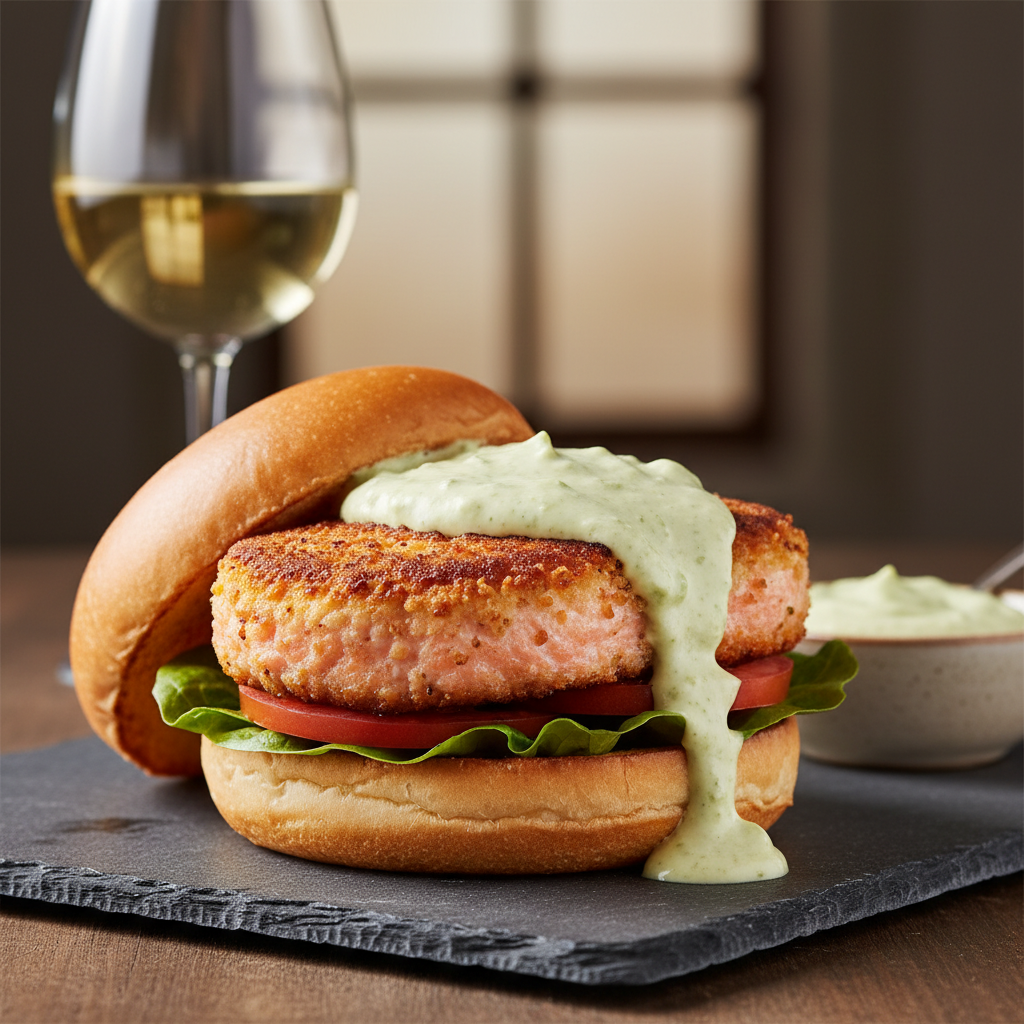
The Ultimate Juicy Salmon Burger With Creamy Avocado Yogurt Sauce
Salmon Burger With Avocado Yogurt Sauce Recipe
Ditch the dry frozen patties for these incredible, restaurant-quality fresh salmon burgers. Crisp on the outside, tender on the inside, and topped with a vibrant, heart-healthy avocado Greek yogurt sauce, this recipe is a 30-minute game changer for weeknight dinners.
20 minutes
10 minutes
30 minutes (plus 15 min chilling)
4 burgers
Main Course
Stovetop / Pan-Sear
American Fusion
Pescatarian
If you have ever been scarred by a dry, flavorless, hockey-puck-style salmon burger from the freezer aisle, I am here to redeem your culinary faith. This Salmon Burger with Avocado Yogurt Sauce is everything a seafood sandwich should be: incredibly juicy, rich in flavor, and texturally satisfying. Unlike beef burgers, which rely on fat content for moisture, salmon requires a delicate touch and the right binding agents to maintain its succulence without becoming rubbery. The secret lies in how we treat the fresh salmon fillet—hand-chopping a portion for texture while pulsing the rest to act as a binder—ensuring every bite is substantial yet tender.
But let’s be honest, a burger is often defined by its toppings. While a slice of cheese might overwhelm the delicate fish, our homemade Avocado Yogurt Sauce provides the perfect counterpoint. It brings the creaminess of mayonnaise but with the bright, tangy punch of Greek yogurt and fresh lemon juice. The avocado adds a velvety richness that pairs naturally with the omega-3 fatty acids in the salmon. This dish is vibrant, colorful, and screams ‘summer,’ yet it is hearty enough to serve in the dead of winter when you need a fresh pick-me-up. Whether you are a lifelong pescatarian or a red-meat lover looking to switch up your grilling rotation, this recipe delivers on all fronts: health, speed, and undeniably gourmet flavor.
History & Origins
The concept of the fish burger is a fascinating evolution in American cuisine, bridging the gap between economic necessity and modern health-conscious dining. Historically, ‘salmon patties’ or ‘croquettes’ were the precursors to the modern salmon burger. Gaining popularity during the Great Depression and later during World War II due to meat rationing, these early iterations were typically made from canned salmon, heavily extended with breadcrumbs, crackers, or mashed potatoes to feed large families on a budget. They were pan-fried and served as a humble, nutritious staple in many households, particularly in the American South and coastal regions.
However, the shift from the humble ‘patty’ to the gourmet ‘burger’ began in the late 20th century. As the Pacific Northwest cuisine gained global recognition in the 1980s and 90s, chefs began treating salmon with more reverence, moving away from canned varieties to fresh fillets. Concurrently, the rise of the health food movement saw diners seeking alternatives to red meat that didn’t sacrifice the satisfaction of a burger experience. The modern salmon burger emerged as a restaurant staple, often featuring Asian-inspired flavors like ginger and soy, or Mediterranean profiles with dill and lemon. Today, it represents a fusion of comfort food mechanics with premium ingredients, symbolizing a shift towards lighter, nutrient-dense meals that don’t compromise on indulgence.
Why This Recipe Works
This recipe succeeds where many others fail primarily due to texture management. A common pitfall with homemade fish burgers is over-processing the meat in a food processor, resulting in a paste that cooks into a rubbery, bouncy texture similar to a fish ball. By hand-chopping one-third of the salmon into small chunks and pulsing the remaining two-thirds into a rough grind, we create a burger with a genuine ‘meaty’ bite that holds together without becoming dense. The inclusion of panko breadcrumbs rather than standard breadcrumbs provides a lighter internal structure, while a touch of Dijon mustard and mayonnaise within the patty mixture adds fat and emulsification, preventing the lean fish from drying out during the sear.
Furthermore, the flavor profile is meticulously balanced. Salmon is a rich, oily fish that craves acidity to cut through the fat. We incorporate lemon zest and fresh dill directly into the patty, but the real magic happens with the sauce. The Avocado Yogurt Sauce utilizes Greek yogurt as a base, which offers a cooling tang that mayonnaise alone cannot provide. The avocado adds a vegetable fat that melts on the palate, mirroring the richness of the salmon while the cilantro and lime in the sauce brighten the entire ensemble. This contrast between the hot, crispy-seared patty and the cool, creamy, acidic sauce creates a sensory experience that hits every taste bud.
Why You’ll Love This Recipe
- ✓Uses fresh salmon for superior texture and moisture
- ✓High in protein and heart-healthy Omega-3 fatty acids
- ✓Ready in under 45 minutes, perfect for weeknights
- ✓The sauce is a healthier, probiotic-rich alternative to mayo
- ✓Versatile: serves great on a bun or over a salad
- ✓Kid-friendly way to introduce more fish into the diet
Equipment You’ll Need
- ✓Food Processor
- ✓Sharp Chef’s Knife
- ✓Large Non-Stick Skillet or Cast Iron Pan
- ✓Mixing Bowls
- ✓Baking Sheet or Plate
- ✓Parchment Paper
- ✓Spatula
Ingredients
- ✓1.5 lbs fresh skinless salmon fillet, bones removed
- ✓1/2 cup Panko breadcrumbs
- ✓2 green onions (scallions), thinly sliced
- ✓1 tablespoon fresh dill, chopped
- ✓1 tablespoon Dijon mustard
- ✓1 tablespoon mayonnaise
- ✓1 teaspoon lemon zest
- ✓1/2 teaspoon salt
- ✓1/4 teaspoon black pepper
- ✓1 tablespoon olive oil (for cooking)
- ✓1 large ripe avocado
- ✓1/3 cup plain Greek yogurt (full fat or 2%)
- ✓1 tablespoon fresh lime juice
- ✓1 small clove garlic, minced
- ✓1 tablespoon fresh cilantro, chopped
- ✓4 Brioche buns, toasted (optional)
- ✓Lettuce and tomato slices for serving
Instructions
- Prepare the Salmon: Cut about 1/3 of the salmon fillet into small 1/4-inch cubes and set aside in a large mixing bowl. Cut the remaining salmon into large chunks.
- Process the Base: Place the large chunks of salmon into a food processor. Pulse 5-7 times until the salmon is coarsely chopped. Do not puree it into a paste. Add this to the bowl with the hand-chopped salmon.
- Make the Mixture: To the salmon bowl, add the panko breadcrumbs, sliced green onions, chopped dill, Dijon mustard, mayonnaise, lemon zest, salt, and pepper. Gently mix with a spoon or your hands just until combined. Be careful not to overwork the mixture, or the burgers will be tough.
- Form the Patties: Divide the mixture into 4 equal portions. Shape them into patties about 3/4-inch thick. Place the patties on a plate or baking sheet lined with parchment paper.
- Chill: Refrigerate the formed patties for at least 15-30 minutes. This step is crucial as it allows the panko to absorb moisture and helps the burgers hold their shape during cooking.
- Make the Sauce: While the burgers chill, combine the avocado, Greek yogurt, lime juice, minced garlic, cilantro, and a pinch of salt in a food processor or blender. Blend until smooth and creamy. Taste and adjust seasoning if necessary.
- Cook the Burgers: Heat the olive oil in a large non-stick skillet over medium-high heat. Once the oil is shimmering, carefully add the salmon patties. Cook for 3-4 minutes on the first side until golden brown and crispy.
- Flip and Finish: Gently flip the burgers. Lower the heat to medium and cook for another 3-4 minutes, or until the burgers are cooked through and opaque in the center (internal temperature should reach 145°F).
- Assemble: Toast your buns if using. Place a layer of lettuce and tomato on the bottom bun, top with the hot salmon burger, and dollop a generous amount of the Avocado Yogurt Sauce on top. Serve immediately.
Expert Cooking Tips
- ✓Don’t skip the chilling step! The cold temperature helps the fat solidify and the breadcrumbs bind, preventing the burger from falling apart in the pan.
- ✓Use fresh, high-quality salmon. Since the fish is the star, avoid frozen fillets that have been thawed, as they can be too watery.
- ✓If you don’t have a food processor, you can hand-chop all the salmon. It takes a bit more effort but results in an excellent texture.
- ✓Wet your hands slightly with water or oil before forming the patties to prevent the mixture from sticking to your skin.
- ✓Do not press down on the burgers with your spatula while cooking; this squeezes out those precious juices.
- ✓Test the oil heat before adding the burgers; if the oil isn’t hot enough, the breadcrumbs will absorb the oil and become greasy.
Substitutions and Variations
This recipe is quite flexible to accommodate various dietary needs. For a **Gluten-Free** version, simply swap the Panko breadcrumbs for gluten-free Panko or crushed gluten-free crackers; almond flour can work in a pinch but changes the texture slightly. If you don’t have **fresh salmon**, you can use high-quality canned salmon, but you will need to drain it thoroughly and add an egg to help bind it, as canned salmon is drier. The **Greek yogurt** in the sauce can be replaced with sour cream or mayonnaise if you prefer a richer, less tangy sauce. For those who dislike **cilantro**, swap it for fresh parsley or more dill in the sauce. If you want to avoid the **bun**, these serve beautifully inside butter lettuce cups or on top of a mixed greens salad.
Common Mistakes to Avoid
The most common mistake is **over-processing the salmon**. If you blend it until it looks like a paste, the final cooked burger will have a rubbery, unappetizing texture; always pulse gently. Another error is **overcooking the fish**. Salmon cooks relatively quickly, and leaving it in the pan too long will dry it out immediately. Aim for medium to medium-well doneness. **Skipping the refrigeration step** is also a recipe for disaster; the patties are delicate when room temperature and may crumble when you try to flip them. Finally, avoid using **low-fat yogurt** for the sauce if possible, as it can be watery; full-fat or 2% Greek yogurt provides the necessary thickness and mouthfeel.
Serving Suggestions
These burgers are incredibly versatile. For a classic approach, serve them on toasted brioche or sesame seed buns with crisp romaine lettuce, heirloom tomato slices, and red onion. For a lighter, low-carb meal, serve the patty over a bed of arugula and spinach salad with a lemon vinaigrette, using the avocado sauce as a dressing. They also pair wonderfully with sweet potato fries, coleslaw, or a cucumber salad on the side. If you’re hosting a brunch, make smaller patties and serve them as ‘salmon sliders’ or use them as a base for a unique Eggs Benedict.
Storage and Reheating Tips
Leftover salmon burgers can be stored in an airtight container in the refrigerator for up to 2 days. To reheat, place them in a skillet over low heat with a splash of water and cover with a lid to steam them gently until warm; avoid the microwave as it will make the fish rubbery and smell strong. The Avocado Yogurt Sauce is best eaten the day it is made, as avocado oxidizes and turns brown quickly. However, if you must store it, press plastic wrap directly onto the surface of the sauce to minimize air contact and store for up to 24 hours. You can freeze the *uncooked* patties (without the sauce) by separating them with parchment paper and storing them in a freezer bag for up to 1 month. Thaw in the fridge before cooking.
Nutrition Facts (Estimated)
| Serving Size | 1 burger with sauce (no bun) |
| Calories | 385 |
| Fat | 22g |
| Saturated Fat | 4g |
| Unsaturated Fat | 16g |
| Trans Fat | 0g |
| Cholesterol | 95mg |
| Sodium | 420mg |
| Carbohydrates | 12g |
| Fiber | 3g |
| Sugar | 2g |
| Protein | 34g |
Frequently Asked Questions
Can I bake these instead of pan-frying?
Yes, you can bake them at 400°F (200°C) for about 10-12 minutes, flipping halfway through. However, you won’t get the same crispy, golden-brown crust that pan-searing provides.
Why are my burgers falling apart?
This usually happens if the mixture is too wet or if you skipped the chilling step. Make sure to chill the patties for at least 30 minutes. If the mixture feels too loose before forming, add another tablespoon of panko.
Can I use frozen salmon?
You can, but you must thaw it completely and pat it extremely dry with paper towels. Excess water from frozen fish is the enemy of a good burger binder.
Is this recipe spicy?
Not at all. It has a savory, herby flavor. If you want heat, add a pinch of cayenne pepper to the burger mix or some jalapeño to the avocado sauce.
Can I grill these on an outdoor BBQ?
Yes, but be careful. Salmon burgers are more delicate than beef. Ensure your grill grates are very clean and well-oiled. Using a grill basket or a cast-iron griddle on the grill is safer to prevent sticking.
How do I know when they are done?
The internal temperature should reach 145°F. Visually, the salmon should turn from translucent pink to opaque light pink throughout.
Can I make the mixture ahead of time?
Yes, you can make the patty mixture and form the patties up to 4-6 hours in advance. Keep them covered in the refrigerator until you are ready to cook.
What if my avocado sauce turns brown?
The lime juice helps prevent this, but oxidation is natural. If the top layer browns, simply scrape it off; the sauce underneath should still be bright green and safe to eat.
Conclusion
There you have it—the secret to making the best Salmon Burger with Avocado Yogurt Sauce you’ll ever taste. This recipe proves that healthy eating doesn’t have to mean sacrificing flavor or satisfaction. The combination of the hot, crispy, savory salmon patty with the cool, creamy, citrusy sauce is truly a match made in culinary heaven. It’s a dish that feels fancy enough for a dinner party but is simple enough for a Tuesday night. Give this recipe a try, and I promise you’ll never look at the freezer section’s fish burgers the same way again. Don’t forget to pin this recipe for your next summer cookout or healthy meal prep session!