The Ultimate Salmon Poke Bowl with Nutty Brown Rice
Salmon Poke Bowl With Brown Rice Recipe
Experience a burst of fresh, vibrant flavors with this restaurant-quality Salmon Poke Bowl recipe. Featuring buttery, sushi-grade salmon marinated to perfection and served over wholesome, nutty brown rice, this bowl is the perfect balance of healthy fats, protein, and satisfying textures.
20 minutes
30 minutes
50 minutes
2 servings
Main Course
No-Cook (Fish), Stovetop (Rice)
Hawaiian-Japanese Fusion
Pescatarian
There is something undeniably magnetic about a beautifully assembled poke bowl. It is a feast for the eyes just as much as it is for the palate, a kaleidoscope of colors and textures that promises vitality with every bite. In recent years, the poke bowl has transcended its humble Hawaiian roots to become a global phenomenon, and for good reason. It represents the perfect convergence of convenience, health, and indulgence. This specific recipe for Salmon Poke Bowl with Brown Rice is designed to bring that high-end sushi bar experience right into your home kitchen, without the intimidation factor often associated with preparing raw fish.
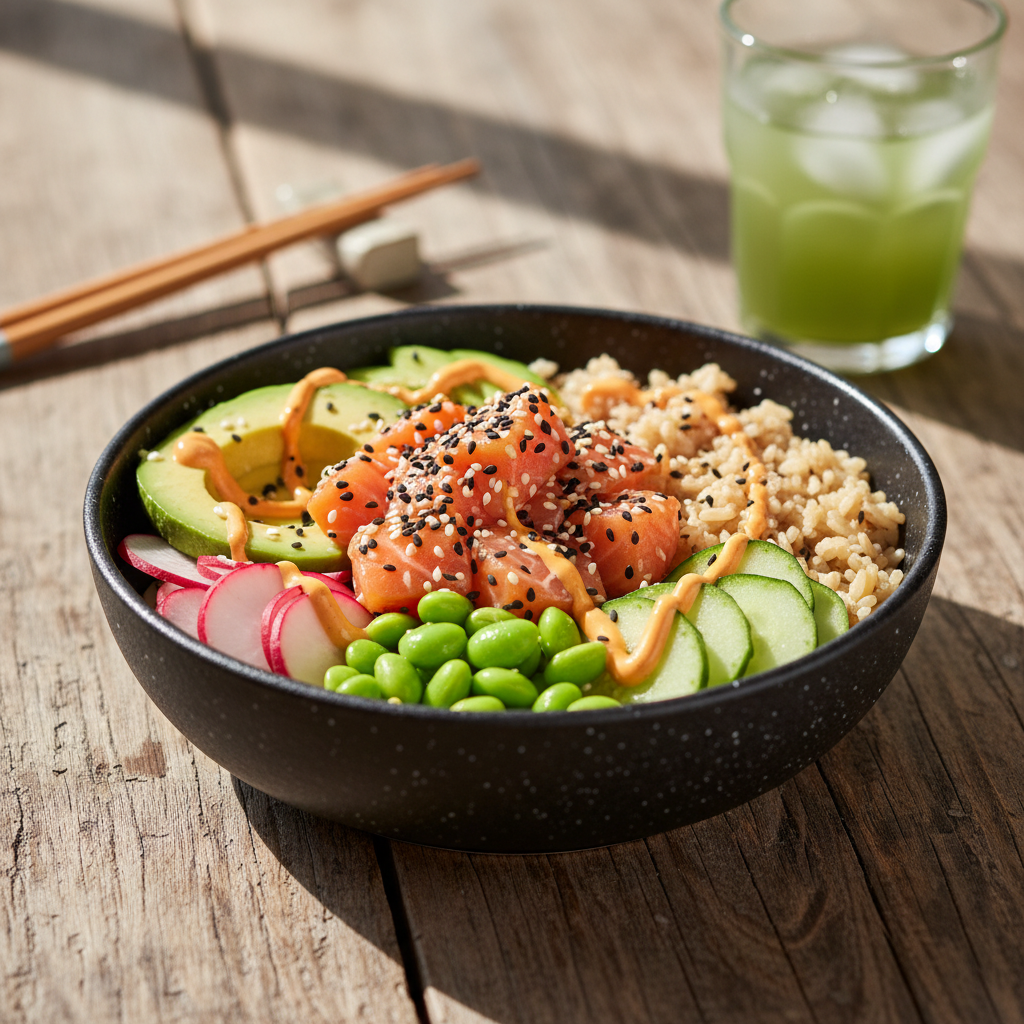
The magic of this dish lies in the interplay of temperatures and textures. You have the slightly warm, chewy, and nutty brown rice acting as the foundation, contrasting beautifully with the cool, buttery cubes of fresh salmon. The salmon itself is tossed in a savory, aromatic dressing that hits every note on the flavor spectrum: salty soy sauce, fragrant sesame oil, a hint of sweetness, and a touch of heat. But a poke bowl isn’t just about the fish; it’s about the symphony of toppings. We incorporate creamy avocado, crunchy cucumbers, snapping edamame, and tangy pickled ginger to ensure that no two bites are exactly the same.
Choosing brown rice over the traditional sushi rice adds a layer of earthy complexity and a boost of fiber that keeps you full longer. This isn’t just a meal; it’s a lifestyle choice that prioritizes wholesome ingredients without sacrificing an ounce of flavor. Whether you are a seasoned home cook or a beginner looking to impress, this recipe guides you through sourcing the best fish and balancing flavors like a pro. Get ready to create a lunch or dinner that feels luxurious, tastes incredibly fresh, and leaves you feeling energized.
History & Origins
To truly appreciate a poke bowl, one must understand its deep-rooted history in the Hawaiian islands. The word ‘poke’ (pronounced poh-kay) literally means ‘to slice’ or ‘cut crosswise into pieces’ in Hawaiian. Long before it became a trendy fast-casual staple on the mainland United States, poke was a simple, pragmatic snack for ancient Hawaiian fishermen. According to food historians, fishermen would take the cut-offs from their daily catch—often reef fish like ‘ama’ama (mullet) or aku (skipjack tuna)—and season them with whatever was readily available. This typically included sea salt, candlenut (inamona), and limu (seaweed). It was a dish born of necessity and respect for the ocean’s resources, eaten to refuel after a long day at sea.
The evolution of poke mirrors the cultural shifts in Hawaii itself. With the arrival of Japanese immigrants in the late 19th and early 20th centuries, the flavor profile of poke began to transform. The introduction of soy sauce (shoyu) and sesame oil created the classic marinade that most of us recognize today. This fusion of Native Hawaiian preparation methods with Japanese ingredients gave birth to ‘shoyu poke,’ which remains a staple at local grocery stores and delis across the islands. For decades, poke was a ubiquitous local comfort food, sold by weight in plastic containers at supermarkets, meant to be eaten with rice or as a pupu (appetizer) at gatherings.
It wasn’t until around 2012 to 2015 that poke exploded onto the mainland culinary scene, morphing into the customizable ‘bowl’ format we see today. While traditionalists might argue that the modern iterations—loaded with toppings like corn, kale, and spicy mayo—stray far from the original simplicity, the spirit of the dish remains: fresh, high-quality ocean bounty seasoned to highlight its natural flavor. This recipe honors that lineage by keeping the fish preparation classic while embracing the modern, nutritious twist of brown rice.
Why This Recipe Works
This recipe stands out because it meticulously balances the ‘Four S’s’ of Asian-inspired cooking: Salty, Sweet, Sour, and Spicy. Many homemade poke recipes fall flat because they either over-marinate the fish, causing it to lose its delicate texture, or they use a sauce that is too heavy, masking the freshness of the salmon. Here, we use a precise ratio of soy sauce to toasted sesame oil, ensuring the fish is coated but not drowning. The addition of a splash of rice vinegar cuts through the richness of the salmon and avocado, providing a necessary acidic lift that brightens the entire dish.
Furthermore, the choice of short-grain brown rice is deliberate and transformative. While white sushi rice is traditional, it can sometimes become mushy or overly sticky if not washed and cooked perfectly. Short-grain brown rice offers a delightful ‘pop’ and chewiness that holds up remarkably well against the dressing. Its nutty flavor profile complements the toasted sesame oil in the marinade, creating a cohesive flavor bridge between the base and the protein.
Finally, this recipe emphasizes texture variance. We don’t just rely on the soft fish and rice; we introduce crunch via radishes and cucumbers, creaminess via avocado and spicy mayo, and a pungent bite from scallions and onions. This textural diversity prevents ‘palate fatigue,’ ensuring that the last bite is just as exciting as the first. By using high-quality, sushi-grade salmon and treating it with a minimal yet potent marinade, we allow the natural quality of the ingredients to shine, which is the ultimate secret to Japanese-Hawaiian cuisine.
Why You’ll Love This Recipe
- ✓High-Protein & Omega-3 Rich: Packed with healthy fats for brain and heart health.
- ✓Restaurant Quality at Home: Achieves that high-end sushi bar taste for a fraction of the cost.
- ✓Nutrient-Dense Base: Brown rice adds fiber and a satisfying nutty flavor compared to white rice.
- ✓Highly Customizable: Easy to swap toppings based on what is in your fridge.
- ✓No-Cook Protein: Perfect for hot days when you don’t want to turn on the oven.
- ✓Quick Assembly: Once the rice is cooked, the meal comes together in minutes.
Equipment You’ll Need
- ✓Rice Cooker or Medium Pot
- ✓Sharp Chef’s Knife
- ✓Cutting Board
- ✓Medium Mixing Bowl
- ✓Small Whisk or Fork
- ✓Measuring Spoons and Cups
Ingredients
- ✓1 cup short-grain brown rice, rinsed
- ✓2 cups water (for rice)
- ✓1 lb Sushi-grade Salmon, skin removed and cut into 1/2 inch cubes
- ✓3 tbsp Soy sauce or Tamari
- ✓1 tsp Toasted sesame oil
- ✓1 tsp Rice vinegar
- ✓1/2 tsp Fresh ginger, grated
- ✓1/2 tsp Chili garlic sauce or Sriracha (optional)
- ✓2 stalks Green onions, thinly sliced (white and green parts separated)
- ✓1/4 cup Sweet onion, finely diced (optional)
- ✓1 ripe Avocado, sliced or cubed
- ✓1/2 cup Cucumber, sliced into half-moons
- ✓1/2 cup Shelled Edamame, thawed
- ✓2 Radishes, thinly sliced
- ✓1 tbsp Sesame seeds (black or white)
- ✓Spicy Mayo (optional garnish)
- ✓Nori strips or Furikake seasoning (optional)
Instructions
- 1. Cook the Rice: Rinse the brown rice thoroughly under cold water until the water runs clear. Combine the rice and water in a pot or rice cooker. Cook according to package instructions (usually simmering for 30-40 minutes). Once cooked, fluff with a fork and let it cool slightly. It should be warm, not piping hot, when serving.
- 2. Prepare the Salmon: While the rice is cooking, ensure your salmon is very cold (it’s easier to slice). Using a very sharp knife, remove the skin if necessary and cut the salmon into uniform 1/2-inch cubes. Place the cubes in a medium mixing bowl.
- 3. Make the Marinade: In a small bowl, whisk together the soy sauce, toasted sesame oil, rice vinegar, grated ginger, chili garlic sauce (if using), and the white parts of the green onions.
- 4. Marinate the Fish: Pour the marinade over the cubed salmon. Add the diced sweet onion if using. Gently toss with a spoon or spatula to coat every piece evenly. Cover and refrigerate for 10-15 minutes while you prep the toppings. *Do not marinate for longer than 30 minutes or the texture will change.*
- 5. Prep Toppings: Slice the avocado, cucumber, and radishes. Thaw the edamame if frozen.
- 6. Assemble the Bowls: Divide the warm brown rice between two serving bowls. Top the rice with the marinated salmon on one side.
- 7. Add Garnishes: Arrange the avocado, cucumber, edamame, and radishes distinctively around the bowl to create sections of color.
- 8. Final Touches: Sprinkle with the green parts of the green onions, sesame seeds, and nori or furikake. Drizzle with spicy mayo if desired. Serve immediately.
Expert Cooking Tips
- ✓Source Carefully: Always ask your fishmonger for ‘sushi-grade’ or ‘sashimi-grade’ fish. This means it has been frozen at specific temperatures to kill parasites.
- ✓Knife Skills Matter: Use your sharpest knife. A dull knife will tear the delicate fish flesh rather than slicing it cleanly, affecting the mouthfeel.
- ✓Rice Temperature: The contrast between warm rice and cold fish is key. Don’t assemble the bowl with piping hot rice, or it will cook the fish. Let the rice cool to room temperature or just slightly warm.
- ✓Don’t Over-Mix: When tossing the salmon with the sauce, be gentle. You want to coat the cubes, not mash them.
- ✓Chill Your Bowl: If it’s a particularly hot day, chill your serving bowl in the fridge for 10 minutes before plating to keep everything crisp.
- ✓Toast Your Seeds: If using raw sesame seeds, quickly toast them in a dry pan for 1-2 minutes to unlock their nutty aroma.
Substitutions and Variations
This recipe is incredibly versatile and can be adapted to suit various dietary needs and pantry limitations. **Protein**: If you cannot find good salmon, sushi-grade Ahi tuna is the classic alternative. For a cooked option, poached shrimp or even seared tofu work beautifully. Vegetarians can marinate cubes of firm tofu or even watermelon (for a textural mimic) in the same sauce. **Base**: If brown rice isn’t your favorite, feel free to use traditional white sushi rice, black rice (forbidden rice) for a dramatic look, quinoa for extra protein, or even a bed of mixed greens or zucchini noodles for a low-carb version. **Sauce**: To make this Gluten-Free, simply swap the soy sauce for Tamari or Coconut Aminos. If you don’t have rice vinegar, apple cider vinegar or a squeeze of fresh lime juice can provide the necessary acidity. **Toppings**: The sky is the limit here. Mango or pineapple adds a wonderful tropical sweetness that pairs well with salmon. Seaweed salad (wakame), pickled jalapeños, crispy fried onions, or macadamia nuts are also excellent additions.
Common Mistakes to Avoid
The most common mistake when making poke at home is **compromising on fish quality**. Regular supermarket salmon fillets intended for baking are not safe to eat raw. Always verify the source. Another frequent error is **over-marinating**. Unlike meat, fish protein is delicate; the acid in the marinade (vinegar/citrus) and the salt in the soy sauce will begin to ‘cook’ (cure) the fish if left too long, turning it mushy or rubbery. Aim to marinate right before serving. A third mistake is **serving temperature confusion**. Poke is best when the fish is ice cold and the rice is warm (but not hot). If the rice is steaming hot, it will heat the fish up, creating an unappealing lukewarm temperature and potentially releasing fishy odors. Finally, avoid **over-saucing**. The fish should be dressed, not swimming in liquid. You can always serve extra sauce on the side.
Serving Suggestions
Serve these poke bowls immediately after assembly to enjoy the peak freshness of the ingredients. A side of miso soup is the traditional accompaniment, providing a warm, savory broth to sip between bites. For beverages, this dish pairs wonderfully with iced green tea, a cold Japanese lager like Asahi or Sapporo, or a crisp white wine like Sauvignon Blanc or Pinot Grigio, which cuts through the fattiness of the salmon. If you are hosting a dinner party, set up a ‘DIY Poke Bar’ where guests can scoop their own rice and choose from an array of toppings to build their own perfect bowl.
Storage and Reheating Tips
Because this recipe involves raw fish and avocado, it is strictly best enjoyed fresh. **Leftover raw fish should generally not be stored for later consumption** due to safety concerns and texture degradation. However, if you have prepared the components separately (cooked rice, chopped veggies, and sauce) but haven’t mixed them with the fish yet, those can be stored. The brown rice will keep in an airtight container in the fridge for 3-4 days. The chopped vegetables (cucumber, radish) can be stored for 2 days. The marinade can be kept in a jar for up to a week. If you have leftover marinated fish, it is highly recommended to cook it (pan-sear it quickly) before storing it in the fridge for up to 1 day to eat as a cooked topping later.
Nutrition Facts (Estimated)
| Serving Size | 1 Bowl |
| Calories | 650 |
| Fat | 28g |
| Saturated Fat | 4g |
| Unsaturated Fat | 22g |
| Trans Fat | 0g |
| Cholesterol | 55mg |
| Sodium | 980mg |
| Carbohydrates | 68g |
| Fiber | 8g |
| Sugar | 6g |
| Protein | 32g |
Frequently Asked Questions
Is it safe to eat raw salmon from the grocery store?
Not necessarily. You must look for ‘sushi-grade’ or ‘sashimi-grade’ labeling. This indicates the fish has been flash-frozen at very low temperatures to kill parasites. If you are unsure, ask the fishmonger directly if the fish is safe for raw consumption.
Can I use frozen salmon?
Yes, in fact, frozen salmon is often safer than ‘fresh’ because it was frozen immediately after catching. However, ensure it is high-quality. Defrost it slowly in the refrigerator overnight, never in the microwave or warm water, to maintain texture.
How do I make spicy mayo?
It’s very simple! Mix 2 tablespoons of mayonnaise (Japanese Kewpie mayo is best) with 1-2 teaspoons of Sriracha or chili garlic sauce. You can add a drop of sesame oil for extra flavor.
Can I make this ahead of time for meal prep?
You can prep the base and veggies, but do not marinate the fish ahead of time. Store the rice, veggies, and fish in separate containers. Mix the sauce in a small jar. Assemble and toss the fish with the sauce right before eating.
Is this recipe gluten-free?
It can easily be made gluten-free by using Tamari or Coconut Aminos instead of regular soy sauce, as traditional soy sauce contains wheat.
What does ‘poke’ mean?
Poke is a Hawaiian word that means ‘to slice’ or ‘cut crosswise into pieces’. It refers to the method of cutting the fish into cubes.
Can I use canned salmon?
While you *can* use canned salmon for a cooked salmon bowl, it won’t be a traditional poke bowl. If using canned, mix it with the spicy mayo rather than the soy marinade for better texture.
Why is my brown rice gummy?
Gummy rice usually happens if there is too much water or if it was stirred too much while cooking. Use a 2:1 water-to-rice ratio for brown rice and let it steam with the lid on after the heat is off.
Conclusion
Making a Salmon Poke Bowl with Brown Rice at home is one of the most rewarding culinary experiments you can undertake. It demystifies the art of handling raw fish and allows you to control exactly what goes into your body. The result is a meal that feels vibrant, clean, and sophisticated, yet is surprisingly simple to pull together on a weeknight. By combining the earthy goodness of brown rice with the luxurious texture of fresh salmon and a rainbow of crisp vegetables, you are creating a bowl that nourishes you from the inside out. We hope this recipe becomes a staple in your kitchen rotation, bringing a taste of the islands to your table whenever you crave it. Enjoy the process of slicing, seasoning, and assembling—it’s a beautiful ritual that ends in a delicious reward.