Creamy & Healthy Seafood Chowder with Light Cream: A Guilt-Free Comfort Bowl
Seafood Chowder With Light Cream Healthy Recipe
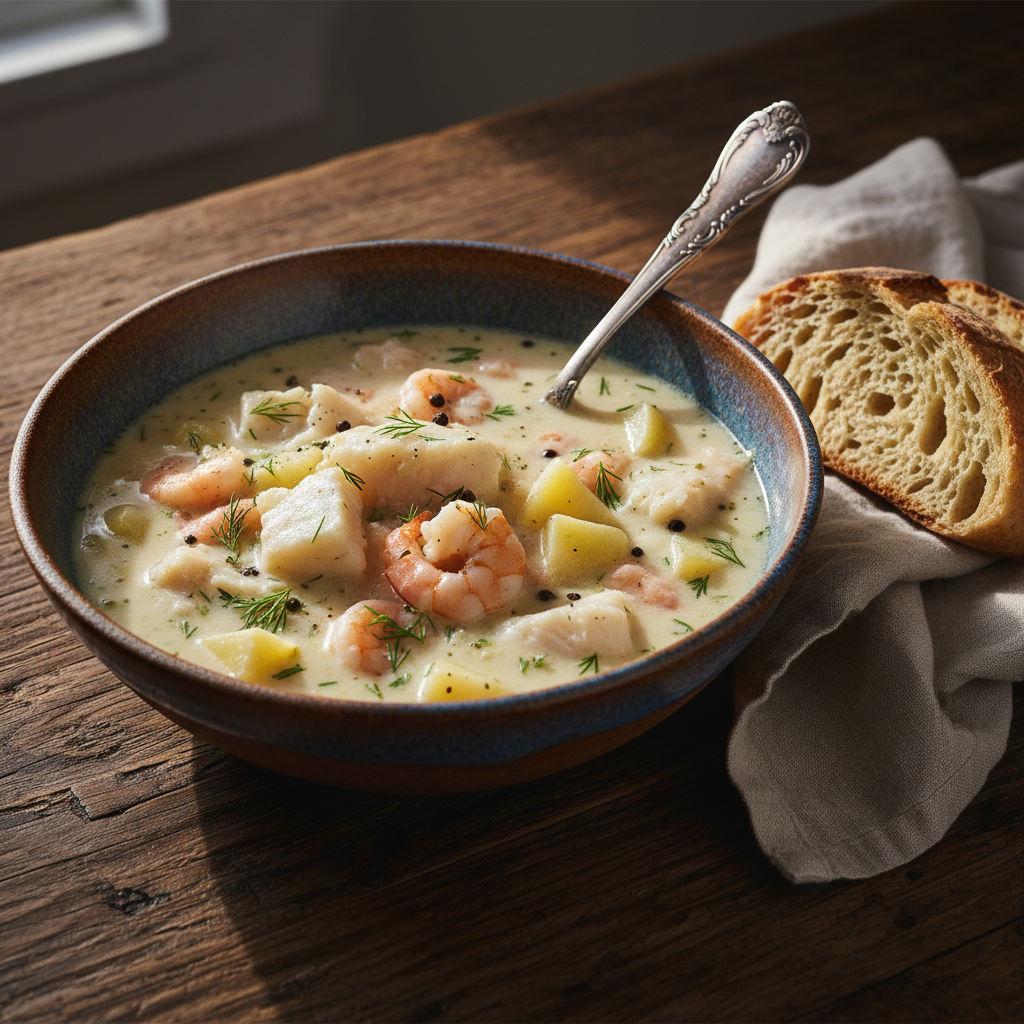
Discover the perfect balance of rich flavor and wholesome ingredients with this healthy seafood chowder recipe. Using light cream and a bounty of fresh seafood, this bowl offers all the comfort of a traditional New England classic without the heaviness.
20 minutes
25 minutes
45 minutes
6 servings
Main Course
Stovetop
American / New England
Pescatarian
There is something undeniably magical about a steaming bowl of chowder on a crisp day. It is the culinary equivalent of a warm hug, wrapping you in layers of savory broth, tender vegetables, and the briny sweetness of the ocean. However, traditional New England-style chowders are often synonymous with heavy cream, stick after stick of butter, and a caloric density that can leave you feeling sluggish rather than nourished. This recipe for Seafood Chowder with Light Cream flips the script, proving that you do not need to sacrifice decadence for health. By swapping out heavy whipping cream for a high-quality light cream and increasing the ratio of nutrient-dense seafood and vegetable stock, we create a soup that is silky and satisfying yet surprisingly light on the palate.
The secret lies in the technique. Rather than relying solely on fat for thickness, we utilize the natural starches from potatoes and a carefully reduced aromatic base to build body. The flavor profile is complex, starting with a foundation of sautéed onions, celery, and perhaps a hint of fennel, which pairs beautifully with the seafood. We then layer in a rich fish stock or clam juice, which provides that essential umami backbone. When the light cream is finally stirred in, it mingles with the savory broth to create a velvety texture that coats the spoon perfectly. This dish is a celebration of fresh ingredients—plump shrimp, flaky white fish, and tender clams—all swimming in a broth that lets their natural flavors shine rather than drowning them in fat. It is a recipe designed for the modern home cook who craves comfort food that aligns with a balanced lifestyle.
History & Origins
The history of chowder is as deep and murky as the sea itself, rooted in the maritime traditions of North America and Europe. The word ‘chowder’ is widely believed to be derived from the French word ‘chaudière,’ referring to the large cauldron or pot in which fishermen would cook their stews. These early iterations were humble, distinctively practical meals created by Breton sailors who migrated to the Newfoundland coast and later down to New England. Originally, these stews were not the creamy white bowls we visualize today; they were layered dishes often consisting of salt pork, hardtack (a dry, long-lasting biscuit used to thicken the broth), and whatever catch was available that day.
As the dish settled into the culinary landscape of the northeastern United States in the 18th and 19th centuries, regional rivalries began to simmer. New Englanders staunchly defended their dairy-based versions, while Manhattanites introduced tomatoes, creating a red broth that purists considered a heresy. In fact, in 1939, a bill was playfully introduced in the Maine legislature to make adding tomatoes to chowder illegal! Over the decades, the ‘New England’ style became the gold standard for creamy chowder, often evolving into an ultra-rich indulgence laden with heavy cream and flour rouxs. However, as culinary trends in the 21st century shifted towards lighter, more health-conscious eating, chefs and home cooks began revisiting the roots of the dish. They sought ways to maintain the creamy texture using lighter dairy products and vegetable purées, returning the focus to the freshness of the seafood rather than the heaviness of the dairy. This specific recipe represents that modern evolution—honoring the ‘chaudière’ tradition of a hearty, one-pot meal while adapting to contemporary nutritional preferences.
Why This Recipe Works
This recipe succeeds because it meticulously balances texture and flavor intensity without relying on excessive fats. In traditional chowders, heavy cream often masks the delicate sweetness of fresh seafood. By using light cream (which typically contains around 18-30% milk fat compared to heavy cream’s 36%+) and cutting it with a robust stock, we allow the seafood to remain the star of the show. The viscosity is achieved not just through the dairy, but through the starch released by the potatoes as they simmer. We recommend using a starchy potato like a Russet or a Yukon Gold; as they cook, their edges soften and dissolve slightly into the broth, acting as a natural thickener.
Furthermore, the timing of the ingredients is critical in this method. Seafood cooks incredibly fast, and nothing ruins a chowder faster than rubbery shrimp or disintegrated fish. This recipe instructs you to build the flavorful base first—softening the aromatics and cooking the potatoes until tender—before adding the seafood in the final few minutes. This ensures that the fish remains flaky and moist, the shrimp stays snappy, and the clams are tender. The addition of fresh herbs like dill or thyme at the very end brightens the dish, cutting through the creaminess and adding a layer of fresh aromatic complexity that heavy, boiled-down chowders often lack. It works because it respects the ingredients, treating the soup as a vehicle for the seafood rather than just a thick sauce.
Why You’ll Love This Recipe
- ✓Significantly lower in calories and saturated fat than traditional recipes.
- ✓Uses natural potato starch for thickening instead of a heavy flour roux.
- ✓Versatile seafood options allow you to use fresh or frozen catches.
- ✓Ready in under 45 minutes, making it perfect for weeknight dinners.
- ✓Rich, creamy texture without the heavy ‘weighed down’ feeling.
- ✓Packed with protein and essential minerals from the seafood mix.
Equipment You’ll Need
- ✓Large Dutch oven or heavy-bottomed soup pot
- ✓Chef’s knife
- ✓Cutting board
- ✓Vegetable peeler
- ✓Wooden spoon
- ✓Measuring cups and spoons
- ✓Ladle
Ingredients
- ✓1 tablespoon olive oil
- ✓1 tablespoon unsalted butter
- ✓1 large yellow onion, finely diced
- ✓2 stalks celery, diced
- ✓2 cloves garlic, minced
- ✓1 pound Yukon Gold potatoes, peeled and cut into 1/2-inch cubes
- ✓3 cups seafood stock or clam juice (low sodium preferred)
- ✓1 bay leaf
- ✓1 teaspoon dried thyme (or 1 tablespoon fresh)
- ✓1/2 teaspoon smoked paprika
- ✓1 pound firm white fish (cod, haddock, or halibut), cut into 1-inch chunks
- ✓1/2 pound raw shrimp, peeled and deveined
- ✓1 cup light cream (or half-and-half)
- ✓Salt and freshly cracked black pepper to taste
- ✓2 tablespoons chopped fresh parsley
- ✓1 tablespoon chopped fresh dill
- ✓Lemon wedges for serving
Instructions
- Heat the olive oil and butter in a large Dutch oven or heavy pot over medium heat until the butter is melted and foaming.
- Add the diced onion and celery. Sauté for 5-7 minutes until the onions are translucent and soft, but not browned.
- Stir in the minced garlic and cook for another minute until fragrant, being careful not to burn it.
- Add the cubed potatoes, seafood stock, bay leaf, thyme, and smoked paprika. Stir well to combine.
- Increase the heat to bring the mixture to a gentle boil, then reduce heat to low, cover, and simmer for about 12-15 minutes, or until the potatoes are tender when pierced with a fork.
- Using the back of a wooden spoon or a potato masher, lightly crush a few of the potato cubes directly in the pot. This helps thicken the broth naturally without adding extra flour.
- Stir in the light cream and bring the soup back to a very gentle simmer. Do not let it boil vigorously, as the dairy may curdle.
- Gently add the white fish chunks and shrimp. Simmer uncovered for about 4-6 minutes, or just until the fish is opaque and flakes easily, and the shrimp are pink and curled.
- Remove the pot from the heat. Discard the bay leaf.
- Stir in the fresh parsley and dill. Season generously with salt and black pepper to taste.
- Ladle into warm bowls and serve immediately with a squeeze of fresh lemon juice and crusty bread.
Expert Cooking Tips
- ✓Do not boil the soup after adding the light cream; high heat can cause the dairy to separate and look grainy.
- ✓Cut your potatoes into uniform sizes to ensure they cook evenly.
- ✓If you prefer a thicker chowder, you can mix 1 tablespoon of cornstarch with a little cold water and stir it in before adding the seafood.
- ✓Fresh seafood is best, but high-quality frozen seafood works well too—just thaw it completely before cooking.
- ✓Taste your stock before adding salt; clam juice can be quite salty on its own.
- ✓Adding the herbs at the very end preserves their bright color and fresh flavor.
Substitutions and Variations
This recipe is highly adaptable to whatever dietary needs or pantry staples you have on hand. If you cannot find light cream, a mixture of equal parts whole milk and heavy cream works perfectly, or you can use evaporated milk for a lower-fat shelf-stable option that still offers creaminess. For a dairy-free version, full-fat canned coconut milk is a delicious substitute, though it will impart a slight coconut flavor that pairs well with the seafood. In terms of seafood, feel free to swap the shrimp for scallops or adding canned clams (add them at the very end just to heat through). If you don’t have fish stock, vegetable broth or chicken broth can be used, though the seafood flavor will be less intense; adding a splash of clam juice is highly recommended if using these alternatives. Yukon Gold potatoes are preferred for their creamy texture, but Russets will break down more for a thicker soup, and Red potatoes will hold their shape better.
Common Mistakes to Avoid
The most common mistake when making seafood chowder is overcooking the seafood. Fish and shrimp cook in a matter of minutes; leaving them in the boiling broth for too long results in a rubbery, tough texture that ruins the delicate experience. Another frequent error is boiling the soup vigorously after adding the dairy. Light cream has a lower fat content than heavy cream, making it more prone to curdling or ‘breaking’ under high heat. Always keep the heat low and gentle once the dairy is in the pot. Finally, under-seasoning is a crime against chowder. Potatoes absorb a lot of salt, so be sure to taste and adjust the seasoning right before serving to ensure the flavors pop.
Serving Suggestions
This chowder is best served piping hot in wide, shallow bowls. A squeeze of fresh lemon juice right before eating cuts through the richness and highlights the seafood flavors. Serve it alongside a piece of crusty sourdough bread, a warm baguette, or classic oyster crackers for crunch. For a complete meal, pair the chowder with a crisp green salad dressed in a sharp vinaigrette to contrast the creamy soup. A glass of crisp white wine, such as a Sauvignon Blanc or an un-oaked Chardonnay, makes for an excellent beverage pairing.
Storage and Reheating Tips
Seafood chowder is best enjoyed fresh, but leftovers can be stored in an airtight container in the refrigerator for up to 2 days. Because seafood is delicate, the texture may degrade slightly upon reheating. To reheat, pour the chowder into a saucepan and place it over low heat, stirring gently until just warmed through. Do not let it boil, as this will overcook the seafood and potentially curdle the cream. Freezing is generally not recommended for chowders made with light cream and potatoes, as the dairy tends to separate and become grainy, and the potatoes can become mealy upon thawing.
Nutrition Facts (Estimated)
| Serving Size | 1.5 cups |
| Calories | 320 |
| Fat | 12g |
| Saturated Fat | 6g |
| Unsaturated Fat | 5g |
| Trans Fat | 0g |
| Cholesterol | 110mg |
| Sodium | 680mg |
| Carbohydrates | 22g |
| Fiber | 3g |
| Sugar | 4g |
| Protein | 28g |
Frequently Asked Questions
Can I use frozen seafood mix for this recipe?
Yes, absolutely. A frozen ‘seafood medley’ often containing squid, shrimp, and mussels is a convenient and budget-friendly option. Thaw it in the refrigerator overnight and drain any excess liquid before adding it to the pot during the final step of cooking.
How can I make the chowder thicker without flour?
The recipe uses the natural starch from the potatoes to thicken the broth. You can mash more of the cooked potatoes against the side of the pot to release more starch. Alternatively, a cornstarch slurry (1 tbsp cornstarch mixed with 1 tbsp cold water) added to the simmering broth before the cream works wonders.
Is light cream the same as half-and-half?
They are similar but not identical. Light cream usually has about 20% milk fat, while half-and-half has about 10-12%. You can use them interchangeably in this recipe, though light cream will yield a slightly richer result.
Can I make this in a slow cooker?
You can start the base in the slow cooker (onions, potatoes, stock, spices) and cook on low for 4-6 hours. However, you must add the light cream and seafood only in the last 30 minutes of cooking to prevent curdling and overcooking.
What kind of fish is best for chowder?
Firm white fish is ideal because it holds its shape well. Cod, haddock, halibut, and pollack are excellent choices. Avoid delicate fish like sole or flounder, which will disintegrate into the broth.
Is this recipe gluten-free?
Yes, this recipe is naturally gluten-free as it relies on potatoes for thickening rather than a wheat flour roux. Just ensure your seafood stock and any packaged spices are certified gluten-free.
Can I add bacon to this recipe?
Definitely. For a smoky flavor, fry chopped bacon at the very beginning, remove the crispy bits, and use the rendered fat to sauté the vegetables. Garnish the finished soup with the crispy bacon crumbles.
Why did my soup curdle?
Curdling usually happens if the heat was too high after adding the dairy, or if there was a high acid content (like lemon juice) added while the soup was boiling. Add acid only at the very end, off the heat.
Conclusion
Seafood Chowder with Light Cream proves that comfort food doesn’t have to weigh you down. By making smart swaps and focusing on fresh, high-quality ingredients, you can create a meal that feels indulgent and special while remaining nutritious. Whether you are serving this for a cozy family dinner or impressing guests at a weekend gathering, this recipe is sure to become a staple in your kitchen rotation. The delicate balance of savory herbs, tender potatoes, and sweet seafood in a silky broth is a testament to the fact that healthy eating can be absolutely delicious. So grab your pot, visit your local fishmonger, and get ready to warm up with a bowl of pure goodness.