Seared Tuna Poke Bowl With Brown Rice Recipe
Seared Tuna Poke Bowl With Brown Rice Recipe
Experience the vibrant flavors of Hawaii with a modern twist in this Seared Tuna Poke Bowl. Featuring sesame-crusted ahi tuna atop nutty brown rice and loaded with fresh, crunchy vegetables, this bowl is the ultimate healthy weeknight dinner that tastes like a luxury vacation.
20 minutes
25 minutes
45 minutes
4 servings
Main Course
Stovetop
Hawaiian-Japanese Fusion
Pescatarian
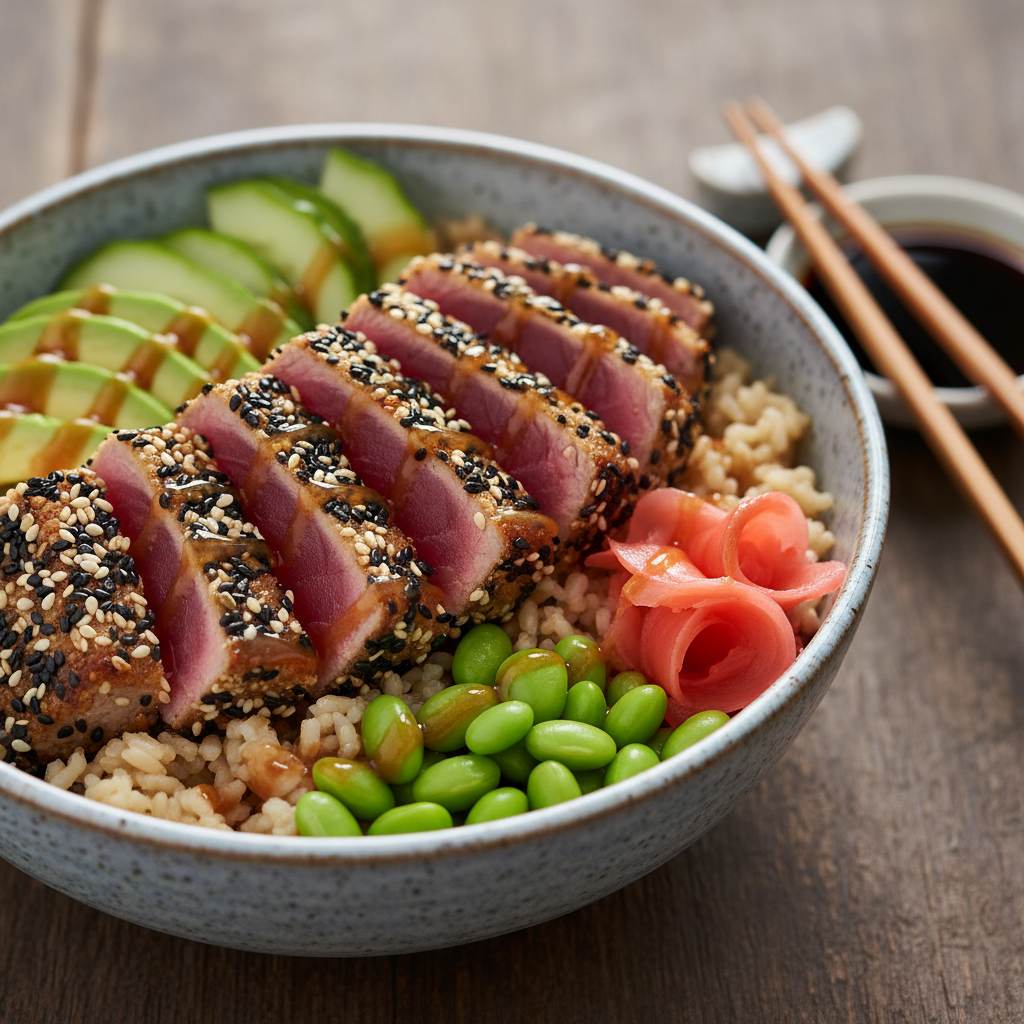
If there is one meal that perfectly bridges the gap between nutritious fuel and pure culinary indulgence, it is the poke bowl. While traditional poke features raw, cubed fish, this Seared Tuna Poke Bowl with Brown Rice introduces a delightful textural contrast that appeals to both sushi aficionados and those who prefer their seafood slightly cooked. Imagine a slice of premium Ahi tuna, encrusted in toasted sesame seeds and seared for mere seconds to create a savory, nutty crust, while the center remains buttery and tender. This recipe takes the concept of the ‘nourish bowl’ to new heights, anchoring the delicate protein with the hearty, earthy flavors of short-grain brown rice.
In the world of food blogging and healthy eating, the ‘bowl’ trend has dominated for years, and for good reason. It allows for endless creativity and customization. This specific rendition focuses on a balance of macronutrients and flavor profiles. We swap the traditional white sushi rice for fiber-rich brown rice, providing a complex carbohydrate base that keeps you full longer. The toppings—creamy avocado, crisp cucumber, sweet edamame, and tangy pickled ginger—create a symphony of textures in every bite. Whether you are looking for a post-workout recovery meal, a light summer dinner, or simply a way to bring restaurant-quality Japanese-Hawaiian fusion into your home kitchen, this seared tuna poke bowl is your answer. It is vibrant, colorful, and bursting with umami, proving that healthy food never has to be boring.
History & Origins
The history of poke (pronounced poh-kay) is deeply rooted in Hawaiian culture and culinary tradition. The word ‘poke’ literally means ‘to slice’ or ‘cut crosswise into pieces’ in Hawaiian. Long before it became a mainland craze or a staple in trendy fast-casual restaurants, poke was a simple, pragmatic snack for ancient Hawaiian fishermen. They would season the cut-offs from their catch—typically reef fish—with sea salt, crushed candlenut (inamona), and seaweed (limu) to sustain themselves while working. It was a dish born of necessity and respect for the ocean’s bounty.
As waves of immigrants from Japan and China arrived in Hawaii in the late 19th and early 20th centuries, the flavor profile of poke began to evolve. The introduction of soy sauce (shoyu) and sesame oil transformed the dish, creating the ‘shoyu poke’ that is arguably the most popular variation today. The dish remained a local staple, found in supermarkets and family gatherings across the islands, often sold by the pound in deli counters.
The specific variation in this recipe—seared tuna—draws inspiration from the Japanese technique known as ‘Tataki.’ In Japanese cuisine, meat or fish is briefly seared over a hot flame or pan, sliced thinly, and served with ginger and soy sauce. This method was likely popularized by samurai Sakamoto Ryoma in the 19th century, inspired by European grilling techniques. By combining the Hawaiian bowl format with the Japanese tataki preparation and the modern American inclination towards whole grains like brown rice, this dish represents a true culinary melting pot. It reflects the global journey of poke from a fisherman’s snack to a worldwide phenomenon that continues to adapt and thrive.
Why This Recipe Works
This Seared Tuna Poke Bowl recipe works exceptionally well because it is built on the fundamental culinary principles of balance and contrast. First, let’s talk about texture. Traditional poke is soft on soft—raw fish on soft rice. By searing the tuna with a coating of black and white sesame seeds, we introduce a crucial crunch and a toasted, nutty aroma that elevates the fish. This ‘Maillard reaction’ on the exterior adds savory depth that raw fish alone cannot provide, while the inside remains cool and melt-in-your-mouth tender.
Secondly, the choice of brown rice is not just a health decision; it is a flavor decision. White sushi rice is delicious but neutral. Brown rice has a natural nuttiness and a chewier texture that stands up well against the bold soy-ginger dressing and the richness of the tuna. It prevents the bowl from becoming a mushy mixture and adds an earthy foundation that grounds the bright, acidic toppings.
Finally, the dressing ties it all together. The marinade uses a ratio of soy sauce for salt, rice vinegar for acid, sesame oil for fat, and a touch of sugar to round it out. This hits all five taste receptors on the tongue. The addition of fresh ginger and garlic cuts through the fattiness of the avocado and the fish, cleansing the palate with every bite. It is a recipe designed to be visually stunning and gastronomically satisfying.
Why You’ll Love This Recipe
- ✓High-Protein & Nutrient Dense: Packed with lean protein and healthy fats.
- ✓Quick Preparation: Ready in under 45 minutes, perfect for weeknights.
- ✓Restaurant Quality: Looks and tastes like a $25 bowl from a high-end spot.
- ✓Customizable: Easily adaptable toppings to suit picky eaters or dietary needs.
- ✓Textural Masterpiece: Crunchy sesame crust meets buttery tuna and fluffy rice.
Equipment You’ll Need
- ✓Rice Cooker or Heavy-Bottomed Pot
- ✓Cast Iron Skillet or Non-Stick Pan
- ✓Sharp Chef’s Knife
- ✓Cutting Board
- ✓Small Mixing Bowl (for sauce)
- ✓Shallow Dish (for sesame seeds)
- ✓Tongs
Ingredients
- ✓1 lb Sushi-Grade Ahi Tuna steaks (about 1.5 inches thick)
- ✓2 tbsp Sesame Oil (divided)
- ✓2 tbsp Black Sesame Seeds
- ✓2 tbsp White Sesame Seeds
- ✓2 cups Short-Grain Brown Rice, cooked
- ✓1/4 cup Soy Sauce (or Tamari for gluten-free)
- ✓1 tbsp Rice Vinegar
- ✓1 tsp Fresh Ginger, grated
- ✓1 clove Garlic, minced
- ✓1 tsp Honey or Brown Sugar
- ✓1 large Avocado, sliced
- ✓1 cup Cucumber, diced
- ✓1 cup Shelled Edamame, steamed
- ✓4 Radishes, thinly sliced
- ✓2 Green Onions, thinly sliced
- ✓Optional: Spicy Mayo, Pickled Ginger, Seaweed Salad
Instructions
- 1. Prepare the Rice: Rinse the brown rice thoroughly under cold water until the water runs clear. Cook according to package instructions or use a rice cooker. Once cooked, fluff with a fork and let it cool slightly to room temperature or warm (not piping hot).
- 2. Make the Dressing: In a small bowl, whisk together the soy sauce, rice vinegar, grated ginger, minced garlic, honey, and 1 tablespoon of sesame oil. Set aside to let the flavors meld.
- 3. Prep the Tuna: Pat the tuna steaks dry with paper towels. This is crucial for a good sear. In a shallow dish, mix the black and white sesame seeds. Brush the tuna steaks lightly with a small amount of soy sauce or oil, then press them firmly into the sesame seeds, coating all sides evenly.
- 4. Sear the Tuna: Heat the remaining 1 tablespoon of sesame oil in a cast-iron skillet over high heat until it is shimmering and just starting to smoke. Carefully place the tuna steaks in the pan. Sear for exactly 45-60 seconds per side. You only want to toast the seeds and cook the outer 1-2mm of the fish; the center should remain raw. Don’t forget to quickly sear the edges using tongs.
- 5. Rest and Slice: Remove the tuna from the pan immediately and transfer to a cutting board. Let it rest for 5 minutes. Using a very sharp knife, slice the tuna against the grain into 1/4-inch thick slices.
- 6. Assemble the Bowls: Divide the warm brown rice among four bowls. Arrange the sliced tuna, avocado, cucumber, edamame, and radish slices artistically over the rice.
- 7. Garnish and Serve: Drizzle the prepared dressing over the fish and vegetables. Top with green onions and optional garnishes like spicy mayo or pickled ginger. Serve immediately.
Expert Cooking Tips
- ✓Buy the Right Fish: Always ask your fishmonger for ‘sushi-grade’ or ‘sashimi-grade’ tuna. This ensures it has been frozen at low temperatures to kill parasites, making it safe to eat rare.
- ✓Dry the Fish: Moisture is the enemy of a good sear. Use paper towels to get the surface of the tuna very dry before coating in seeds.
- ✓High Heat is Key: Your pan needs to be screaming hot. If it’s not hot enough, the fish will cook through before the seeds toast, resulting in grey, overcooked tuna.
- ✓Sharp Knife: To get clean slices of seared tuna without tearing the flesh, use the sharpest knife you own and use long, drawing motions rather than sawing.
- ✓Rice Temperature: Poke is traditionally served with rice that is warm (body temperature), not piping hot. Piping hot rice can cook the fish from the bottom up.
Substitutions and Variations
This recipe is highly versatile and can be adapted to suit various dietary needs and pantry limitations. If you cannot find **Ahi Tuna**, high-quality **Salmon** is a fantastic alternative that offers a richer, fattier flavor profile. For a **vegetarian or vegan** option, use extra-firm tofu; press the water out, cube it, and sear it just like the fish, or use marinated watermelon for a fruit-based alternative. If **brown rice** isn’t your favorite, you can substitute it with sushi rice, black rice, quinoa for extra protein, or even a salad mix/zucchini noodles for a low-carb keto version. For the dressing, **Tamari** or **Coconut Aminos** can directly replace soy sauce to make the dish **Gluten-Free** or soy-free. If you don’t have edamame, snap peas or blanched asparagus provide a similar green crunch.
Common Mistakes to Avoid
The most common mistake when making seared tuna is **overcooking the fish**. It happens in seconds. Keep your eye on the clock and the color of the fish on the side; as soon as the sear is achieved, get it out of the pan. Another mistake is **overcrowding the pan**. If you are cooking for more than four people, sear the tuna in batches to ensure the pan temperature stays high. Regarding the rice, a common error is **using wet, mushy rice**. Ensure you rinse your rice to remove excess starch and use the correct water ratio so the grains remain distinct. Finally, **cutting the veggies too large** can make the bowl difficult to eat. Aim for bite-sized pieces that can easily be picked up with chopsticks or a fork along with some rice.
Serving Suggestions
Serve this Seared Tuna Poke Bowl immediately after assembling to maintain the temperature contrast between the warm rice and the cool fish. It pairs beautifully with a side of hot **Miso Soup** to start the meal. For beverages, a chilled glass of dry **Riesling**, a crisp **Japanese Lager**, or a hot cup of **Green Tea** (Genmaicha is excellent with the brown rice) complements the flavors perfectly. If you are hosting a dinner party, set up a ‘DIY Poke Bar’ where guests can choose their own toppings from small bowls.
Storage and Reheating Tips
Seared tuna is best enjoyed fresh. However, if you have leftovers, store the components separately in airtight containers in the refrigerator. The **seared tuna** should be consumed within 24 hours; the texture will change slightly as it sits, but it is still safe to eat. **Brown rice** can be stored for up to 3 days; reheat it with a splash of water in the microwave before eating. **Avocado** should be cut fresh to avoid browning, though storing it with a cut onion can help delay oxidation. Do not freeze the cooked fish or the assembled bowl, as the textures will be ruined upon thawing.
Nutrition Facts (Estimated)
| Serving Size | 1 Bowl |
| Calories | 520 |
| Fat | 18g |
| Saturated Fat | 3g |
| Unsaturated Fat | 14g |
| Trans Fat | 0g |
| Cholesterol | 45mg |
| Sodium | 850mg |
| Carbohydrates | 55g |
| Fiber | 8g |
| Sugar | 6g |
| Protein | 38g |
Frequently Asked Questions
Do I really need sushi-grade tuna if I am searing it?
Yes, absolutely. Because the center of the fish remains raw, you must use sushi-grade fish to ensure it is safe to eat. Searing only kills bacteria on the surface, not parasites inside.
Can I make this recipe completely raw without searing?
Yes! If you prefer traditional poke, simply skip the searing step. Cube the raw tuna, toss it in the marinade, and serve it over the rice.
What is the difference between Ahi and Yellowfin tuna?
Ahi is actually the Hawaiian name that refers to two species: Yellowfin tuna and Bigeye tuna. Yellowfin is widely available and has a milder flavor, while Bigeye has a higher fat content. Both work great for this recipe.
Can I meal prep this poke bowl?
You can prep the ingredients, but don’t assemble it until you are ready to eat. Cook the rice, chop the veggies, and make the sauce ahead of time (up to 2 days). Sear the fish just before serving for the best quality.
Is this recipe gluten-free?
It can easily be made gluten-free by using Tamari or Coconut Aminos instead of traditional soy sauce, which usually contains wheat.
How do I know when the tuna is done?
Visual cues are best. Look at the side of the steak; you should see a thin layer of white (cooked) flesh about 1/8th inch deep, while the rest remains bright red/pink. It takes about 45-60 seconds per side on high heat.
Can I use frozen tuna steaks?
Yes, frozen tuna is often safer as it has been flash-frozen. Thaw it slowly in the refrigerator overnight. Do not thaw in the microwave or warm water.
What can I use instead of sesame seeds?
If you have a sesame allergy or just don’t like them, you can use crushed macadamia nuts for a Hawaiian twist, or simply sear the tuna with a cracked black pepper crust.
Conclusion
This Seared Tuna Poke Bowl with Brown Rice is more than just a meal; it’s a celebration of fresh ingredients and bold flavors. It proves that healthy eating doesn’t require sacrificing taste or satisfaction. By mastering the simple art of searing tuna and assembling a balanced bowl, you bring a touch of gourmet elegance to your everyday dining. Whether you are a seasoned home cook or a kitchen novice, this recipe is forgiving, fun, and undeniably delicious. Gather your ingredients, sharpen your knife, and get ready to impress yourself with a bowl that looks as good as it tastes.