Ultimate Sesame Ginger Salmon Bowl With Nutty Brown Rice
Sesame Ginger Salmon Bowl With Brown Rice Recipe
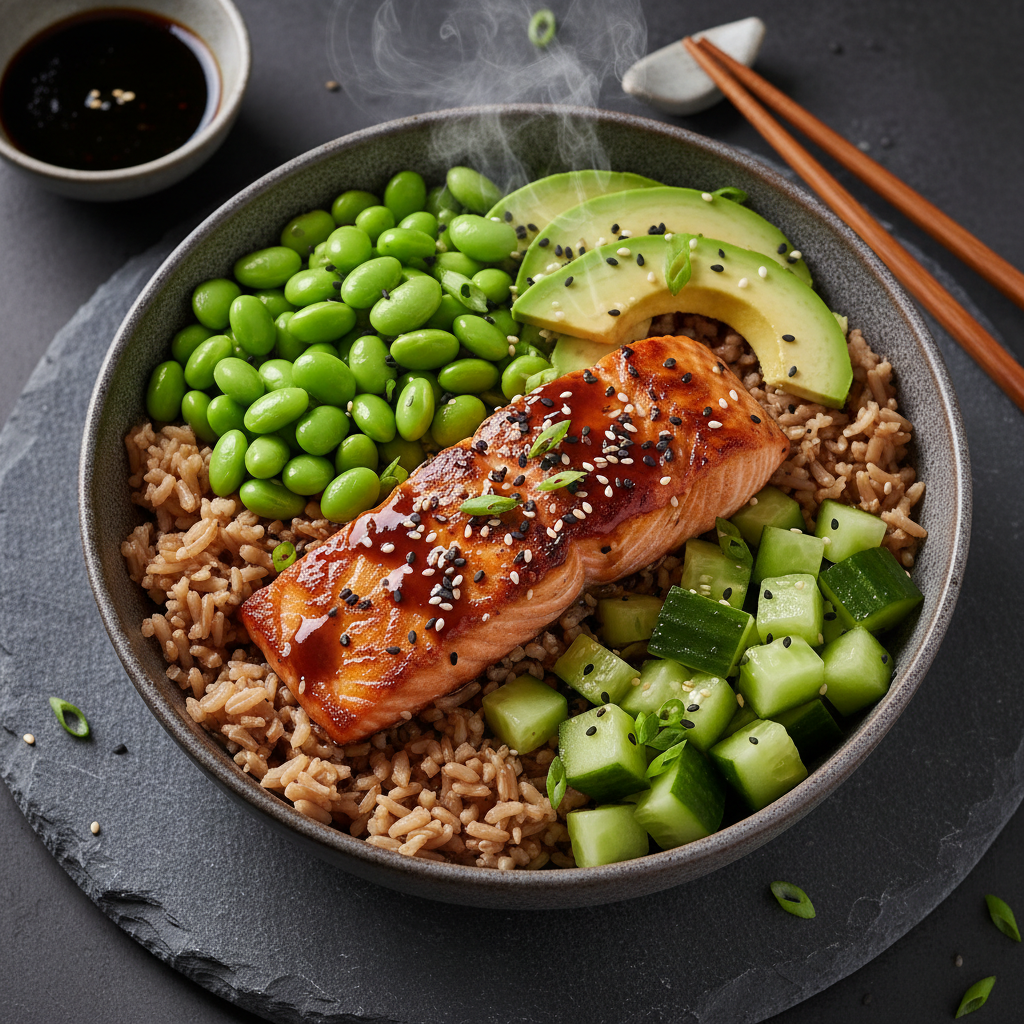
This vibrant Sesame Ginger Salmon Bowl is the perfect balance of sweet, savory, and nutty flavors. Featuring perfectly seared salmon, fluffy brown rice, and a rainbow of fresh vegetables, it is a healthy, protein-packed dinner ready in under 45 minutes.
15 minutes
30 minutes
45 minutes
4 servings
Main Course
Stovetop
Asian Fusion
Pescatarian
In the world of weeknight dinners, finding the sweet spot between nutritious, delicious, and quick can often feel like an impossible task. Enter the Sesame Ginger Salmon Bowl with Brown Rice—a recipe that ticks every single box and looks beautiful doing it. This dish is a celebration of textures and temperatures, combining the warmth of pan-seared, flaky salmon with the cool crunch of fresh cucumbers, creamy avocado, and the hearty chew of nutty brown rice. The star of the show, however, is the homemade sesame ginger glaze. It is sticky, savory, slightly sweet, and packed with umami, coating the salmon in a layer of flavor that transforms a simple piece of fish into a restaurant-quality meal. Unlike heavy, cream-based sauces, this marinade relies on the brightness of fresh ginger and the depth of toasted sesame oil to provide richness without the guilt. Whether you are a meal-prep enthusiast looking for lunch options that hold up in the fridge or a busy parent seeking a wholesome dinner that comes together in one skillet and a pot, this bowl is designed to satisfy. We chose brown rice for this recipe not just for its health benefits, but because its robust texture stands up perfectly to the bold sauce, ensuring every bite is substantial and satisfying. Get ready to elevate your bowl game with a recipe that proves healthy eating never has to be boring.
History & Origins
The concept of the ‘grain bowl’—a composed meal featuring a base of grains topped with protein, vegetables, and sauce—has roots that span across various cultures and histories, though its modern iteration is a relatively recent phenomenon in Western dining. Historically, this style of eating draws heavy inspiration from the ‘Buddha Bowl,’ a term that originated from the principles of Zen Buddhism and macrobiotic diets, emphasizing balance, moderation, and the consumption of whole, plant-based foods served in a single bowl. In Asian cuisine, particularly Japanese ‘Donburi’ and Korean ‘Bibimbap,’ the idea of serving meat and vegetables over rice is a centuries-old tradition. The specific flavor profile of this Sesame Ginger Salmon Bowl pays homage to the classic Japanese pairing of soy sauce (shoyu), ginger (shoga), and sesame (goma). These ingredients have been cornerstones of Japanese culinary history for over a thousand years, valued for their ability to preserve food and enhance natural flavors. The introduction of salmon to this flavor profile is actually a more modern adaptation, popularized globally in the late 20th century as salmon became more accessible and the demand for heart-healthy omega-3 fatty acids grew. In the United States, the rise of ‘bowl culture’ in the 2010s, driven by health-conscious fast-casual chains, cemented dishes like this as a staple of the modern American diet, bridging the gap between traditional Asian flavors and contemporary nutritional science.
Why This Recipe Works
This recipe succeeds because it is built on the fundamental culinary principle of balancing the five tastes: salty, sweet, sour, bitter, and umami. The marinade is the workhorse here; the soy sauce provides the salty umami base, honey adds necessary sweetness to aid in caramelization, rice vinegar cuts through the richness of the fish with acidity, and fresh ginger adds a spicy, aromatic kick. When the salmon hits the hot pan, the sugars in the honey and the proteins in the soy sauce undergo the Maillard reaction, creating a deeply flavorful, caramelized crust that seals in the moisture of the fish. Furthermore, the choice of brown rice over white rice is strategic. Brown rice retains its bran and germ, giving it a nutty flavor and a firmer texture that doesn’t turn to mush when mixed with the sauce and vegetables. The contrast of temperatures is another reason this dish is so palatable; the hot, savory salmon and rice against the cold, crisp cucumber and creamy avocado excites the palate, making each bite interesting. Finally, the fat content in the salmon and avocado ensures that the meal is satiating, keeping you full longer than a carb-heavy pasta dish would.
Why You’ll Love This Recipe
- ✓High in Protein and Omega-3 Fatty Acids
- ✓Ready in under 45 minutes
- ✓Gluten-Free adaptable
- ✓Perfect for meal prepping
- ✓Restaurant-quality sauce made from pantry staples
- ✓Versatile vegetable toppings
Equipment You’ll Need
- ✓Large skillet or non-stick pan
- ✓Medium saucepan or rice cooker
- ✓Small mixing bowl
- ✓Whisk
- ✓Chef’s knife
- ✓Cutting board
- ✓Measuring cups and spoons
Ingredients
- ✓4 salmon fillets (approx. 6oz each), skin on or off
- ✓2 cups uncooked brown rice
- ✓1/3 cup low-sodium soy sauce (or Tamari)
- ✓2 tablespoons honey or maple syrup
- ✓1 tablespoon toasted sesame oil
- ✓1 tablespoon rice vinegar
- ✓2 cloves garlic, minced
- ✓1 tablespoon fresh ginger, grated
- ✓1 cup shelled edamame, steamed
- ✓1 large avocado, sliced
- ✓1 cup cucumber, diced
- ✓2 green onions, thinly sliced
- ✓1 tablespoon sesame seeds (white or black)
- ✓1 tablespoon olive oil (for searing)
Instructions
- Rinse the brown rice thoroughly under cold water until the water runs clear. Cook according to package instructions or use a rice cooker. Once cooked, fluff with a fork and set aside covered to keep warm.
- While the rice is cooking, prepare the sauce. In a small bowl, whisk together the soy sauce, honey, toasted sesame oil, rice vinegar, minced garlic, and grated ginger until the honey is fully dissolved.
- Pat the salmon fillets dry with paper towels. This is crucial for getting a good sear. Season the salmon lightly with a pinch of salt and black pepper.
- Place the salmon in a shallow dish or ziplock bag and pour half of the sauce over the fish. Let it marinate for 15 minutes at room temperature. Reserve the other half of the sauce for serving.
- Heat the olive oil in a large skillet over medium-high heat. Once the oil is shimmering, carefully place the salmon fillets in the pan, flesh-side down (if skin-on, start flesh side; if skinless, just lay them flat).
- Sear the salmon for 3-4 minutes without moving it, allowing a golden crust to form. Flip the fillets and cook for another 2-4 minutes, or until the salmon is opaque and flakes easily with a fork. If using skin-on salmon, crisp the skin side last.
- While the salmon rests for a moment, assemble the bowls. Divide the warm brown rice among four bowls.
- Top the rice with a salmon fillet, a scoop of steamed edamame, sliced avocado, and diced cucumber.
- Drizzle the reserved sauce over the salmon and vegetables.
- Garnish generously with sliced green onions and sesame seeds before serving immediately.
Expert Cooking Tips
- ✓Dry the salmon thoroughly before marinating to ensure the sauce adheres and the fish sears rather than steams.
- ✓Don’t marinate the salmon for more than 30 minutes, as the acid in the vinegar can start to break down the texture of the fish.
- ✓Use fresh ginger and garlic instead of powdered versions for a significantly punchier flavor profile.
- ✓If using skin-on salmon, sear the skin side last to keep it crispy when serving.
- ✓Toast your sesame seeds in a dry pan for 60 seconds before garnishing to release their aromatic oils.
- ✓Let the salmon rest for 2-3 minutes after cooking to allow the juices to redistribute.
- ✓For perfectly fluffy brown rice, let it sit covered off the heat for 10 minutes after cooking before fluffing.
Substitutions and Variations
This recipe is incredibly flexible and can be adapted to suit various dietary needs and pantry limitations. For a Gluten-Free version, simply swap the soy sauce for Tamari or coconut aminos; the flavor profile will remain largely unchanged. If you are looking to reduce carbohydrates, cauliflower rice or a mix of salad greens makes an excellent base instead of brown rice. For those who do not eat fish, firm tofu pressed and cubed, or chicken thighs work wonderfully with this marinade; just adjust the cooking time to ensure the protein is cooked through. If honey is not available or you prefer a vegan sweetener, maple syrup or agave nectar are perfect 1:1 substitutions. You can also swap the vegetables based on seasonality; roasted sweet potatoes, blanched broccoli, shredded carrots, or radishes add great texture and nutrition. If you don’t have rice vinegar, apple cider vinegar or lime juice can provide the necessary acidity.
Common Mistakes to Avoid
The most common mistake with this dish is overcrowding the pan when searing the salmon. If the fillets are too close together, they will steam instead of sear, resulting in a soggy exterior rather than a delicious caramelized crust. Another pitfall is overcooking the salmon. Salmon continues to cook slightly after being removed from the heat, so pull it off when it is just barely opaque in the center to avoid dry, chalky fish. Regarding the rice, failing to rinse brown rice before cooking can lead to a gummy texture due to excess starch. Additionally, burning the garlic and ginger is a risk when searing; since there is sugar (honey) in the marinade, it burns quickly. Keep the heat at medium-high, not maximum, and watch it closely. Lastly, do not pour the marinade that the raw fish sat in over the cooked dish without boiling it first; this recipe instructs you to reserve half the sauce separately for safety and freshness.
Serving Suggestions
These bowls are a complete meal on their own, but they can be elevated with a few condiments and sides. A drizzle of spicy Sriracha mayo or a dollop of chili garlic paste adds a wonderful heat that contrasts with the sweet glaze. A side of miso soup is a classic pairing that warms the palate. For beverages, a hot cup of green tea or a cold glass of crisp white wine, such as a Sauvignon Blanc or Pinot Grigio, pairs beautifully with the fatty salmon. You can also serve this with a side of pickled ginger or kimchi to introduce a fermented, tangy element that cuts through the richness.
Storage and Reheating Tips
To store leftovers, it is best to keep the ingredients separate if possible. Store the salmon and rice in one airtight container and the fresh vegetables (cucumber, avocado) in another to prevent the warm ingredients from wilting the cool ones. The avocado should be tossed in a little lime juice to prevent browning. The cooked salmon and rice will last for up to 3 days in the refrigerator. To reheat, sprinkle a little water over the rice and salmon and microwave gently in 30-second intervals, or reheat in a skillet over low heat. Do not overheat the salmon as it will dry out. The fresh vegetables should be added cold after reheating the main components. This dish is excellent for meal prep; simply assemble the bowls in glass containers but leave the avocado and sauce on the side until ready to eat.
Nutrition Facts (Estimated)
| Serving Size | 1 bowl |
| Calories | 580 |
| Fat | 24g |
| Saturated Fat | 4g |
| Unsaturated Fat | 18g |
| Trans Fat | 0g |
| Cholesterol | 70mg |
| Sodium | 780mg |
| Carbohydrates | 52g |
| Fiber | 8g |
| Sugar | 12g |
| Protein | 38g |
Frequently Asked Questions
Can I use frozen salmon for this recipe?
Yes, absolutely. Ensure the salmon is completely thawed in the refrigerator overnight and patted very dry before marinating to prevent excess water from diluting the sauce.
Is this recipe spicy?
It has a very mild warmth from the fresh ginger, but it is not spicy. If you prefer heat, add red pepper flakes or Sriracha to the sauce.
Can I use white rice instead of brown?
Yes, Jasmine or Basmati rice works well. Just remember that white rice cooks much faster than brown rice and has a softer texture.
How do I know when the salmon is done?
The salmon should flake easily with a fork and be opaque pink. The internal temperature should reach 145°F (63°C) at the thickest part.
Can I bake the salmon instead of pan-searing?
Yes. Bake at 400°F (200°C) for 12-15 minutes. It won’t have the same crispy crust, but it will be tender and delicious.
What can I use if I don’t have fresh ginger?
You can use 1/4 teaspoon of ground ginger powder for every tablespoon of fresh ginger, but fresh is highly recommended for the best flavor.
Is the sodium content high in this dish?
Soy sauce is high in sodium. To reduce this, use low-sodium soy sauce or coconut aminos, and do not add extra salt to the fish.
Can I make the sauce ahead of time?
Yes, the sauce can be whisked together and stored in a jar in the fridge for up to one week.
How do I keep the avocado from turning brown for meal prep?
If meal prepping, it is best to cut the avocado fresh each day. If you must cut it ahead, toss it generously in lime or lemon juice.
Conclusion
The Sesame Ginger Salmon Bowl with Brown Rice is more than just a recipe; it’s a solution for busy evenings when you refuse to compromise on health or flavor. It brings the sophistication of Asian-fusion dining right into your home kitchen with minimal effort and maximum reward. By combining heart-healthy fats, complex carbohydrates, and lean protein, you are fueling your body with high-quality ingredients that taste indulgent. We hope this recipe becomes a staple in your weekly rotation, proving that wholesome food can be exciting, colorful, and deeply satisfying. Don’t forget to share your creations on Pinterest and tag us so we can see your beautiful bowls!