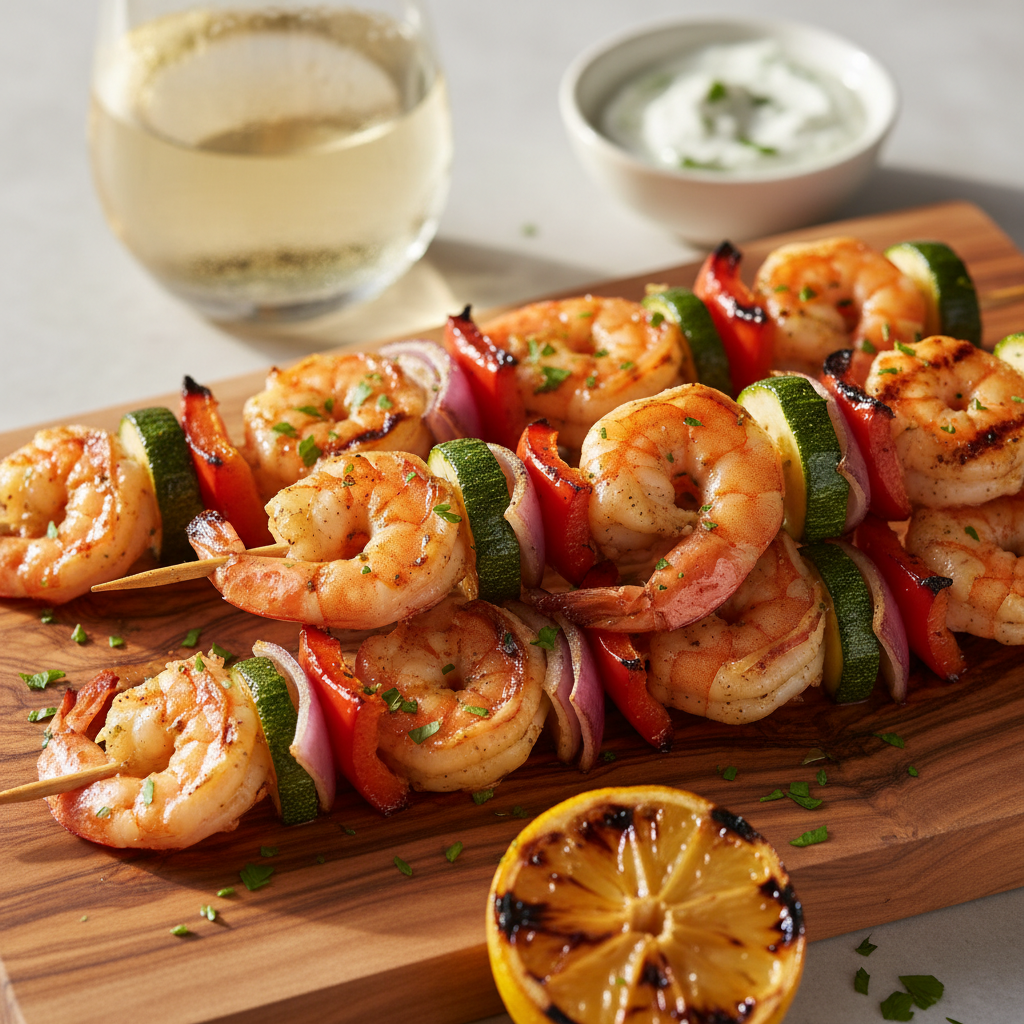
Fire-Kissed Lemon Garlic Shrimp and Vegetable Kebabs
Shrimp And Vegetable Kebab Grill Healthy Recipe
These vibrant Lemon Garlic Shrimp and Vegetable Kebabs are the ultimate quick and healthy weeknight dinner. Packed with protein and bursting with fresh summer flavors, they come together in under 30 minutes for a perfect low-carb meal.
20 minutes
10 minutes
30 minutes
4 servings
Main Course
Grilling
Mediterranean-American
Gluten-Free
There is something undeniably magical about the ritual of grilling. The way the flames lick the food, imparting a smoky, charred essence that you simply cannot replicate on a stovetop, transforms humble ingredients into a feast for the senses. This recipe for Lemon Garlic Shrimp and Vegetable Kebabs is a celebration of that magic, designed specifically for those who crave big, bold flavors without the heavy calorie count. Whether you are a seasoned pitmaster or a novice firing up the grill for the first time this season, these skewers are approachable, forgiving, and spectacularly delicious.
At the heart of this dish is the marinade—a zesty, herbaceous concoction of fresh lemon juice, minced garlic, oregano, and high-quality olive oil. It does double duty here: tenderizing the shrimp while coating the vegetables in a glossy, flavorful sheen that caramelizes beautifully over high heat. We aren’t just talking about a simple dinner; we are talking about a sensory experience. The snap of the fresh bell peppers, the sweetness of the red onion as it softens, and the juicy, succulent bite of perfectly cooked shrimp create a textural symphony that keeps you coming back for more.
Furthermore, this recipe is a nutritional powerhouse. In a world where ‘healthy’ often gets synonymous with ‘bland,’ these kebabs stand as a defiant counterargument. They are naturally gluten-free, dairy-free, and low-carb, making them an ideal choice for anyone following a Keto, Paleo, or Mediterranean diet. But forget the diet labels for a moment; the real draw here is the taste. It is fresh, vibrant, and undeniably summery, evoking memories of seaside vacations and warm evenings spent on the patio with friends. So, grab your skewers and let’s get grilling!
History & Origins
The concept of cooking meat on skewers over an open fire is as old as the discovery of fire itself, predating modern cookware by millennia. The word ‘kebab’ (or kabob) finds its etymological roots in the Middle East, specifically derived from the Arabic word ‘kabāb,’ which means roasted meat. Historically, medieval Turkish soldiers were known to use their swords to grill chunks of meat over open-field fires during their campaigns. This practical method of cooking eventually evolved into a culinary art form that spread across the Ottoman Empire, influencing cuisines from Greece (souvlaki) to India (seekh kebab) and beyond.
While traditional kebabs were primarily focused on lamb or mutton, the evolution of the dish into the ‘shish kebab’ we recognize in the West—chunks of marinated meat alternated with vegetables—is a relatively modern adaptation that gained massive popularity in the United States during the mid-20th century. The inclusion of seafood, particularly shrimp, is a coastal variation that marries the ancient technique of skewering with the bounty of the sea.
Shrimp kebabs specifically gained traction in American backyard barbecue culture in the 1970s and 80s, as grilling became a suburban pastime and global trade made shrimp more accessible to inland home cooks. The combination of Mediterranean flavors—lemon, garlic, and olive oil—with the American love for grilling created a fusion dish that respects the ancient history of the kebab while embracing modern preferences for lighter, faster-cooking proteins. Today, the shrimp and vegetable kebab is a staple of healthy outdoor cooking, representing a culinary journey that spans from ancient battlefields to modern patio dining.
Why This Recipe Works
This recipe succeeds where many other kebab recipes fail due to a precise balance of marinade chemistry and ingredient preparation. One of the most common pitfalls in grilling kebabs is uneven cooking—shrimp cook incredibly fast, while chunks of raw onion or pepper can remain crunchy and raw. To solve this, we cut the vegetables into specific, bite-sized dimensions that are slightly smaller than the shrimp. This ensures that by the time the shrimp turns that perfect opaque pink with a slight char, the vegetables are crisp-tender rather than burnt or raw.
Secondly, the marinade is formulated with the perfect ratio of acid (lemon juice) to fat (olive oil). Shrimp is delicate; leave it in a highly acidic marinade for too long, and the acid will ‘cook’ it (like ceviche), resulting in a rubbery texture once grilled. This recipe utilizes a quick 15-minute marinate time, which is the sweet spot. It allows the garlic and oregano to penetrate the surface without compromising the structural integrity of the protein.
Finally, the high-heat grilling method locks in moisture. By searing the outside quickly, we create a flavor-packed crust (the Maillard reaction) while keeping the inside of the shrimp juicy. The interplay of textures—the crunch of the pepper, the softness of the zucchini, and the snap of the shrimp—creates a satisfying mouthfeel that makes this healthy dish feel indulgent.
Why You’ll Love This Recipe
- ✓Ready in under 30 minutes including prep time
- ✓High protein and low carbohydrate content
- ✓Bursting with fresh Mediterranean flavors
- ✓Perfect for meal prep and leftovers
- ✓Highly customizable with different seasonal vegetables
- ✓Keto, Paleo, and Whole30 compliant
Equipment You’ll Need
- ✓Outdoor Grill or Indoor Grill Pan
- ✓Bamboo or Metal Skewers
- ✓Small Mixing Bowl
- ✓Whisk
- ✓Chef’s Knife
- ✓Cutting Board
- ✓Pastry Brush
- ✓Tongs
Ingredients
- ✓1.5 lbs Large Shrimp (21-25 count), peeled and deveined, tails left on or off
- ✓2 medium Zucchinis, sliced into half-moons
- ✓1 large Red Bell Pepper, cut into 1-inch chunks
- ✓1 large Red Onion, cut into 1-inch chunks
- ✓1/4 cup Extra Virgin Olive Oil
- ✓3 cloves Garlic, minced
- ✓1 Lemon, juiced and zested
- ✓1 tsp Dried Oregano
- ✓1/2 tsp Smoked Paprika
- ✓1/2 tsp Sea Salt
- ✓1/4 tsp Black Pepper
- ✓Fresh Parsley, chopped (for garnish)
Instructions
- If using bamboo skewers, submerge them in water and soak for at least 30 minutes to prevent burning on the grill.
- In a small mixing bowl, whisk together the olive oil, lemon juice, lemon zest, minced garlic, dried oregano, smoked paprika, salt, and black pepper to create the marinade.
- Place the peeled and deveined shrimp in a large bowl. Pour half of the marinade over the shrimp and toss gently to coat. Let sit for 15 minutes (do not exceed 30 minutes or the acid will toughen the shrimp). Reserve the remaining marinade for basting.
- While the shrimp marinates, wash and chop the zucchini, red bell pepper, and red onion into uniform 1-inch pieces.
- Preheat your outdoor grill to medium-high heat (approx 400°F) or heat a large grill pan over medium-high heat on the stove. Oil the grates lightly.
- Thread the ingredients onto the skewers, alternating between shrimp, zucchini, red onion, and bell pepper. Aim for about 4-5 shrimp per skewer, ensuring ingredients are touching but not packed too tightly.
- Place the skewers on the hot grill. Cook for 2-3 minutes per side. The shrimp should turn pink and opaque, and the vegetables should have nice char marks.
- During the last minute of cooking, brush the skewers with the reserved marinade for an extra flavor boost.
- Remove from the grill immediately to prevent overcooking. Garnish with fresh chopped parsley and serve hot.
Expert Cooking Tips
- ✓Soak wooden skewers for at least 30 minutes to prevent them from catching fire.
- ✓Don’t overcrowd the skewers; leaving a tiny bit of space helps heat circulate for even cooking.
- ✓Use large or jumbo shrimp so they don’t dry out before the vegetables are tender.
- ✓Oil your grill grates right before adding the food to prevent sticking.
- ✓Keep the tail shell on the shrimp for better presentation, or remove it for easier eating.
- ✓If using an indoor grill pan, you may need to cook in batches to avoid steaming the food.
Substitutions and Variations
This recipe is incredibly versatile and welcomes substitutions based on dietary needs or pantry availability. If you aren’t a fan of shrimp, cubed chicken breast or sirloin steak chunks work beautifully, though you will need to increase the marinating time to at least an hour and the cooking time to ensure the meat is done. For a vegetarian or vegan version, swap the shrimp for cubes of extra-firm tofu or whole cremini mushrooms. Regarding the vegetables, yellow squash is a perfect swap for zucchini. You can also use cherry tomatoes, yellow bell peppers, or even pineapple chunks for a sweet and savory twist. If you don’t have smoked paprika, standard sweet paprika or a pinch of cayenne for heat works well. Lime juice can replace lemon juice for a more tropical flavor profile.
Common Mistakes to Avoid
The most common mistake with shrimp kebabs is overcooking the protein. Shrimp goes from perfectly tender to rubbery and tough in a matter of seconds. Watch the color closely; as soon as the shrimp turns pink and opaque, it is done. Another mistake is cutting the vegetables too large. If your onion chunks are huge, they will still be raw when the shrimp is ready. Ensure your veggie cuts are similar in size to the shrimp. Additionally, forgetting to soak bamboo skewers is a classic error that leads to burnt sticks and lost food falling into the coals. Lastly, do not marinate the shrimp overnight. The acid in the lemon juice breaks down the delicate meat, resulting in a mushy texture.
Serving Suggestions
These kebabs are a complete meal on their own, but they pair wonderfully with a variety of sides. For a light, low-carb dinner, serve them over a bed of cauliflower rice or a crisp Greek salad with feta and olives. If you aren’t watching carbs, they are fantastic alongside fluffy jasmine rice, lemon herb couscous, or warm pita bread with a side of tzatziki sauce for dipping. A chilled glass of Sauvignon Blanc or a sparkling lemon water makes for the perfect beverage pairing to cut through the smoky flavors.
Storage and Reheating Tips
Leftover shrimp and vegetable kebabs are best stored in an airtight container in the refrigerator for up to 3 days. Remove the ingredients from the skewers before storing to save space and make reheating easier. To reheat, avoid the microwave if possible, as it tends to make shrimp rubbery. Instead, reheat them gently in a skillet over medium heat with a splash of water or olive oil just until warmed through. They are also delicious served cold over a salad for lunch the next day. We do not recommend freezing cooked shrimp kebabs, as the texture of the vegetables will become mushy upon thawing.
Nutrition Facts (Estimated)
| Serving Size | 2 skewers |
| Calories | 285 |
| Fat | 14g |
| Saturated Fat | 2g |
| Unsaturated Fat | 11g |
| Trans Fat | 0g |
| Cholesterol | 220mg |
| Sodium | 420mg |
| Carbohydrates | 8g |
| Fiber | 3g |
| Sugar | 4g |
| Protein | 32g |
Frequently Asked Questions
Can I use frozen shrimp for this recipe?
Yes, absolutely. Just ensure the shrimp are completely thawed and patted dry with paper towels before marinating. Excess water will dilute the marinade and prevent a good sear.
Do I have to use skewers?
No. You can easily make this as a ‘grill basket’ meal. Toss all the marinated ingredients into a grill basket and cook over the fire, tossing occasionally, or simply sauté them in a large skillet on the stove.
How do I know when the shrimp is done?
Shrimp is done when it turns from translucent gray to opaque pink and forms a ‘C’ shape. If it curls tightly into an ‘O’ shape, it is likely overcooked.
Can I prepare these ahead of time?
You can chop the vegetables and thread the skewers (without shrimp) hours in advance. However, do not add the shrimp to the acidic marinade until 15-20 minutes before cooking.
What is the best size shrimp to use?
We recommend ‘Large’ (21-25 count per pound) or ‘Extra Large’ (16-20 count). Smaller shrimp will cook too fast and dry out before the vegetables have a chance to soften.
Is this recipe spicy?
Not at all. The smoked paprika adds a depth of flavor and color without heat. If you want spice, add a pinch of red pepper flakes or cayenne to the marinade.
Can I cook this in the oven?
Yes. Preheat your oven to 400°F (200°C). Place skewers on a baking sheet lined with parchment paper and roast for 8-10 minutes, flipping halfway through.
Why did my bamboo skewers burn?
This happens if they aren’t soaked long enough. Submerge them fully in water for at least 30 minutes before grilling. Alternatively, wrap the exposed ends in foil.
Conclusion
These Lemon Garlic Shrimp and Vegetable Kebabs are proof that healthy eating doesn’t have to be complicated or boring. With just a handful of fresh ingredients and a hot grill, you can create a restaurant-quality meal right in your own backyard. The combination of smoky char, zesty lemon, and savory garlic is a crowd-pleaser that never fails to impress. Whether you are hosting a summer BBQ or just looking for a quick Tuesday night dinner, this recipe deserves a spot in your regular rotation. Give it a try, and watch how quickly these colorful skewers disappear from the plate!