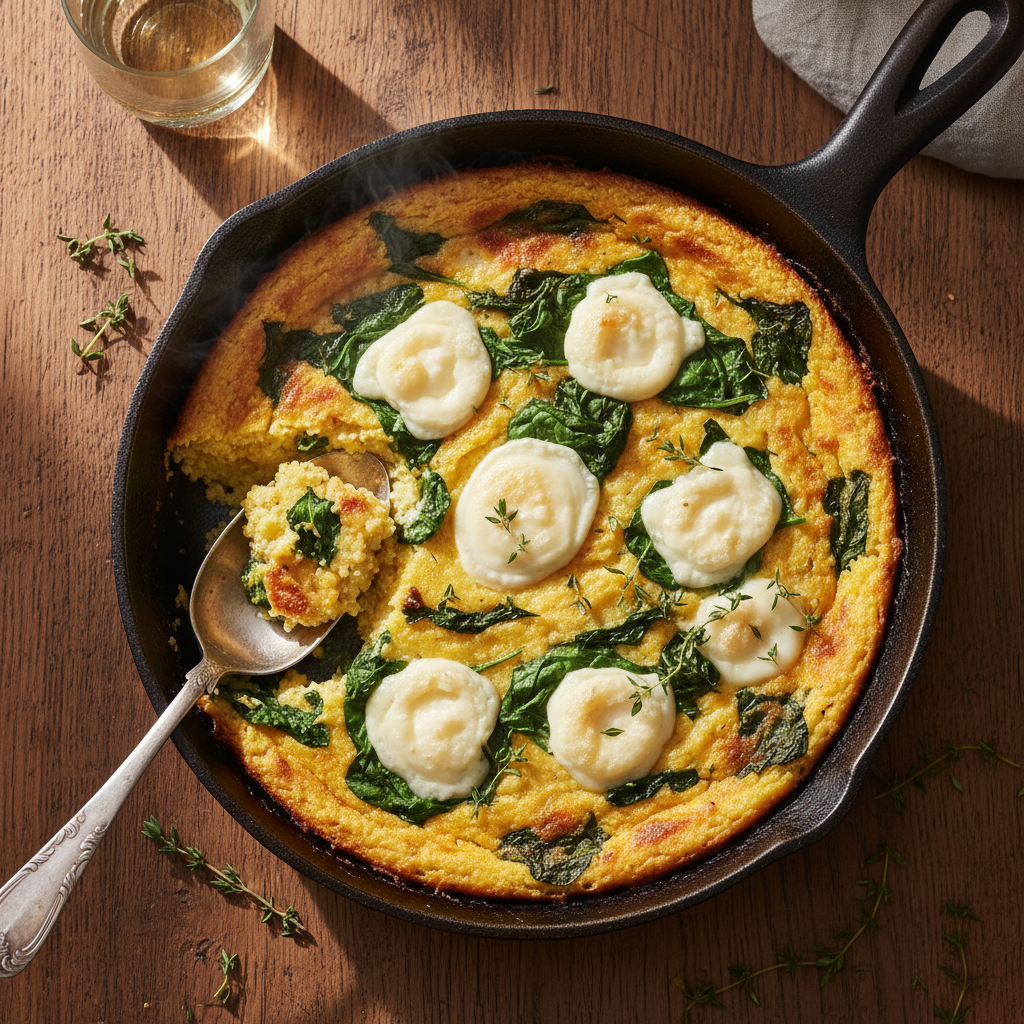
Rustic Spinach and Goat Cheese Polenta Bake
Spinach And Goat Cheese Polenta Bake Recipe
This creamy, comforting Spinach and Goat Cheese Polenta Bake is the ultimate vegetarian dinner or elegant side dish. Featuring velvety stone-ground cornmeal, earthy sautéed spinach, and pockets of tangy melted chevre, it’s a gluten-free masterpiece that comes together with surprisingly little effort.
20 minutes
40 minutes
1 hour
6 servings
Main Course / Side Dish
Stovetop and Oven Bake
Italian-American
Gluten-Free
There is something profoundly grounding about a well-made polenta dish. While pasta often takes the spotlight in Italian cuisine, polenta is the unsung hero of the north—a dish that warms the soul and fills the kitchen with the sweet, nutty aroma of toasted corn. This Spinach and Goat Cheese Polenta Bake is a celebration of textures and contrasting flavors. We start with a base of creamy, slow-cooked polenta, enriched with butter and parmesan to create a velvety canvas. Into this golden porridge, we fold vibrant, garlic-sautéed spinach which provides an earthy counterpoint to the sweetness of the corn.
But the real magic happens when the goat cheese enters the equation. Unlike mozzarella, which stretches, or cheddar, which becomes oily, fresh chèvre softens into luxurious, tangy pockets of creaminess that cut through the richness of the cornmeal. When baked, the top forms a delicate, golden crust while the interior remains impossibly soft and spoonable. This dish walks the fine line between rustic comfort food and elegant dinner party fare. It is robust enough to serve as a vegetarian main course, perhaps paired with a crisp arugula salad and a glass of Sauvignon Blanc, yet versatile enough to sit alongside a roast chicken or braised short ribs. Whether you are a long-time lover of grits and cornmeal or a polenta novice, this recipe is designed to be foolproof, delivering a restaurant-quality result right from your home oven.
History & Origins
The history of polenta is a fascinating journey that predates the introduction of corn to Europe. In ancient Rome, ‘puls’ was a staple porridge made from farro, spelt, or barley, consumed by Roman legions and peasants alike for its sustenance and ease of preparation. It wasn’t until the late 15th and early 16th centuries, following the Columbian Exchange, that maize (corn) traveled from the Americas to Europe. It found a particularly hospitable home in Northern Italy—specifically in regions like Lombardy, Veneto, and Piedmont—where the climate was perfect for cultivation.
Initially, maize was viewed with suspicion and was primarily a food for the poor, replacing the older grains in the traditional porridge pot. However, over centuries, ‘polenta’ (derived from the Latin ‘pollen’, meaning fine flour) evolved from a peasant survival food into a cherished cultural icon. It became the bread of the north, sliced and grilled when cold, or served soft and steaming hot. The pairing of bitter greens and cheese with polenta is deeply rooted in this tradition. Farmers would utilize what was available: corn from the fields, wild greens or spinach from the garden, and fresh cheese from their livestock. Goat cheese, or ‘caprino’, has been produced in Italy for thousands of years, often in the rocky terrains where cows struggled but goats thrived. This recipe honors that centuries-old marriage of simple, distinct ingredients—grain, greens, and dairy—elevating them into a cohesive, modern casserole that pays homage to its humble, hardworking roots.
Why This Recipe Works
This recipe succeeds because it masterfully balances the ‘three pillars of taste’: fat, acid, and earthiness. Polenta, on its own, is a blank slate with a mild, sweet corn flavor and a high starch content. When cooked with milk and butter, it becomes incredibly rich and savory, but it runs the risk of being one-dimensional or heavy. This is where the specific choice of ingredients comes into play.
The inclusion of spinach is not just for nutrition; its slight natural bitterness and mineral quality ground the sweetness of the corn. However, the true game-changer is the goat cheese. Goat cheese contains caprylic acid, which gives it that signature tartness. This acidity cuts through the heavy fats of the butter and parmesan, cleansing the palate with every bite and keeping the dish from feeling cloying.
Structurally, the ‘bake’ method works better than stovetop-only serving because it allows the flavors to meld. By transferring the hot polenta to the oven, you encourage the evaporation of excess moisture, concentrating the corn flavor. The heat of the oven also toasts the top layer of the polenta and cheese, creating the Maillard reaction—browning that equals flavor. This textural contrast between the slightly crisp, golden top and the molten, creamy interior is what makes this specific preparation superior to a standard bowl of soft polenta.
Why You’ll Love This Recipe
- ✓Naturally Gluten-Free: A safe and delicious option for those with gluten sensitivities.
- ✓Vegetarian Main or Side: Hearty enough to stand alone, yet elegant enough to accompany roasted meats.
- ✓Texture Contrast: Features a golden, slightly crisp top layer hiding a creamy, molten interior.
- ✓Nutrient Dense: Packed with iron from spinach and calcium from the cheeses.
- ✓Meal Prep Friendly: Can be assembled ahead of time and baked when ready to serve.
Equipment You’ll Need
- ✓Large heavy-bottomed saucepan or Dutch oven
- ✓9×9 inch baking dish or 10-inch cast iron skillet
- ✓Whisk
- ✓Wooden spoon
- ✓Chef’s knife
- ✓Cutting board
- ✓Cheese grater
Ingredients
- ✓1 cup stone-ground yellow cornmeal (polenta)
- ✓4 cups liquid (combination of 2 cups chicken or vegetable stock and 2 cups whole milk)
- ✓2 tablespoons unsalted butter
- ✓1 tablespoon olive oil
- ✓10 oz fresh spinach, washed and roughly chopped (or 10oz frozen, thawed and squeezed dry)
- ✓3 cloves garlic, minced
- ✓4 oz fresh goat cheese (chèvre), crumbled
- ✓1/2 cup freshly grated Parmesan cheese
- ✓1 teaspoon sea salt (plus more to taste)
- ✓1/2 teaspoon freshly cracked black pepper
- ✓1 teaspoon fresh thyme leaves (optional garnish)
- ✓Pinch of nutmeg (optional)
Instructions
- Preheat your oven to 375°F (190°C). Grease a 9×9 baking dish or a 10-inch cast iron skillet with a little butter or olive oil.
- In a large heavy-bottomed saucepan, bring the milk and stock to a gentle simmer over medium-high heat. Do not let it boil over.
- While whisking constantly to prevent lumps, slowly pour the cornmeal into the simmering liquid in a steady stream. This step is crucial for a smooth texture.
- Reduce the heat to low. Switch to a wooden spoon and cook, stirring frequently, for about 20-25 minutes. The polenta should become thick and creamy, pulling away slightly from the sides of the pot. If it becomes too stiff, add a splash more water or stock.
- While the polenta cooks, heat the olive oil in a separate skillet over medium heat. Add the minced garlic and sauté for 30 seconds until fragrant.
- Add the chopped spinach to the skillet with the garlic. Sauté until wilted (about 3-4 minutes). Season with a pinch of salt and pepper. Remove from heat.
- Once the polenta is cooked, remove it from the heat. Stir in the butter, half of the goat cheese, and all of the Parmesan cheese. Stir until melted and combined.
- Gently fold the sautéed spinach mixture into the polenta. Taste and adjust seasoning with salt, pepper, and a pinch of nutmeg if desired.
- Pour the polenta mixture into your prepared baking dish or cast iron skillet. Smooth the top with a spatula.
- Top with the remaining crumbled goat cheese and a sprinkle of fresh thyme.
- Bake in the preheated oven for 15-20 minutes, or until the polenta is bubbly and the cheese on top is slightly golden. For extra browning, broil for the last 2 minutes (watch carefully!).
- Remove from the oven and let it rest for 10 minutes before serving. This allows the polenta to set slightly, making it easier to scoop or slice.
Expert Cooking Tips
- ✓The Whisking Technique: When adding the dry cornmeal to the liquid, whisk vigorously. This is the only way to guarantee a lump-free base.
- ✓Liquid Ratio: A 4:1 liquid-to-cornmeal ratio is standard for creamy polenta. For a firmer, sliceable bake, you can reduce the liquid to 3.5 cups.
- ✓Don’t Rush the Grains: Even ‘quick’ polenta benefits from a few extra minutes. If using stone-ground, ensure the grains are fully hydrated and soft, not gritty, before baking.
- ✓Room Temperature Cheese: Take your goat cheese out of the fridge 10 minutes before using; it crumbles more organically and melts faster.
- ✓Squeeze the Greens: If using frozen spinach, you must squeeze out as much water as possible using a clean kitchen towel, otherwise, your bake will be watery.
- ✓Resting is Key: Just like lasagna, polenta needs to settle after coming out of the oven. If you cut into it immediately, it may be too runny.
Substitutions and Variations
This recipe is highly adaptable to whatever is in your pantry.
**Greens:** If you aren’t a fan of spinach, Swiss chard or kale work beautifully. Just ensure you sauté kale longer as it is tougher.
**Cheese:** If goat cheese is too tangy for your palate, try using feta for a salty kick, or dollops of ricotta for a milder, creamier finish. Gorgonzola is an excellent choice for those who want a bolder, funkier flavor profile.
**Liquids:** To make this lighter, use all vegetable broth instead of milk, though you will lose some creaminess. For a decadent holiday version, swap half the milk for heavy cream.
**Cornmeal:** If you cannot find polenta labeled specifically as such, look for medium-grind cornmeal. Avoid fine corn flour (which makes a paste) or coarse grits (which take much longer to cook and have a different texture).
**Vegan Option:** Use vegetable stock, replace dairy milk with unsweetened oat milk or almond milk, use nutritional yeast instead of Parmesan, and a high-quality vegan soft cheese alternative or cashew cream instead of goat cheese.
Common Mistakes to Avoid
The most common mistake with polenta dishes is under-seasoning. Corn is naturally sweet but very bland; it requires a significant amount of salt to wake up the flavors. Taste your porridge before you put it in the oven—if it tastes bland now, baking won’t fix it.
Another frequent error is not stirring enough during the stovetop phase. If left unattended, cornmeal settles to the bottom and burns, imparting a scorched flavor to the whole dish.
Finally, avoid using ‘instant’ polenta if possible. While convenient, it often lacks the depth of flavor and robust texture of stone-ground cornmeal. If you must use instant, reduce the stovetop cooking time to 3-5 minutes but keep the baking time the same.
Serving Suggestions
This bake is incredibly versatile. As a main course, serve it with a side of balsamic-glazed roasted tomatoes or a crisp fennel and orange salad to cut through the richness. It pairs wonderfully with a poached egg on top for a luxurious brunch.
As a side dish, it is the perfect companion to braised meats like Osso Buco, short ribs, or a simple roast chicken with lemon and herbs. For a vegetarian feast, serve alongside grilled portobello mushrooms or ratatouille. Wine pairing? A crisp, acidic white wine like Pinot Grigio or Sauvignon Blanc works well to balance the creamy goat cheese, though a light red like Pinot Noir also complements the earthy spinach.
Storage and Reheating Tips
Store leftovers in an airtight container in the refrigerator for up to 4 days. Polenta firms up significantly when cold. To reheat, you can slice a square and pan-fry it in a little butter until crispy (highly recommended!), or microwave it with a splash of water or milk to help it regain its creamy consistency. This dish can also be frozen. Wrap individual portions tightly in plastic wrap and foil. Freeze for up to 2 months. Thaw overnight in the refrigerator before reheating.
Nutrition Facts (Estimated)
| Serving Size | 1 slice (approx 200g) |
| Calories | 340 |
| Fat | 18g |
| Saturated Fat | 10g |
| Unsaturated Fat | 7g |
| Trans Fat | 0g |
| Cholesterol | 45mg |
| Sodium | 480mg |
| Carbohydrates | 32g |
| Fiber | 4g |
| Sugar | 2g |
| Protein | 12g |
Frequently Asked Questions
Can I use instant polenta for this recipe?
Yes, you can. It will significantly reduce the stovetop cooking time to about 3-5 minutes. However, the texture may be slightly less grainy and robust than traditional stone-ground cornmeal.
Is cornmeal the same thing as polenta?
Technically, polenta is the name of the dish, and cornmeal is the ingredient. However, in the grocery store, packages labeled ‘polenta’ are usually medium-to-coarse grind cornmeal derived from flint corn, which holds its texture better than the softer dent corn used for cornbread.
Can I assemble this ahead of time?
Absolutely. You can prepare the polenta, mix in the spinach and cheese, and spread it into the baking dish. Cover and refrigerate for up to 24 hours. When ready to eat, bake it straight from the fridge, adding 10-15 minutes to the cooking time.
Why is my polenta lumpy?
Lumps happen when the cornmeal is added too quickly to hot water without enough agitation. To fix it, you can try whisking vigorously or using an immersion blender carefully to smooth it out before adding the spinach.
Can I make this vegan?
Yes. Swap the butter for vegan butter or oil, use vegetable broth and plant-based milk for the liquid, and use vegan cheese alternatives for the goat cheese and parmesan.
Can I add meat to this bake?
Definitely. Crispy pancetta, crumbled Italian sausage, or bacon bits make excellent additions. Cook the meat first and fold it in with the spinach.
My polenta seems too runny before baking, is that wrong?
It should be the consistency of thick porridge. Remember that it will tighten up significantly in the oven and even more so as it cools. If it looks like soup, cook it longer on the stove; if it looks like cement, add more liquid.
What kind of goat cheese should I use?
Look for a log of fresh goat cheese (chèvre). Avoid aged goat cheeses which are hard and grateable, as you want the creamy, melting quality of the fresh variety.
Do I have to bake it?
No, you can serve this as ‘soft polenta’ straight from the pot. The baking step is primarily to create a casserole-style presentation with a golden crust, but the flavors are fully developed on the stovetop.
Conclusion
This Spinach and Goat Cheese Polenta Bake is more than just a recipe; it’s a reliable companion for cold nights, busy weekdays, and gathering friends around the table. It proves that humble ingredients like cornmeal and frozen spinach can be transformed into something truly spectacular with just a little technique and the right flavor pairings. The contrast of the earthy greens, the sweet corn, and the bright, tangy goat cheese creates a harmony that keeps you coming back for ‘just one more bite.’ Whether you fry up the leftovers for breakfast or serve it fresh and bubbling for dinner, this dish is sure to become a permanent rotation in your kitchen repertoire. Enjoy the process of stirring, smelling, and tasting—it’s unmatched comfort food therapy.