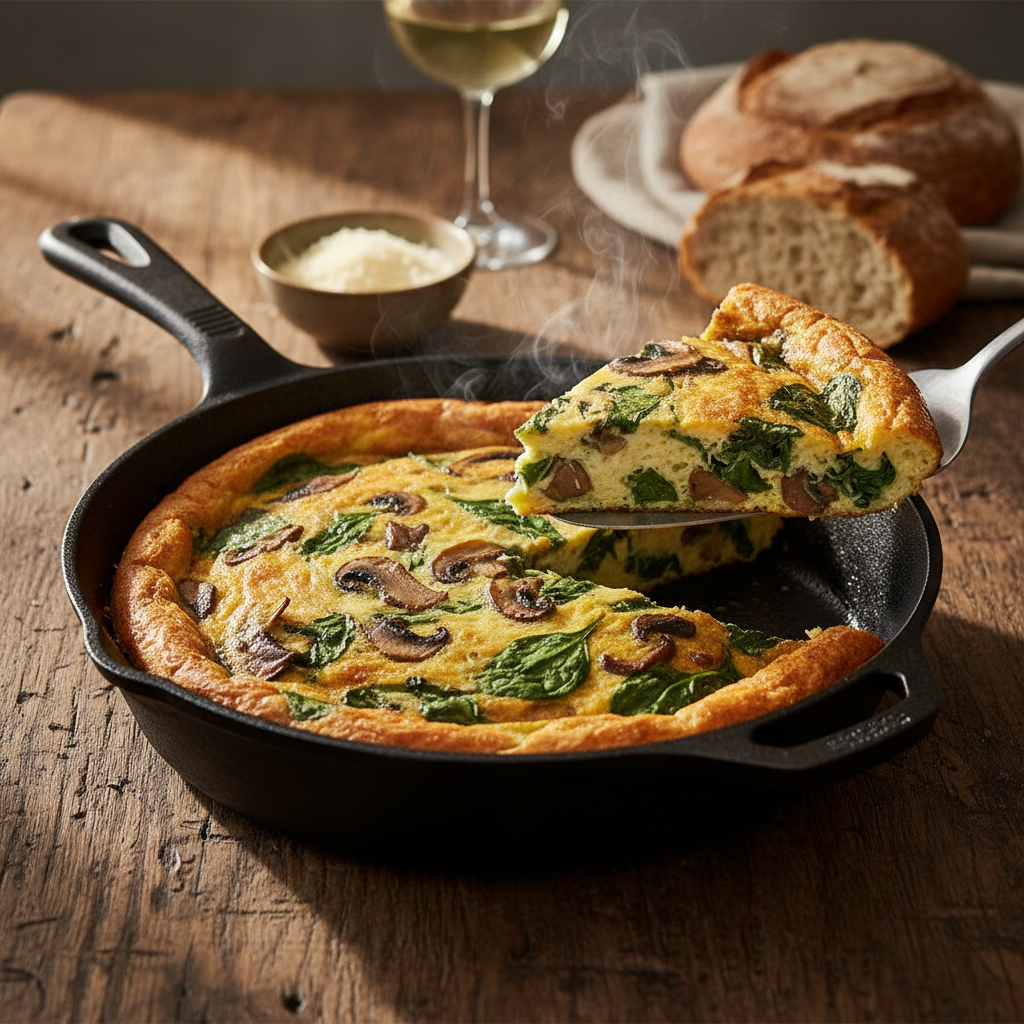
Creamy Spinach and Mushroom Frittata: The Ultimate Vegetarian Skillet Dinner
Spinach Mushroom Frittata Dinner Vegetarian Recipe
This savory Spinach Mushroom Frittata is the perfect answer to busy weeknights, blending earthy cremini mushrooms and fresh spinach in fluffy, cheesy eggs. Ready in under 30 minutes, it is a protein-packed vegetarian dinner that doubles as a delicious breakfast leftover.
10 minutes
20 minutes
30 minutes
6 servings
Main Course
Stovetop and Oven
Italian-American
Vegetarian
There is something undeniably comforting about the concept of ‘breakfast for dinner,’ or as it is affectionately known, ‘brinner.’ When the day has been long and the motivation to cook an elaborate meal is low, the humble egg becomes a culinary hero. This Spinach Mushroom Frittata is not just a backup plan; it is a star attraction that rivals any complex main course in flavor and satisfaction. Imagine a sizzling cast-iron skillet arriving at the table, the eggs puffed to golden perfection, encasing a treasure trove of savory, caramelized mushrooms, tender wilted spinach, and pockets of melted cheese. Unlike a quiche, which requires the fuss of a pastry crust, a frittata is all about the filling. It is a rustic, honest dish that relies on the quality of its simple ingredients. The magic lies in the texture: the edges are crisp and browned from the hot skillet, while the center remains creamy and custard-like, almost melting in your mouth. This recipe specifically targets the vegetarian palate but is hearty enough to satisfy the most devoted meat-eaters. The earthiness of the mushrooms provides that essential ‘umami’ punch, while the spinach adds a fresh, vegetal brightness that cuts through the richness of the eggs and cheese. Whether you are looking for a quick weeknight meal, a centerpiece for a Sunday brunch, or a meal-prep champion that tastes just as good cold as it does hot, this frittata is the versatile, nutritious, and utterly delicious solution you have been searching for.
History & Origins
The frittata is a cornerstone of Italian home cooking, deeply rooted in the tradition of ‘cucina povera’ or peasant cooking, where nothing went to waste. The word itself derives from the Italian verb ‘friggere,’ meaning ‘to fry.’ Historically, a frittata was a practical vessel for leftovers—a way to repurpose yesterday’s roasted vegetables, bits of cheese, or cooked pasta into a new, substantial meal. Unlike the French omelet, which is delicate, folded, and typically serves one, the Italian frittata is communal, robust, and cooked slowly. In its earliest iterations, it was cooked entirely on the stovetop, flipped halfway through with a plate—a maneuver requiring skill and confidence. As the dish migrated to America with Italian immigrants, it evolved. The modern American interpretation often simplifies the cooking process by starting on the stove to set the bottom and finishing in the oven to cook the top, eliminating the perilous flip. This evolution has transformed the frittata from a humble leftover dish into a celebrated brunch staple and a sophisticated light dinner. While ingredients vary wildly by region and season, the combination of spinach and mushroom is a modern classic, reflecting a global shift towards vegetable-forward eating while honoring the rustic, open-faced nature of the original Italian creation.
Why This Recipe Works
The secret to a perfect frittata lies in moisture control and heat management, and this recipe is engineered to master both. A common pitfall with vegetable frittatas is a watery, spongy texture caused by vegetables releasing liquid into the eggs as they cook. This recipe circumvents that issue by mandating a thorough sauté of the mushrooms and spinach first. Mushrooms are like sponges; they hold a significant amount of water. By browning them in the skillet before the eggs are introduced, we not only concentrate their flavor through the Maillard reaction but also evaporate the excess moisture. Similarly, wilting the spinach ensures that the egg custard remains rich and creamy, not diluted. Furthermore, this recipe utilizes a combination of whole eggs and full-fat dairy (heavy cream or whole milk). This fat content protects the protein structure of the eggs from tightening up too quickly, ensuring the final result is tender rather than rubbery. Finally, the two-stage cooking method—searing on the stovetop followed by a gentle finish in the oven—provides the best of both worlds: a flavorful, caramelized crust on the bottom and a fluffy, evenly cooked interior that puffs up beautifully without drying out.
Why You’ll Love This Recipe
- ✓Ready in under 30 minutes for a quick weeknight meal.
- ✓High-protein vegetarian dinner that is naturally gluten-free.
- ✓One-pan cleanup using a cast-iron skillet.
- ✓Excellent for meal prep as it stores and reheats beautifully.
- ✓Versatile recipe that helps reduce food waste.
Equipment You’ll Need
- ✓10-inch or 12-inch Cast Iron Skillet (oven safe)
- ✓Large Mixing Bowl
- ✓Whisk
- ✓Chef’s Knife
- ✓Cutting Board
- ✓Cheese Grater
Ingredients
- ✓8 large eggs
- ✓1/3 cup heavy cream or whole milk
- ✓2 tablespoons olive oil
- ✓1 tablespoon unsalted butter
- ✓8 oz Cremini or Baby Bella mushrooms, sliced
- ✓5 oz fresh baby spinach
- ✓1 small yellow onion, diced
- ✓2 cloves garlic, minced
- ✓1/2 cup shredded Gruyere or Parmesan cheese
- ✓1/2 cup crumbled feta or goat cheese (optional)
- ✓1/2 teaspoon sea salt
- ✓1/4 teaspoon freshly cracked black pepper
- ✓Fresh parsley or chives for garnish
Instructions
- Preheat your oven to 400°F (200°C). Position a rack in the center of the oven.
- In a large mixing bowl, crack the eggs and add the heavy cream (or milk), salt, and pepper. Whisk vigorously until the yolks and whites are fully combined and the mixture is slightly frothy. Set aside.
- Heat the olive oil and butter in a 10-inch cast-iron skillet over medium-high heat. Once the butter foams, add the sliced mushrooms. Cook undisturbed for 3-4 minutes to allow them to brown, then stir and cook for another 2-3 minutes until golden and tender.
- Add the diced onion to the skillet with the mushrooms. Sauté for 3 minutes until the onion is translucent and soft. Add the minced garlic and cook for just 30 seconds until fragrant, being careful not to burn it.
- Add the fresh spinach to the skillet in handfuls. Toss continuously with tongs or a spatula until the spinach is fully wilted and any excess liquid has evaporated. This step is crucial to prevent a watery frittata.
- Reduce the heat to low. Spread the vegetable mixture evenly across the bottom of the skillet. Pour the egg mixture over the vegetables. Do not stir, but use a spatula to gently lift the edges of the frittata to let raw egg flow underneath.
- Sprinkle the shredded Gruyere and crumbled feta evenly over the top of the eggs.
- Let the frittata cook on the stovetop for about 2-3 minutes until the edges begin to set and pull away from the pan slightly.
- Transfer the skillet to the preheated oven. Bake for 10-12 minutes, or until the eggs are just set in the center and the top is slightly puffed and golden. Be careful not to overcook.
- Remove from the oven using oven mitts (the handle will be extremely hot). Let it rest for 5 minutes before slicing. Garnish with fresh herbs and serve warm.
Expert Cooking Tips
- ✓Use room temperature eggs if possible; they whisk up fluffier and bake more evenly.
- ✓Do not skip the dairy; the fat in the cream or milk prevents the eggs from becoming rubbery.
- ✓Grate your own cheese from a block rather than using pre-shredded, as pre-shredded cheese contains anti-caking agents that affect melting.
- ✓Watch the salt content if your cheese is particularly salty (like Parmesan or Feta).
- ✓If you do not have an oven-safe skillet, you can sauté the veggies in a regular pan and transfer everything to a greased baking dish before adding the eggs.
- ✓Let the frittata rest before slicing; this allows the residual heat to finish cooking the center and helps the slice hold its shape.
Substitutions and Variations
This recipe is incredibly flexible. If you do not have spinach, you can substitute it with kale or Swiss chard, but be sure to sauté tougher greens a bit longer to tenderize them. For the mushrooms, white button mushrooms work fine, though they have less flavor than cremini; shiitakes can add a wonderful smoky depth. Dairy-wise, you can use half-and-half, whole milk, or even sour cream for extra tang, but avoid skim milk as it can make the eggs watery. Cheese is entirely subjective; sharp cheddar, mozzarella, or goat cheese are excellent alternatives to Gruyere. For a dairy-free version, use unsweetened almond milk and omit the cheese or use a vegan cheese alternative. If you want to add meat, cooked crumbled bacon, diced ham, or sausage are classic additions.
Common Mistakes to Avoid
The most common mistake is overcooking the frittata, which leads to a dry, sponge-like texture. Remember that the eggs will continue to cook in the hot skillet even after you take it out of the oven, so pull it when the center is just barely set. Another error is not cooking the vegetables enough; if the mushrooms and spinach are not sautéed until dry, they will release water into the eggs, resulting in a soggy mess. Using a pan that isn’t oven-safe is a logistical mistake—always double-check your cookware. Finally, forgetting to season the layers results in a bland dish; season your vegetables as they cook, not just the egg mixture.
Serving Suggestions
This frittata is a complete meal on its own, but it pairs beautifully with a simple green salad dressed with a sharp lemon vinaigrette to cut through the richness of the eggs. For a heartier dinner, serve it alongside roasted breakfast potatoes or a slice of crusty sourdough bread with butter. If serving for brunch, a fruit salad or yogurt parfait makes a great accompaniment. A dash of hot sauce or a dollop of pesto on top adds a fantastic zing.
Storage and Reheating Tips
Store leftover frittata in an airtight container in the refrigerator for up to 4 days. It is excellent served cold, room temperature, or warm. To reheat, place a slice in the microwave for 30-45 seconds, or for better texture, warm it in a 350°F oven or toaster oven for 5-10 minutes. You can freeze frittata slices wrapped tightly in plastic wrap and aluminum foil for up to 2 months, but be aware that the texture of the eggs may become slightly spongy upon thawing. Thaw overnight in the fridge before reheating.
Nutrition Facts (Estimated)
| Serving Size | 1 slice |
| Calories | 185 |
| Fat | 14g |
| Saturated Fat | 6g |
| Unsaturated Fat | 7g |
| Trans Fat | 0g |
| Cholesterol | 215mg |
| Sodium | 320mg |
| Carbohydrates | 4g |
| Fiber | 1g |
| Sugar | 2g |
| Protein | 12g |
Frequently Asked Questions
Can I make this frittata ahead of time?
Yes, absolutely. Frittatas are one of the best make-ahead egg dishes. You can bake it on Sunday and enjoy it for breakfast, lunch, or dinner throughout the week. It tastes great cold or reheated.
What if I don’t have a cast-iron skillet?
If you don’t have a cast-iron skillet, use any oven-safe non-stick frying pan. If your pan has a plastic handle, it is not oven-safe. In that case, sauté your vegetables in the pan, then transfer them to a greased pie dish or baking dish, pour the eggs over, and bake entirely in the oven for about 20-25 minutes.
Why did my frittata turn out watery?
A watery frittata is usually caused by vegetables releasing liquid during the baking process. Ensure you sauté the mushrooms and spinach thoroughly until the pan is dry before adding the eggs.
Can I use frozen spinach instead of fresh?
Yes. If using frozen spinach, thaw it completely and squeeze out as much water as possible using a clean kitchen towel or your hands before adding it to the skillet. This is critical to avoid a soggy dish.
How do I know when the frittata is done?
The frittata is done when the edges are golden brown and the center is no longer jiggling liquidly, but still looks soft. A knife inserted into the center should come out relatively clean.
Is this recipe Keto-friendly?
Yes, this recipe is naturally low-carb and high-fat, making it excellent for a Keto diet. Just ensure your milk choice aligns with your specific carb limits (heavy cream is best).
Can I double the recipe?
You can double the ingredients, but you will need a much larger pan or two separate skillets. Alternatively, bake it in a 9×13 inch casserole dish, though the cooking time will increase significantly.
Why is my frittata sticking to the pan?
Eggs are notorious for sticking. Ensure your cast iron is well-seasoned. If using a stainless steel pan, use enough oil and butter. A non-stick oven-safe pan is the safest bet for beginners.
Conclusion
The Spinach Mushroom Frittata is a testament to the idea that fast food can be healthy, homemade, and deeply satisfying. It is a dish that respects your time without compromising on flavor, offering a sophisticated dinner solution that comes together in a single pan. Whether you are a vegetarian, a busy parent, or just someone who loves a good egg dish, this recipe deserves a spot in your regular rotation. So grab your skillet, whisk up some eggs, and enjoy a dinner that feels like a hug on a plate. Don’t forget to pin this recipe for later and leave a comment on how you customized yours!