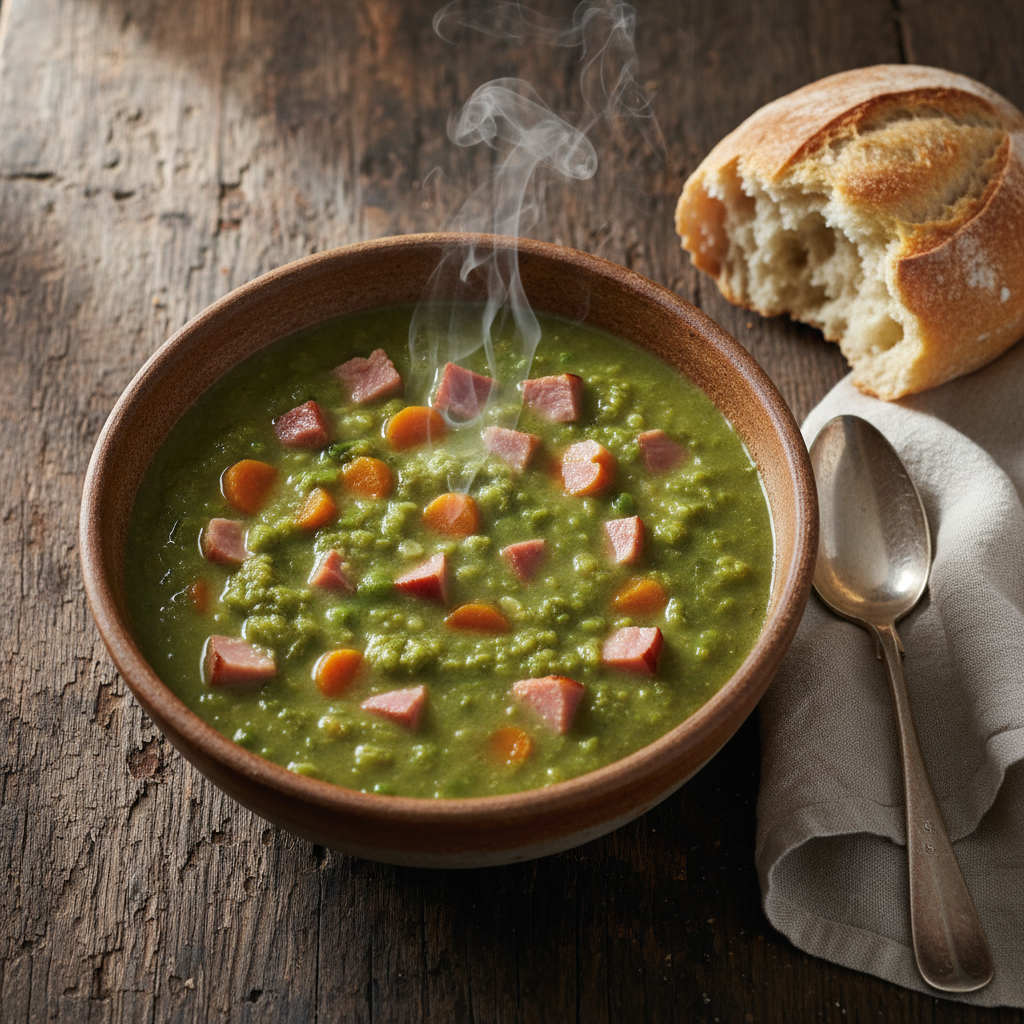
Hearty Split Pea Soup With Turkey Ham: A Healthy Comfort Classic
Split Pea Soup With Turkey Ham Healthy Recipe
Warm your soul with this nutritious and deeply flavorful Split Pea Soup featuring savory turkey ham. This lighter twist on the classic comfort food delivers a creamy texture and smoky taste without the excess fat, making it perfect for a cozy weeknight dinner or healthy meal prep.
15 minutes
1 hour 15 minutes
1 hour 30 minutes
6 servings
Soup
Stovetop
American
Gluten-Free
There are few dishes as universally comforting as a thick, steaming bowl of split pea soup. It is the culinary equivalent of a weighted blanket—grounding, warming, and deeply satisfying. However, traditional recipes often rely heavily on fatty smoked ham hocks or bacon grease to achieve that signature richness, which can weigh down the nutritional profile of an otherwise healthy meal. This Split Pea Soup with Turkey Ham recipe reinvents the classic by maintaining all the beloved smoky, savory depth while significantly reducing the saturated fat and calorie count. By utilizing turkey ham, we achieve a robust, meaty flavor profile that perfectly complements the natural earthiness of the dried peas. As the soup simmers, the split peas break down into a luxurious, creamy consistency without the need for heavy cream or flour thickeners, making this a fantastic option for those seeking gluten-free comfort food. The addition of a classic mirepoix—onions, carrots, and celery—adds layers of sweetness and aromatic complexity, while fresh herbs like thyme and bay leaves tie everything together. This soup is not just a meal; it is a nutrient-dense powerhouse loaded with fiber, plant-based protein, and essential vitamins. Whether you are looking to warm up on a chilly winter evening, seeking a budget-friendly meal that feeds a crowd, or wanting a healthy lunch option that tastes even better the next day, this recipe ticks every box. It proves that healthy eating does not mean compromising on the rich, nostalgic flavors we all crave.
History & Origins
Split pea soup is a dish with ancient roots, tracing its culinary lineage back thousands of years. Evidence of pea cultivation dates back to the Neolithic era, and the ancient Greeks and Romans were known to cultivate peas for soups and broths. In fact, in his play ‘The Birds’ from 414 BC, the Greek playwright Aristophanes mentions pea soup, highlighting its status as a staple food of the time. Historically, peas were allowed to dry on the vine, which extended their shelf life significantly—a crucial factor for survival during long, harsh winters before the advent of refrigeration. This dried pulse became a dietary cornerstone across Europe. In the Middle Ages, ‘pease pudding’ or ‘pease pottage’ was a common dish among the peasantry, often cooked in a cauldron over an open fire for days, with ingredients added as they became available. This is immortalized in the nursery rhyme ‘Pease porridge hot, pease porridge cold.’ As the dish traveled, different cultures adopted their own variations. The Dutch are famous for ‘Snert,’ a very thick pea soup often served with smoked sausage, while in Britain, it became a comfort staple often associated with London fogs, which were colloquially called ‘pea-soupers’ due to their thick, yellowish-green appearance. When European settlers arrived in North America, they brought these recipes with them. In New England and French Canada, the soup evolved to include local ingredients and often utilized the leftover ham bone from Sunday dinner to flavor the pot. Today, split pea soup remains a beloved classic in American cuisine, celebrated for its simplicity, affordability, and ability to turn humble ingredients into a feast.
Why This Recipe Works
This recipe succeeds because it carefully balances texture and flavor intensity while swapping out heavier ingredients for lighter alternatives. The core of its success lies in the use of turkey ham. Traditional ham hocks are delicious but can be incredibly fatty and difficult to butcher; turkey ham offers a concentrated, cured, and smoky flavor that infuses the broth immediately, but with a fraction of the fat content. This allows the natural flavor of the peas to shine through rather than being masked by grease. Furthermore, the cooking method is designed to maximize the natural starch content of the split peas. By simmering them slowly with the lid slightly ajar, we allow the peas to disintegrate completely. This releases their internal starches, which thicken the soup naturally, creating a velvety mouthfeel without the need for a roux or dairy. The timing of the salt addition is also crucial; we season towards the end because adding salt too early can sometimes toughen the skins of legumes, preventing them from softening properly. Finally, the ratio of aromatics to liquid is optimized to ensure every spoonful is packed with tender carrots and celery, providing a necessary textural contrast to the creamy purée of the peas. The result is a soup that feels rich and indulgent but is actually light and energizing.
Why You’ll Love This Recipe
- ✓High-fiber and high-protein meal that promotes satiety.
- ✓Low-fat alternative using turkey ham without sacrificing smoky flavor.
- ✓Naturally gluten-free and dairy-free creamy texture.
- ✓Budget-friendly ingredients that yield a large batch.
- ✓One-pot meal for easy cleanup.
- ✓Freezes beautifully for long-term meal prep.
Equipment You’ll Need
- ✓Large Dutch oven or heavy-bottomed soup pot
- ✓Chef’s knife
- ✓Cutting board
- ✓Wooden spoon
- ✓Measuring cups and spoons
- ✓Ladle
Ingredients
- ✓1 tablespoon olive oil
- ✓1 large yellow onion, diced
- ✓3 medium carrots, peeled and diced
- ✓3 ribs celery, diced
- ✓1 pound (16 oz) dried green split peas, rinsed and picked over
- ✓1.5 cups diced turkey ham (approx. 8 oz)
- ✓4 cloves garlic, minced
- ✓6 cups low-sodium chicken broth (or vegetable broth)
- ✓2 cups water (plus more if needed)
- ✓1 teaspoon dried thyme (or 3 sprigs fresh thyme)
- ✓2 dried bay leaves
- ✓1/2 teaspoon smoked paprika
- ✓Salt and freshly cracked black pepper to taste
- ✓Fresh parsley for garnish (optional)
Instructions
- 1. Prepare the vegetables: Wash and peel the carrots. Dice the onion, carrots, and celery into uniform pieces to ensure even cooking. Mince the garlic and cube the turkey ham into bite-sized pieces.
- 2. Sauté the aromatics: Heat the olive oil in a large Dutch oven or soup pot over medium heat. Add the diced onion, carrots, and celery. Sauté for 5-7 minutes until the onions are translucent and the vegetables begin to soften.
- 3. Add flavor base: Stir in the diced turkey ham and cook for another 3-4 minutes, allowing the ham to brown slightly and release its smoky flavor. Add the minced garlic, dried thyme, and smoked paprika, stirring constantly for 1 minute until fragrant.
- 4. Combine peas and liquid: Pour in the chicken broth and water. Add the rinsed split peas and bay leaves. Stir well to scrape up any browned bits from the bottom of the pot.
- 5. Simmer: Increase the heat to bring the soup to a boil. Once boiling, reduce the heat to low, cover the pot with the lid slightly ajar to allow steam to escape, and simmer for 60 to 75 minutes.
- 6. Stir occasionally: Stir the soup every 15-20 minutes to prevent the peas from sticking to the bottom of the pot. The soup is done when the peas have completely broken down and the soup is thick and creamy.
- 7. Adjust consistency and season: If the soup is too thick for your liking, add a splash more water or broth. Remove the bay leaves. Taste the soup and season with salt and freshly cracked black pepper. Be careful with salt as the turkey ham and broth already contain sodium.
- 8. Serve: Ladle the hot soup into bowls and garnish with fresh parsley if desired. Serve immediately with crusty bread.
Expert Cooking Tips
- ✓Rinse the peas thoroughly under cold water until the water runs clear to remove dust and debris.
- ✓Do not add salt at the beginning of the cooking process; wait until the peas are soft, as salt can toughen the skins and prolong cooking time.
- ✓If you prefer a completely smooth soup, you can use an immersion blender at the end, though traditional split pea soup usually has some texture.
- ✓To enhance the smoky flavor, you can add a drop or two of liquid smoke if your turkey ham is mild.
- ✓Stirring is critical towards the end of cooking as the soup thickens, to prevent scorching on the bottom of the pot.
- ✓Fresh lemon juice squeezed in right before serving can brighten the flavors and cut through the richness.
Substitutions and Variations
This recipe is highly adaptable to suit various dietary needs and pantry availability. If you cannot find turkey ham, smoked turkey wings or a smoked turkey leg are excellent substitutes; simply simmer the whole piece in the soup and shred the meat off the bone at the end. For a pork-based version, traditional ham hocks or diced bacon can be used. If you are vegetarian or vegan, omit the meat entirely and use vegetable broth instead of chicken broth; to replicate the smoky flavor without meat, add a teaspoon of smoked paprika or a dash of liquid smoke. You can also swap green split peas for yellow split peas; yellow peas have a slightly milder, nuttier flavor but will cook down similarly. If you don’t have onions, leeks are a fantastic alternative that adds a subtle sweetness. For extra nutrition, you can stir in spinach or kale during the last 5 minutes of cooking.
Common Mistakes to Avoid
One of the most common mistakes when making split pea soup is failing to sort and rinse the peas. Dried peas can sometimes contain small stones or debris, so a quick visual check is necessary. Another error is boiling the soup too vigorously; a rapid boil can cause the liquid to evaporate too quickly before the peas are tender, leading to a burnt bottom and undercooked peas. Always simmer gently. Additionally, adding acidic ingredients like tomatoes or vinegar too early can prevent the peas from softening, so save any acidic adjustments for the very end. Finally, don’t panic if the soup looks thin after 45 minutes; the thickening happens rapidly in the final stages of cooking as the starches gelatinize, so be patient.
Serving Suggestions
This split pea soup is a hearty meal on its own, but it pairs wonderfully with sides that offer a textural contrast. A slice of crusty sourdough bread or a warm baguette is essential for dipping. For a crunchier element, top the soup with homemade garlic croutons or oyster crackers. A simple grilled cheese sandwich makes for a classic diner-style combo. If you want to lighten up the meal, serve it alongside a crisp green salad with a vinaigrette dressing to cut through the savory richness of the soup. For a garnish, a dollop of plain Greek yogurt or sour cream can add a tangy creaminess, and a sprinkle of fresh chives or parsley adds a pop of color.
Storage and Reheating Tips
Split pea soup stores exceptionally well and often tastes better the next day as the flavors meld. To store, allow the soup to cool completely before transferring it to an airtight container. It will keep in the refrigerator for up to 4-5 days. Note that the soup will thicken significantly as it cools, becoming almost solid. When reheating on the stove or in the microwave, you will likely need to stir in a splash of water or broth to return it to the desired consistency. For freezing, portion the cooled soup into freezer-safe bags or containers, leaving about an inch of space for expansion. It can be frozen for up to 3 months. Thaw overnight in the refrigerator before reheating.
Nutrition Facts (Estimated)
| Serving Size | 1.5 cups |
| Calories | 285 |
| Fat | 3g |
| Saturated Fat | 0.5g |
| Unsaturated Fat | 2g |
| Trans Fat | 0g |
| Cholesterol | 25mg |
| Sodium | 680mg |
| Carbohydrates | 42g |
| Fiber | 16g |
| Sugar | 6g |
| Protein | 22g |
Frequently Asked Questions
Do I need to soak split peas before cooking?
No, unlike beans, split peas do not require soaking. They are small and split, which allows them to cook relatively quickly and break down without the overnight soak.
Why are my split peas still hard after cooking?
Old peas can sometimes stay hard no matter how long you cook them. Also, adding acid (like lemon or tomatoes) or salt too early can prevent softening. Ensure your peas are fresh and simmer gently.
Can I make this in a slow cooker?
Yes! Combine all ingredients (except garnish) in a slow cooker. Cook on Low for 7-8 hours or High for 4-5 hours until peas are creamy.
Is turkey ham processed?
Turkey ham is a cured meat made from turkey thigh meat. While it is processed, look for brands with lower sodium and fewer nitrates for a healthier option compared to traditional pork ham.
How can I make the soup thinner?
Split pea soup naturally thickens as it stands. Simply stir in water or chicken broth, 1/4 cup at a time, until you reach your desired consistency.
Can I use yellow split peas instead of green?
Absolutely. Yellow split peas are slightly milder and sweeter, but they cook the same way and will result in a delicious, albeit yellow, soup.
Is this soup gluten-free?
Yes, the ingredients are naturally gluten-free. However, always check the label on your turkey ham and chicken broth to ensure they were not processed in a facility with wheat.
Can I add potatoes to this soup?
Yes, adding diced potatoes is a great way to bulk up the soup. Add them at the same time as the broth so they have time to soften.
What if I accidentally over-salt the soup?
If the soup is too salty, you can add a peeled, raw potato and simmer for 15 minutes; discard the potato before serving. Alternatively, dilute with more water or unsalted broth.
Conclusion
Split Pea Soup with Turkey Ham is the ultimate testament to the idea that healthy eating can be deeply satisfying. It strips away the excess fats of the traditional recipe while amplifying the comforting, savory notes that make this dish a timeless favorite. Whether you are cooking for a family, prepping lunches for the week, or simply in need of a warm culinary hug, this recipe delivers on all fronts. The ease of preparation and the budget-friendly ingredient list make it accessible to home cooks of all levels. So, grab your Dutch oven and let the aroma of simmering thyme and smoky turkey fill your kitchen. We hope this soup becomes a regular in your winter rotation, bringing warmth and wellness to your table.