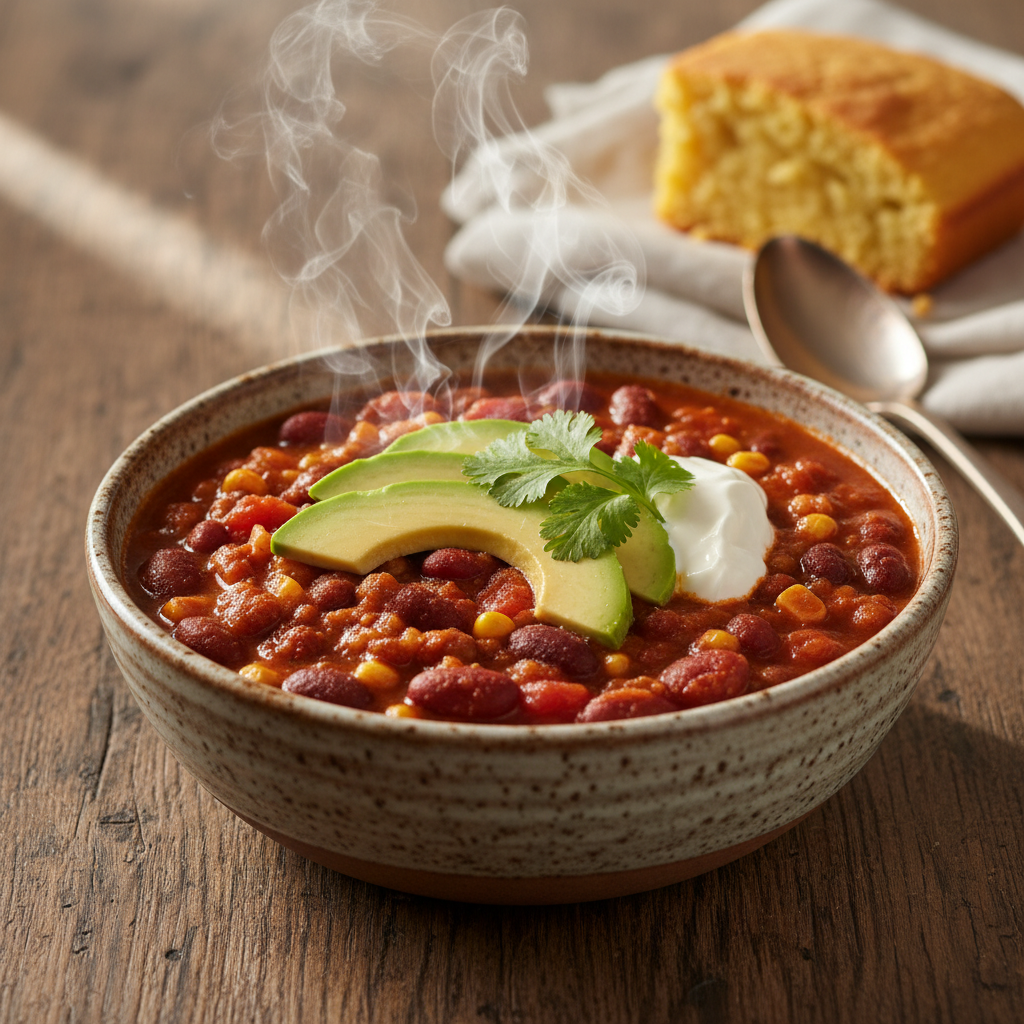
The Ultimate Hearty Three Bean Vegetarian Chili
Three Bean Vegetarian Chili Healthy Recipe
This robust Three Bean Vegetarian Chili is the ultimate comfort food, packed with plant-based protein and bold, smoky flavors. It is a one-pot wonder that comes together in under an hour, making it the perfect healthy dinner for busy weeknights or cozy weekend gatherings.
15 minutes
45 minutes
1 hour
6 servings
Main Course
Stovetop
Tex-Mex / American
Vegan
There are few dishes as universally comforting as a steaming bowl of chili, but this Three Bean Vegetarian Chili takes that comfort to a new level of nourishment and flavor. Often, vegetarian versions of classic meat dishes are accused of lacking depth or texture, but this recipe completely dispels that myth. By utilizing a trio of distinct beans—kidney, black, and pinto—we create a complex textural landscape that rivals any beef-based stew. The magic, however, lies in the blooming of the spices. We don’t just dump powder into liquid; we sauté a robust blend of cumin, smoked paprika, and chili powder with onions and garlic to awaken their essential oils, creating a base that is rich, smoky, and deeply aromatic.
This dish is designed for the modern home cook who wants health benefits without sacrificing satisfaction. It is naturally high in fiber and protein, heart-healthy, and vibrant with the colors of bell peppers, tomatoes, and corn. Whether you are a strict vegetarian, trying to participate in Meatless Monday, or simply looking for a budget-friendly meal that feeds a crowd, this chili delivers. It is thick, glossy, and savory, with a hint of sweetness from the tomatoes and a kick of heat that warms you from the inside out. Best of all, the flavors meld and intensify over time, making the leftovers even more delicious than the fresh batch. Get ready to fill your kitchen with the irresistible scent of the Southwest.
History & Origins
The history of chili is as spicy and contested as the dish itself. While most food historians agree that ‘chili con carne’ (chili with meat) originated in the American West, specifically Texas and Northern Mexico, the evolution of the vegetarian version is a fascinating journey of its own. The original chili popularized by the ‘Chili Queens’ of San Antonio in the 1880s was heavily meat-focused, often a simple stew of beef, suet, and dried peppers. For decades, adding beans to chili was considered a cardinal sin by purists, a debate that still rages in competitive chili cook-offs today.
However, as the counterculture movements of the 1960s and 1970s gained momentum in the United States, there was a significant shift toward plant-based diets. The ‘hippie’ movement, coupled with a rising awareness of global cuisines and the environmental impact of meat consumption, paved the way for the vegetable-forward stew. The concept of the ‘Three Bean’ salad, a staple of mid-century American potlucks, likely influenced the multi-bean approach to vegetarian chili. Cooks began to realize that combining kidney beans, black beans, and pinto beans provided a complete protein profile when paired with rice or corn, and offered a textural variety that mimicked the chew of meat. Today, vegetarian chili is no longer just an alternative; it is a celebrated category of cuisine in its own right, embracing ingredients from sweet potatoes to quinoa, though the classic Three Bean style remains the gold standard for heartiness.
Why This Recipe Works
This recipe succeeds because it addresses the two main pitfalls of vegetarian cooking: lack of umami and lack of texture. In meat-based chilies, the fat and searing of the beef provide a savory depth that vegetables alone cannot replicate. To counter this, we build layers of umami using specific techniques. First, we sauté the tomato paste until it darkens; this caramelization process, known as the Maillard reaction, unlocks a savory richness. We also include a splash of soy sauce or tamari, which acts as a secret weapon to boost the salty, savory profile without making the dish taste like Asian cuisine.
Secondly, the texture is managed through the ‘Three Bean’ strategy. Kidney beans offer a firm, creamy bite; black beans are smaller and earthier; and pinto beans are soft and buttery. This variety ensures that every spoonful has a different mouthfeel, preventing the ‘mushiness’ often associated with bean stews. Furthermore, we use a combination of crushed tomatoes for body and diced tomatoes for chunks, ensuring the broth is thick and substantial. Finally, the addition of a small amount of cocoa powder or dark chocolate adds a subtle bitterness and earthiness that mimics the complexity of mole sauce, rounding out the acidity of the tomatoes and the heat of the chilies.
Why You’ll Love This Recipe
- ✓Packed with 18g of plant-based protein per serving
- ✓One-pot meal for easy cleanup
- ✓Freezer-friendly and perfect for meal prep
- ✓Rich, smoky flavor profile without any meat
- ✓Gluten-free and Vegan friendly
- ✓Budget-friendly pantry staple recipe
Equipment You’ll Need
- ✓Large Dutch Oven or Heavy-Bottomed Pot
- ✓Chef’s Knife
- ✓Cutting Board
- ✓Wooden Spoon
- ✓Can Opener
- ✓Measuring Spoons and Cups
- ✓Ladle
Ingredients
- ✓2 tablespoons olive oil
- ✓1 large yellow onion, diced
- ✓1 red bell pepper, diced
- ✓1 green bell pepper, diced
- ✓4 cloves garlic, minced
- ✓2 tablespoons chili powder
- ✓1 tablespoon ground cumin
- ✓1 teaspoon smoked paprika
- ✓1 teaspoon dried oregano
- ✓1/4 teaspoon cayenne pepper (optional for heat)
- ✓2 tablespoons tomato paste
- ✓1 (28 oz) can crushed tomatoes
- ✓1 (15 oz) can diced tomatoes, undrained
- ✓2 cups vegetable broth
- ✓1 (15 oz) can red kidney beans, drained and rinsed
- ✓1 (15 oz) can black beans, drained and rinsed
- ✓1 (15 oz) can pinto beans, drained and rinsed
- ✓1 cup frozen corn kernels
- ✓1 tablespoon soy sauce or tamari (for umami)
- ✓1 teaspoon unsweetened cocoa powder (secret ingredient)
- ✓Salt and black pepper to taste
- ✓1 tablespoon lime juice
Instructions
- Prepare your vegetables: Dice the onion, red bell pepper, and green bell pepper into uniform pieces. Mince the garlic cloves.
- Heat the olive oil in a large Dutch oven or heavy pot over medium-high heat. Once the oil is shimmering, add the diced onions and peppers. Sauté for 5-7 minutes until the onions are translucent and the peppers have softened.
- Add the minced garlic, chili powder, cumin, smoked paprika, oregano, and cayenne pepper. Stir constantly for about 1 minute until the spices are fragrant. This ‘blooming’ step is crucial for flavor depth.
- Stir in the tomato paste and cook for another 1-2 minutes, mixing it with the vegetables until it turns a darker shade of red.
- Pour in the crushed tomatoes, diced tomatoes (with their juices), and vegetable broth. Stir well to combine, scraping up any browned bits from the bottom of the pot.
- Add the rinsed kidney beans, black beans, and pinto beans, along with the soy sauce and cocoa powder. Stir to incorporate.
- Bring the mixture to a boil, then reduce the heat to low. Cover the pot and let it simmer gently for 30 minutes, stirring occasionally to prevent sticking.
- Stir in the frozen corn and simmer uncovered for an additional 10-15 minutes. This allows the chili to thicken to your desired consistency.
- Remove from heat. Stir in the fresh lime juice to brighten the flavors. Taste and season with salt and black pepper as needed.
- Ladle into bowls and serve hot with your favorite toppings like avocado, cilantro, or jalapeños.
Expert Cooking Tips
- ✓Always rinse your canned beans thoroughly to remove excess sodium and the starchy liquid that can cause digestive issues.
- ✓Don’t skip the lime juice at the end; the acid cuts through the richness and wakes up the spices.
- ✓If you have time, let the chili sit for 15-20 minutes after cooking before serving to let the flavors marry.
- ✓For a thicker chili, you can mash about 1/2 cup of the beans against the side of the pot and stir them back in.
- ✓Use high-quality vegetable broth, as it forms the base of the flavor profile.
- ✓If you prefer a ‘meaty’ texture without meat, try adding 1/2 cup of dry quinoa or lentils along with the broth (you may need to add extra liquid).
Substitutions and Variations
This recipe is incredibly forgiving and adaptable to whatever you have in your pantry. If you don’t have the specific trio of beans listed, you can double up on one type or swap in Great Northern beans, navy beans, or chickpeas. For the vegetables, you can add diced zucchini, sweet potatoes, or carrots during the sauté step for extra nutrition. If you don’t have vegetable broth, water with a bouillon cube works perfectly fine. The soy sauce adds umami, but Worcestershire sauce (ensure it’s a vegetarian brand without anchovies) is a great alternative. If you are out of crushed tomatoes, tomato sauce or puree can be used, though the texture will be smoother. For those who dislike corn, simply omit it or swap it for green beans. Finally, the cocoa powder is a flavor enhancer, but a square of dark chocolate or a pinch of cinnamon can achieve a similar warming effect.
Common Mistakes to Avoid
The most common mistake when making vegetarian chili is rushing the cooking process. While the ingredients are already ‘cooked’ (canned beans), they need time to simmer together to absorb the spices and develop a cohesive flavor; otherwise, the dish will taste like beans floating in tomato juice. Another mistake is under-seasoning. Beans are very bland and absorb a lot of salt, so taste frequently toward the end of cooking. Avoid adding the acid (lime juice) too early; cooking acid for too long can dull its brightness, so always add it at the very end. Lastly, be careful not to burn the garlic. Garlic cooks much faster than onions and peppers, so always add it in the last minute of sautéing before the liquids go in.
Serving Suggestions
This Three Bean Vegetarian Chili is a meal in itself, but the right sides and toppings elevate it to a feast. Serve it alongside warm, honey-buttered cornbread or over a bed of fluffy white rice or quinoa to stretch the meal further. It is also excellent scooped over a baked potato or sweet potato for a ‘loaded’ dinner. For a fun twist, use leftovers to make chili nachos or chili cheese fries. Essential toppings include diced avocado or guacamole, a dollop of sour cream (or coconut yogurt for vegans), shredded sharp cheddar cheese, fresh cilantro, sliced jalapeños for extra heat, and tortilla chips for crunch.
Storage and Reheating Tips
This chili is one of those magical dishes that tastes better the next day. Store leftovers in an airtight container in the refrigerator for up to 5 days. Reheat gently on the stove over medium-low heat, adding a splash of water or broth if it has thickened too much. For freezing, let the chili cool completely before transferring to freezer-safe bags or containers. It freezes beautifully for up to 3 months. Thaw overnight in the refrigerator before reheating. If you plan to freeze it, you might want to hold off on adding the cilantro or fresh lime juice until you reheat and serve it.
Nutrition Facts (Estimated)
| Serving Size | 1.5 cups |
| Calories | 340 |
| Fat | 4g |
| Saturated Fat | 0.5g |
| Unsaturated Fat | 3g |
| Trans Fat | 0g |
| Cholesterol | 0mg |
| Sodium | 650mg |
| Carbohydrates | 58g |
| Fiber | 16g |
| Sugar | 8g |
| Protein | 18g |
Frequently Asked Questions
Can I use dried beans instead of canned?
Yes, absolutely. You will need to soak and cook the dried beans separately before adding them to the chili, as the acidity in the tomatoes can prevent dried beans from softening properly if cooked together from raw. Use about 1.5 cups of cooked beans for every can called for in the recipe.
Is this chili very spicy?
As written, this recipe is mild to medium. The heat comes from the chili powder and the optional cayenne. If you are sensitive to spice, omit the cayenne and choose a mild chili powder. If you love heat, add a diced jalapeño with the onions or increase the cayenne.
Can I make this in a slow cooker?
Yes! Sauté the onions, peppers, garlic, and spices in a pan first to develop the flavor, then transfer everything to a slow cooker. Cook on Low for 6-8 hours or High for 3-4 hours. Add the lime juice just before serving.
Can I make this in an Instant Pot?
Definitely. Use the Sauté function for the vegetables and spices. Add the liquids and beans, seal the lid, and cook on High Pressure for 8 minutes. Let the pressure release naturally for 10 minutes before venting.
How can I boost the protein even more?
You can add a cup of cooked quinoa, red lentils (which will dissolve and thicken the chili), or a plant-based ground meat crumble. Topping with Greek yogurt instead of sour cream also adds protein.
Is the cocoa powder necessary?
It is not strictly necessary, but it is highly recommended. It doesn’t make the chili taste like chocolate; rather, it adds a deep, earthy richness that complements the chili powder and tomatoes beautifully.
Why does my chili taste metallic?
A metallic taste usually comes from the canned tomatoes. To fix this, ensure you cook the tomato paste and tomatoes long enough, and add a pinch of sugar or a bit more sautéed onions to balance the acidity.
Is this recipe gluten-free?
Yes, all the natural ingredients are gluten-free. However, always check the labels on your soy sauce (use Tamari for gluten-free) and vegetable broth to ensure they are certified gluten-free.
Conclusion
Making a delicious, healthy dinner doesn’t have to be complicated or time-consuming. This Three Bean Vegetarian Chili proves that you can have a hearty, flavor-packed meal on the table in under an hour, using ingredients you likely already have in your pantry. It’s a dish that warms the soul, nourishes the body, and brings people together. Whether you’re hosting a game day party or just looking for a reliable meal prep recipe for the week, this chili is a winner. Don’t forget to pin this recipe for later and share your creations with us on social media!