Creamy Dairy-Free Tofu and Mushroom Stroganoff: The Ultimate Comfort Dinner
Tofu And Mushroom Stroganoff Dairy Free Recipe
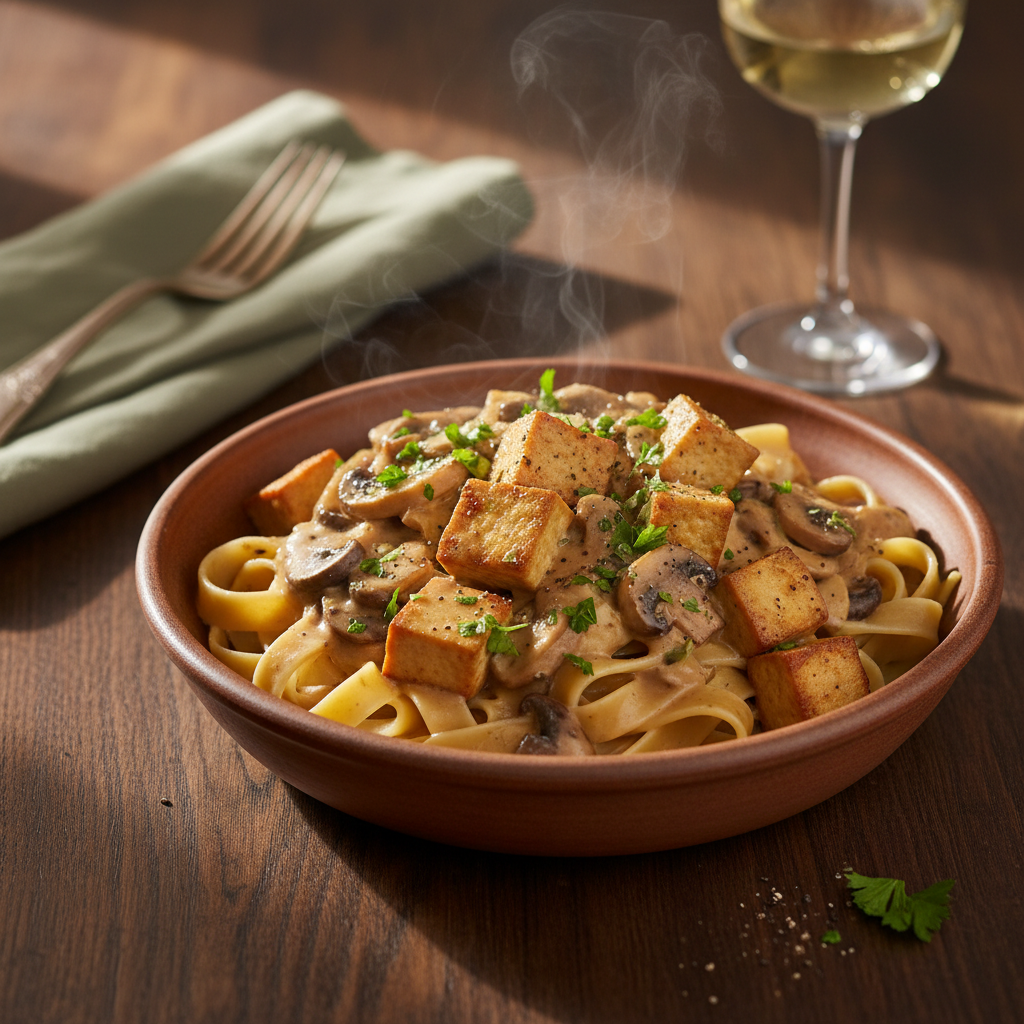
Rich, savory, and impossibly creamy without a drop of dairy, this protein-packed Tofu and Mushroom Stroganoff is the ultimate comfort food. Featuring golden-seared tofu cubes and earthy mushrooms swimming in a luxurious sauce served over tender noodles, it is a perfect 45-minute weeknight meal that will satisfy vegans and meat-eaters alike.
15 minutes
30 minutes
45 minutes
4 servings
Main Course
Stovetop
Russian-American Fusion
Vegan
There are few dishes in the culinary world that evoke the sensation of a warm hug quite like Beef Stroganoff. The combination of savory meat, earthy mushrooms, and that signature tangy, rich cream sauce is the definition of comfort. However, for those of us navigating a plant-based lifestyle or simply trying to reduce our dairy intake, this classic can often feel off-limits. Enter this game-changing Tofu and Mushroom Stroganoff. This recipe is not just a poor imitation of the original; it is a robust, flavor-forward dish that stands proudly on its own merits. We replace the traditional beef with two distinct textures: the chewiness of extra-firm, pan-seared tofu and the meaty, umami-rich bite of caramelized mushrooms. But the real magic lies in the sauce. Achieving that velvety consistency without heavy cream or sour cream can be tricky, but this recipe masters it using a blend of savory broth, a touch of Dijon mustard for that requisite tang, and a dairy-free creamy element that binds it all together. Whether you use a cashew cream base or a high-quality oat milk thickened with a roux, the result is a gloss that coats the back of a spoon perfectly. The flavor profile is deep and complex, layering garlic, onions, and fresh thyme with the salty punch of tamari, which mimics the beefy depth of the traditional version. This dish proves that you do not need animal products to create a meal that is hearty, satisfying, and deeply nostalgic. It is perfect for a cozy Sunday dinner, yet quick enough for a frantic Tuesday night. Get ready to add a new staple to your heavy rotation.
History & Origins
The origins of Stroganoff are as rich and textured as the sauce itself, rooting back to 19th-century Russia. The dish is named after the influential Stroganov family, specifically Count Pavel Stroganov, a dignitary and general. While the exact moment of invention is debated, it is widely believed that the dish was created by the Count’s French chefs. This explains the fusion of Russian tastes—specifically the love for sour cream (smetana)—with classic French culinary techniques like making a roux and using mustard as a flavoring agent. The earliest recorded recipe appeared in a classic Russian cookbook in 1871, calling for lightly floured beef cubes, prepared mustard, and bouillon, finished with a small amount of sour cream. There were no onions and no mushrooms in the original iteration. As the dish traveled the globe following the fall of Tsarist Russia, it evolved significantly. In China, it picked up spices; in the United States, particularly post-World War II, it became a suburban staple often made with ground beef and cream of mushroom soup. The introduction of mushrooms became standard to stretch the meat and add earthiness. The vegetarian and vegan evolution of Stroganoff began gaining traction in the health-conscious movements of the 1970s, where tofu and seitan began replacing beef. Today’s dairy-free version represents the modern era of cooking, where traditional comfort meets dietary awareness, utilizing global ingredients like tamari and nutritional yeast to replicate the savory depth that the French chefs originally sought to achieve with beef stock.
Why This Recipe Works
This recipe succeeds where many vegan adaptations fail because it prioritizes texture and umami layering. Often, tofu dishes can be soft and one-note, but here, we treat the tofu like meat. By pressing the liquid out and searing it separately in cornstarch, we create a crispy exterior barrier that holds up against the rich sauce, providing a satisfying ‘chew’ that mimics the mouthfeel of steak strips. Secondly, we double down on the mushrooms. By using a mix of varietals like Cremini and Shiitake, and cooking them until they are deeply browned—not just steamed—we unlock a massive amount of natural glutamates (umami). The sauce construction is the third pillar of success. Traditional Stroganoff relies on the reaction between sour cream and beef juices. To replicate this without dairy, we use a combination of vegetable broth enriched with tamari (soy sauce) for depth and color, and Dijon mustard combined with a splash of acid (lemon juice or vinegar) to mimic the lactic tang of sour cream. The creamy element, whether you choose cashew cream or a coconut-based alternative, creates an emulsion that clings to the noodles rather than sliding off. This balance of savory, salty, creamy, and tangy hits every receptor on the palate, making you forget it is entirely plant-based.
Why You’ll Love This Recipe
- ✓Completely Dairy-Free and Vegan
- ✓High in plant-based protein from tofu and mushrooms
- ✓Ready in under 45 minutes
- ✓Rich, umami-packed flavor profile
- ✓Perfect for meal prep and leftovers
- ✓Budget-friendly ingredients
Equipment You’ll Need
- ✓Large cast-iron skillet or wide sauté pan
- ✓Tofu press (or heavy books and towels)
- ✓Large pot for boiling pasta
- ✓Chef’s knife
- ✓Cutting board
- ✓Whisk
- ✓Measuring cups and spoons
Ingredients
- ✓1 block (14-16 oz) Extra Firm Tofu, drained and pressed
- ✓2 tbsp Cornstarch (for coating tofu)
- ✓3 tbsp Olive oil, divided
- ✓1 lb Mixed Mushrooms (Cremini, Shiitake, or Button), sliced
- ✓1 medium Yellow Onion, diced
- ✓3 cloves Garlic, minced
- ✓2 cups Vegetable Broth (low sodium preferred)
- ✓2 tbsp Tamari or Soy Sauce
- ✓1 tbsp Dijon Mustard
- ✓1 tbsp Nutritional Yeast (optional for cheesy depth)
- ✓1/2 cup Unsweetened Cashew Cream (or full-fat canned coconut milk)
- ✓1 tbsp Fresh Thyme leaves (or 1 tsp dried)
- ✓1 tbsp Lemon Juice
- ✓Salt and Black Pepper to taste
- ✓8 oz Wide Ribbon Pasta (tagliatelle, pappardelle, or egg-free wide noodles)
- ✓Fresh Parsley for garnish
Instructions
- 1. PREPARE THE TOFU: Press the tofu for at least 15-20 minutes to remove excess moisture. Cut the pressed tofu into 1-inch cubes or tear it into organic chunks for a more rustic texture. Toss the tofu chunks in a bowl with the cornstarch and a pinch of salt until evenly coated.
- 2. BOIL PASTA: Bring a large pot of salted water to a boil. Cook the pasta according to package directions until al dente. Drain and set aside, tossing with a tiny bit of oil to prevent sticking.
- 3. SEAR THE TOFU: Heat 1 tablespoon of olive oil in a large skillet over medium-high heat. Add the tofu in a single layer (do not crowd the pan). Cook for 3-4 minutes on each side until golden brown and crispy. Remove tofu from the pan and set aside on a plate.
- 4. COOK MUSHROOMS: In the same skillet, add another tablespoon of oil. Add the sliced mushrooms. Cook undisturbed for 3-4 minutes to allow them to brown properly. Stir and cook for another 3 minutes until they have released their liquid and it has evaporated.
- 5. AROMATICS: Lower heat to medium. Add the remaining tablespoon of oil if the pan is dry. Add the diced onions and cook until translucent (about 4 minutes). Add the minced garlic and fresh thyme, cooking for 1 minute until fragrant.
- 6. BUILD THE SAUCE: Deglaze the pan with a splash of the vegetable broth, scraping up any browned bits (fond) from the bottom. Pour in the remaining broth, tamari, and Dijon mustard. Whisk to combine. Bring to a gentle simmer.
- 7. MAKE IT CREAMY: Stir in the cashew cream (or coconut milk) and nutritional yeast. Simmer the sauce for 5-7 minutes until it reduces slightly and thickens. If the sauce is too thin, you can add a cornstarch slurry (1 tsp cornstarch mixed with 1 tbsp water).
- 8. COMBINE: Add the crispy tofu back into the pan along with the cooked pasta. Toss gently to coat everything in the sauce. Let it heat through for 1-2 minutes.
- 9. FINISH: Remove from heat. Stir in the lemon juice to brighten the flavors. Taste and adjust salt and pepper as needed. Garnish generously with fresh parsley before serving.
Expert Cooking Tips
- ✓Pressing the tofu is non-negotiable; wet tofu will not get crispy and will dilute your creamy sauce.
- ✓Don’t salt the mushrooms immediately. Salt draws out moisture, which causes mushrooms to steam instead of brown. Salt them after they have browned.
- ✓Use a mix of mushrooms for the best flavor complexity. Shiitakes add a meaty punch, while Creminis provide bulk.
- ✓Tearing the tofu instead of cutting cubes creates more surface area for the cornstarch to cling to, resulting in extra crispiness.
- ✓If using gluten-free pasta, be careful not to overcook it, as it can break apart when tossed in the heavy sauce.
- ✓Nutritional yeast adds a savory, cheese-like background note that bridges the gap between the vegetable broth and the cream element.
- ✓Always add the lemon juice at the very end; cooking acid for too long can dull its brightness.
Substitutions and Variations
This recipe is highly adaptable. If you are soy-free, you can replace the tofu with seitan chunks (if you eat gluten) or simply double the amount of mushrooms and add a can of chickpeas for protein. For the creamy element, cashew cream (soaked cashews blended with water) is the gold standard for neutrality, but full-fat canned coconut milk works well if you don’t mind a slight coconut hint. Alternatively, use a high-quality oat milk or soy creamer. If you don’t have Tamari, regular soy sauce or coconut aminos work perfectly. For the pasta, traditional Stroganoff uses egg noodles, but most dried pasta is vegan. Fusilli, rotini, or farfalle hold the sauce well if you can’t find wide ribbon noodles. Gluten-free pasta blends or even mashed potatoes are excellent bases for this sauce.
Common Mistakes to Avoid
The most common mistake is overcrowding the pan when cooking the mushrooms or tofu. If the pan is too full, the temperature drops and the ingredients steam in their own juices rather than searing, leading to a rubbery texture and lack of flavor. Another mistake is rushing the sauce reduction. The sauce needs time to simmer so the flavors of the thyme, garlic, and onion can meld. Also, skipping the acid (lemon juice or vinegar) at the end is a mistake; the dish can feel ‘heavy’ or ‘flat’ without that sharp note to cut through the richness. Finally, be careful with the saltiness; broth and tamari are both salty, so taste before adding extra salt.
Serving Suggestions
Classically, Stroganoff is served over wide noodles, but it is equally delicious ladled over a bed of creamy mashed potatoes or fluffy white rice. To balance the richness of the dish, serve it with a crisp, acidic side. Steamed green beans with lemon zest, roasted asparagus, or a simple arugula salad with a balsamic vinaigrette make excellent companions. A slice of crusty garlic bread is also fantastic for mopping up any leftover sauce in the bowl.
Storage and Reheating Tips
Store leftovers in an airtight container in the refrigerator for up to 4 days. The sauce will thicken significantly as it cools. To reheat, place in a saucepan over low heat and add a splash of water or vegetable broth to loosen the consistency back to creamy. Microwave reheating works too, but do it in short intervals, stirring in between. Freezing is possible but not ideal, as tofu texture changes upon freezing (becoming chewier/spongier) and creamy emulsions can sometimes separate. If you must freeze it, do so without the pasta, and boil fresh pasta when you are ready to eat.
Nutrition Facts (Estimated)
| Serving Size | 1 bowl (approx 350g) |
| Calories | 420 |
| Fat | 18g |
| Saturated Fat | 3g |
| Unsaturated Fat | 12g |
| Trans Fat | 0g |
| Cholesterol | 0mg |
| Sodium | 680mg |
| Carbohydrates | 45g |
| Fiber | 6g |
| Sugar | 4g |
| Protein | 22g |
Frequently Asked Questions
Can I make this recipe gluten-free?
Absolutely. Use Tamari instead of soy sauce (which usually contains wheat) and serve the stroganoff over gluten-free pasta, rice, or mashed potatoes. Ensure your oat milk or broth is certified gluten-free as well.
What is the best way to make cashew cream?
Soak 1/2 cup of raw cashews in boiling water for 30 minutes. Drain and rinse, then blend with 1/2 cup of fresh water and a pinch of salt until completely smooth. This replaces heavy cream perfectly.
Can I use silken tofu instead of firm?
You cannot use silken tofu as the ‘meat’ substitute because it will disintegrate in the pan. However, you can blend silken tofu with water to create a high-protein creamy base for the sauce instead of cashew cream.
My sauce is too runny, how do I fix it?
Simmer it for a few more minutes uncovered to let moisture evaporate. If it’s still stubborn, mix 1 teaspoon of cornstarch with 1 tablespoon of cold water and stir it into the boiling sauce. It will thicken instantly.
Can I use dried mushrooms?
Yes! Dried porcini mushrooms are fantastic here. Rehydrate them in hot water, chop them, and add them with the fresh mushrooms. Use the soaking liquid (strained of grit) as part of your vegetable broth for intense flavor.
Is this dish spicy?
Not at all. It is savory and creamy. The Dijon mustard adds a tiny bit of zing, and black pepper adds warmth, but there is no heat. You can add red pepper flakes if you want a kick.
Can I use meat alternatives like Impossible or Beyond meat?
Yes, you can use plant-based ground meat crumbles instead of tofu to mimic the texture of a ground beef stroganoff. Brown the crumbles first, remove, and follow the recipe as written.
What wine pairs well with this?
Since this is a creamy, earthy dish, a white wine with some body like a Chardonnay or a Viognier works well. Alternatively, a light red like a Pinot Noir complements the mushrooms beautifully.
Conclusion
This Tofu and Mushroom Stroganoff is proof that comfort food doesn’t require dairy or meat to be soul-satisfying. It brings together the best of both worlds: the nostalgic, creamy richness you crave and the wholesome, plant-based ingredients that make you feel good. Whether you are cooking for a dedicated vegan or a skeptic meat-eater, the depth of flavor in this sauce is sure to win them over. So, grab your skillet, press that tofu, and get ready to enjoy a bowl of pure, savory bliss.