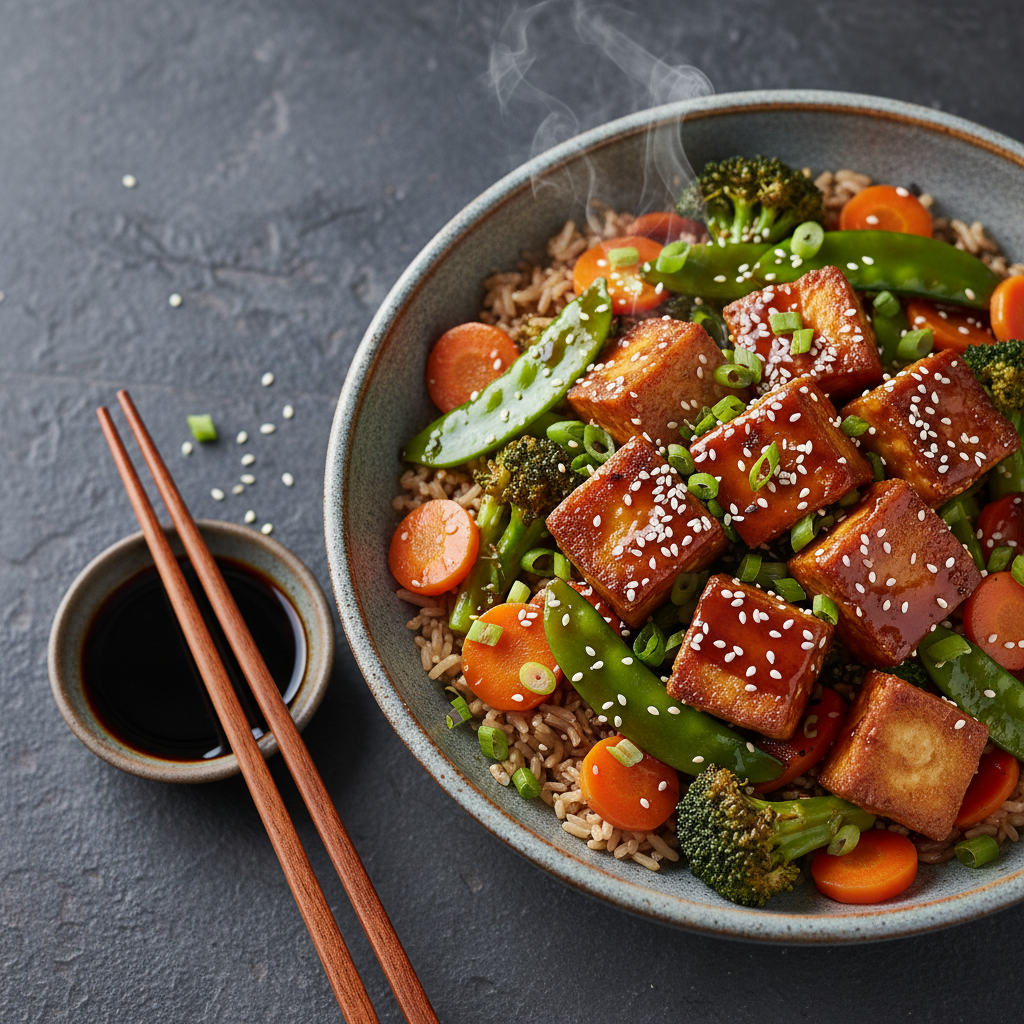
The Ultimate Crispy Tofu and Vegetable Stir Fry with Nutty Brown Rice
Tofu And Vegetable Stir Fry With Brown Rice Recipe
Transform humble ingredients into a gourmet weeknight dinner with this vibrant Tofu and Vegetable Stir Fry. Featuring perfectly golden, crispy tofu cubes and a medley of crunchy vegetables tossed in a savory garlic-ginger sauce, this dish is paired with wholesome brown rice for a complete, nutrient-packed meal.
20 minutes
25 minutes
45 minutes
4 servings
Main Course
Stir-Frying
Asian-Fusion
Vegetarian
If you have ever been disappointed by soggy, flavorless tofu or limp vegetables in a homemade stir fry, this recipe is about to change your culinary life. The art of the perfect stir fry lies in the texture—specifically, the contrast between the tender-crisp vegetables and the protein. In this comprehensive guide, we are tackling the most common complaint about plant-based cooking: the texture of tofu. By utilizing a simple cornstarch coating technique and a two-step cooking process, we transform plain blocks of soybean curd into addictive, golden nuggets that soak up our rich, umami-packed sauce without losing their crunch.
But a stir fry is only as good as its supporting cast. We are moving beyond the standard frozen vegetable mix and embracing fresh, vibrant produce like snap peas, bell peppers, and broccoli florets, all wok-seared to preserve their bright colors and nutritional integrity. The foundation of this meal is nutty, hearty brown rice. While white rice is traditional, brown rice adds a complex, earthy flavor profile and a chewy texture that stands up beautifully to the bold sauce. This dish strikes the elusive balance between being deeply comforting and incredibly healthy, offering a rainbow of phytonutrients, a substantial hit of plant-based protein, and complex carbohydrates to keep you fueled. Whether you are a dedicated vegan or a meat-eater looking to incorporate more plants into your diet, this Tofu and Vegetable Stir Fry is designed to satisfy your cravings for takeout while nourishing your body from the inside out.
History & Origins
The technique of stir-frying, or ‘chao’ (炒), is a culinary tradition with roots stretching back over a thousand years in China, though it became widely popularized during the Ming Dynasty as a method to cook food quickly using high heat, which conserved precious fuel. The wok, with its distinct concave shape, was engineered specifically for this purpose, allowing for the rapid tossing of ingredients to ensure even cooking and the development of ‘wok hei’—the breath of the wok—a smoky, seared flavor that defines authentic Chinese cuisine.
Tofu, the star protein of this dish, has an even more ancient lineage. Legend attributes its invention to Lord Liu An, a Han Dynasty prince, around 179 BC. For over two millennia, tofu has been a staple in East Asian cuisine, valued not just for its versatility but for its ability to absorb the flavors of whatever it is cooked with. It traveled from China to Japan in the Nara period and eventually spread across the globe.
The inclusion of brown rice in this recipe represents a modern, health-conscious adaptation often seen in Western wellness circles. Historically, polishing rice to remove the bran and germ (creating white rice) was a sign of wealth and refinement in Asia, while brown rice was often associated with the poor. However, in recent decades, the global understanding of nutrition has flipped this script. Today, brown rice is celebrated for its high fiber content and lower glycemic index. This recipe marries the ancient, rapid-fire cooking techniques of the East with the modern nutritional preferences of the West, creating a fusion dish that honors the past while serving the needs of the contemporary kitchen.
Why This Recipe Works
This recipe succeeds where many others fail primarily due to the treatment of the tofu. Most home cooks make the mistake of throwing wet, raw tofu directly into the pan with vegetables, resulting in a crumbling, watery mess. In this recipe, we employ a crucial step: pressing the tofu to remove excess moisture, followed by tossing it in cornstarch (or arrowroot powder). When pan-fried, this starch layer creates a barrier that crisps up beautifully, mimicking the texture of deep-fried tofu with significantly less oil. This crust also acts as a sponge, holding onto the sauce rather than letting it slide off.
Secondly, the ‘staging’ of the vegetables is key. Different vegetables have different cooking times. By adding hard vegetables like carrots and broccoli first, and softer ones like bell peppers and snap peas later, we ensure that every bite is perfectly cooked—tender but with a satisfying snap. Finally, the sauce is formulated with a balance of salty (soy sauce), sweet (maple syrup or brown sugar), acid (rice vinegar), and aromatics (ginger and garlic). The addition of a cornstarch slurry to the sauce ensures it thickens instantly upon hitting the hot pan, glazing the ingredients in a glossy, flavorful coat rather than pooling at the bottom of the bowl. This attention to texture and sauce viscosity is what elevates this dish from a standard pantry clear-out to a restaurant-quality meal.
Why You’ll Love This Recipe
- ✓Crispy, golden tofu that stays crunchy even in sauce
- ✓A nutrient-dense rainbow of fresh vegetables
- ✓Rich, savory garlic-ginger sauce made from pantry staples
- ✓High in plant-based protein and fiber
- ✓Better and healthier than takeout
- ✓Customizable with whatever veggies you have on hand
Equipment You’ll Need
- ✓Large Wok or Heavy Skillet
- ✓Tofu Press (or heavy books and paper towels)
- ✓Chef’s Knife
- ✓Cutting Board
- ✓Medium Pot (for rice)
- ✓Whisk
- ✓Small Mixing Bowls
Ingredients
- ✓1 block (14 oz) extra-firm tofu, drained and pressed
- ✓2 tablespoons cornstarch (for coating tofu)
- ✓2 tablespoons avocado oil or vegetable oil, divided
- ✓1 cup uncooked brown rice
- ✓2 cups vegetable broth (for cooking rice)
- ✓2 cups broccoli florets, cut into bite-sized pieces
- ✓1 red bell pepper, sliced into strips
- ✓1 cup sugar snap peas, strings removed
- ✓2 large carrots, sliced into thin rounds or matchsticks
- ✓3 cloves garlic, minced
- ✓1 tablespoon fresh ginger, grated
- ✓1/4 cup low-sodium soy sauce (or tamari for GF)
- ✓1 tablespoon rice vinegar
- ✓1 tablespoon maple syrup or brown sugar
- ✓1 teaspoon sesame oil
- ✓1 tablespoon cornstarch (for sauce thickener) mixed with 2 tbsp water
- ✓Green onions and sesame seeds for garnish
Instructions
- Start by cooking the brown rice. Rinse the rice thoroughly under cold water. In a medium pot, combine the rice and vegetable broth. Bring to a boil, then reduce heat to low, cover, and simmer for 35-40 minutes until liquid is absorbed and rice is tender. Remove from heat and let it sit covered for 10 minutes.
- While the rice cooks, prepare the tofu. Wrap the tofu block in paper towels and place a heavy object on top (like a cast-iron skillet) for at least 15 minutes to press out excess water. Cut the pressed tofu into 1-inch cubes.
- Place the tofu cubes in a large bowl and sprinkle with 2 tablespoons of cornstarch. Toss gently until the tofu is evenly coated with a thin, powdery layer.
- In a small bowl, whisk together the sauce ingredients: soy sauce, rice vinegar, maple syrup, sesame oil, minced garlic, and grated ginger. Set aside. Prepare the cornstarch slurry in a separate small cup.
- Heat 1 tablespoon of oil in your wok or large skillet over medium-high heat. Add the tofu cubes in a single layer. Cook for 3-4 minutes on each side until golden brown and crispy. Remove tofu from the pan and set aside on a plate.
- Wipe out the wok if needed and add the remaining 1 tablespoon of oil. Add the carrots and broccoli. Stir fry for 3-4 minutes until they begin to soften but are still crisp.
- Add the bell pepper and snap peas to the wok. Stir fry for another 2-3 minutes. If the pan gets too dry, add a splash of water to create steam.
- Pour the sauce mixture over the vegetables and toss to coat. Let it bubble for 30 seconds.
- Stir the cornstarch slurry once more (it settles quickly) and pour it into the bubbling sauce. Stir constantly; the sauce will thicken into a glossy glaze almost immediately.
- Add the cooked tofu back into the pan. Toss gently to coat everything in the sauce and warm the tofu through.
- Serve immediately over a bed of fluffy brown rice, garnished with sliced green onions and toasted sesame seeds.
Expert Cooking Tips
- ✓Press your tofu thoroughly; moisture is the enemy of crispiness.
- ✓Do not overcrowd the pan when frying tofu; cook in batches if necessary to ensure steaming doesn’t occur.
- ✓Prep all your vegetables and sauce before you turn on the stove; stir-frying happens very fast.
- ✓Cut your vegetables into uniform sizes so they cook evenly.
- ✓Use a high smoke point oil like avocado, grapeseed, or canola oil for the frying steps.
- ✓If you like heat, add a teaspoon of chili garlic sauce or sriracha to the liquid sauce mix.
- ✓Toast your sesame seeds in a dry pan for 1 minute before garnishing for extra nutty flavor.
Substitutions and Variations
This recipe is incredibly flexible and friendly to various dietary needs. For a gluten-free version, simply swap the soy sauce for Tamari or coconut aminos. If you are avoiding soy altogether, you can substitute the tofu for chickpeas, seitan, or even chicken breast, and use coconut aminos for the sauce. The vegetable selection is entirely up to you; zucchini, baby corn, water chestnuts, bok choy, and mushrooms are excellent alternatives or additions. If you don’t have brown rice, this stir fry pairs wonderfully with quinoa, jasmine rice, cauliflower rice for a low-carb option, or even tossed with soba noodles. Maple syrup can be replaced with honey (if not vegan), agave, or brown sugar. For the thickener, arrowroot powder works just as well as cornstarch.
Common Mistakes to Avoid
The most common mistake is skipping the tofu pressing step, which results in a mushy texture that dilutes the sauce. Another frequent error is dumping all vegetables into the wok at once. Hard root vegetables like carrots take significantly longer to cook than delicate peppers or leafy greens; cooking them together results in some being raw while others are overcooked mush. Additionally, avoid adding the sauce to a cold pan or letting it sit too long without stirring, as the cornstarch can clump. Finally, do not cover the wok once the green vegetables are added, as trapping the steam can turn vibrant green veggies into a dull olive color due to the acid in the vegetables breaking down chlorophyll.
Serving Suggestions
Serve this stir fry piping hot in wide, shallow bowls to allow the beautiful colors to be displayed. Create a base with the brown rice, ladle the veggie and tofu mix on top, and be generous with the garnishes. A side of kimchi or pickled cucumbers adds a nice tangy contrast to the savory sauce. For a beverage pairing, a cold jasmine iced tea or a crisp lager beer complements the salty and savory notes perfectly. If you are serving this for a dinner party, consider starting with some vegetable spring rolls or edamame.
Storage and Reheating Tips
Leftovers can be stored in an airtight container in the refrigerator for up to 4 days. However, note that the tofu will lose its crispiness as it sits in the sauce. To reheat, it is best to use a skillet or wok over medium heat rather than a microwave to help revive some of the texture. If you must microwave, sprinkle a few drops of water over the rice to prevent it from drying out. Freezing is not recommended for this specific recipe because the texture of the tofu changes significantly (becoming spongy and chewy) and the vegetables will become mushy upon thawing. Ideally, cook only what you plan to eat within a few days.
Nutrition Facts (Estimated)
| Serving Size | 1 bowl (approx 400g) |
| Calories | 420 |
| Fat | 14g |
| Saturated Fat | 2g |
| Unsaturated Fat | 11g |
| Trans Fat | 0g |
| Cholesterol | 0mg |
| Sodium | 680mg |
| Carbohydrates | 58g |
| Fiber | 7g |
| Sugar | 8g |
| Protein | 18g |
Frequently Asked Questions
Why is my tofu falling apart?
Tofu usually falls apart if it hasn’t been pressed enough or if you are using a variety that is too soft. Ensure you are buying ‘Extra Firm’ or ‘Super Firm’ tofu, not ‘Silken’ or ‘Soft’.
Can I use frozen vegetables?
Yes, you can use frozen vegetables, but the texture won’t be as crisp. Thaw and drain them well before adding to the wok, and reduce the cooking time since they are usually blanched before freezing.
How do I make the sauce spicy?
You can add red pepper flakes, Sriracha, Sambal Oelek, or a diced fresh chili pepper to the sauce mixture to kick up the heat.
My sauce is too thick, what do I do?
If the sauce becomes too gluey, simply stir in a tablespoon of water or vegetable broth at a time until it reaches your desired consistency.
Can I bake the tofu instead of frying?
Absolutely! For a hands-off method, toss the cornstarch-coated tofu in oil and bake at 400°F (200°C) for 25-30 minutes, flipping halfway through, until crispy.
Is brown rice really better than white rice?
Nutritionally, brown rice is a whole grain containing the bran and germ, providing more fiber, magnesium, and other nutrients compared to refined white rice. However, it takes longer to cook.
Can I make this recipe oil-free?
Yes. You can bake the tofu without oil (use parchment paper) and water-sauté the vegetables using small splashes of broth instead of oil, though the tofu won’t be as crispy.
What can I use instead of cornstarch?
Arrowroot powder, potato starch, or tapioca flour are excellent substitutes for coating the tofu and thickening the sauce.
Conclusion
Mastering this Tofu and Vegetable Stir Fry with Brown Rice adds a powerful tool to your kitchen repertoire. It is the kind of meal that ticks every box: it is visually stunning, deeply satisfying, packed with nutrition, and comes together relatively quickly. By respecting the individual cooking times of the ingredients and taking the time to treat the tofu right, you elevate simple produce into a dish that feels special. We hope this recipe helps you fall in love with cooking plant-based meals at home. Don’t forget to pin this recipe for later and leave a comment below letting us know what vegetables you used in your version!