Ultimate Healthy Tuna Stuffed Sweet Potatoes: The Perfect Protein-Packed Meal Prep
Tuna Stuffed Sweet Potato Healthy Recipe
Discover the perfect marriage of savory and sweet with these nutrient-dense Tuna Stuffed Sweet Potatoes. This easy, budget-friendly recipe combines fluffy baked sweet potatoes with a zesty, protein-rich tuna salad for a satisfying lunch or dinner that keeps you fueled for hours.
15 minutes
45 minutes
1 hour
4 servings
Main Course
Baking
American / Healthy
Gluten-Free
In the world of healthy eating, few ingredients are as versatile and beloved as the humble sweet potato. When you combine its natural, earth-grown sweetness with the savory, protein-packed punch of canned tuna, you unlock a flavor combination that is nothing short of magical. This Tuna Stuffed Sweet Potato recipe is more than just a quick weeknight dinner; it is a testament to the fact that nutritious food does not have to be complicated, expensive, or bland.
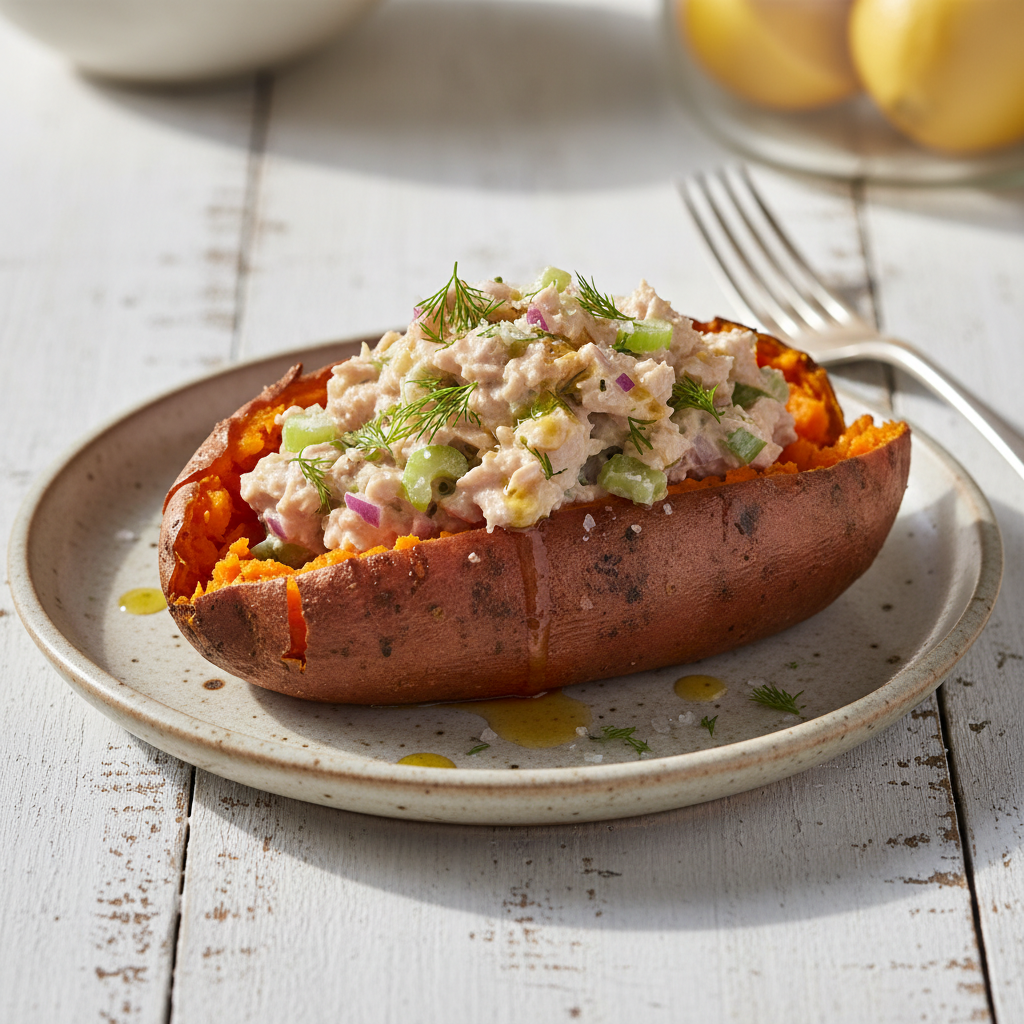
Imagine cutting into a perfectly roasted sweet potato, its skin slightly crisp and caramelized, revealing a steaming, vibrant orange interior that is as soft as butter. Now, top that with a cool, creamy, and crunchy tuna salad spiked with tangy Dijon mustard, fresh lemon juice, and crisp celery. The contrast in temperatures—the piping hot potato against the refreshing tuna salad—creates a sensory experience that elevates this dish from a simple pantry meal to a gourmet-style comfort food.
This recipe has become a staple in modern wellness circles because it checks every box: it is high in protein, rich in complex carbohydrates, loaded with fiber, and bursting with vitamins A and C. It is the ultimate meal prep solution for busy professionals, fitness enthusiasts, or anyone looking to get a wholesome dinner on the table without a sink full of dirty dishes. Whether you are strictly gluten-free, following a whole-foods diet, or simply trying to reduce your grocery bill without sacrificing flavor, this dish delivers on all fronts. It is hearty enough to stand alone as a main course yet light enough to leave you feeling energized rather than weighed down. Let’s dive into why this dynamic duo of ingredients deserves a permanent spot in your weekly meal rotation.
History & Origins
The culinary journey of the sweet potato and the concept of stuffing vegetables is a fascinating tale that spans continents and millennia. The sweet potato (*Ipomoea batatas*) originated in the Americas, with evidence of its cultivation in Peru dating back as far as 5,000 years ago. It was a staple crop for ancient civilizations in Central and South America before being introduced to Europe by Christopher Columbus in the late 15th century. From there, it traveled to Africa and Asia, becoming a critical food source globally due to its hardiness and nutritional density.
Meanwhile, the practice of stuffing vegetables—known in culinary terms as *farci* in France or associated with dishes like *dolma* in the Middle East—has ancient roots. However, the specific concept of the “stuffed potato” or “jacket potato” is heavily rooted in British culinary tradition. In the UK, a baked potato with various fillings (beans, cheese, tuna mayonnaise) has been a popular working-class meal since the mid-20th century, celebrated for being filling and affordable.
Canned tuna, the other star of this dish, revolutionized protein consumption after its rise in popularity in the early 20th century. It transformed seafood from a coastal luxury into a shelf-stable global commodity. The marriage of the American sweet potato with the British-style stuffed jacket potato concept, utilizing the convenience of canned tuna, really began to gain traction in the 2010s. As the “clean eating” and paleo movements surged in the United States, food bloggers and nutritionists sought alternatives to the white potato and heavy, mayonnaise-laden fillings. The Tuna Stuffed Sweet Potato emerged during this wellness renaissance as a modern classic—a dish that respects the history of its ingredients while adapting to contemporary nutritional science and the busy lifestyles of the digital age.
Why This Recipe Works
This recipe succeeds brilliantly because it is a masterclass in balancing flavor profiles and textures. First, consider the flavor spectrum: sweet potatoes are naturally sugary and earthy. If you were to pair them with something equally sweet, the dish would feel like a dessert. However, by introducing a savory tuna salad, we create a ‘swalty’ (sweet and salty) dynamic that is incredibly pleasing to the human palate. The tuna salad is seasoned with lemon juice and Dijon mustard, providing a necessary acidic cut that pierces through the density of the potato starch.
Texture is the second pillar of why this works. A properly baked sweet potato is soft, creamy, and yielding. To prevent the dish from becoming ‘mush on mush,’ it is crucial to incorporate crunch. This is why our tuna salad recipe insists on finely diced celery and red onion. These ingredients provide a crisp snap in every bite, offering a satisfying counterpoint to the creamy potato and the tender tuna.
Finally, from a nutritional standpoint, this pairing works because it offers sustained energy. The complex carbohydrates in the sweet potato digest slowly, providing a steady release of glucose, while the high protein content of the tuna promotes satiety. This synergy prevents the blood sugar spike and crash often associated with carb-heavy meals, making it a recipe that not only tastes good but makes you feel good physically.
Why You’ll Love This Recipe
- ✓High Protein & Fiber: Keeps you full for hours.
- ✓Budget-Friendly: Uses affordable pantry staples.
- ✓Gluten-Free & Whole30 Option: fits many dietary needs.
- ✓Meal Prep Champion: Components store well separately.
- ✓Zero Waste: Utilizes the whole potato, skin and all.
Equipment You’ll Need
- ✓Baking sheet
- ✓Parchment paper or aluminum foil
- ✓Large mixing bowl
- ✓Chef’s knife
- ✓Fork
- ✓Measuring spoons and cups
Ingredients
- ✓4 medium sweet potatoes, scrubbed clean and dried
- ✓2 cans (5 oz each) tuna in water, drained well
- ✓1/3 cup Greek yogurt (plain, non-fat) or high-quality mayonnaise
- ✓2 stalks celery, finely diced
- ✓1/4 cup red onion, finely minced
- ✓1 tablespoon Dijon mustard
- ✓1 tablespoon fresh lemon juice
- ✓1/2 teaspoon garlic powder
- ✓Salt and black pepper to taste
- ✓1 tablespoon fresh dill or parsley, chopped (for garnish)
- ✓Optional: 1/2 cup shredded cheddar cheese (for a tuna melt variation)
Instructions
- Preheat your oven to 400°F (200°C). Line a baking sheet with parchment paper or foil for easy cleanup.
- Thoroughly wash and scrub the sweet potatoes to remove any dirt. Pat them completely dry with a paper towel. This step is crucial for crispy skin.
- Using a fork, pierce each sweet potato 5-6 times all over. This allows steam to escape and prevents them from bursting in the oven.
- Place the potatoes on the baking sheet and bake for 45-60 minutes. The time will vary based on the size of the potatoes. They are done when a knife slides easily into the center and the sugars have started to caramelize on the outside.
- While the potatoes bake, prepare the filling. In a large mixing bowl, combine the drained tuna, Greek yogurt (or mayo), diced celery, red onion, Dijon mustard, lemon juice, and garlic powder.
- Mix well until the ingredients are evenly incorporated. Taste the mixture and season with salt and black pepper according to your preference. Place the salad in the fridge to keep cool until the potatoes are ready.
- Once the potatoes are baked, remove them from the oven and let them cool for about 5-10 minutes so they are safe to handle.
- Slice each potato lengthwise down the center, being careful not to cut all the way through to the bottom. Gently squeeze the ends towards the center to push the potato open and fluff the inside flesh with a fork.
- Generously stuff each potato with the tuna salad mixture.
- Garnish with fresh dill or parsley and serve immediately. Alternatively, if adding cheese, sprinkle it on top and place under the broiler for 2-3 minutes until melted.
Expert Cooking Tips
- ✓Dry the Skins: Ensure the potatoes are bone-dry before baking to get that desirable crispy skin.
- ✓Don’t Wrap in Foil: Baking potatoes wrapped in foil steams them. For a roasted flavor and texture, bake them naked on the sheet.
- ✓Drain the Tuna: Press down on the tuna can lid to squeeze out as much water as possible; nobody likes a soggy salad.
- ✓Uniform Size: Buy sweet potatoes that are roughly the same size so they finish cooking at the same time.
- ✓Fluff the Potato: Don’t skip fluffing the inside of the potato with a fork before adding the topping; it makes the texture much better.
Substitutions and Variations
This recipe is incredibly flexible and forgiving. If you are not a fan of tuna, canned salmon or shredded rotisserie chicken are excellent protein alternatives that work well with the same creamy dressing. For a vegetarian version, chickpeas mashed with the back of a fork make a great textural substitute for tuna.
Regarding the binder, Greek yogurt is the healthy choice for high protein and probiotics, but you can use mayonnaise for a classic taste, or mashed avocado for a dairy-free, heart-healthy fat option. If red onion is too pungent for your taste, swap it for green onions (scallions) or chives for a milder onion flavor. Lastly, if you don’t have Dijon mustard, a pinch of dried mustard powder or even a splash of apple cider vinegar can provide that necessary tang.
Common Mistakes to Avoid
The most common mistake people make is undercooking the sweet potato. A sweet potato that is still hard in the center is unappetizing and difficult to eat. Always test with a knife; it should slide in with zero resistance. Another frequent error is making the tuna salad too watery. This usually happens if the tuna isn’t drained properly or if watery vegetables like cucumber or tomato are added to the mix without being deseeded. This excess liquid will seep into the potato, making the whole dish soggy. Finally, avoid prepping the potatoes too far in advance if you want the skins crispy; once they are refrigerated, the skins will soften, though they will still taste delicious when reheated.
Serving Suggestions
These stuffed sweet potatoes are a complete meal on their own, but they pair wonderfully with a simple side salad of mixed greens dressed with a vinaigrette to add more volume and freshness to your plate. If you are serving these for a dinner party or a family meal, consider setting up a ‘topping bar’ with extras like hot sauce, diced avocado, roasted pumpkin seeds for crunch, or pickled jalapeños for a spicy kick. A light, crisp white wine like a Sauvignon Blanc or a sparkling water with lime complements the richness of the tuna and the sweetness of the potato perfectly.
Storage and Reheating Tips
To store leftovers, it is best to keep the baked sweet potatoes and the tuna salad in separate airtight containers in the refrigerator. They will stay fresh for up to 3-4 days. When you are ready to eat, reheat the sweet potato in the microwave or oven until hot, and then top with the cold tuna salad. If you have already stuffed the potatoes, you can store them assembled. In this case, you can eat them cold (which is delicious!) or reheat them gently. Note that heating the tuna salad will change its texture slightly and release a stronger aroma. Freezing is not recommended for the tuna salad component as the yogurt or mayo may separate upon thawing, though baked sweet potatoes freeze beautifully on their own.
Nutrition Facts (Estimated)
| Serving Size | 1 stuffed potato |
| Calories | 385 |
| Fat | 12g |
| Saturated Fat | 2g |
| Unsaturated Fat | 9g |
| Trans Fat | 0g |
| Cholesterol | 35mg |
| Sodium | 450mg |
| Carbohydrates | 42g |
| Fiber | 6g |
| Sugar | 9g |
| Protein | 28g |
Frequently Asked Questions
Can I make this recipe paleo-friendly?
Yes! Simply substitute the Greek yogurt with a paleo-approved mayonnaise (usually made with avocado oil) or use mashed avocado as your binder.
Is it better to boil or bake the sweet potatoes?
Baking is far superior for this recipe. Boiling adds moisture to the potato and dilutes the flavor, whereas baking concentrates the natural sugars and improves the texture.
Can I use white potatoes instead?
Absolutely. Russet potatoes work very well as ‘jacket potatoes’ with tuna filling, though the flavor profile will be more savory and less sweet.
How can I speed up the cooking time?
You can microwave the sweet potatoes for 5-6 minutes until they start to soften, and then finish them in the oven for 15-20 minutes to crisp up the skin. This cuts the cooking time in half.
Is this recipe safe for meal prep?
Yes, it is excellent for meal prep. Keep the potatoes and filling separate until you are ready to eat to maintain the best texture.
What kind of tuna should I buy?
We recommend ‘chunk light’ or ‘solid white albacore’ packed in water. Tuna packed in oil adds unnecessary calories and can make the filling too greasy.
Can I eat the sweet potato skin?
Yes, the skin is highly nutritious, containing significant fiber and potassium. Just make sure to scrub it well before baking.
Is this recipe keto-friendly?
Sweet potatoes are higher in carbs, so they are generally not considered keto-friendly. However, it is a great carb source for carb-cycling days or general healthy eating.
Conclusion
There you have it—a simple, nutritious, and utterly delicious recipe that proves healthy eating doesn’t have to be boring. The Tuna Stuffed Sweet Potato is a testament to the power of whole foods coming together to create something greater than the sum of their parts. Whether you are looking for a post-workout refuel, a kid-friendly dinner, or a reliable lunch option, this dish is sure to satisfy. Give it a try this week, and don’t forget to experiment with your own favorite toppings and spices to make it truly your own!