Juicy & Healthy Turkey Meatloaf with Oats
Turkey Meatloaf With Oats Healthy Recipe
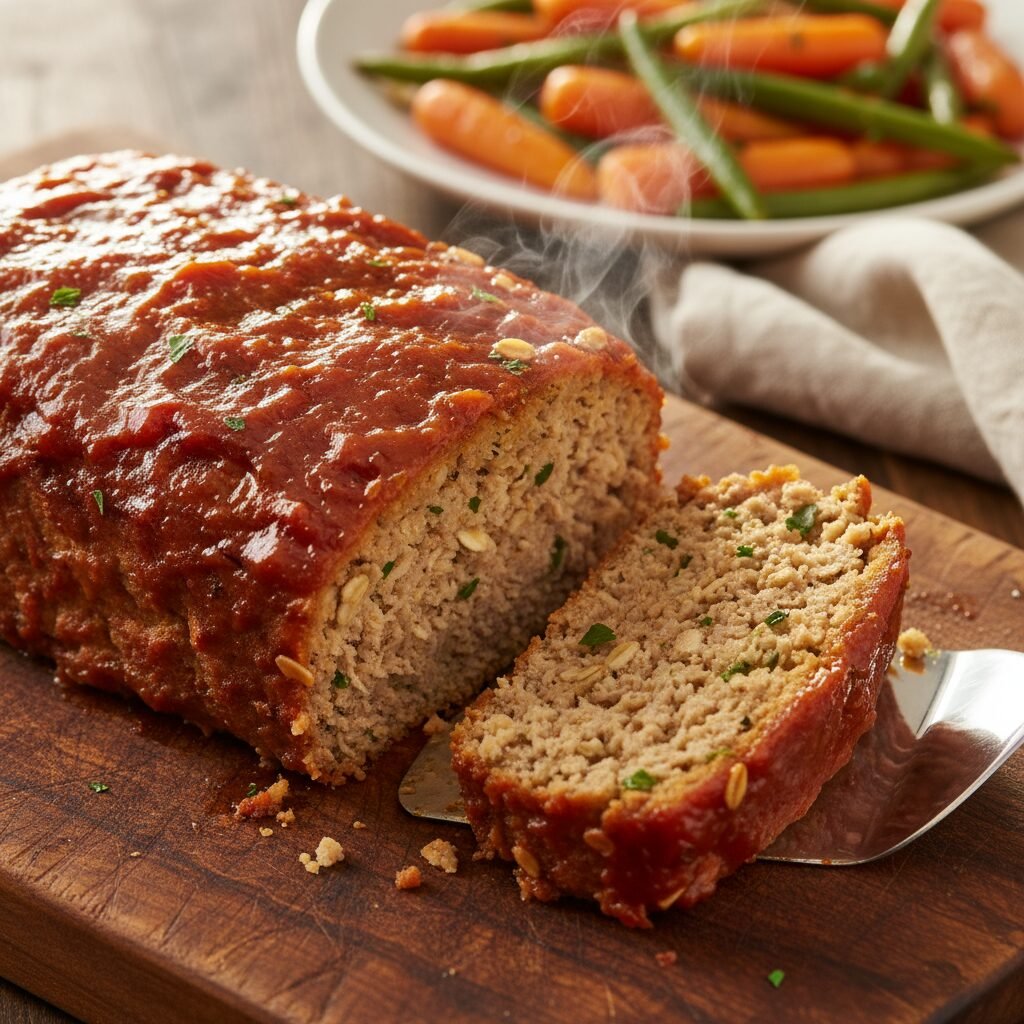
Ditch the dry, bland meatloaf of the past and embrace this incredibly moist and flavorful Turkey Meatloaf with Oats. Packed with lean protein and fiber-rich oats, this healthy dinner recipe is a comfort food makeover that your entire family will request on repeat.
20 minutes
55 minutes
1 hour 15 minutes
6 servings
Main Course
Baking
American
Gluten-Free Option
Meatloaf is the quintessential American comfort food, evoking memories of Sunday dinners and cozy kitchens. However, traditional recipes often rely on heavier beef blends and refined breadcrumbs, which can weigh you down. Enter this game-changing Turkey Meatloaf with Oats—a lighter, more nutritious alternative that refuses to compromise on flavor or texture. By swapping ground beef for lean ground turkey, we immediately reduce the saturated fat content, making this a heart-healthy choice for weeknight meals. But the real secret weapon here is the addition of rolled oats. Unlike dry breadcrumbs, oats have a unique ability to absorb and retain moisture, ensuring that every slice is succulent and tender, never dry or crumbly.
Many home cooks shy away from turkey meatloaf because of its reputation for being bland or rubbery. This recipe tackles those issues head-on with a robust blend of aromatics—sautéed onions, garlic, and a splash of Worcestershire sauce—that infuse the meat with savory depth. The oats not only bind the loaf together but also add a subtle nutty undertone that complements the turkey beautifully. Topped with a tangy, sweet-and-savory glaze that caramelizes as it bakes, this dish delivers that classic sticky finish we all crave. Whether you are meal prepping for a busy week or hosting a casual family gathering, this turkey meatloaf proves that eating healthy doesn’t mean sacrificing the comfort food experience. It’s a modern classic that balances nutrition with pure culinary indulgence.
History & Origins
The concept of meatloaf has ancient roots, dating back to Roman times when chopped meats were mixed with spices and wine-soaked bread. A recipe for a patty-like dish is even found in the famous Roman cookbook ‘Apicius’ from the 5th century. However, the meatloaf we recognize today is largely a product of American ingenuity, particularly during the Great Depression. In the 1930s, stretching expensive proteins was a necessity for survival. Home cooks began adding inexpensive fillers like crackers, breadcrumbs, and oats to ground meat to make it feed more mouths. This cemented meatloaf’s status as a frugal, reliable staple in the American culinary canon.
By the 1950s, meatloaf had evolved from a survival dish to a celebrated centerpiece of the suburban dinner table, often glazed with ketchup and served alongside mashed potatoes. As health consciousness began to rise in the late 20th century, specifically during the low-fat craze of the 1980s and 90s, poultry began to replace red meat in many households. Ground turkey emerged as a popular substitute, though early attempts often resulted in dry, flavorless loaves due to the lower fat content. The integration of oats gained popularity not just for texture, but as part of a broader movement towards whole grains and heart health. Today, the turkey and oat combination represents the modern evolution of this historic dish—honoring the tradition of ‘stretching’ meat while prioritizing nutritional value and moisture retention.
Why This Recipe Works
This recipe succeeds where many turkey meatloaves fail primarily due to the hydration strategy and the choice of binder. Ground turkey is significantly leaner than the ground beef chuck typically used in meatloaf (which is often 80/20). Fat provides moisture, so when you remove it, you must replace it. In this recipe, we use old-fashioned rolled oats soaked in milk (or a milk alternative) before mixing them into the meat. This technique, similar to a ‘panade’ used in meatball making, allows the oats to swell and become gelatinous. When baked, these hydrated oats release moisture slowly back into the meat, preventing the proteins from tightening up too much and drying out the loaf.
Furthermore, the texture of oats provides a better structure than fine breadcrumbs for turkey. Turkey has a softer, almost paste-like consistency compared to beef. Oats add necessary bulk and chew, giving the loaf a satisfying mouthfeel that mimics the density of a traditional beef loaf. Flavor-wise, we layer umami-rich ingredients like tomato paste, soy sauce (or Worcestershire), and dried herbs directly into the meat mixture. This compensates for the mild flavor of the turkey. Finally, baking the loaf free-form on a sheet pan rather than in a loaf pan allows the heat to circulate evenly, caramelizing the glaze on all sides rather than just the top, resulting in a superior flavor profile.
Why You’ll Love This Recipe
- ✓Significantly lower in saturated fat than traditional beef meatloaf.
- ✓Rolled oats provide superior moisture retention and added fiber.
- ✓Gluten-free friendly if certified gluten-free oats are used.
- ✓Perfect for meal prep as it stays moist when reheated.
- ✓Kid-friendly flavor profile with a sweet and tangy glaze.
- ✓Budget-friendly ingredients that yield a large portion.
Equipment You’ll Need
- ✓Large mixing bowl
- ✓Small mixing bowl (for glaze)
- ✓Baking sheet or roasting pan
- ✓Parchment paper or aluminum foil
- ✓Chef’s knife
- ✓Cutting board
- ✓Measuring cups and spoons
- ✓Instant-read meat thermometer
Ingredients
- ✓2 lbs lean ground turkey (93% lean recommended)
- ✓1 cup old-fashioned rolled oats (gluten-free if needed)
- ✓1/2 cup milk (dairy or unsweetened almond milk)
- ✓1 medium yellow onion, finely chopped
- ✓2 cloves garlic, minced
- ✓1 large egg, lightly beaten
- ✓1 tbsp Worcestershire sauce
- ✓1 tsp dried thyme
- ✓1 tsp dried oregano
- ✓1 tsp salt
- ✓1/2 tsp black pepper
- ✓1/2 cup ketchup (for glaze)
- ✓1 tbsp brown sugar (for glaze)
- ✓1 tsp Dijon mustard (for glaze)
Instructions
- Preheat your oven to 375°F (190°C). Line a rimmed baking sheet with parchment paper or aluminum foil for easy cleanup.
- In a large bowl, combine the rolled oats and milk. Stir well and let it sit for about 5-10 minutes. This allows the oats to absorb the liquid and soften.
- While the oats are soaking, heat a small skillet over medium heat with a drizzle of olive oil. Sauté the chopped onion for 5 minutes until translucent and soft. Add the minced garlic and cook for another minute until fragrant. Remove from heat and let cool slightly.
- To the bowl with the soaked oats, add the ground turkey, cooled onion and garlic mixture, beaten egg, Worcestershire sauce, thyme, oregano, salt, and pepper.
- Using your hands, gently mix the ingredients until just combined. Be careful not to overwork the meat, as this can make the meatloaf tough.
- Transfer the meat mixture to the prepared baking sheet. Shape it into a loaf approx 9 inches long and 5 inches wide.
- In a small bowl, whisk together the ketchup, brown sugar, and Dijon mustard to make the glaze.
- Brush half of the glaze over the top and sides of the meatloaf.
- Bake in the preheated oven for 45 minutes.
- Remove the meatloaf from the oven and brush the remaining glaze over the top.
- Return to the oven and bake for another 10-15 minutes, or until the internal temperature reaches 165°F (74°C) on an instant-read thermometer.
- Let the meatloaf rest for at least 10 minutes before slicing. This allows the juices to redistribute throughout the meat.
Expert Cooking Tips
- ✓Do not overmix the meat; mix just until ingredients are incorporated to ensure a tender texture.
- ✓Soaking the oats is crucial. Do not skip the milk soaking step, as this locks in moisture.
- ✓Use an instant-read thermometer to prevent overcooking. Turkey dries out quickly if cooked past 165°F.
- ✓Finely chop your vegetables so they cook evenly inside the loaf and don’t cause it to crumble when sliced.
- ✓Letting the meatloaf rest is mandatory. Cutting into it immediately will cause all the juices to run out.
- ✓If you prefer a crispier exterior, broil the loaf for 1-2 minutes at the very end after adding the second layer of glaze.
Substitutions and Variations
This recipe is highly adaptable to suit various dietary needs and pantry staples. If you are gluten-free, ensure you are using certified gluten-free rolled oats and check your Worcestershire sauce label, or swap it for tamari. For a dairy-free version, any unsweetened plant-based milk (like almond or oat milk) works perfectly to soak the oats. If you don’t have fresh onions or garlic, you can substitute with 1 tablespoon of onion powder and 1 teaspoon of garlic powder, though fresh aromatics provide better moisture. For the glaze, you can swap ketchup for BBQ sauce for a smoky twist, or use a sugar-free ketchup if you are watching your sugar intake. Quick oats can be used in a pinch, but they will result in a softer, less textured loaf than old-fashioned rolled oats.
Common Mistakes to Avoid
The most common mistake when making turkey meatloaf is overcooking it. Because turkey is lean, it lacks the fat buffer that beef has, meaning the window between ‘perfectly cooked’ and ‘dry sawdust’ is small. Always use a thermometer. Another mistake is compacting the meat mixture too tightly when shaping the loaf. You want to gently pat it into shape; pressing it down firmly will result in a dense, rubbery brick. Additionally, using extremely lean turkey breast (99% fat-free) is not recommended for meatloaf as it has almost no fat to keep it juicy; stick to the 93% lean blend (often labeled as ‘lean’ rather than ‘extra lean’) for the best balance of health and flavor. Finally, skipping the resting period is a tragic error that results in a dry slice and a puddle of juice on the cutting board.
Serving Suggestions
This turkey meatloaf pairs wonderfully with classic comfort food sides that have been lightened up. Serve it alongside roasted garlic mashed cauliflower or olive oil smashed potatoes for a hearty meal. Steamed green beans with lemon zest, roasted Brussels sprouts, or a crisp kale salad with apple cider vinaigrette cut through the richness of the savory glaze. For a nostalgic twist, serve leftovers as a sandwich on whole-grain bread with a little extra mayo and lettuce. It also goes great with a side of sweet potato fries or a wild rice pilaf.
Storage and Reheating Tips
Store leftover meatloaf in an airtight container in the refrigerator for up to 3-4 days. To reheat, place slices on a baking sheet, cover with foil (to prevent drying out), and warm in a 350°F oven for about 10-15 minutes. Alternatively, you can microwave individual slices for 1-2 minutes, placing a damp paper towel over the slice to keep it moist. This meatloaf also freezes exceptionally well. You can freeze the cooked loaf whole or in individual slices wrapped tightly in plastic wrap and then foil. Freeze for up to 3 months. Thaw overnight in the refrigerator before reheating.
Nutrition Facts (Estimated)
| Serving Size | 1 slice (approx 6oz) |
| Calories | 285 |
| Fat | 10g |
| Saturated Fat | 2.5g |
| Unsaturated Fat | 7g |
| Trans Fat | 0g |
| Cholesterol | 85mg |
| Sodium | 450mg |
| Carbohydrates | 18g |
| Fiber | 3g |
| Sugar | 8g |
| Protein | 28g |
Frequently Asked Questions
Can I use quick oats instead of rolled oats?
Yes, you can use quick oats. The texture will be slightly smoother and less hearty, but they will still perform the function of binding the meat and holding moisture.
Why is my turkey meatloaf mushy?
Mushy meatloaf is usually the result of too much liquid or not enough binder (oats). Ensure you measure the milk accurately. Also, cutting into the loaf too soon before it rests can make the texture seem mushy.
Can I make this recipe without eggs?
Yes. You can use a ‘flax egg’ (1 tbsp ground flaxseed mixed with 3 tbsp water, let sit for 5 mins) as a binder substitute, though the loaf may be slightly more crumbly.
Do I need a loaf pan?
No, and free-form is actually better! Baking it on a sheet pan allows the heat to circulate around the entire loaf, creating a better crust and glaze caramelization.
Is this recipe gluten-free?
It can be! Just ensure your oats are certified gluten-free and check your condiments (Worcestershire sauce/ketchup) for hidden gluten.
Can I add vegetables to the meatloaf?
Absolutely. Finely grated carrots, zucchini (squeezed dry), or chopped spinach are great additions for extra nutrition. Just be mindful of the extra moisture they add.
What works best: 93% lean or 99% lean turkey?
Definitely 93% lean. The 99% lean turkey breast is too dry for meatloaf and will likely result in a tough, rubbery texture.
Can I prep this ahead of time?
Yes, you can mix and shape the loaf up to 24 hours in advance. Cover it tightly with plastic wrap and refrigerate. When ready to cook, let it sit on the counter for 20 minutes to take the chill off before baking.
Conclusion
Turkey Meatloaf with Oats is more than just a healthy alternative; it is a delicious standalone dish that deserves a regular spot in your dinner rotation. It proves that you don’t need heavy fats to achieve a moist, flavorful, and satisfying meal. By using simple pantry staples like oats and maximizing the flavor with aromatics and a sticky glaze, you create a dinner that feels indulgent but fuels your body right. Give this recipe a try next time you are craving comfort food, and watch it become a family favorite instantly!