Creamy Vegan Red Lentil Dahl with Fluffy Basmati Rice: The Ultimate Comfort Food
Vegan Red Lentil Dahl With Basmati Rice Recipe
This creamy, protein-packed Vegan Red Lentil Dahl is the ultimate weeknight comfort food, ready in under 45 minutes. Simmered with aromatic spices, coconut milk, and tomatoes, it pairs perfectly with fluffy aromatic Basmati rice for a wholesome, gluten-free meal that freezes beautifully.
15 minutes
30 minutes
45 minutes
4 servings
Main Course
Stovetop
Indian-Inspired
Vegan
There is something profoundly soothing about a bowl of warm, spiced lentils. In the realm of plant-based comfort foods, this Vegan Red Lentil Dahl (or Masoor Dal) reigns supreme. It is a dish that manages to be incredibly rich and creamy without a drop of dairy, thanks to the magical breakdown of red lentils and a splash of luscious coconut milk. Unlike their brown or green counterparts, red lentils do not hold their shape; instead, they dissolve into a thick, golden porridge that acts as the perfect canvas for a robust tapestry of spices.
This recipe is designed for the modern home cook who craves deep, complex flavors but doesn’t have hours to spend watching a pot simmer. We start by building a flavor base with onions, garlic, and ginger—the holy trinity of Indian cooking—before blooming a blend of turmeric, cumin, and coriander to release their essential oils. The result is a vibrant, golden stew that warms you from the inside out. Paired with perfectly cooked, fragrant Basmati rice, this meal provides a complete protein profile and a satisfying texture contrast between the soft dahl and the distinct, fluffy grains of rice. Whether you are a strict vegan, a flexitarian, or just someone looking to cut down on meat without sacrificing flavor, this dahl is a revelation. It’s economical, pantry-friendly, and arguably tastes even better the next day as the flavors meld.
History & Origins
Dahl (also spelled dal, daal, or dhal) refers to both the ingredient—dried, split pulses like lentils, peas, and beans—and the stew-like dish prepared from them. It is a cornerstone of Indian cuisine, with a history stretching back thousands of years to the Indus Valley Civilization. Archaeological evidence suggests that lentils were part of the diet in the Indian subcontinent as early as 1800 BC. While royalty enjoyed elaborate meat dishes, dahl became the primary source of protein for the vast majority of the population, revered for its nutritional density and affordability.
Specifically, this recipe uses Masoor Dal (split red lentils). In traditional Ayurveda, red lentils are considered ‘tridoshic’ when cooked with the right spices, meaning they balance all three body energies. They are prized for being easier to digest than other legumes. The preparation method involves a technique known as ‘tadka’ or ‘chaunk’ (tempering), where spices are briefly fried in hot oil or ghee to release their aromatics before being added to the cooked lentils. While traditional versions might use ghee (clarified butter), the evolution of dahl has seen many regional and modern variations, including the use of coconut milk in coastal regions like Kerala, which lends the vegan creaminess found in this recipe. As Indian cuisine traveled globally, dahl became a beloved staple in the UK and eventually the US, celebrated for its versatility and health benefits.
Why This Recipe Works
This specific recipe succeeds where others fail because of the precise attention to texture and the layering of spices. Many home cooks struggle with dahl that is either too watery or too bland.
First, the texture: We use split red lentils because they have had their skins removed. This allows them to disintegrate rapidly during cooking, acting as their own thickener. We enhance this natural creaminess with full-fat coconut milk added at the very end. Adding it too early can cause the fats to separate, but stirring it in off the heat preserves the velvety mouthfeel.
Second, the flavor profile: The secret lies in ‘blooming’ the spices. We don’t just dump raw curry powder into water. We sauté cumin seeds, coriander, and turmeric in the oil with the onions. This oil-soluble step amplifies the flavor intensity significantly. Furthermore, we use a dual-acid approach. Tomatoes are cooked down with the lentils for a savory depth, while fresh lemon juice is added right before serving. This final hit of acidity cuts through the richness of the coconut milk and brightens the earthy lentils, creating a perfectly balanced bite.
Why You’ll Love This Recipe
- ✓Ready in under 45 minutes, perfect for weeknights.
- ✓Naturally vegan and gluten-free.
- ✓High in plant-based protein and fiber.
- ✓Budget-friendly pantry staple ingredients.
- ✓Freezes exceptionally well for meal prep.
- ✓Creamy texture without any dairy.
Equipment You’ll Need
- ✓Large pot or Dutch oven
- ✓Medium saucepan with tight-fitting lid (for rice)
- ✓Fine mesh sieve
- ✓Chef’s knife
- ✓Cutting board
- ✓Wooden spoon
- ✓Measuring cups and spoons
Ingredients
- ✓1 cup dried red lentils (Masoor Dal), rinsed thoroughly
- ✓1 tablespoon coconut oil or olive oil
- ✓1 large yellow onion, finely diced
- ✓4 cloves garlic, minced
- ✓1 tablespoon fresh ginger, grated
- ✓1 teaspoon ground turmeric
- ✓1 teaspoon ground cumin
- ✓1 teaspoon ground coriander
- ✓1/2 teaspoon chili powder or cayenne (adjust to heat preference)
- ✓1 can (14 oz) crushed tomatoes or diced tomatoes
- ✓3 cups vegetable broth (low sodium preferred)
- ✓1/2 cup full-fat coconut milk (canned)
- ✓1 cup Basmati rice
- ✓1.5 cups water (for rice)
- ✓Salt and black pepper to taste
- ✓Fresh cilantro, chopped (for garnish)
- ✓Lemon wedges (for serving)
Instructions
- Rinse the red lentils in a fine mesh sieve under cold running water until the water runs clear. Set aside.
- Rinse the Basmati rice gently in a bowl of water, swirling with your hand, then drain. Repeat 3-4 times to remove excess starch. Soak the rice in fresh water for 15 minutes if time permits.
- In a large pot or Dutch oven, heat the coconut oil over medium heat. Add the diced onion and sauté for 5-6 minutes until soft and translucent.
- Add the minced garlic and grated ginger to the onions. Cook for another 1-2 minutes until fragrant, being careful not to burn the garlic.
- Stir in the turmeric, cumin, coriander, and chili powder. Toast the spices with the aromatics for about 30 seconds to bloom the flavors.
- Add the rinsed lentils, crushed tomatoes, and vegetable broth to the pot. Stir well to combine.
- Bring the mixture to a boil, then reduce the heat to low. Cover and simmer for 20-25 minutes, stirring occasionally to prevent sticking, until the lentils are completely soft and have broken down.
- While the dahl simmers, cook the rice. Drain the soaking rice. In a medium saucepan, combine the rice, 1.5 cups of water, and a pinch of salt. Bring to a boil, then immediately reduce heat to the lowest setting, cover tightly with a lid, and cook for 12-15 minutes. Remove from heat and let sit covered for 5 minutes before fluffing with a fork.
- Once the lentils are cooked, stir in the coconut milk. Simmer uncovered for another 5 minutes to thicken to your desired consistency. Season with salt and pepper to taste.
- Remove the dahl from heat and stir in a squeeze of fresh lemon juice.
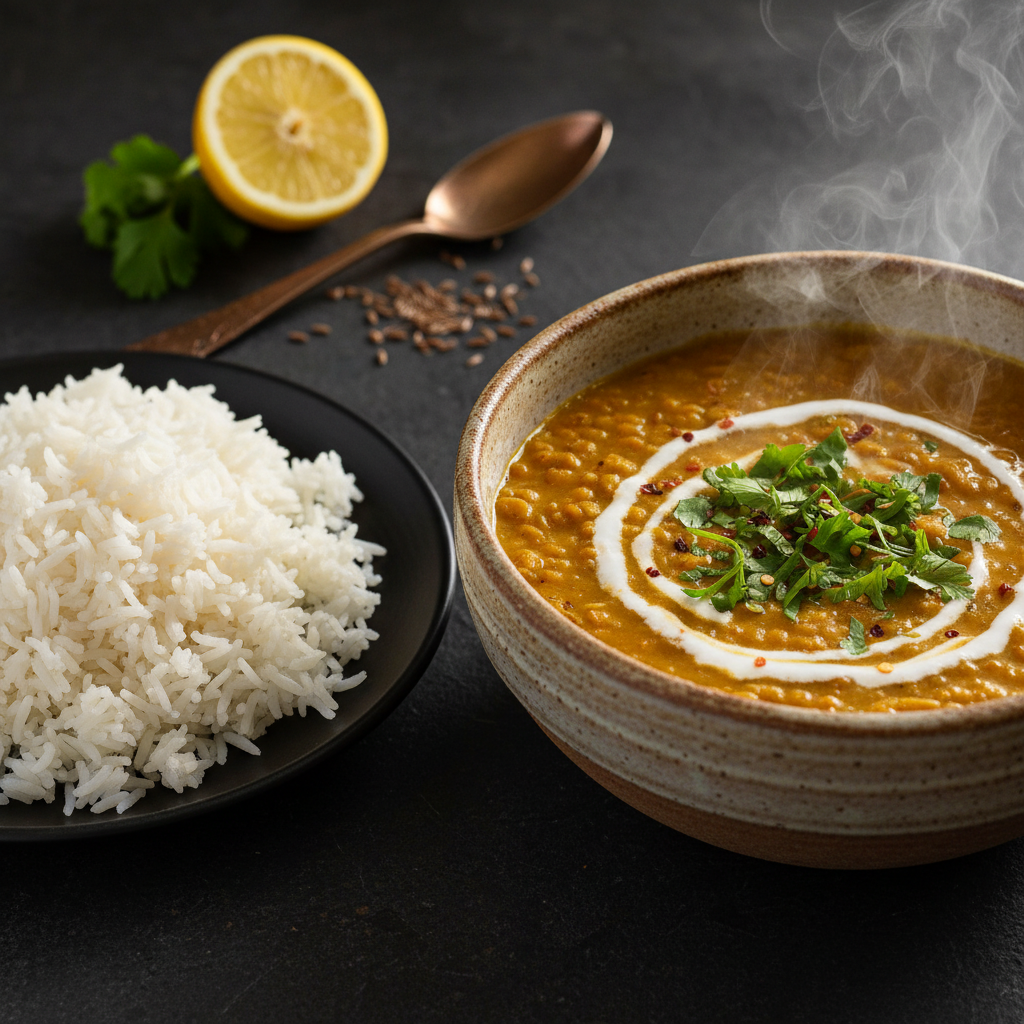
- Serve the dahl hot over a bed of fluffy Basmati rice, garnished generously with fresh cilantro.
Expert Cooking Tips
- ✓Rinsing the lentils is crucial not just for cleanliness but to remove dust and debris.
- ✓If the dahl becomes too thick upon standing, simply stir in a splash of water or extra veggie broth to loosen it up.
- ✓For an extra burst of flavor, fry a teaspoon of whole cumin seeds in oil and pour it over the finished dish (a second tadka).
- ✓Use fresh ginger and garlic instead of pastes for a much brighter flavor profile.
- ✓Don’t skip the lemon juice at the end; the acidity is necessary to balance the earthy lentils.
- ✓Soaking the Basmati rice results in longer, fluffier grains that don’t clump together.
Substitutions and Variations
This recipe is highly adaptable. If you don’t have red lentils, you can use yellow split peas (Toor Dal) or split mung beans (Moong Dal), though the cooking time may increase by 10-15 minutes. Do not use brown or green lentils if you want that creamy, porridge-like consistency, as they hold their shape. For the coconut milk, you can substitute cashew cream or a plant-based heavy cream alternative for richness, or simply omit it for a lighter, tomato-forward stew. If you are not strictly vegan, ghee is a traditional and flavorful substitute for the coconut oil. For the greens, you can stir in fresh baby spinach or kale during the last 2 minutes of cooking for added nutrition.
Common Mistakes to Avoid
The most common mistake is undercooking the aromatics. The onions need to be truly soft and the raw smell of garlic gone before adding liquids, or the base flavor will be sharp and unrefined. Another error is boiling the lentils too vigorously; a gentle simmer is best to ensure they cook evenly without scorching the bottom of the pot. Also, avoid adding the salt at the very beginning of the cooking process, as it can sometimes toughen the lentil skins and prolong cooking time; it’s best to salt towards the end. Finally, do not lift the lid off the rice while it’s steaming! This releases the necessary steam and leads to unevenly cooked, crunchy rice.
Serving Suggestions
Serve this dahl piping hot in wide bowls. It pairs classically with Basmati rice, but is equally delicious with warm naan bread, roti, or chapati for scooping. For a complete Indian-inspired feast, serve alongside a cooling cucumber raita (use dairy-free yogurt for vegans), mango chutney, and a side of roasted cauliflower (Aloo Gobi) or spiced okra. A sprinkle of red chili flakes or fresh green chilies on top adds a nice kick for heat lovers.
Storage and Reheating Tips
This dahl stores beautifully and often tastes better the next day. Let it cool completely before transferring to an airtight container. It will keep in the refrigerator for up to 5 days. For freezing, portion the cooled dahl into freezer-safe bags or containers; it will last for up to 3 months. To reheat, thaw overnight in the fridge if frozen, then warm on the stovetop over low heat. You will likely need to add a splash of water or broth as the lentils will have thickened significantly in the cold. Reheat the rice separately with a sprinkle of water in the microwave to restore its fluffiness.
Nutrition Facts (Estimated)
| Serving Size | 1 bowl with rice |
| Calories | 480 |
| Fat | 12g |
| Saturated Fat | 6g |
| Unsaturated Fat | 5g |
| Trans Fat | 0g |
| Cholesterol | 0mg |
| Sodium | 450mg |
| Carbohydrates | 72g |
| Fiber | 14g |
| Sugar | 4g |
| Protein | 18g |
Frequently Asked Questions
Do I need to soak red lentils before cooking?
No, soaking is not strictly necessary for red lentils as they are thin and split. However, a thorough rinse is required. Soaking them for 15-20 minutes can speed up cooking slightly and aid digestion, but you can cook them directly after rinsing.
Is this dish spicy?
As written, the recipe is mild to moderately spiced. The heat comes mainly from the chili powder or cayenne. You can omit the chili entirely for a kid-friendly version or increase it if you prefer more heat.
Can I make this in an Instant Pot?
Yes! Sauté the aromatics using the Sauté function, then add the rest of the ingredients (except coconut milk and lemon). Seal and cook on High Pressure for 8-10 minutes. Quick release, then stir in the coconut milk and lemon.
Why is my dahl mushy?
Red lentil dahl is supposed to be mushy and creamy! Unlike green lentils, red lentils break down completely. If you prefer distinct lentils, you should use brown or green lentils, but the dish will be a soup rather than a creamy dahl.
Is this recipe gluten-free?
Yes, both lentils and rice are naturally gluten-free. Just ensure your spices and vegetable broth are certified gluten-free to avoid cross-contamination.
Can I use light coconut milk?
You can, but the result will be less creamy and rich. Full-fat coconut milk provides the best texture and mouthfeel.
What can I use instead of Basmati rice?
Jasmine rice is a great alternative, though it is slightly stickier. Brown rice or quinoa are excellent whole-grain options, though they require longer cooking times.
How do I fix the dahl if it’s too salty?
If you’ve oversalted, you can add a peeled, quartered potato to the pot and simmer for 10 minutes; the potato absorbs excess salt. Discard the potato before serving. Alternatively, add more coconut milk or a splash of water.
Conclusion
This Vegan Red Lentil Dahl with Basmati Rice is more than just a recipe; it’s a reliable companion for busy days and chilly evenings. It proves that plant-based eating doesn’t require expensive substitutes or complicated techniques—just humble ingredients treated with care. Whether you are cooking for a crowd or prepping meals for the week, this golden, fragrant bowl of goodness is sure to become a regular in your kitchen rotation. Enjoy the warmth, the health benefits, and the incredible flavors of homemade dahl!