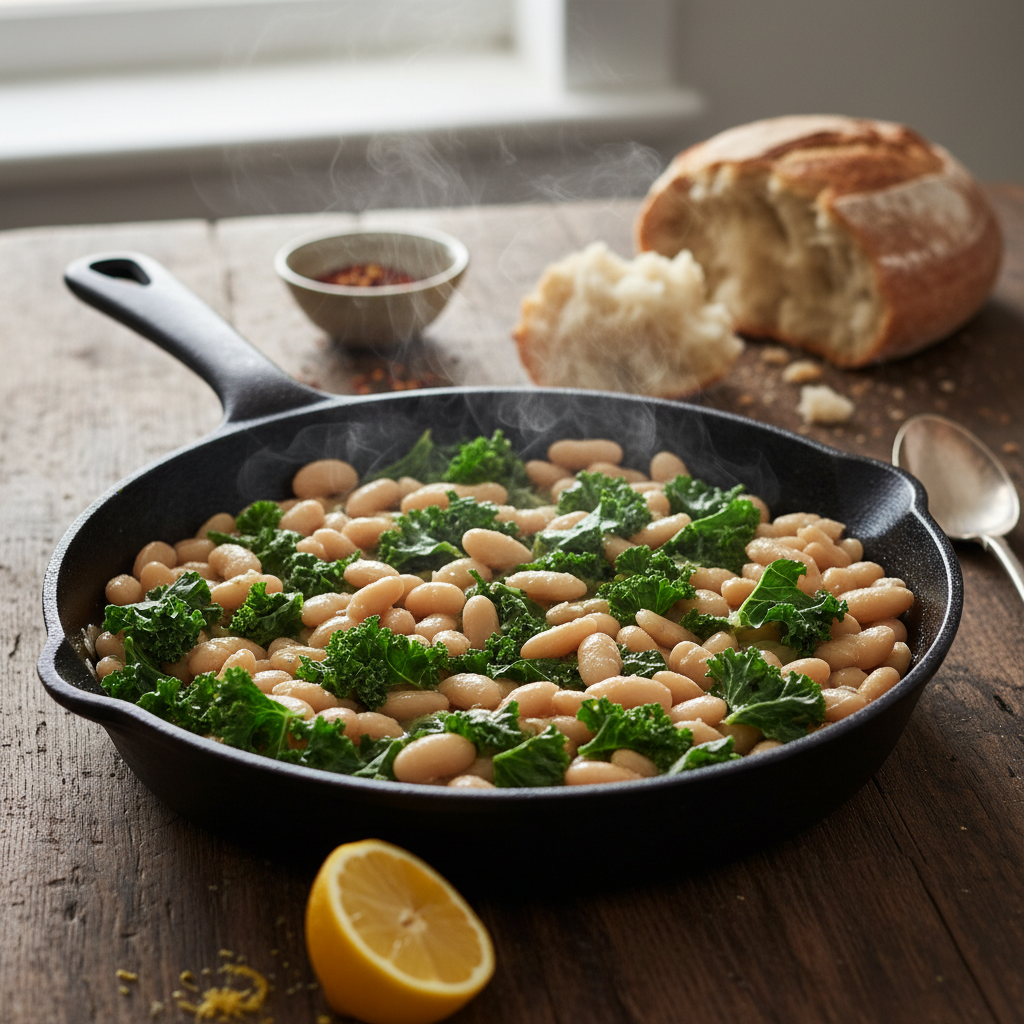
Creamy Vegan White Bean and Kale Skillet with Lemon and Garlic
Vegan White Bean And Kale Skillet Healthy Recipe
This 20-minute vegan white bean and kale skillet is the ultimate healthy comfort food. Packed with plant-based protein, creamy cannellini beans, and zesty lemon garlic flavors, it is a perfect quick weeknight dinner that tastes like a gourmet meal.
10 minutes
20 minutes
30 minutes
4 servings
Main Course
Stovetop
Mediterranean / American
Vegan
In the world of plant-based cooking, finding the perfect intersection between ‘fast,’ ‘healthy,’ and ‘comforting’ can sometimes feel like a culinary impossible triangle. However, this Vegan White Bean and Kale Skillet defies the odds, delivering a meal that feels like a warm hug while nourishing your body with nutrient-dense superfoods. Picture this: tender cannellini beans simmered in a savory, garlic-infused broth that naturally thickens into a creamy sauce, coating vibrant ribbons of earthy kale. The dish is finished with a bright pop of fresh lemon juice and a dusting of nutritional yeast or vegan parmesan, creating a flavor profile that is sophisticated enough for a dinner party but simple enough for a Tuesday night. What makes this recipe truly standout is its texture. Many people struggle with kale because it can be tough or fibrous, but in this skillet method, the kale is braised gently alongside the beans, softening it to perfection without losing its structural integrity. The beans, partially mashed, release their starches to create a velvety mouthfeel without the need for heavy creams or dairy. It is a celebration of rustic, peasant-style cooking where humble ingredients are elevated through technique and seasoning. Whether you are a strict vegan, a flexitarian, or just someone looking to cut down on meat consumption without sacrificing flavor, this skillet dinner is a revelation. It pairs beautifully with crusty sourdough bread for dipping, serves as a hearty topping for toasted quinoa, or stands alone as a protein-packed main course. Get ready to add a new staple to your weekly rotation that will leave you feeling energized and satisfied.
History & Origins
While this specific recipe is a modern adaptation suited for contemporary vegan diets, its roots are deeply entrenched in the ancient traditions of the Mediterranean, specifically the ‘Cucina Povera’ (peasant cooking) of Tuscany, Italy. The combination of beans and greens is a cornerstone of Tuscan cuisine, most famously recognized in dishes like ‘Ribollita’ or ‘Fagioli all’Uccelletto.’ Cannellini beans, often referred to as white kidney beans, have been a staple in Italy for centuries due to their creamy texture and ability to grow in various climates. Historically, meat was a luxury reserved for the wealthy or for special occasions, so rural families relied heavily on legumes as their primary source of protein. Kale, particularly the Lacinato or ‘Dino’ variety (Cavolo Nero), has originated in the Mediterranean region and has been cultivated for over 2,000 years. In ancient Rome and Greece, kale was one of the most widely grown green vegetables. This skillet recipe pays homage to those historical methods of slow-cooking pulses with sturdy greens, garlic, and olive oil. Over time, as these dishes migrated to the United States and evolved with modern health trends, the cooking times were shortened for convenience, and the focus shifted toward retaining the vibrant color and nutrients of the greens. The modern ‘skillet’ version is a testament to the timelessness of these ingredients, proving that the simple marriage of a legume and a brassica, bound together by good olive oil and garlic, is a culinary concept that transcends centuries and borders.
Why This Recipe Works
This recipe succeeds because it leverages the natural chemical properties of the ingredients to create a complex texture and flavor profile without requiring processed additives. First, let’s talk about the creaminess. By using cannellini beans and opting to mash a small portion of them directly in the pan, we release the beans’ natural starches into the vegetable broth. This creates an emulsion with the olive oil that mimics the mouthfeel of heavy cream or butter, providing that ‘comfort food’ satisfaction that is often missing in vegan dishes. Secondly, the flavor balance is scientifically sound. Kale is naturally bitter, and beans can be bland and earthy. To counteract this, we introduce fat (olive oil), umami (garlic, onion, nutritional yeast), and, most importantly, acid (lemon juice). The acidity of the lemon cuts through the starchiness of the beans and neutralizes the bitterness of the kale, brightening the entire dish. Furthermore, the cooking method—sautéing aromatics first, then simmering—builds layers of flavor. Adding the kale towards the end ensures it wilts but retains its bright green color and distinct chew, avoiding the mushy texture of overcooked greens. Finally, from a nutritional synergy standpoint, pairing iron-rich kale with vitamin C-rich lemon juice significantly increases the body’s ability to absorb the non-heme iron found in the greens, making this dish not just delicious, but biologically efficient.
Why You’ll Love This Recipe
- ✓Ready in under 30 minutes
- ✓High in plant-based protein and fiber
- ✓Gluten-free and Dairy-free
- ✓Uses affordable pantry staples
- ✓One-pan meal for easy cleanup
- ✓Nutrient-dense superfood boost
Equipment You’ll Need
- ✓Large Cast Iron Skillet or Heavy-Bottomed Pan
- ✓Chef’s Knife
- ✓Cutting Board
- ✓Wooden Spoon or Spatula
- ✓Measuring Cups and Spoons
- ✓Citrus Juicer
Ingredients
- ✓2 cans (15 oz each) Cannellini beans, rinsed and drained
- ✓1 large bunch Curly Kale or Lacinato Kale, stems removed and chopped
- ✓1 medium Yellow Onion, diced
- ✓4 cloves Garlic, minced
- ✓1 cup Vegetable Broth (low sodium preferred)
- ✓2 tbsp Extra Virgin Olive Oil
- ✓1 tsp Red Pepper Flakes (adjust to spice preference)
- ✓1/2 tsp Sea Salt
- ✓1/2 tsp Black Pepper
- ✓2 tbsp Nutritional Yeast (optional for cheesy flavor)
- ✓1 large Lemon, juiced and zested
Instructions
- 1. Prepare your produce: Wash the kale thoroughly, remove the tough stems, and chop the leaves into bite-sized pieces. Dice the onion and mince the garlic. Rinse and drain the cannellini beans.
- 2. Heat the olive oil in a large skillet over medium heat. Once shimmering, add the diced onion and sauté for 5-6 minutes until translucent and soft.
- 3. Add the minced garlic and red pepper flakes to the skillet. Cook for another 1-2 minutes, stirring constantly to prevent the garlic from burning, until fragrant.
- 4. Add the chopped kale to the skillet. It may look like a lot, but it will shrink down. Sauté for 3-4 minutes until the kale is wilted and bright green.
- 5. Pour in the drained cannellini beans and the vegetable broth. Stir to combine.
- 6. Reduce the heat to medium-low. Using the back of your wooden spoon, gently smash about 1/4 of the beans. This helps thicken the broth into a creamy sauce.
- 7. Let the mixture simmer for 5-8 minutes, allowing the flavors to meld and the liquid to reduce slightly.
- 8. Stir in the nutritional yeast, salt, and black pepper.
- 9. Remove the skillet from the heat. Stir in the fresh lemon juice and lemon zest immediately before serving to keep the flavor bright.
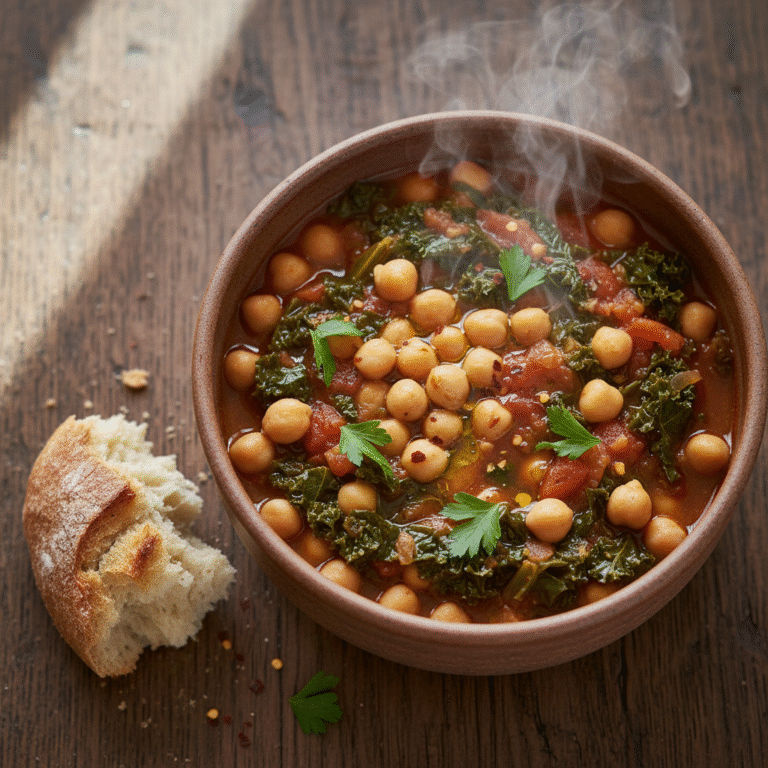
- 10. Taste and adjust seasoning as needed. Serve warm with crusty bread or over grain.
Expert Cooking Tips
- ✓De-stem the kale thoroughly; the stems can be tough and fibrous even after cooking.
- ✓Don’t skip the lemon zest; it adds an aromatic brightness that juice alone cannot provide.
- ✓If you prefer a soupier consistency, add an extra 1/2 cup of broth.
- ✓Use high-quality extra virgin olive oil, as its flavor is prominent in this simple dish.
- ✓Rinse canned beans very well to remove excess sodium and the metallic canning taste.
- ✓Add the garlic after the onions have softened so it doesn’t burn and become bitter.
- ✓For extra protein, you can stir in hemp seeds or top with toasted pine nuts before serving.
Substitutions and Variations
This recipe is incredibly versatile and forgiving, making it perfect for clearing out the pantry. If you don’t have cannellini beans, Great Northern beans, navy beans, butter beans, or even chickpeas work wonderfully as substitutes. Chickpeas will result in a slightly firmer texture and less creaminess, while butter beans will make the dish even richer. For the greens, curly kale can be swapped for Lacinato (dino) kale, Swiss chard, collard greens, or fresh spinach. If using spinach, add it at the very end of cooking as it wilts much faster than kale. If you are not strictly vegan, chicken broth can replace vegetable broth, and parmesan cheese can replace nutritional yeast. For those avoiding oil, you can sauté the vegetables in a splash of water or broth, though you will lose some richness. The red pepper flakes can be omitted for a kid-friendly version, or swapped for smoked paprika for a different flavor profile.
Common Mistakes to Avoid
The most common mistake with this dish is overcooking the kale until it turns a drab olive-green and becomes mushy; keep an eye on it and remove from heat while it is still vibrant. Another error is burning the garlic; garlic cooks much faster than onions, so always add it later in the sauté process. Failing to season adequately is also a pitfall; beans act as flavor sponges and require a generous amount of salt and acid to taste their best. Make sure to taste the dish at the end and adjust salt and lemon levels. Finally, do not simply dump the whole can of beans in with the liquid; the canning liquid is often slimy and salty, so rinsing them is crucial for a clean, fresh flavor.
Serving Suggestions
This Vegan White Bean and Kale Skillet is a complete meal on its own, but it shines when paired with the right sides. The most classic pairing is a thick slice of toasted sourdough or rustic Italian bread, rubbed with a clove of garlic, to sop up the creamy broth. For a gluten-free option, serve this over a bed of brown rice, quinoa, or even creamy polenta. It also works beautifully as a savory topping for a baked potato or sweet potato. If you want to add more texture, top the skillet with homemade garlic croutons or roasted pumpkin seeds. A glass of crisp white wine, like a Sauvignon Blanc or Pinot Grigio, cuts through the savory beans perfectly.
Storage and Reheating Tips
Leftovers of this dish store remarkably well, making it excellent for meal prep. Allow the skillet to cool completely before transferring the contents to an airtight container. It will stay fresh in the refrigerator for 3 to 4 days. In fact, the flavors often improve the next day as the beans absorb more of the garlic and lemon. To reheat, simply warm it in a saucepan over medium-low heat or in the microwave. You may find the mixture has thickened significantly in the fridge; stir in a splash of water or broth to loosen it up to your desired consistency. Freezing is possible but not ideal, as the texture of the kale can become somewhat soggy upon thawing. If you must freeze it, do so in a freezer-safe container for up to 2 months.
Nutrition Facts (Estimated)
| Serving Size | 1 bowl (approx 300g) |
| Calories | 320 |
| Fat | 12g |
| Saturated Fat | 1.5g |
| Unsaturated Fat | 9g |
| Trans Fat | 0g |
| Cholesterol | 0mg |
| Sodium | 450mg |
| Carbohydrates | 42g |
| Fiber | 14g |
| Sugar | 3g |
| Protein | 16g |
Frequently Asked Questions
Can I use dried beans instead of canned?
Absolutely. If using dried beans, soak them overnight and cook them until tender before adding them to this recipe. You will need about 3 cups of cooked beans to replace the 2 cans.
Is this recipe spicy?
It has a mild kick from the red pepper flakes. If you are sensitive to spice or cooking for children, feel free to reduce the amount or omit them entirely.
How can I add more protein?
While beans are a great source of protein, you can boost it further by adding crumbled vegan sausage, tofu cubes, or serving the dish over quinoa instead of rice.
Can I use frozen kale?
Yes, frozen kale works well. You won’t need to cook it as long as fresh kale. Just toss it in and cook until heated through.
What gives the sauce its creamy texture?
The creaminess comes from the starch released by the beans, especially when you mash a portion of them, combined with the olive oil and broth emulsion.
Is this recipe gluten-free?
Yes, naturally! Just ensure your vegetable broth is certified gluten-free if you have a severe allergy.
Can I make this oil-free?
Yes, you can sauté the onions and garlic in a splash of vegetable broth or water instead of olive oil.
Why does my kale taste bitter?
Kale can be bitter if not balanced correctly. The salt and lemon juice in this recipe are key to neutralizing that bitterness. Massage the kale slightly before cooking if you want it even more tender.
Can I use spinach instead?
Yes, but spinach cooks much faster. Add it at the very end and remove from heat as soon as it wilts.
Is nutritional yeast necessary?
It is not strictly necessary, but it adds a savory, cheesy, umami flavor that enhances the dish significantly. If you don’t have it, you can skip it or use a splash of soy sauce for umami.
Conclusion
The Vegan White Bean and Kale Skillet is proof that healthy eating doesn’t have to be complicated, expensive, or time-consuming. By relying on humble, shelf-stable ingredients and smart cooking techniques, you can create a meal that is as nourishing for the soul as it is for the body. The interplay of creamy beans, tender greens, and bright citrus creates a symphony of flavors that will have you scraping the pan clean. Whether you are a seasoned vegan cook or just dipping your toes into plant-based eating, this recipe is a reliable, delicious winner that deserves a permanent spot in your recipe box. Give it a try tonight, and savor the simplicity of good food done right.