Ultimate Light Vegetable Moussaka With Lentils: A Healthy Greek Classic
Vegetable Moussaka With Lentils Light Recipe
Experience the rich, comforting layers of traditional Greek Moussaka without the heaviness. This light vegetable moussaka substitutes meat for hearty lentils and features roasted vegetables topped with a guilt-free, creamy yogurt béchamel, making it the perfect healthy dinner centerpiece.
30 minutes
60 minutes
1 hour 30 minutes
8 servings
Main Course
Baking
Greek
Vegetarian
There are few dishes in the culinary world that evoke the feeling of home quite like Moussaka. It is the quintessential casserole of the Mediterranean—a labor of love that rewards you with bubbling, golden-brown perfection. However, traditional recipes can often feel incredibly heavy, laden with fried eggplant and rich, butter-heavy sauces that leave you feeling sluggish. Enter our Vegetable Moussaka with Lentils Light Recipe. This dish is a revelation for anyone who loves Greek cuisine but wants to maintain a balanced, nutritious diet. We have meticulously deconstructed the classic to keep every ounce of flavor while stripping away the excess oil and heavy fats.
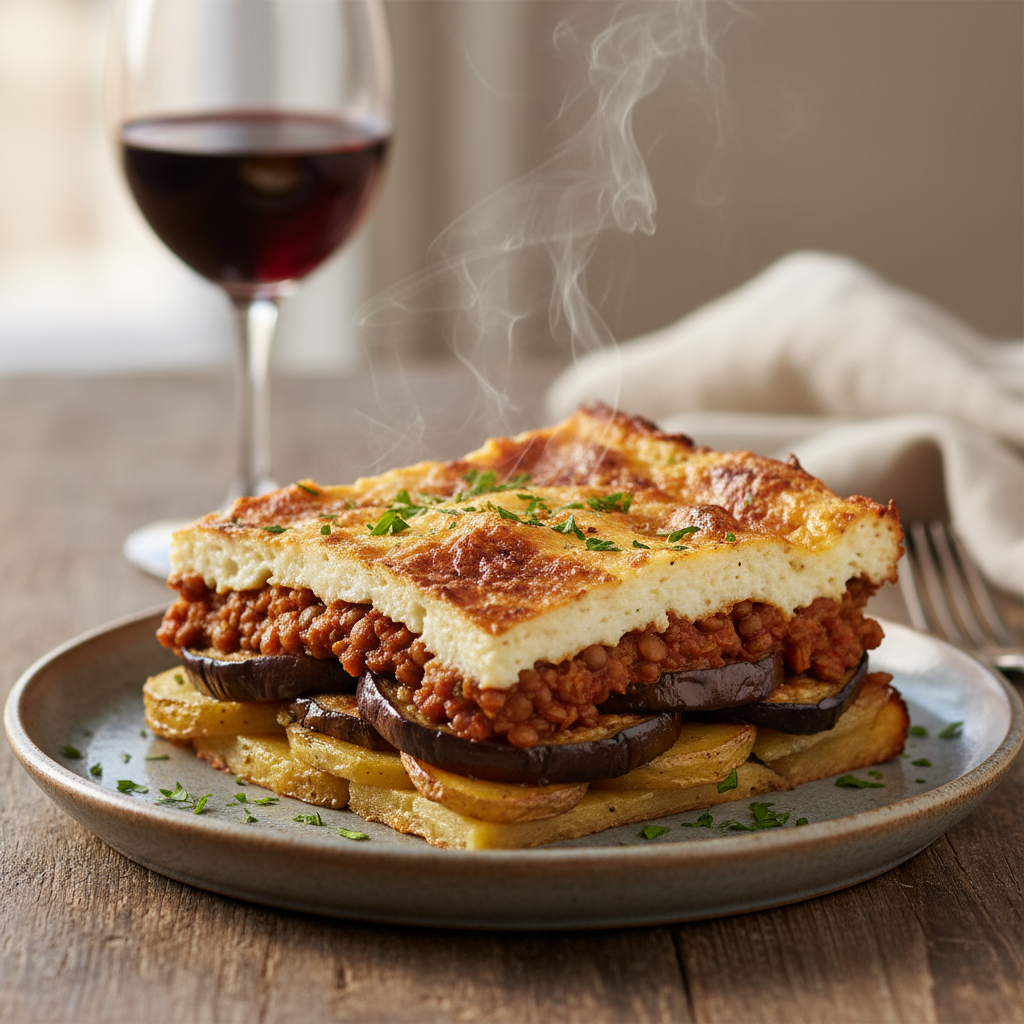
Imagine layers of tender, roasted eggplant and potatoes, sweet and caramelized from the oven rather than greasy from the frying pan. These vegetable foundations hold up a robust, aromatic ragu made not from lamb, but from earthy brown lentils simmered in a rich tomato sauce spiked with cinnamon, cloves, and oregano. The crowning glory is a lighter take on the béchamel—a savory, custardy yogurt-based topping that bakes into a golden, velvet layer. This recipe isn’t just a vegetarian alternative; it is a standalone masterpiece that celebrates the natural sweetness of summer vegetables and the heartiness of legumes. Whether you are a vegetarian, a flexitarian, or simply a lover of good food, this lighter moussaka offers all the comfort of the original with a nutritional profile that fuels your body rather than weighing it down.
History & Origins
The history of Moussaka is as layered as the dish itself, tracing a culinary lineage that spans the Middle East, the Balkans, and the Mediterranean. The word ‘moussaka’ stems from the Arabic ‘musaqqa‘a,’ which translates roughly to ‘moistened’ or ‘chilled.’ Originally, in the Levant, this dish was—and often still is—a simple vegetable stew served cold, consisting primarily of eggplant and tomatoes. It wasn’t until the dish traveled through the Ottoman Empire and landed in Greece that it began to transform into the baked casserole we recognize today.
The version of Moussaka most familiar to the Western world, with its distinct layers and creamy béchamel top, is actually a relatively modern invention from the early 20th century. It was popularized by Nikolaos Tselementes, a Greek chef trained in France, who sought to ‘Europeanize’ Greek cuisine. Tselementes married the traditional eggplant dish with the French mother sauce, Béchamel, creating the rich, decadent icon of Greek gastronomy. However, before this French influence, moussakas were often dairy-free and relied heavily on vegetables and olive oil. Our Vegetable Moussaka with Lentils pays homage to both these roots. By using lentils, we nod to the peasant traditions of using legumes as a primary protein source during religious fasting periods (Nistisima), while the lighter yogurt topping bridges the gap between the original lighter vegetable stews and Tselementes’ creamy innovation. This recipe is a modern evolution, respecting the cultural journey of the dish while adapting to contemporary health consciousness.
Why This Recipe Works
This recipe succeeds where many vegetarian adaptations fail because it focuses on texture and depth of flavor rather than just removing ingredients. First, we address the eggplant dilemma. Eggplant is a sponge; in traditional recipes, frying it means it absorbs an exorbitant amount of oil. By dry-roasting the eggplant and potato slices with a light brush of olive oil, we concentrate their natural sugars and achieve a tender, non-greasy texture that holds its shape within the layers. This prevents the dreaded ‘soggy casserole’ syndrome.
Secondly, the lentil ragu is engineered to mimic the mouthfeel of a meat sauce. We use brown or green lentils because they retain their shape and offer a ‘meaty’ bite, unlike red lentils which would turn to mush. Simmering them with cinnamon, allspice, and red wine infuses them with that signature Greek aromatic profile that triggers the brain to recognize ‘Moussaka’ instantly. Finally, the yogurt-based topping is the secret weapon. Traditional béchamel relies on a roux of butter and flour. Our topping uses Greek yogurt mixed with eggs and a touch of cheese. This mixture sets into a soufflé-like, tangy custard that cuts through the richness of the tomato sauce, providing a creamy finish that is high in protein and significantly lower in calories and saturated fat.
Why You’ll Love This Recipe
- ✓Significantly lower in calories and fat than traditional beef or lamb moussaka.
- ✓High-protein vegetarian meal using nutrient-dense lentils.
- ✓Roasted vegetables replace fried ones for a non-greasy texture.
- ✓Gluten-free friendly if cornstarch is used in the topping.
- ✓Ideal for meal prep as flavors improve after resting overnight.
- ✓Rich in fiber and heart-healthy Mediterranean ingredients.
Equipment You’ll Need
- ✓Large 9×13 inch baking dish or casserole dish
- ✓Two large baking sheets
- ✓Large saucepan or Dutch oven
- ✓Chef’s knife
- ✓Cutting board
- ✓Whisk
- ✓Medium mixing bowl
- ✓Pastry brush
Ingredients
- ✓2 large eggplants (approx. 2 lbs), sliced into 1/4 inch rounds
- ✓3 medium russet or Yukon gold potatoes, peeled and sliced into 1/4 inch rounds
- ✓1.5 cups brown or green lentils, rinsed (dry weight)
- ✓3 tbsp extra virgin olive oil, divided
- ✓1 large yellow onion, finely chopped
- ✓3 cloves garlic, minced
- ✓1 (28 oz) can crushed tomatoes
- ✓1/2 cup dry red wine (optional, substitute vegetable broth)
- ✓1 tsp dried oregano
- ✓1/2 tsp ground cinnamon
- ✓1/4 tsp ground nutmeg
- ✓Salt and freshly cracked black pepper to taste
- ✓2 cups plain Greek yogurt (2% or full fat recommended)
- ✓2 large eggs
- ✓1/3 cup Parmesan or Kefalotyri cheese, grated
- ✓2 tbsp fresh parsley, chopped (for garnish)
Instructions
- 1. Prep the Vegetables: Preheat your oven to 400°F (200°C). Line two large baking sheets with parchment paper. Arrange the eggplant slices on one sheet and potato slices on the other in a single layer. Lightly brush both sides of the vegetables with olive oil and season generously with salt and pepper.
- 2. Roast: Bake the potatoes for about 20-25 minutes until tender and slightly golden. Bake the eggplant for 25-30 minutes until soft and browned. Remove from oven and set aside to cool slightly. Reduce oven temperature to 375°F (190°C).
- 3. Cook the Lentils: While vegetables are roasting, place the lentils in a pot of boiling water. Cook for about 15-20 minutes until tender but not mushy (al dente). Drain well and set aside.
- 4. Make the Sauce: In a large saucepan, heat 1 tablespoon of olive oil over medium heat. Add the chopped onion and sauté for 5 minutes until translucent. Add the garlic and cook for another minute until fragrant.
- 5. Simmer: Pour in the red wine to deglaze the pan, scraping up any browned bits. Add the crushed tomatoes, cooked lentils, oregano, cinnamon, nutmeg, salt, and pepper. Simmer uncovered on low heat for 10-15 minutes until the sauce thickens. Stir in fresh parsley.
- 6. Prepare the Topping: In a medium bowl, whisk together the Greek yogurt, eggs, and half of the grated cheese until smooth. Season with a pinch of salt and nutmeg.
- 7. Assemble: Lightly grease a 9×13 inch baking dish. Create a bottom layer using the roasted potato slices (overlapping slightly is fine). Top the potatoes with half of the eggplant slices. Pour the lentil-tomato sauce evenly over the eggplant. Top with the remaining eggplant slices.
- 8. Top and Bake: Pour the yogurt mixture over the final layer of eggplant, spreading it to the edges with a spatula. Sprinkle the remaining cheese on top. Bake in the 375°F oven for 35-40 minutes, or until the top is golden brown and bubbly.
- 9. Rest: Remove from the oven and let the moussaka rest for at least 20-30 minutes before slicing. This step is crucial for the layers to set.
Expert Cooking Tips
- ✓Salting Eggplant: If your eggplant is old or large, sprinkle salt on the slices and let them sweat in a colander for 30 minutes before roasting to remove bitterness.
- ✓Don’t Skip Resting: Cutting into hot moussaka will result in a messy collapse. Resting allows the juices to redistribute and the layers to firm up.
- ✓Lentil Choice: Do not use red split lentils; they will dissolve into the sauce. Brown, green, or Puy lentils provide the necessary texture.
- ✓Potato Thickness: Slice potatoes uniformly to ensure they cook evenly. A mandoline slicer is helpful here.
- ✓Sauce Consistency: Ensure your lentil sauce is thick, not watery. If it’s too runny, the moussaka will be soggy.
- ✓Yogurt Tempering: Ensure your yogurt is at room temperature before mixing with eggs to prevent any separation issues.
Substitutions and Variations
This recipe is highly adaptable to various dietary needs. For a **vegan version**, replace the yogurt topping with a béchamel made from olive oil, flour, and oat milk, or use a cashew cream sauce. You can omit the eggs and use a cornstarch slurry to thicken. If you are **gluten-free**, this recipe is naturally compliant provided you check your spices and cheese for additives; if making a traditional béchamel, use gluten-free 1-to-1 flour. For the vegetables, **zucchini** makes an excellent addition or substitute for eggplant if you prefer a milder flavor; simply roast it alongside the others. If you aren’t a fan of lentils, **chickpeas** or a plant-based ground meat alternative work wonderfully as the protein base. While Greek yogurt is preferred for the topping, you can use **ricotta cheese** whipped with eggs for a slightly richer, Italian-style finish.
Common Mistakes to Avoid
The most common mistake when making moussaka is **undercooking the potatoes**. Since the casserole acts as a melding environment, the potatoes must be fully tender before assembly, or they will remain hard and unpleasant in the final dish. Another frequent error is **assembling while the sauce is too wet**. If your tomato-lentil mixture is soupy, simmer it longer to reduce the liquid; excess moisture has nowhere to go in a casserole and will result in a watery plate. Finally, **skipping the spices** is a sin in Greek cooking. The cinnamon, nutmeg, and oregano are not optional; they define the flavor profile. Without them, you are simply making a vegetable lasagna, not moussaka.
Serving Suggestions
This Vegetable Moussaka is a hearty meal on its own, but it pairs beautifully with fresh, acidic sides to cut through the richness. A classic **Greek Salad (Horiatiki)** with tomatoes, cucumbers, kalamata olives, and a block of feta is the perfect accompaniment. Crusty sourdough bread or warm pita is excellent for scooping up any rogue lentils. For a beverage, a glass of medium-bodied red wine like Agiorgitiko or a crisp white Assyrtiko complements the earthy flavors perfectly. Finish the meal with fresh fruit or a small piece of baklava.
Storage and Reheating Tips
Moussaka is one of those magical dishes that tastes even better the next day. Store leftovers in an airtight container in the refrigerator for up to **4 days**. To reheat, place individual portions in the microwave or, for better results, cover with foil and heat in a 350°F oven until warmed through. This dish is also **freezer-friendly**. You can freeze the baked (and cooled) moussaka in portions for up to 3 months. Thaw overnight in the refrigerator before reheating. If freezing the whole dish unbaked, assemble it but leave off the yogurt topping; add the fresh topping right before baking after thawing.
Nutrition Facts (Estimated)
| Serving Size | 1 slice (approx 250g) |
| Calories | 340 |
| Fat | 12g |
| Saturated Fat | 4g |
| Unsaturated Fat | 7g |
| Trans Fat | 0g |
| Cholesterol | 55mg |
| Sodium | 450mg |
| Carbohydrates | 38g |
| Fiber | 11g |
| Sugar | 8g |
| Protein | 18g |
Frequently Asked Questions
Can I use canned lentils instead of dry?
Yes, absolutely! Use two 15oz cans of lentils. Rinse and drain them thoroughly before adding them to the tomato sauce. Since they are already cooked, you only need to simmer the sauce for about 10 minutes to meld the flavors.
Why is my moussaka watery?
Watery moussaka usually comes from two sources: the vegetables releasing water or the sauce being too thin. Roasting the veggies beforehand solves the first issue. Reducing your tomato sauce until it is thick and robust solves the second.
Do I have to peel the eggplant?
This is a matter of personal preference. The skin contains nutrients and fiber, but it can be tough or bitter in larger eggplants. If you prefer a tender melt-in-your-mouth texture, peel the eggplant in stripes (zebra pattern) or fully peel it.
Can I make this ahead of time?
Yes, moussaka is an excellent make-ahead dish. You can assemble the entire dish, cover it, and refrigerate it for up to 24 hours before baking. You may need to add 10-15 minutes to the baking time if it goes into the oven cold.
Is this spicy?
No, this dish is aromatic, not spicy hot. The ‘spices’ used are warming spices like cinnamon and nutmeg. If you want heat, you can add a pinch of red pepper flakes to the lentil ragu.
Can I substitute sweet potatoes for regular potatoes?
Yes, sweet potatoes add a lovely sweetness that pairs well with cinnamon and lentils. However, they cook faster than russet potatoes, so keep an eye on them during the roasting stage.
What cheese is best for the topping?
Traditionally, Kefalotyri or Graviera is used. However, these can be hard to find in the US. Parmesan, Pecorino Romano, or even a sharp white cheddar are excellent substitutes.
How do I know when it’s done?
The top should be a deep golden brown with some darker spots, and the sauce should be bubbling vigorously around the edges. The internal temperature should reach at least 165°F (74°C).
Conclusion
This Vegetable Moussaka with Lentils proves that comfort food doesn’t have to be heavy to be satisfying. It captures the essence of the Greek islands—sun-ripened vegetables, aromatic herbs, and the joy of sharing a meal—while respecting a modern, health-conscious lifestyle. The layers of texture, from the creamy custard top to the hearty lentil bite and tender vegetables, create a symphony of flavor that will have your family asking for seconds. Whether you are serving it for a casual weeknight dinner or a special Sunday gathering, this lighter take on a classic is sure to become a permanent fixture in your recipe rotation. Kali Orexi (Bon Appétit)!