Vegetarian Jambalaya With Okra And Peppers: A Soulful Cajun Classic
Vegetarian Jambalaya With Okra And Peppers Recipe
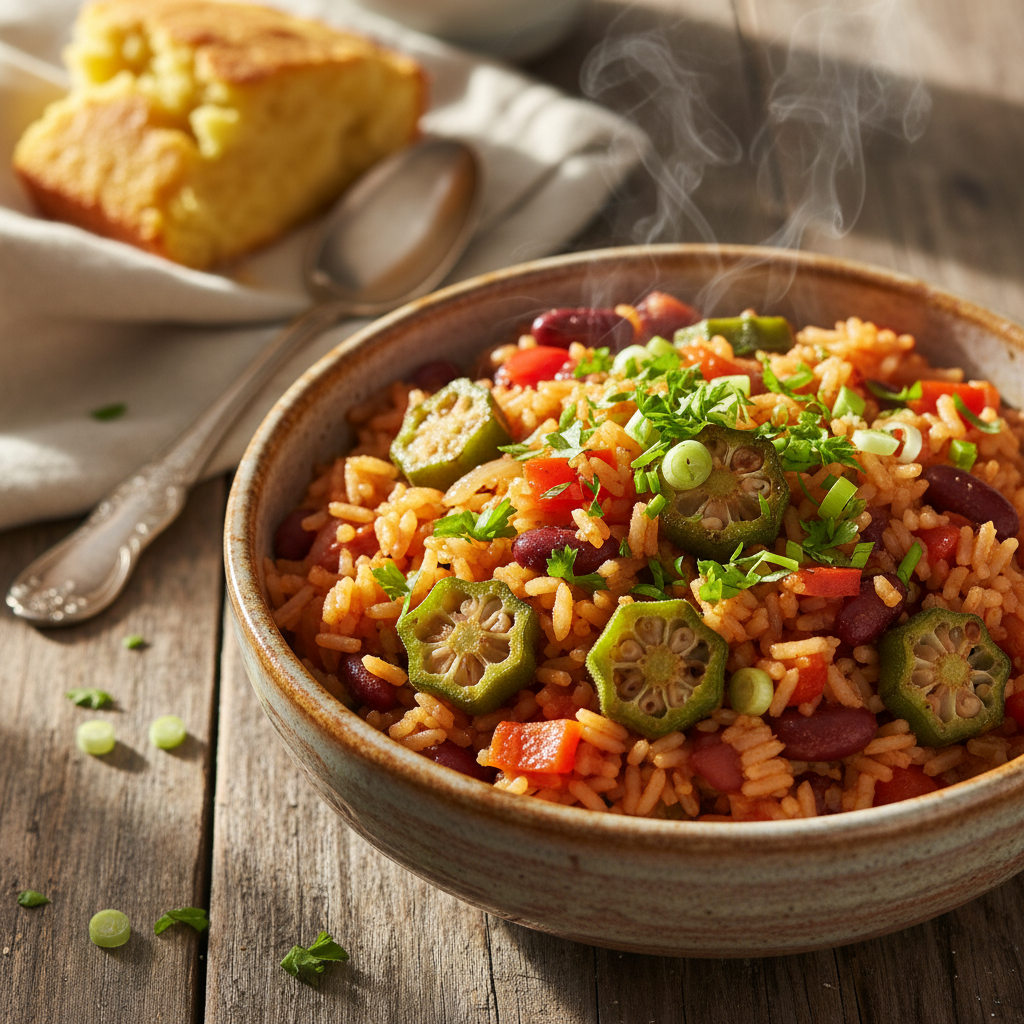
Experience the vibrant soul of New Orleans with this hearty Vegetarian Jambalaya. Packed with fresh okra, crisp peppers, and bold Cajun spices, this one-pot wonder delivers all the smoky, spicy flavor of the classic dish without the meat.
20 minutes
35 minutes
55 minutes
6 servings
Main Course
Stovetop
Cajun/Creole
Vegetarian
There is something undeniably magical about the aroma of Cajun spices wafting through a kitchen. It promises warmth, depth, and a celebration of flavor that transcends the simple ingredients in the pot. This Vegetarian Jambalaya with Okra and Peppers is a testament to the versatility of Creole and Cajun cuisine, proving that you do not need sausage or seafood to create a meal that sings with authenticity. At the heart of this dish is the holy trinity of cooking—onions, celery, and bell peppers—sautéed to aromatic perfection and serving as the foundation for a rich, tomato-based rice stew. We elevate this plant-based version by incorporating fresh okra, which provides a unique texture and an earthy flavor that pairs beautifully with the heat of cayenne and paprika. The rice absorbs the vegetable broth and tomato juices, becoming plump and infused with the essence of garlic, thyme, and oregano. This recipe is designed for those who crave the comfort of Southern cooking but want a lighter, vegetable-forward option. It is a dish that gathers people around the table, perfect for a cozy weeknight dinner or a festive weekend gathering. Whether you are a lifelong vegetarian or simply looking to reduce your meat intake, this jambalaya offers a satisfying, robust experience that leaves you feeling nourished and content. The interplay of textures—from the tender beans to the slight crunch of the peppers and the soft bite of the rice—makes every spoonful a delight.
History & Origins
Jambalaya is a quintessential dish of Louisiana, deeply rooted in the history and culture of the region. Its origins are often debated, but it is widely accepted as a derivative of Spanish paella, adapted to the local ingredients available in the New World. When Spanish settlers arrived in New Orleans, they attempted to recreate their beloved rice dish but lacked saffron. Tomatoes became the substitute to color and flavor the dish, giving rise to the ‘red’ Creole jambalaya found predominantly in the city. Conversely, Cajun jambalaya, often called ‘brown’ jambalaya, originated in the rural bayous and swamps of Louisiana, where tomatoes were scarce; instead, the meats were browned deeply to create the color and flavor base. Our Vegetarian Jambalaya leans towards the Creole style, utilizing tomatoes to create a rich, tangy sauce that envelops the vegetables and rice. The inclusion of okra is a nod to West African influence, as the word ‘gumbo’ is derived from the West African word for okra, ‘ki ngombo.’ Okra has been a staple in Southern cooking for centuries, valued for its ability to thicken stews and its nutritional benefits. Over time, jambalaya has evolved from a humble, resourceful meal made from leftovers into a celebrated icon of Southern hospitality. It represents the melting pot of cultures—French, Spanish, African, and Native American—that defines Louisiana’s heritage. By adapting this historical dish into a vegetarian version, we honor the tradition of adaptability and resourcefulness that created jambalaya in the first place, ensuring that this cultural treasure can be enjoyed by everyone regardless of dietary preference.
Why This Recipe Works
This recipe succeeds because it respects the fundamental techniques of Cajun cooking while making smart adjustments for a plant-based profile. The key to a great jambalaya lies in building layers of flavor. We start by searing the okra separately or ensuring it is cooked with high heat initially to mitigate its natural sliminess, a common concern for many home cooks. By sautéing the ‘holy trinity’ (onions, celery, and peppers) until they are soft and translucent, we release their natural sugars, which balances the acidity of the tomatoes. Unlike meat-based versions where fat from the sausage flavors the rice, we use a high-quality vegetable broth and a generous amount of smoked paprika to mimic that savory, smoky depth. The addition of kidney beans not only boosts the protein content, making it a complete meal, but also adds a creamy texture that contrasts with the fluffy rice. Furthermore, the rice is cooked directly in the pot with the liquids and spices, allowing the grains to absorb every ounce of flavor rather than just being coated in a sauce. This ‘absorption method’ ensures that the seasoning penetrates deep into the starch. Finally, letting the pot rest covered after cooking is crucial; it allows the residual steam to finish cooking the rice perfectly, resulting in separate, tender grains rather than a mushy mixture.
Why You’ll Love This Recipe
- ✓One-pot meal for easy cleanup
- ✓Packed with fiber-rich vegetables and plant protein
- ✓Authentic Cajun flavor profile without the meat
- ✓Perfect for meal prep and tastes better the next day
- ✓Budget-friendly ingredients found in any pantry
- ✓Gluten-free and vegan-friendly
Equipment You’ll Need
- ✓Large Dutch oven or heavy-bottomed pot with lid
- ✓Chef’s knife
- ✓Cutting board
- ✓Wooden spoon
- ✓Measuring cups and spoons
Ingredients
- ✓2 tablespoons olive oil
- ✓1 lb fresh okra, sliced into 1/2 inch rounds
- ✓1 large yellow onion, diced
- ✓2 green bell peppers, diced
- ✓2 stalks celery, diced
- ✓4 cloves garlic, minced
- ✓1 tablespoon Cajun seasoning (salt-free preferred)
- ✓1 teaspoon smoked paprika
- ✓1/2 teaspoon dried thyme
- ✓1/2 teaspoon dried oregano
- ✓1/4 teaspoon cayenne pepper (adjust to taste)
- ✓1 can (14.5 oz) crushed tomatoes
- ✓1 can (15 oz) red kidney beans, drained and rinsed
- ✓1.5 cups long-grain white rice, uncooked
- ✓3 cups vegetable broth
- ✓2 bay leaves
- ✓Salt and black pepper to taste
- ✓3 green onions, sliced for garnish
- ✓Fresh parsley, chopped for garnish
Instructions
- 1. Prepare your vegetables by washing and chopping the onion, bell peppers, celery, and okra. Ensure the okra is dry before slicing to minimize sliminess.
- 2. Heat the olive oil in a large Dutch oven over medium-high heat. Add the sliced okra and cook for about 5-7 minutes, stirring occasionally, until it is lightly browned and the texture tightens. Remove the okra from the pot and set aside.
- 3. In the same pot, add a splash more oil if needed. Add the diced onion, green bell peppers, and celery. Sauté for 6-8 minutes until the vegetables are softened and onions are translucent.
- 4. Stir in the minced garlic, Cajun seasoning, smoked paprika, thyme, oregano, and cayenne pepper. Cook for another minute until the spices are fragrant, being careful not to burn the garlic.
- 5. Pour in the crushed tomatoes and cook for 3-4 minutes, allowing the liquid to reduce slightly and the flavors to meld.
- 6. Add the uncooked rice and stir well to coat the grains in the tomato and vegetable mixture. Toasting the rice for a minute here adds flavor.
- 7. Pour in the vegetable broth and add the drained kidney beans and bay leaves. Stir to combine.
- 8. Return the browned okra to the pot. Bring the mixture to a rolling boil.
- 9. Once boiling, reduce the heat to low, cover the pot with a tight-fitting lid, and simmer for 20-25 minutes. Do not lift the lid during this time to keep the steam inside.
- 10. After the rice is tender and the liquid is absorbed, remove the pot from the heat. Let it sit, covered, for another 5-10 minutes to steam the rice to perfection.
- 11. Remove the bay leaves. Fluff the jambalaya gently with a fork. Taste and adjust seasoning with salt and pepper if necessary.
- 12. Serve hot, garnished with sliced green onions and fresh parsley.
Expert Cooking Tips
- ✓Rinse your rice before cooking to remove excess starch, which helps prevent the jambalaya from becoming mushy.
- ✓If you prefer a spicier kick, add a diced jalapeño along with the bell peppers.
- ✓Use a heavy-bottomed pot like a Dutch oven to ensure even heat distribution and prevent the rice from burning at the bottom.
- ✓Do not skip the resting step at the end; it is crucial for the final texture of the rice.
- ✓Fresh okra is best, but frozen okra can be used; just thaw and pat it dry thoroughly before searing.
Substitutions and Variations
This recipe is incredibly flexible. If you cannot find fresh okra, frozen works well, or you can substitute it with zucchini or green beans, though the texture will differ. For the rice, brown rice can be used for a nuttier flavor and more fiber, but you will need to increase the liquid by about 1/2 cup and extend the cooking time to 40-45 minutes. If you are not a fan of kidney beans, chickpeas or black-eyed peas are excellent alternatives that fit the Southern theme. For those who are not strictly vegetarian, you can add soy-based sausage slices or tempeh to mimic the traditional meat texture. If you are sensitive to heat, omit the cayenne pepper and choose a mild Cajun seasoning blend. The vegetable broth can be swapped for mushroom broth for an even deeper, earthier umami flavor.
Common Mistakes to Avoid
One of the most common mistakes when making jambalaya is stirring the rice too much while it is simmering. Once you lower the heat and cover the pot, you must leave it alone; stirring breaks the starch and leads to a gummy texture. Another error is lifting the lid to ‘check’ on the rice. This releases valuable steam needed to cook the grains evenly. Under-seasoning is also a pitfall; rice absorbs a lot of salt and spice, so ensure your broth is flavorful or season generously at the start. Finally, adding the okra without searing it first can result in a slimy dish. Taking the time to brown the okra separately changes its texture significantly and adds a pleasant roasted flavor.
Serving Suggestions
Vegetarian Jambalaya is a hearty meal on its own, but it pairs wonderfully with a side of warm, buttery cornbread to soak up the spices. A crisp green salad with a vinaigrette dressing provides a refreshing contrast to the savory, spicy stew. For a true Southern feast, serve it alongside collard greens or mustard greens. A dollop of vegan sour cream or a slice of avocado on top can help cool down the heat if you made it extra spicy. Beverage-wise, a cold iced tea or a light lager complements the bold flavors perfectly.
Storage and Reheating Tips
Store leftovers in an airtight container in the refrigerator for up to 4 days. Jambalaya often tastes even better the next day as the flavors have more time to meld. To reheat, place a portion in a microwave-safe bowl with a splash of water or broth to prevent it from drying out, and heat until warm. Alternatively, reheat gently on the stovetop over medium-low heat, adding a little liquid if the rice seems dry. This dish also freezes well; let it cool completely, then transfer to freezer-safe bags or containers. It can be frozen for up to 3 months. Thaw overnight in the refrigerator before reheating.
Nutrition Facts (Estimated)
| Serving Size | 1 bowl (approx 350g) |
| Calories | 320 |
| Fat | 4g |
| Saturated Fat | 0.5g |
| Unsaturated Fat | 3g |
| Trans Fat | 0g |
| Cholesterol | 0mg |
| Sodium | 580mg |
| Carbohydrates | 62g |
| Fiber | 9g |
| Sugar | 6g |
| Protein | 12g |
Frequently Asked Questions
Can I make this recipe in a slow cooker?
Yes, you can. Sauté the vegetables and spices first as directed, then transfer everything to a slow cooker. Add the liquids and rice, but reduce the broth by about 1/2 cup since less evaporation occurs. Cook on low for 3-4 hours or high for 1.5-2 hours until the rice is tender.
Is Cajun seasoning spicy?
Most commercial Cajun blends contain cayenne pepper and can be moderately spicy. If you are sensitive to heat, look for ‘mild’ blends or make your own mix using paprika, garlic powder, onion powder, oregano, and thyme, omitting the chili peppers.
Why is my rice crunchy?
Crunchy rice usually means there wasn’t enough liquid or it didn’t cook long enough. If the liquid is gone but rice is hard, add 1/4 cup of hot water or broth, cover, and cook on very low heat for another 5-10 minutes.
Can I use quinoa instead of rice?
Yes, quinoa is a great high-protein substitute. Rinse the quinoa well and reduce the cooking time to about 15-20 minutes. The liquid ratio might need a slight adjustment, so check the package instructions for the specific quinoa variety.
How do I stop the okra from being slimy?
The key is to cook it quickly on high heat before adding it to the liquid, or add it whole. In this recipe, searing the sliced okra first helps seal it and reduces the mucilage release. Acidic ingredients like tomatoes also help counteract the slime.
Do I have to use a Dutch oven?
While a Dutch oven is ideal for heat retention, any large, heavy-bottomed pot with a tight-fitting lid will work. A large deep skillet with a lid is also a good option.
Can I add tofu to this?
Absolutely. Firm or extra-firm tofu works best. Press the tofu to remove water, cube it, and brown it in the pan along with or after the okra for better texture before adding it to the stew.
Is this recipe gluten-free?
Yes, all the fresh ingredients and rice are naturally gluten-free. However, always check the labels on your Cajun seasoning and vegetable broth to ensure they were processed in a gluten-free facility.
Conclusion
This Vegetarian Jambalaya with Okra and Peppers is more than just a dinner recipe; it is an invitation to explore the rich tapestry of Southern flavors in a healthy, plant-based way. By focusing on fresh vegetables and aromatic spices, you create a dish that is comforting, nutritious, and bursting with life. It proves that traditional recipes can be adapted to modern lifestyles without losing their soul. Whether you are cooking for a busy family or hosting a dinner party, this jambalaya is sure to impress with its vibrant colors and complex tastes. Give it a try, and let the warmth of New Orleans fill your kitchen.