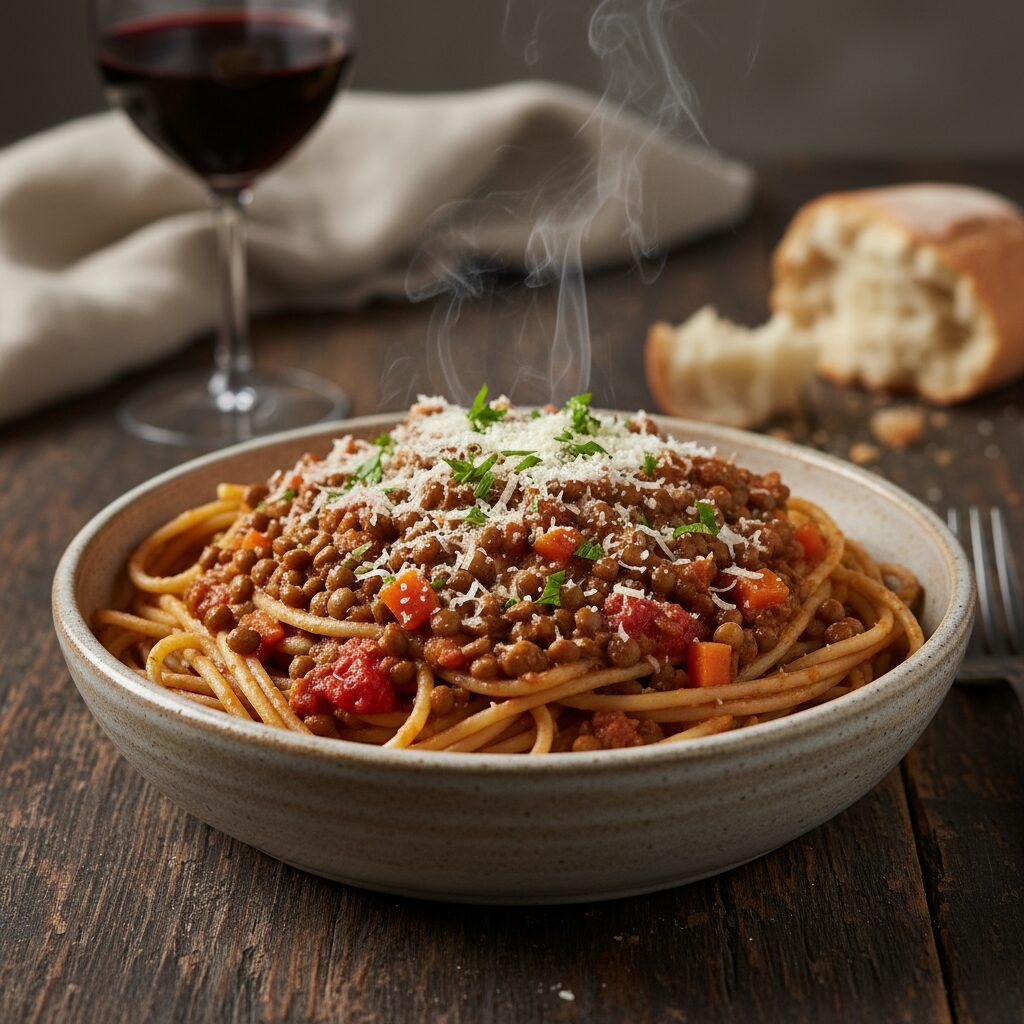
The Ultimate Hearty Vegetarian Lentil Bolognese with Whole Wheat Pasta
Vegetarian Lentil Bolognese With Whole Wheat Pasta Recipe
This rich and robust Vegetarian Lentil Bolognese is the ultimate plant-based comfort food. Simmered to perfection with aromatic herbs, red wine, and hearty lentils, it offers a meaty texture that pairs perfectly with the nuttiness of whole wheat pasta.
15 minutes
45 minutes
60 minutes
6 servings
Main Course
Stovetop
Italian-American
Vegetarian
There is something undeniably comforting about a simmering pot of bolognese sauce bubbling away on the stove, filling the kitchen with the scents of garlic, onions, and rich tomatoes. For years, I believed that a true bolognese required slow-cooked beef or pork to achieve that signature depth of flavor and melt-in-your-mouth texture. However, this Vegetarian Lentil Bolognese with Whole Wheat Pasta completely revolutionized my approach to Italian ragu. By swapping meat for earthy brown lentils, we not only create a nutritional powerhouse packed with fiber and plant-based protein, but we also achieve a texture that is surprisingly similar to the traditional meat sauce. The lentils hold their shape just enough to provide a satisfying chew while absorbing every ounce of the savory tomato and wine broth. This recipe is designed for those who love the ritual of cooking but want a meal that leaves them feeling energized rather than heavy. We serve it over al dente whole wheat pasta, which adds a wonderful nutty undertone that stands up beautifully to the thick, hearty sauce. Unlike refined white pasta, which can sometimes get lost under a heavy ladle of ragu, the whole wheat variety offers a rustic sturdiness that complements the lentils perfectly. Whether you are a strict vegetarian, a ‘Meatless Monday’ enthusiast, or simply looking to incorporate more heart-healthy legumes into your diet without sacrificing flavor, this dish is a revelation. It freezes beautifully, making it a meal-prep champion, and the flavors only deepen after a day in the fridge, promising even better leftovers.
History & Origins
The origins of Bolognese sauce, or ‘Ragù alla Bolognese,’ are deeply rooted in the culinary traditions of Bologna, Italy. Historically, ragu was a meat-based sauce served to the wealthy, evolving from simple stews in the 18th century to the refined pasta topping we know today. The official recipe, registered by the Accademia Italiana della Cucina in 1982, strictly dictates the use of beef, pancetta, onions, carrots, celery, tomato paste, wine, and milk. It is a dish defined by slow cooking and rich, animal-based fats. However, as culinary landscapes shifted in the 20th and 21st centuries, so did the interpretation of this classic. The rise of vegetarianism and a global focus on sustainable, plant-forward eating habits led chefs and home cooks to seek alternatives that honored the spirit of the original ragu—the ‘soffritto’ base and the slow simmer—while replacing the meat. Lentils emerged as the premier substitute due to their size, shape, and ability to mimic the texture of ground meat. In Italy, lentils have long been associated with prosperity and good fortune, often eaten at New Year’s, so their integration into a ragu style sauce was a natural evolution. This specific iteration, pairing the lentil ragu with whole wheat pasta, reflects a modern American influence where whole grains are prized for their health benefits. It represents a beautiful marriage of Old World technique—the slow building of flavor layers—with New World nutritional consciousness.
Why This Recipe Works
This recipe succeeds where many vegetarian sauces fail because it prioritizes texture and umami, two elements often missing when meat is removed. First, we use brown or green lentils rather than red lentils. Red lentils disintegrate into a mush when cooked, which is great for soup but terrible for a ragu. Brown lentils retain a slight bite, mimicking the mouthfeel of ground beef. Second, the depth of flavor is built methodically. We start with a classic ‘soffritto’ (onion, carrot, celery) sautéed until sweet and tender, which forms the aromatic backbone. We then deglaze the pan with dry red wine. This step is crucial; the alcohol evaporates, leaving behind a complex acidity and richness that elevates the canned tomatoes from simple to sublime. We also incorporate a splash of balsamic vinegar and soy sauce (or tamari) near the end. While not traditional Italian ingredients, they add a punch of umami that replaces the savory depth usually provided by beef and pancetta. Finally, the choice of whole wheat pasta is deliberate. The sauce is thick and heavy; it needs a pasta with structural integrity and a robust flavor profile to balance it out. The earthiness of the wheat mirrors the earthiness of the lentils, creating a harmonious flavor profile.
Why You’ll Love This Recipe
- ✓High-protein, plant-based meal perfect for vegetarians and meat-eaters alike.
- ✓Rich, meaty texture achieved using brown lentils.
- ✓Uses pantry staples for an affordable yet gourmet dinner.
- ✓Whole wheat pasta adds complex nuttiness and extra fiber.
- ✓Freezes exceptionally well for meal prep.
Equipment You’ll Need
- ✓Large Dutch oven or heavy-bottomed pot
- ✓Large pot for boiling pasta
- ✓Chef’s knife
- ✓Cutting board
- ✓Wooden spoon
- ✓Colander
Ingredients
- ✓2 tablespoons extra virgin olive oil
- ✓1 large yellow onion, finely diced
- ✓2 large carrots, peeled and finely diced
- ✓2 celery stalks, finely diced
- ✓4 cloves garlic, minced
- ✓1 cup dry brown or green lentils, rinsed and picked over
- ✓1/2 cup dry red wine (Cabernet or Merlot works well)
- ✓28 oz can crushed tomatoes
- ✓2 cups vegetable broth (low sodium preferred)
- ✓2 tablespoons tomato paste
- ✓1 teaspoon dried oregano
- ✓1 teaspoon dried basil
- ✓1/2 teaspoon dried thyme
- ✓1 tablespoon balsamic vinegar
- ✓1 teaspoon soy sauce or tamari (for umami)
- ✓1/2 teaspoon red pepper flakes (optional)
- ✓Salt and black pepper to taste
- ✓1 lb whole wheat spaghetti or penne
- ✓Fresh parsley or basil for garnish
- ✓Grated Parmesan cheese (optional, omit for vegan)
Instructions
- Heat the olive oil in a large Dutch oven or heavy pot over medium heat.
- Add the diced onion, carrots, and celery. Sauté for about 8-10 minutes until the vegetables are softened and the onions are translucent.
- Add the minced garlic and cook for another minute until fragrant, being careful not to burn it.
- Stir in the tomato paste, dried oregano, basil, thyme, and red pepper flakes. Cook for 2 minutes to caramelize the tomato paste slightly.
- Pour in the red wine to deglaze the pan, using a wooden spoon to scrape up any browned bits from the bottom. Simmer for 2-3 minutes until the liquid has mostly reduced.
- Add the rinsed lentils, crushed tomatoes, and vegetable broth. Stir well to combine.
- Bring the mixture to a boil, then reduce the heat to low. Cover the pot partially and simmer for 35-40 minutes, or until the lentils are tender but not mushy. Stir occasionally to prevent sticking.
- While the sauce simmers, bring a large pot of salted water to a boil. Cook the whole wheat pasta according to package instructions until al dente.
- Once the lentils are cooked, stir in the balsamic vinegar and soy sauce. Taste and season generously with salt and black pepper.
- Drain the pasta, reserving about 1/2 cup of the pasta water.
- Add the cooked pasta directly to the sauce if serving immediately, adding a splash of pasta water if needed to help the sauce cling to the noodles. Alternatively, serve the sauce ladled over the pasta.
- Garnish with fresh herbs and grated Parmesan cheese if desired.
Expert Cooking Tips
- ✓Finely dice your vegetables (mirepoix) to ensure they blend seamlessly into the sauce texture.
- ✓Do not skip the deglazing step with wine; it adds essential acidity that cuts through the starch.
- ✓If you prefer a smoother sauce, use an immersion blender to pulse the sauce 2-3 times before adding the pasta, but keep most lentils whole for texture.
- ✓Salt the pasta water generously; it is the only chance to season the actual noodles.
- ✓Use brown or green lentils, not red lentils, as red lentils will dissolve completely.
- ✓Simmer with the lid slightly ajar to allow excess moisture to evaporate, creating a thicker sauce.
- ✓Add a rind of parmesan cheese to the simmering sauce for extra depth (remove before serving).
Substitutions and Variations
This recipe is incredibly flexible. If you are gluten-free, simply swap the whole wheat pasta for a brown rice or quinoa pasta; the sauce itself is naturally gluten-free (ensure you use tamari instead of soy sauce). If you do not consume alcohol, replace the red wine with an equal amount of vegetable broth mixed with a teaspoon of red wine vinegar to mimic the acidity. For the lentils, French green lentils (Puy lentils) are an excellent, slightly peppery alternative to standard brown lentils. If you want to add more vegetables, finely chopped mushrooms or zucchini can be sautéed along with the onions and carrots. For a vegan version, ensure you omit the parmesan cheese or use a cashew-based nutritional yeast topping. If you don’t have crushed tomatoes, you can use whole peeled tomatoes and crush them by hand, or tomato purée for a smoother consistency.
Common Mistakes to Avoid
The most common mistake with lentil bolognese is undercooking or overcooking the lentils. Undercooked lentils are crunchy and unpleasant, while overcooked lentils turn to mush. Test them at the 30-minute mark; they should be creamy inside but with the skin intact. Another mistake is skipping the browning of the tomato paste. Adding the paste directly into the liquid misses the opportunity to develop a rich, roasted tomato flavor. Additionally, many people forget to season adequately. Lentils are very starchy and absorb a lot of salt; if the dish tastes bland, it likely just needs more salt and a splash of acid (lemon or vinegar) to wake up the flavors. Finally, do not rinse your pasta after draining. The starch on the pasta helps the sauce adhere to it.
Serving Suggestions
Serve this hearty bolognese in wide, shallow bowls to maximize the sauce-to-pasta ratio. It pairs beautifully with a side of crusty garlic bread or focaccia to sop up any remaining sauce. For a lighter side, a crisp green salad with a sharp vinaigrette (arugula with lemon and olive oil is perfect) helps cut through the richness of the meal. A glass of medium-bodied red wine, such as a Chianti or the same Cabernet used in the sauce, complements the dish wonderfully. If you are serving this for a dinner party, offer a small bowl of red pepper flakes and extra parmesan on the table for guests to customize their heat and cheese levels.
Storage and Reheating Tips
This sauce stores exceptionally well, making it a meal prep favorite. Allow the sauce to cool completely before transferring it to an airtight container. It will keep in the refrigerator for up to 5 days. In fact, the flavors often improve on the second day. To freeze, place the cooled sauce (without the pasta) in freezer-safe bags or containers for up to 3 months. Thaw overnight in the fridge before reheating. Reheat on the stovetop over medium-low heat, adding a splash of water or broth if the sauce has thickened too much. It is best to boil fresh pasta when you are ready to eat, rather than freezing the cooked pasta mixed with the sauce, as the pasta can become mushy upon reheating.
Nutrition Facts (Estimated)
| Serving Size | 1 bowl (approx 1.5 cups) |
| Calories | 420 |
| Fat | 8g |
| Saturated Fat | 1.5g |
| Unsaturated Fat | 6g |
| Trans Fat | 0g |
| Cholesterol | 5mg |
| Sodium | 450mg |
| Carbohydrates | 68g |
| Fiber | 14g |
| Sugar | 6g |
| Protein | 18g |
Frequently Asked Questions
Can I use canned lentils instead of dry?
Yes, you can. Use two 15-ounce cans of lentils, rinsed and drained. Add them to the pot where the dry lentils are called for, but reduce the vegetable broth to 1/2 cup and reduce the simmering time to 15-20 minutes, just enough to meld the flavors.
Is this recipe vegan?
The sauce ingredients are entirely vegan. The recipe becomes non-vegan only if you garnish with traditional dairy Parmesan cheese. Use a vegan cheese alternative or nutritional yeast to keep it 100% plant-based.
Can I make this in an Instant Pot?
Absolutely. Sauté the veggies on ‘Sauté’ mode, deglaze with wine, then add remaining ingredients (reduce broth to 1.5 cups). Cook on High Pressure for 10 minutes, followed by a natural release for 10 minutes.
Why is my sauce too watery?
This can happen if the heat was too low or the lid was on too tight. Remove the lid completely and simmer for an additional 5-10 minutes to let the excess liquid evaporate and the sauce thicken.
Can I use a different type of pasta?
Yes, while whole wheat adds a nice nutty flavor, you can use regular semolina pasta, gluten-free pasta, or even zucchini noodles for a low-carb option. Wide noodles like tagliatelle or pappardelle work best with chunky sauces.
Do I have to use wine?
No, the wine adds depth, but it is not strictly necessary. You can substitute it with extra vegetable broth and a tablespoon of red wine vinegar or balsamic vinegar to provide the necessary acidity.
Can I add meat to this?
If you are a flexitarian, you can certainly brown some ground beef or turkey with the onions at the beginning, but the recipe is designed to be robust and filling without it.
How do I make it spicy?
Increase the red pepper flakes to 1 teaspoon or add a chopped fresh chili pepper during the sauté step with the onions and carrots.
Is whole wheat pasta healthier?
Generally, yes. It contains the entire grain kernel (bran, germ, and endosperm), providing more fiber, iron, and nutrients than refined white pasta.
Conclusion
This Vegetarian Lentil Bolognese with Whole Wheat Pasta proves that you don’t need meat to create a deeply satisfying, comfort-food dinner. It checks all the boxes: nutritious, affordable, flavorful, and family-friendly. Whether you are looking to reduce your meat intake or simply want a delicious new pasta dish to add to your rotation, this recipe is sure to become a household staple. The magic lies in the slow simmer and the quality of the ingredients, transforming humble lentils into a sauce worthy of a Sunday dinner. So, pour yourself a glass of wine, get that chopping board ready, and enjoy the process of making a meal that feeds both the body and the soul. Happy cooking!