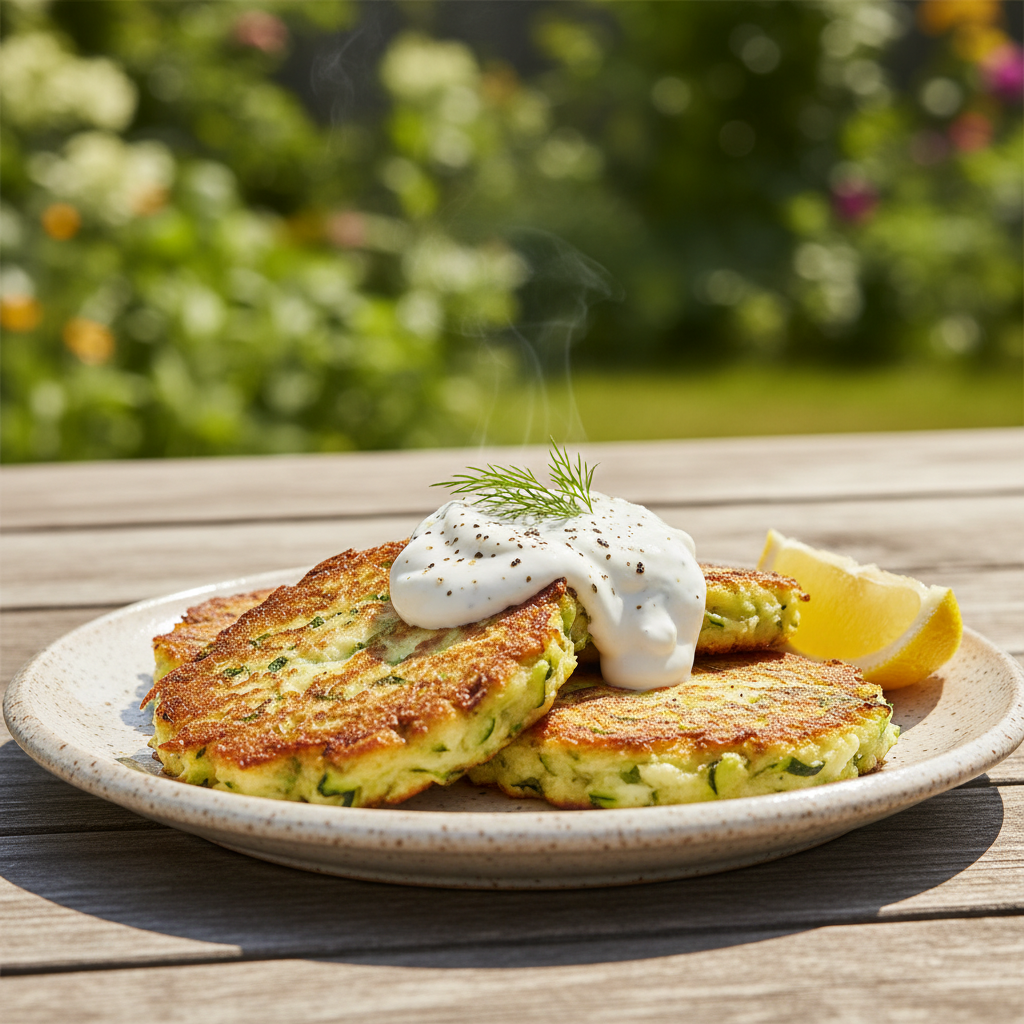
Crispy Low-Carb Zucchini and Feta Fritters with Lemon Dill Aioli
Zucchini And Feta Fritter Low Carb Recipe
Transform your summer zucchini bounty into these golden, crispy fritters that are packed with salty feta and fresh herbs. This keto-friendly and gluten-free recipe solves the soggy fritter problem, delivering a perfect crunch in every bite.
20 minutes
15 minutes
35 minutes
8 fritters (4 servings)
Appetizer / Main Course
Pan Fry
Greek / Mediterranean
Gluten-Free
There is a specific moment in every home gardener’s summer when the excitement of the first zucchini harvest turns into a mild panic. The vines are prolific, and suddenly, you have more squash than you know what to do with. Enter the Zucchini and Feta Fritter—a dish that not only utilizes this abundance but celebrates it. However, for those on a low-carb or ketogenic diet, traditional fritters pose a challenge due to the heavy use of wheat flour for binding. Furthermore, the most common culinary crime against zucchini is a soggy, water-logged texture that refuses to crisp up.
This recipe is the result of extensive testing to create the ultimate low-carb fritter that rivals any traditional version. By swapping standard flour for a blend of almond flour and parmesan cheese, we achieve a binder that is flavorful, low in carbohydrates, and structurally sound. The star of the show, however, is the combination of flavors. The mild, slightly sweet flesh of the zucchini provides the perfect canvas for the sharp, briny punch of feta cheese. When you add fresh dill, scallions, and a hint of lemon zest, the result is a Mediterranean-inspired delight that feels light yet incredibly satisfying. Whether you are serving these as a savory breakfast, a light lunch, or a crowd-pleasing appetizer, these fritters promise a golden exterior and a tender, cheesy interior without the carb-heavy guilt.
History & Origins
The concept of the fritter—ingredients battered or breaded and fried—is universal, appearing in almost every cuisine around the globe. The word itself traces back to the Latin ‘frictura,’ meaning a fry. However, this specific combination of zucchini and feta is deeply rooted in Greek cuisine, where they are known as ‘Kolokithokeftedes.’ Originating from the Greek islands, particularly Crete, these fritters were traditionally a way to use the plentiful summer squash and fresh goat or sheep milk cheeses available in the region.
In traditional Greek cooking, Kolokithokeftedes are a staple mezze (small dish) served alongside tzatziki and ouzo. They historically utilized local herbs like mint and dill, which grew wild in the hills. Over time, as the recipe migrated across the Atlantic and into health-conscious kitchens, adaptations began to emerge. The low-carb movement of the 21st century necessitated a shift away from the wheat flour and breadcrumbs traditionally used to bind the wet vegetable. This modern iteration respects the ancient flavor profile of the Aegean—preserving the salty feta and aromatic herbs—while updating the technique for modern dietary needs, proving that traditional flavors can seamlessly adapt to contemporary lifestyles.
Why This Recipe Works
The primary reason this recipe succeeds where many others fail lies in the moisture management. Zucchini is approximately 95% water. If you mix raw, untreated zucchini into a batter, that water releases during the cooking process, steaming the fritter from the inside out and resulting in a mushy mess. This recipe employs a rigorous salting and squeezing technique. By salting the grated zucchini and letting it sit, we use osmosis to draw out the cellular water. Squeezing it dry ensures that when the fritter hits the hot oil, it fries rather than steams.
Secondly, the binding agents are carefully selected for both flavor and chemistry. In the absence of gluten, which provides elasticity, we need strong binders. The combination of almond flour and eggs provides the protein structure needed to hold the shape. We enhance this with grated parmesan cheese. Unlike flour which can taste chalky if undercooked, parmesan melts and then crisps up, creating a ‘lace’ of crispy cheese throughout the fritter that acts as a delicious glue. Finally, the use of crumbled feta rather than shredded cheese creates pockets of warm, soft creaminess that contrast perfectly with the crispy exterior, providing a textural experience that is superior to using a uniform melting cheese like cheddar.
Why You’ll Love This Recipe
- ✓Keto-friendly and Gluten-Free: Uses almond flour and cheese as binders.
- ✓Superior Texture: Special prep method ensures crispy, never soggy, results.
- ✓Flavor Bomb: Packed with fresh dill, mint, garlic, and briny feta.
- ✓Versatile: perfect for breakfast, lunch, or a party appetizer.
- ✓Meal Prep Friendly: Reheats beautifully in an air fryer or oven.
Equipment You’ll Need
- ✓Box grater or food processor
- ✓Large mixing bowl
- ✓Nut milk bag or clean cheesecloth
- ✓Large non-stick skillet or cast iron pan
- ✓Spatula
- ✓Measuring cups and spoons
- ✓Wire cooling rack
Ingredients
- ✓3 cups Zucchini, shredded (approx. 2 medium zucchini)
- ✓1 tsp Kosher salt (for drawing out moisture)
- ✓1/2 cup Almond flour, superfine
- ✓1/3 cup Parmesan cheese, grated
- ✓1/2 cup Feta cheese, crumbled
- ✓2 large Eggs, beaten
- ✓2 stalks Green onions (scallions), thinly sliced
- ✓2 tbsp Fresh dill, chopped
- ✓1 tbsp Fresh mint, chopped (optional)
- ✓1 clove Garlic, minced
- ✓1 tsp Lemon zest
- ✓1/4 tsp Black pepper
- ✓2-3 tbsp Olive oil or Avocado oil, for frying
Instructions
- 1. Prepare the Zucchini: Wash and trim the ends of the zucchini. Using the coarse side of a box grater, grate the zucchini. Place the grated zucchini in a colander or bowl and toss with 1 teaspoon of kosher salt. Let it sit for at least 10-15 minutes to draw out moisture.
- 2. Squeeze Dry: This is the most critical step. Transfer the salted zucchini to a nut milk bag or a clean kitchen towel/cheesecloth. Twist and squeeze vigorously to remove as much liquid as possible. You should be left with a dry, compact ball of zucchini shreds. Discard the liquid.
- 3. Mix the Batter: In a large mixing bowl, combine the dried zucchini, almond flour, grated parmesan, crumbled feta, sliced green onions, dill, mint, minced garlic, lemon zest, and black pepper. Pour in the beaten eggs.
- 4. Combine: Mix everything together thoroughly with a fork or your hands until the mixture is uniform. The batter should be thick and hold together when pressed.
- 5. Heat the Pan: Heat the olive oil or avocado oil in a large skillet over medium heat. The oil should be shimmering but not smoking.
- 6. Form Fritters: Scoop about 1/4 cup of the mixture for each fritter. Using your hands, form them into patties about 1/2 inch thick. If the mixture feels too loose, let it sit for another 2 minutes to allow the almond flour to absorb moisture.
- 7. Fry: Place the patties into the hot skillet. Do not overcrowd the pan; cook in batches if necessary (3-4 at a time). Cook for 3-4 minutes on the first side until deep golden brown and crispy.
- 8. Flip and Finish: Carefully flip the fritters. Cook for another 3-4 minutes on the second side. The internal cheese should be melted and the exterior crunchy.
- 9. Drain: Transfer the cooked fritters to a wire rack placed over a baking sheet (this keeps them crispier than paper towels).
- 10. Serve: Serve warm with a side of tzatziki, sour cream, or a squeeze of fresh lemon juice.
Expert Cooking Tips
- ✓Don’t skip the squeeze: If you don’t remove the water from the zucchini, the fritters will fall apart.
- ✓Watch the heat: If the oil is too hot, the almond flour will burn before the inside is cooked. Medium heat is the sweet spot.
- ✓Use block feta: Pre-crumbled feta often has anti-caking agents. Buying a block and crumbling it yourself yields a creamier texture.
- ✓Let them set: Once you flip the fritter, don’t touch it for at least 2 minutes to ensure a crust forms.
- ✓Keep them warm: If cooking in batches, keep the finished fritters in a warm oven (200°F) on a wire rack.
- ✓Herb freshness: Use fresh herbs whenever possible; dried herbs lack the brightness needed to cut through the rich cheese.
Substitutions and Variations
This recipe is quite flexible regarding ingredients. If you have a nut allergy, you can substitute the almond flour with sunflower seed flour or crushed pork rinds for a zero-carb carnivore approach. If you are not strictly keto, chickpea flour is a traditional and excellent binder that adds a nutty flavor. For the cheeses, goat cheese is a wonderful alternative to feta if you prefer a tangier, creamier bite, though it makes the fritter softer. Pecorino Romano can be swapped for Parmesan for a sharper, saltier kick. In terms of herbs, parsley and basil are great alternatives if you aren’t a fan of dill or mint. If you don’t have zucchini, yellow summer squash works identically in this recipe.
Common Mistakes to Avoid
The most common mistake is under-squeezing the zucchini. If the batter is wet, it won’t crisp. Another issue is overcrowding the pan. Adding too many cold fritters to the skillet drops the oil temperature rapidly, causing the fritters to absorb oil and become greasy rather than searing the outside. Flipping too early is also a frequent error; low-carb binders are more delicate than wheat gluten. You must wait until a solid crust has formed on the bottom before attempting to flip, or the fritter will break in half. Finally, using a food processor to chop the zucchini instead of grating it can sometimes result in a watery puree rather than distinct shreds, which alters the texture negatively.
Serving Suggestions
These fritters are incredibly versatile. For a classic appetizer, serve them hot with a side of cold Tzatziki sauce or a garlic-lemon aioli. They make a fantastic low-carb breakfast topped with a poached egg and a slice of smoked salmon. For a light lunch, serve two fritters on top of a bed of mixed arugula salad dressed with lemon vinaigrette. They also work well as a side dish to grilled lamb chops or roasted chicken. If you want to keep it simple, a dollop of full-fat sour cream and a sprinkle of paprika is perfection.
Storage and Reheating Tips
Store leftover fritters in an airtight container in the refrigerator for up to 4 days. To prevent them from getting soggy, place a sheet of paper towel between layers. Do not reheat them in the microwave, as this will make them rubbery and soft. Instead, reheat them in an air fryer at 350°F for 3-4 minutes, or in a toaster oven until heated through and crispy again. These fritters also freeze well. Freeze them in a single layer on a baking sheet first, then transfer to a freezer bag. They can be reheated from frozen in the oven or air fryer, adding a few extra minutes to the cooking time.
Nutrition Facts (Estimated)
| Serving Size | 2 Fritters |
| Calories | 320 |
| Fat | 26g |
| Saturated Fat | 9g |
| Unsaturated Fat | 15g |
| Trans Fat | 0g |
| Cholesterol | 110mg |
| Sodium | 680mg |
| Carbohydrates | 8g |
| Fiber | 3g |
| Sugar | 3g |
| Protein | 14g |
Frequently Asked Questions
Why are my fritters falling apart in the pan?
This usually happens for two reasons: either the zucchini wasn’t squeezed dry enough, introducing too much moisture, or you flipped them too early before the bottom crust set.
Can I bake these instead of frying?
Yes, but they won’t be as crispy. Bake at 400°F for 20-25 minutes, flipping halfway through. Spray them generously with oil before baking to encourage browning.
Can I use coconut flour instead of almond flour?
Coconut flour is much more absorbent than almond flour. If you swap it, use only about 2 tablespoons of coconut flour for the 1/2 cup of almond flour, and let the batter sit for 10 minutes to thicken.
Is this recipe dairy-free?
As written, no. To make it dairy-free, omit the feta and parmesan. You can add nutritional yeast for a cheesy flavor and use slightly more almond flour to help with binding.
How do I know when the oil is ready?
You can test the oil by dropping a tiny piece of the batter into the pan. If it sizzles immediately and gently, it’s ready. If it smokes, it’s too hot.
Can I make the batter ahead of time?
It is not recommended to make the batter too far in advance (more than 30 minutes) because the zucchini will continue to release liquid even after squeezing, which can make the batter watery.
What is the net carb count?
Each serving (2 fritters) contains approximately 5g of net carbs, making it very suitable for ketogenic diets.
Can I use frozen zucchini?
Technically yes, but the texture will be softer. You must thaw it completely and squeeze it extremely well, as frozen zucchini releases even more water than fresh.
Conclusion
These Zucchini and Feta Fritters prove that low-carb eating doesn’t mean sacrificing texture or flavor. By mastering the simple technique of removing moisture from the squash, you unlock a world of crispy, savory goodness that celebrates the best of Mediterranean ingredients. Whether you are drowning in a summer harvest or just looking for a delicious keto-friendly meal prep option, this recipe is sure to become a staple in your kitchen rotation. Gather your herbs, crumble that feta, and get ready to enjoy the perfect crunch.